Synthetic Rubber Mixture Material
CN → US| HS编码 | 关税税率 | 原产国 | 目的国 | 文档 |
|---|---|---|---|---|
| 3901901000 | 35.0% | CN | US | 官方文档 |
| 3901909000 | 41.5% | CN | US | 官方文档 |
| 4002190019 | 35.0% | CN | US | 官方文档 |
| 4002190014 | 35.0% | CN | US | 官方文档 |
| 3824994900 | 41.5% | CN | US | 官方文档 |
商品图片

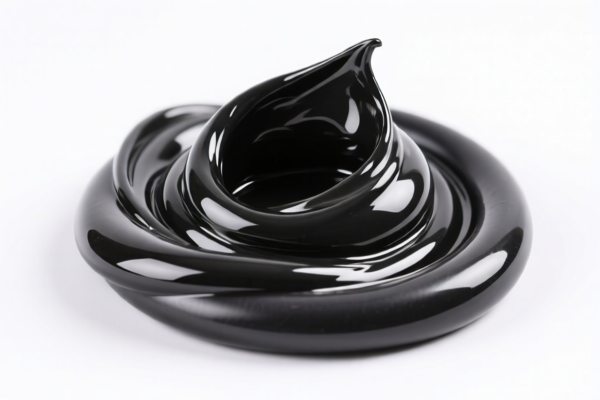


AI分析
🧪 Synthetic Rubber Mixture Material (Chemical Compounds)
🌐 HS Code Reference & Customs Clearance Guide | 2026 Latest Tariff Analysis | Professional Classification Strategy
📌 I. Product Definition & Classification: Do You Really Understand "Synthetic Rubber Mixtures"?
Synthetic rubber mixtures are complex chemical compositions used in the manufacturing of tires, seals, gaskets, hoses, and industrial rubber products. In international trade, the classification depends heavily on the physical form (liquid, paste, powder, or solid) and the primary function (processing aid vs. final rubber product).
Two Main Categories: 1. Chemical Preparations/Compounds (HS Chapter 38 or 34): Liquid/paste mixtures used for treating rubber, vulcanization accelerators, or plasticizers. 2. Unvulcanized Rubber Sheets/Blocks (HS Chapter 40): Solid or semi-solid mixtures ready for molding or extrusion.
⚠️ Key Distinction Point:
- If the product is a liquid, paste, or powder used as an additive or processing aid → Classified under Chapter 38 or 34.
- If the product is a solid block, sheet, or extrudate (unvulcanized) intended for final shaping → Classified under 4005.
📦 II. HS Code Classification Details (2026 Latest Tariff Authoritative对照)
| HS Code | Product Description | Applicability Scenario | Material Conflict? |
|---|---|---|---|
3824.99.49.00 |
Chemical products and preparations, unspecified elsewhere | Liquid/Paste rubber chemicals, complex mixtures | ❌ No |
3403.11.20.00 |
Lubricating preparations containing oil or petrol | Rubber processing aids, lubricants, or plasticizers | ❌ No |
3403.11.50.00 |
Lubricating preparations containing oil or petrol | Specialized rubber treatment agents | ❌ No |
3824.99.29.00 |
Other chemical products and preparations | General rubber chemical compounds | ❌ No |
4005.10.00.00 |
Unvulcanized rubber mixtures | Solid/semi-solid rubber compounds for molding | ❌ No |
🔍 Key Reminder:
- Chapter 38/34 items are typically liquids, pastes, or powders used to process rubber or enhance properties.
- Chapter 40 item is the rubber material itself in a physical form ready for manufacturing.
- Misclassification leads to significant tax differences due to Section 301 and IEEPA tariffs.
💰 III. 2026 Latest Tariff Rate Breakdown (Including Surtaxes & Policy Add-ons)
✅ Applicable Country: United States (US)
✅ Country of Origin: China (CN)
✅ Effective Date: From Nov 10, 2025 (and subsequent imports)
🎯 1. 3824.99.49.00 & 3824.99.29.00 —— Chemical Products & Preparations
| Item | Content |
|---|---|
| Base Tariff Rate | 6.5% (ad valorem) |
| USITC Section 301 Surtax | +25.0% (List 3/4 products) |
| IEEPA Surtax | +10.0% (Targeting China/HK products, from Nov 10, 2025) |
| Total Tax Rate | 41.5% |
| Tax Calculation | CIF Value × 41.5% |
| De Minimis Exemption Available? | ❌ No (deny_de_minimis) |
| Legal Basis Path | Base: 3824.99.49.00 → Section 301: Footnote 9903.88.01 → IEEPA: 9903.01.24 |
📌 Explanation:
- The 6.5% base rate applies to general chemical preparations not specified elsewhere.
- The 25% Section 301 tariff is standard for many Chinese chemical goods.
- The 10% IEEPA tariff is an additional layer for China-origin goods.
- Total: 41.5%. This is a high-cost category. Proper documentation of chemical composition is critical.
🎯 2. 3403.11.20.00 & 3403.11.50.00 —— Lubricating Preparations (Rubber Chemicals)
| Item | Content |
|---|---|
| Base Tariff Rate | 0.2% (3403.11.20) / 1.4% (3403.11.50) (ad valorem) |
| USITC Section 301 Surtax | +25.0% |
| IEEPA Surtax | +10.0% |
| Total Tax Rate | 35.2% (3403.11.20) / 36.4% (3403.11.50) |
| Tax Calculation | CIF Value × Total Rate |
| De Minimis Exemption Available? | ❌ No (deny_de_minimis) |
| Legal Basis Path | Base: 3403.11.xx → Section 301: Footnote 9903.88.01 → IEEPA: 9903.01.24 |
📌 Note:
- These codes apply if the mixture is classified as a "lubricating preparation" (e.g., rubber processing oils, plasticizers).
- Even with a near-zero base rate, the 35.2%-36.4% total tax remains significant due to surtaxes.
- Clarify if the product is a "chemical compound" (Ch 38) or "lubricant" (Ch 34) based on SDS and primary use.
🎯 3. 4005.10.00.00 —— Unvulcanized Rubber Mixtures
| Item | Content |
|---|---|
| Base Tariff Rate | 0.0% (ad valorem) |
| USITC Section 301 Surtax | +25.0% |
| IEEPA Surtax | +10.0% |
| Total Tax Rate | 35.0% |
| Tax Calculation | CIF Value × 35.0% |
| De Minimis Exemption Available? | ❌ No (deny_de_minimis) |
| Legal Basis Path | Base: 4005.10.00.00 → Section 301: Footnote 9903.88.01 → IEEPA: 9903.01.24 |
📌 Advantage:
- This code has the lowest total tax rate (35.0%) among the options.
- Applicable only if the product is a solid/semi-solid unvulcanized rubber compound (e.g., rubber sheets, bales, or blocks).
- Critical: Do NOT use this code for liquid/paste chemicals. Misclassification risks penalties.
🛠️ IV. Customs Clearance Practical Advice (Real-World Pitfall Guide)
✅ 1. Required Document Checklist (Non-negotiable)
| Document | Required | Explanation |
|---|---|---|
| ✅ Safety Data Sheet (SDS) | ✔️ | Must detail chemical composition, hazard class, and physical state (liquid/solid). |
| ✅ Product Specification Sheet | ✔️ | Includes formulation, viscosity, density, and primary use (e.g., "processing aid" vs. "rubber compound"). |
| ✅ Commercial Invoice | ✔️ | Clearly state "Synthetic Rubber Mixture" and specify HS Code. |
| ✅ Packing List | ✔️ | Indicate packaging type (drums, bags, totes) to support physical form description. |
| ✅ Certificate of Origin | ✔️ | Confirm China origin to calculate surtaxes accurately. |
| ✅ Lab Test Report | ✔️ | Recommended to prove physical state (e.g., melting point for solid vs. viscosity for liquid). |
✅ 2. Declaration Tips (Key Mantra)
🔥 "Form Determines Code, State Dictates Tax!"
| Scenario | Correct Declaration | Wrong Practice |
|---|---|---|
| Liquid/Paste Rubber Additive | 3824.99.49.00 or 3403.11.xx |
Misdeclare as solid rubber → 4005.10.00.00 (Audit risk) |
| Solid Rubber Compound (Sheets/Bales) | 4005.10.00.00 |
Misdeclare as chemical mix → 3824.99.49.00 (Higher tax: 41.5% vs 35%) |
| Rubber Oil/Plasticizer | 3403.11.20.00 |
Misdeclare as general chemical → 3824.99.29.00 (Slight tax diff) |
| Vulcanized Rubber Product | Not listed here (Chapter 40 end-use) | Declare as raw mixture → Customs rejection |
✅ 3. Special Case Handling
| Scenario | Handling Advice |
|---|---|
| Custom Formulation (OEM) | Provide exact % composition of base rubber vs. additives. If >50% rubber by weight, lean toward 4005. |
| Mixed Packaging | If drums contain both liquid chemicals and solid rubber samples, declare separately. Never bundle into one HS Code if forms differ. |
| Unclear Physical State | If ambiguous, provide a pre-classification ruling request or lab test proving consistency at room temperature. |
| Chemical Hazardous | Ensure IMDG/IATA compliance for shipping. Some rubber chemicals are hazardous (e.g., accelerators), affecting freight cost but not HS code directly. |
🌍 V. Global Market Comparison (2026 Latest)
| Country/Region | Recommended HS Code | Tariff (China Origin) | Certification/Notes |
|---|---|---|---|
| 🇺🇸 USA | 4005.10.00.00 (Solid) / 3824.99.49.00 (Liquid) |
35.0% (Solid) / 41.5% (Liquid) | High surtaxes. SDS mandatory. |
| 🇨🇳 China (Import) | 4005.10.00.00 |
~1-3% | Low base rate, no surtaxes. |
| 🇪🇺 EU | 3824.99 / 4005.10 |
6.5% (Chem) / 0% (Rubber) | REACH registration required for chemicals. |
| 🇬🇧 UK | 3824.99 / 4005.10 |
6.5% (Chem) / 0% (Rubber) | UK REACH compliance needed. |
| 🇯🇵 Japan | 3824.99 / 4005.10 |
5-6% (Chem) / 0% (Rubber) | No major surtaxes. |
📌 Conclusion:
- USA is the most expensive market due to Section 301 + IEEPA surtaxes.
- Solid Rubber (4005) is 6.5% cheaper than Liquid Chemical (3824) in the US market.
- EU/UK/Japan do not have equivalent aggressive surtaxes, but REACH (EU) compliance is critical for chemical imports.
📌 VI. Common Mistakes & Pitfalls (Lessons Learned)
❌ Mistake 1: Declaring liquid rubber chemicals as solid rubber (4005) to save tax
👉 Consequence: Customs inspection reveals liquid state → Penalty + Back taxes + Delays!
❌ Mistake 2: Ignoring IEEPA 10% surtax in cost calculations
👉 Consequence: Underquoting FOB/CIF values → Margin erosion by 10%!
❌ Mistake 3: Providing vague product names like "Rubber Stuff"
👉 Consequence: Customs may classify under highest duty rate or require additional testing → Clearance delay of 2-4 weeks.
❌ Mistake 4: Failing to separate hazardous components in SDS
👉 Consequence: Shipping refusal or demurrage charges at port.
✅ Correct Practice:
"Unvulcanized Synthetic Rubber Compound, Black, Solid Sheets, for Tire Manufacturing, HS 4005.10.00.00"
OR
"Liquid Rubber Processing Aid, Oil-based, for Tire Industry, HS 3403.11.20.00"
🎯 VII. Conclusion: Precision Classification Saves Money!
🎯 Remember the Mantra:
🔹 "Solid Rubber = 35%, Liquid Chemical = 41.5%!"
🔹 "State Dictates Code, Code Dictates Cost!"
🔹 "SDS is King, Vague Names are Death!"
📌 Pro Tip:
If your product is a liquid rubber compound, explore if it can be physically modified to a solid form (e.g., pellets or sheets) to qualify for 4005.10.00.00 (35.0% tax) instead of 3824.99.49.00 (41.5% tax). A 6.5% tax difference is substantial on high-volume shipments!
📣 Immediate Action:
📞 Consult a Customs Broker + Provide SDS + Apply for Advance Ruling
🚀 Optimize Your Logistics, Maximize Profit, Clear Customs Smoothly!
✨ Professional Clearance Starts with Accurate Classification!
💼 Every Percent Saved is Pure Profit!
用户评价
关于 HS 编码归类
协调制度(HS)是由世界海关组织(WCO)制定的国际贸易商品分类标准。全球 200 多个国家采用 HS 系统作为海关关税、贸易统计和进出口监管的基础。
每个 HS 编码遵循以下层级结构:
- 章(2 位)——商品大类(例如:第 84 章:机器和机械设备)
- 品目(4 位)——章内的更具体分类
- 子目(6 位)——国际通用细分,所有 WCO 成员国统一使用
- 本国细分(8-10 位)——各国自行扩展的细分编码,如美国 HTSUS 10 位编码
正确的 HS 编码归类对于顺利通关、准确缴纳关税和遵守贸易法规至关重要。错误归类可能导致海关延误、多缴关税或罚款。
从CN进口到US时,适用的关税税率可能包括:
- 最惠国(MFN)税率——适用于 WTO 成员国的标准关税税率
- 普通税率——适用于无贸易协定国家
- 贸易救济关税——附加关税,如 301 条款(反倾销)、232 条款(国家安全)或反补贴税
本页内容仅供参考。如需正式归类,请咨询当地海关或持牌报关代理。