Tall Branch Saw
CN → US| HS编码 | 关税税率 | 原产国 | 目的国 | 文档 |
|---|---|---|---|---|
| 8201600000 | 0.0% | CN | US | 官方文档 |
| 8467810000 | 17.5% | CN | US | 官方文档 |
| 8201906000 | 35.0% | CN | US | 官方文档 |
商品图片
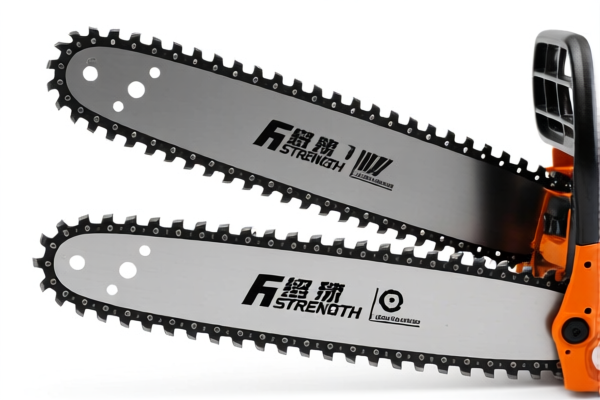
AI分析
🪚 Tall Branch Saw (High Reach Pruner / Pole Saw)
🌐 HS Code Classification & Customs Clearance Guide | 2026 Latest Tariff Analysis | Professional Compliance Strategy
📌 I. Product Definition: What is a "Tall Branch Saw"?
A Tall Branch Saw (often referred to as a Pole Saw, High Reach Pruner, or Long Handle Lopper) is a gardening and forestry hand tool designed for cutting branches at heights that are unreachable by the human arm.
In international trade, its classification depends heavily on power source and mechanism: * Manual Models: Hand-operated saws with extended poles. Classified under Chapter 82 (Tools, implements...). * Power-Assisted/Powered Models: Includes battery-powered, electric, or gas-powered pole chainsaws. Classified under Chapter 84 (Machinery...).
⚠️ Critical Distinction:
- If it is purely manual (hand-held saw blade on a pole) → Chapter 82.
- If it has an engine/motor (even if handheld/pole-mounted) → Chapter 84.
📦 II. HS Code Classification Details (2026 Latest Tariff对照)
Based on the provided data, here are the three possible classifications with their specific rationales:
| HS Code | Product Description | Application Scenario | Key Classification Logic |
|---|---|---|---|
8201.60.00.00 |
Pruners and Similar Hand Tools | Manual high-cutting pruners, loppers with long handles | Fits the definition of "Hand tools for gardening/forestry." Specifically categorized under "Pruners and similar hand scissors." |
8467.81.00.00 |
Tools for Working in the Reverse Direction (e.g., Chainsaws) | Battery/Electric/Gas-powered pole chainsaws or saws | Categorized as an extension of "Chainsaws." No material conflict. Classified under power tools/machinery for woodworking/forestry. |
8201.90.60.00 |
Other Hand Tools for Agriculture/Horticulture/Forestry | Manual saws that don't fit "pruners/scissors" exactly | Fits "Other hand tools for agriculture/horticulture/forestry." Assumes non-ferrous metal blade or general hand tool category if not strictly a scissor type. |
🔍 Key Takeaway:
- Manual Tools go to 8201.xxxxxx.
- Powered Tools (Chainsaw type) go to 8467.81.00.00.
- Misclassification between Chapter 82 (Hand Tools) and Chapter 84 (Machinery) is a common customs error.
💰 III. 2026 Tariff Rate Breakdown (Including Surcharges & Policy Add-ons)
✅ Applicable Country: United States (US)
✅ Origin: China (CN)
✅ Effective Date: 2025/2026 (Current Trade Policy)
🎯 1. 8201.60.00.00 —— Manual Pruners & Similar Hand Tools
| Item | Detail |
|---|---|
| Base Tariff | 1¢ each + 2.8% (Ad valorem + specific duty) |
| Section 301 Surcharge | +25.0% |
| Section 122 Surcharge | +10.0% |
| Total Effective Rate | 37.8% + 1¢/unit (Approximate, calculation varies by volume) |
| Legal Basis | USITC:8201.60.00.00 + Footnote:301-25 + IEEPA:122-10 |
📌 Explanation:
- This classification attracts the highest Section 301 surcharge (25%) because manual gardening tools are heavily targeted.
- The 1¢ per unit is a specific duty that adds up significantly for high-volume shipments.
- Total Tax Burden: High. The combination of ad valorem and specific duties makes this less cost-effective for low-value items.
🎯 2. 8467.81.00.00 —— Powered/Chainsaw-type Tools
| Item | Detail |
|---|---|
| Base Tariff | 0.0% |
| Section 301 Surcharge | +7.5% |
| Section 122 Surcharge | +10.0% |
| Total Effective Rate | 17.5% |
| Legal Basis | USITC:8467.81.00.00 + Footnote:301-7.5 + IEEPA:122-10 |
📌 Explanation:
- Lowest Total Tax Rate among the options.
- The base tariff is 0%, which significantly reduces the burden.
- Section 301 is only 7.5%, much lower than the 25% for manual tools.
- Ideal for: Battery-operated or electric pole saws. This is the most cost-effective classification for powered tools.
🎯 3. 8201.90.60.00 —— Other Hand Tools for Forestry/Gardening
| Item | Detail |
|---|---|
| Base Tariff | 0.0% |
| Section 301 Surcharge | +25.0% |
| Section 122 Surcharge | +10.0% |
| Total Effective Rate | 35.0% |
| Legal Basis | USITC:8201.90.60.00 + Footnote:301-25 + IEEPA:122-10 |
📌 Explanation:
- While the base tariff is 0%, the Section 301 surcharge is 25%, same as8201.60.00.00.
- Total rate (35%) is slightly lower than8201.60.00.00(which has the 1¢/unit fee), but still significantly higher than8467.81.00.00.
- Risk: Customs may challenge this if the product clearly fits "Pruners" (8201.60.00.00). Misclassification here can lead to penalties.
🛠️ IV. Customs Clearance Operational Advice
✅ 1. Document Preparation Checklist
| Document | Requirement | Note |
|---|---|---|
| Product Specification Sheet | ✔️ Mandatory | Clearly state: Manual vs. Powered, Blade Type, Pole Length, Weight. |
| Photos/Video | ✔️ Mandatory | Show the power source (battery, cord, gas engine) to prove Chapter 84 vs. 82. |
| Commercial Invoice | ✔️ Mandatory | Must specify "Tall Branch Saw" or "Pole Saw" with HS Code. |
| Power Supply Details | ✔️ Critical for 8467 |
Include voltage, wattage, battery type (Li-ion) for powered models. |
| Material Composition | ✔️ For 8201 |
Specify blade material (Steel, Carbon, etc.) to support Chapter 82 classification. |
✅ 2. Classification Strategy & Tips
🔥 "Manual is Chapter 82, Powered is Chapter 84. Choose Wisely!"
| Scenario | Recommended HS Code | Reason |
|---|---|---|
| Battery/Gas Pole Saw | 8467.81.00.00 |
Lowest Tax (17.5%). Categorized as a tool for working in reverse (chainsaw-like). |
| Manual High-Cut Pruner | 8201.60.00.00 |
Standard manual pruner. High tax (37.8%) due to 25% surcharge + specific duty. |
| Manual Saw (Non-Pruner) | 8201.90.60.00 |
If it doesn't look like a pruner/scissor. Tax 35%. Risk of audit if misclassified. |
⚠️ Warning:
- Do NOT classify a powered pole saw as a manual tool (8201.xxxx) to avoid higher duties. Customs checks for motors/batteries.
- Do NOT classify a manual pruner as8467.81.00.00(Machinery). It lacks mechanical power.
✅ 3. Special Circumstances & Risk Mitigation
| Situation | Handling Advice |
|---|---|
| OEM/Private Label | Provide client agreement to prove brand relationship. HS Code is based on product, not brand. |
| Battery-Powered | Ensure battery is properly packaged per IATA/UN38.3 if shipped via air. |
| High-Value Precision Tools | If the tool has precision bearings or specialized alloys, consider if 8201.90.60.00 is more accurate, but verify with customs broker. |
| Kit Sales (Saw + Pole) | Declare as a complete set. The main function (cutting) determines the HS Code. |
🌍 V. Global Market Comparison (2026)
| Country/Region | Recommended HS Code | Tariff (China Origin) | Notes |
|---|---|---|---|
| 🇺🇸 USA | 8467.81.00.00 (Powered) |
17.5% | Best option for powered tools. |
| 🇺🇸 USA | 8201.60.00.00 (Manual) |
37.8% | High duty. Consider sourcing from non-China countries for duty-free/low-duty access. |
| 🇪🇺 EU | 8201.60.00.00 (Manual) |
0-12% | Varies by specific subheading. No Section 301/122 equivalent. |
| 🇪🇺 EU | 8467.81.00.00 (Powered) |
0-6% | Generally lower duties than US. |
📌 Conclusion:
- US Market: Powered tools (8467.81.00.00) are significantly cheaper to import than manual tools due to lower Section 301 rates.
- Manual Tools: Face high tariffs (35-38%). Consider Duty Mitigation strategies (e.g., sourcing from Vietnam/Mexico if possible) for manual models.
📌 VI. Common Errors & Pitfalls (Lessons Learned)
❌ Error 1: Classifying a Battery Pole Saw as 8201.60.00.00 (Manual)
👉 Consequence: Customs may reject the entry, demand correct HS Code (8467), and impose penalties. Also, you might pay more if the manual rate is higher, or less if you underestimate, leading to audits.
❌ Error 2: Using "Garden Tool" as a generic description
👉 Consequence: Customs cannot determine the HS Code. Delay in clearance.
👉 Fix: Use "High Reach Pruner, Manual" or "12V Electric Pole Saw".
❌ Error 3: Ignoring the Section 122 (10%) surcharge
👉 Consequence: Underestimating landed cost. This 10% applies to almost all Chinese-origin goods in the US currently.
✅ Best Practice:
"For powered tall branch saws, use HS Code 8467.81.00.00. It offers the lowest total tax burden (17.5%) and avoids the high 25% Section 301 surcharge applied to manual tools."
🎯 VII. Conclusion: Professional Classification, Cost Savings!
🎯 Key Takeaway:
🔹 Powered Pole Saw → HS Code 8467.81.00.00 → 17.5% Total Tax (Best Option)
🔹 Manual Pruner → HS Code 8201.60.00.00 → 37.8% Total Tax (High Cost)🔹 "Don't let manual tools kill your margin. If it has a motor, use Chapter 84!"
📌 Pro Tip:
If you are importing manual tools (8201), consider:
1. Supplier Diversification: Source from Vietnam or Thailand to avoid China-specific tariffs (if applicable).
2. Duty Drawback: If re-exporting, investigate duty drawback programs.
3. Pre-Ruling: Apply for a US Customs Border Protection (CBP) Binding Ruling to confirm your HS Code choice before shipping.
📣 Immediate Action:
📞 Consult your freight forwarder or customs broker.
📄 Provide photos and specs (especially power source).
🚀 Choose8467.81.00.00for powered models to save 20% in duties!
✨ Smart Classification = Smart Savings!
💼 Every percentage point in duty is profit or loss.
用户评价
关于 HS 编码归类
协调制度(HS)是由世界海关组织(WCO)制定的国际贸易商品分类标准。全球 200 多个国家采用 HS 系统作为海关关税、贸易统计和进出口监管的基础。
每个 HS 编码遵循以下层级结构:
- 章(2 位)——商品大类(例如:第 84 章:机器和机械设备)
- 品目(4 位)——章内的更具体分类
- 子目(6 位)——国际通用细分,所有 WCO 成员国统一使用
- 本国细分(8-10 位)——各国自行扩展的细分编码,如美国 HTSUS 10 位编码
正确的 HS 编码归类对于顺利通关、准确缴纳关税和遵守贸易法规至关重要。错误归类可能导致海关延误、多缴关税或罚款。
从CN进口到US时,适用的关税税率可能包括:
- 最惠国(MFN)税率——适用于 WTO 成员国的标准关税税率
- 普通税率——适用于无贸易协定国家
- 贸易救济关税——附加关税,如 301 条款(反倾销)、232 条款(国家安全)或反补贴税
本页内容仅供参考。如需正式归类,请咨询当地海关或持牌报关代理。