Tea Bag Organizer
CN → US| HS编码 | 关税税率 | 原产国 | 目的国 | 文档 |
|---|---|---|---|---|
| 6912005000 | 16.0% | CN | US | 官方文档 |
| 7013492090 | 32.5% | CN | US | 官方文档 |
| 7310210075 | 85.0% | CN | US | 官方文档 |
| 7310290065 | 85.0% | CN | US | 官方文档 |
| 6912004890 | 19.8% | CN | US | 官方文档 |
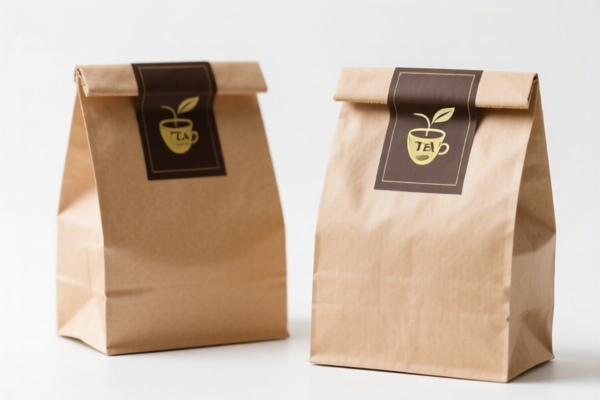
商品图片


AI分析
🍵 Tea Bag Organizer: Ultimate HS Code & Customs Clearance Guide (2026 Edition)
🌐 HS Code Classification & Duty Breakdown | Expert Trade Strategy for Tea Containers
Target Market: United States (US)
Origin: China (CN)
Status: High-Clearance Risk Alert for Steel vs. Ceramic/Glass
Welcome to the definitive guide for Tea Bag Organizers. In international trade, a simple "jar" can fall into drastically different tax brackets depending entirely on material composition. A $5 mistake in classification can lead to a 60% tax bill difference!
📦 I. Product Definition & Classification Logic
A Tea Bag Organizer is a storage vessel designed specifically for dry goods (tea leaves/bags). Its HS Code classification depends on the primary material: 1. Metal (Iron/Steel): If the container is made of iron or steel, it falls under Chapter 73. 2. Ceramic: If it is earthenware or porcelain, it falls under Chapter 69. 3. Glass: If it is made of glass, it falls under Chapter 70.
⚠️ Critical Distinction: * Steel Organizer: High risk due to Section 301 + 122 Clause (Up to 85% Total Duty). * Ceramic/Glass Organizer: Moderate risk (Base duty + 122 Clause ~ 16-24% Total Duty).
📋 II. HS Code Classification Matrix (Data-Based Analysis)
Based on the provided trade data, here is the breakdown of the 5 most probable classifications for Tea Bag Organizers:
| HS Code | Material Inference | Product Type & Usage | Total Duty Rate | Tax Breakdown (US-China) |
|---|---|---|---|---|
| 7310.29.00.65 | Iron / Steel | Metal containers, capacity < 50L. Ideal for tea storage. | 85.0% | Base: 0% Add-On: 25% (Section 301) 122 Clause: 10% (Steel/Al/Cu) + 50% (Specific Steel) |
| 6912.00.48.90 | Ceramic | Tableware/Kitchenware, Household items. | 19.8% | Base: 9.8% Add-On: 0% 122 Clause: 10% |
| 7013.49.60.90 | Glass | Kitchen/Dining Glassware (Catch-all category). | 24.7% | Base: 7.2% Add-On: 7.5% 122 Clause: 10% |
| 6912.00.50.00 | Ceramic (Non-Porcelain) | Kitchen utensils/Storage vessels (Household). | 16.0% | Base: 6.0% Add-On: 0% 122 Clause: 10% |
| 7013.49.20.90 | Glass | Storage vessels (Catch-all for glass containers). | 32.5% | Base: 22.5% Add-On: 0% 122 Clause: 10% |
🔍 Analysis Insight: * The "Steel Trap":
7310.29.00.65is the most dangerous classification. It includes a specific "122 Clause" surcharge of 50% on top of the 10% and 25% tariffs, skyrocketing the cost to 85%. * The "Safe Zone": Ceramic (6912) and Glass (7013) options generally keep the total duty under 33%.
💰 III. Deep Dive: Tax Clause Explanation (2026 Rules)
To understand why the tax difference is so massive, let's decode the 122 Clause and Section 301 terms:
🚨 1. Iron/Steel Container (7310.29.00.65) - The 85% Nightmare
- Base Tariff: 0% (Free trade agreement baseline or general rate).
- Section 301 (Add-on): +25.0% (Standard penalty on Chinese steel products).
- 122 Clause (Steel/Aluminum/Copper):
- 10% Base Surcharge: Applied to all steel/aluminum/copper imports.
- 50% "Specific Steel" Surcharge: An additional 50% penalty applied specifically to steel products under this clause (often related to national security or trade deficit measures).
- Math: $0\% + 25\% + 10\% + 50\% = \mathbf{85.0\%}$
🏺 2. Ceramic Container (6912.00.48.90 or 50.00) - The Cost-Effective Choice
- Base Tariff: 6.0% - 9.8% (Depending on specific ceramic type).
- Section 301 (Add-on): 0% (Ceramics are generally exempt from the 25% steel/tech surcharge).
- 122 Clause: +10% (Applied as a general surcharge on ceramics if applicable, but no extra 50% steel penalty).
- Math: $9.8\% + 0\% + 10\% = \mathbf{19.8\%}$ (or $6.0\% + 10\% = \mathbf{16.0\%}$)
🥛 3. Glass Container (7013.49.60.90 or 20.90) - Moderate Cost
- Base Tariff: 7.2% or 22.5% (Varies by specific glass product definition).
- Section 301 (Add-on): 0% or 7.5% (Glass may attract a specific add-on).
- 122 Clause: +10%.
- Math: $7.2\% + 7.5\% + 10\% = \mathbf{24.7\%}$ OR $22.5\% + 0\% + 10\% = \mathbf{32.5\%}$
🛠️ IV. Customs Clearance Strategy & Pitfalls
✅ 1. Material Verification (Crucial Step)
Before filing, you MUST confirm the material composition.
* Action: Provide a Bill of Materials (BOM) or a Product Spec Sheet clearly stating "100% Ceramic," "Tempered Glass," or "Stainless Steel."
* Risk: If you declare a steel jar as "Ceramic" to avoid the 85% tax, Customs will inspect. If they find traces of metal or the structure is clearly steel, you will face Severe Penalties and re-classification back to 7310.
✅ 2.申报技巧 (Declaration Tips)
- For Steel: Do NOT hide the material. If you must use steel, be prepared for the 85% duty. Consider if the profit margin can sustain this.
- For Ceramic/Glass: Ensure the description matches the "Catch-all" logic.
- Bad: "Jar for tea."
- Good: "Ceramic storage vessel, household use, non-porcelain, capacity < 5L."
✅ 3. Avoiding the "122 Clause" Traps
- The 122 Clause (often related to Section 301/232) is the biggest cost driver.
- Strategy: If the design allows, switch from Steel to Ceramic. The savings can be 65% of the product value (85% vs 20%).
🚀 V. Actionable Recommendations
| Scenario | Recommended HS Code | Total Duty | Strategic Advice |
|---|---|---|---|
| High-End Metal Jar | 7310.29.00.65 |
85.0% | ❌ Avoid unless the product value is very high or you have a tariff engineering solution (e.g., composite materials). |
| Mid-Range Ceramic | 6912.00.48.90 |
19.8% | ✅ Best Choice. Low tax, high perceived value. |
| Budget Glass | 7013.49.60.90 |
24.7% | ✅ Good Choice. Safe for glass items with no special glass duties. |
| Unspecified Storage | 6912.00.50.00 |
16.0% | ✅ Lowest Cost. If the item is clearly ceramic/non-porcelain. |
📝 Final Checklist for Shippers:
- Is it Metal? If YES → Expect 85% tax (
7310). - Is it Ceramic? If YES → Expect ~16-20% tax (
6912). - Is it Glass? If YES → Expect ~25-33% tax (
7013). - Documentation: Prepare Material Composition Reports immediately.
- Labeling: Ensure the label says "Ceramic" or "Glass" if that is the material, not "Storage Container" (ambiguous).
💡 Pro Tip: If you are importing Tea Bag Organizers, the Ceramic option (
6912.00.50.00at 16.0% or6912.00.48.90at 19.8%) is the most profitable route. Avoid Steel (7310) unless the brand premium justifies an 85% duty cost.
📌 Disclaimer: Tax rates and HS Codes are subject to change based on US Trade Policy (Section 301, 122 Clause). Always consult a licensed customs broker for the latest 2026 updates before shipping.
🚀 Ship Smart, Tax Less!
用户评价
关于 HS 编码归类
协调制度(HS)是由世界海关组织(WCO)制定的国际贸易商品分类标准。全球 200 多个国家采用 HS 系统作为海关关税、贸易统计和进出口监管的基础。
每个 HS 编码遵循以下层级结构:
- 章(2 位)——商品大类(例如:第 84 章:机器和机械设备)
- 品目(4 位)——章内的更具体分类
- 子目(6 位)——国际通用细分,所有 WCO 成员国统一使用
- 本国细分(8-10 位)——各国自行扩展的细分编码,如美国 HTSUS 10 位编码
正确的 HS 编码归类对于顺利通关、准确缴纳关税和遵守贸易法规至关重要。错误归类可能导致海关延误、多缴关税或罚款。
从CN进口到US时,适用的关税税率可能包括:
- 最惠国(MFN)税率——适用于 WTO 成员国的标准关税税率
- 普通税率——适用于无贸易协定国家
- 贸易救济关税——附加关税,如 301 条款(反倾销)、232 条款(国家安全)或反补贴税
本页内容仅供参考。如需正式归类,请咨询当地海关或持牌报关代理。