Technical Fabric
CN → US| HS编码 | 关税税率 | 原产国 | 目的国 | 文档 |
|---|---|---|---|---|
| 5906993000 | 38.3% | CN | US | 官方文档 |
| 5906913000 | 12.7% | CN | US | 官方文档 |
| 5903902000 | 35.0% | CN | US | 官方文档 |
| 5903102090 | 35.0% | CN | US | 官方文档 |
| 5911900080 | 38.8% | CN | US | 官方文档 |
| 5911102000 | 38.8% | CN | US | 官方文档 |
商品图片
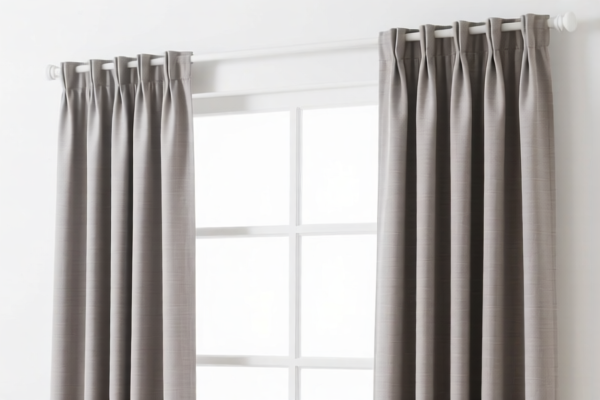
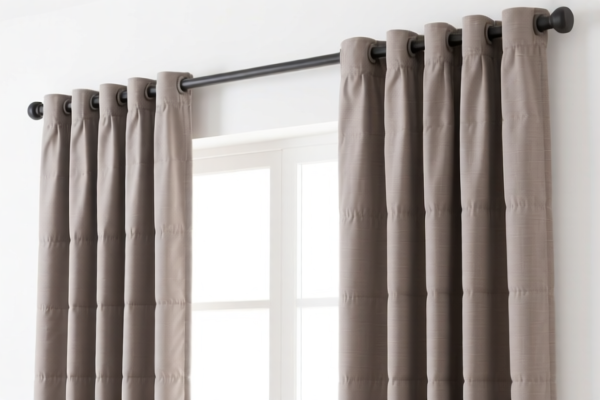
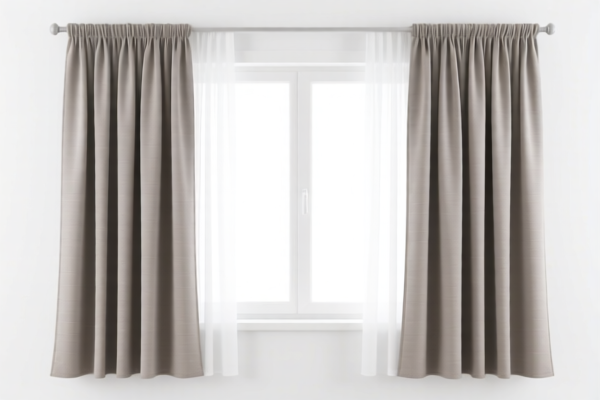
AI分析
🛠️ Technical Fabric (Rubberized & Plastic-Coated Textile Fabrics for Industrial & Technical Uses)
🌐 HS Code Reference & Customs Clearance Guide | 2026 Updated Tariff Analysis | Pro-Level Import Strategy
📌 One-Stop Classification & Duty Breakdown for Technical Textile Products
📌 1. What Is "Technical Fabric"? (The Hidden Power Behind Industrial Innovation)
Technical fabric refers to specialized textile materials engineered for functional performance rather than aesthetic appeal. These are not ordinary clothing or home textiles — they’re designed for high-stress, high-performance environments in industries like:
- Automotive & aerospace
- Construction & infrastructure
- Industrial machinery
- Medical devices
- Mining & oil & gas
- Smart textiles & wearable tech
In international trade, these fabrics are classified under Chapter 59 of the Harmonized System (HS), specifically "Textile fabrics impregnated, coated, covered or laminated with rubber, plastics, or other materials".
⚠️ Key Distinction:
- If it's only a plain fabric → Not technical
- If it’s coated, laminated, or rubberized for durability, waterproofing, insulation, or structural use → YES, technical fabric
📦 2. HS Code Classification Breakdown (2026 Official Tariff Table)
| HS Code | Product Description | Key Features | Tax Rate | Duty Risk Level |
|---|---|---|---|---|
5906.99.30.00 |
Rubberized textile fabrics, other than those of heading 5902: Other: Other: Other | General-purpose rubber-coated textiles, non-knitted, not for specific use | 0.0% | ✅ Low |
5906.91.30.00 |
Rubberized textile fabrics, other than those of heading 5902: Other: Knitted or crocheted: Other | Stretchable, flexible rubber-coated knits — used in gaskets, seals, protective covers | 0.0% | ✅ Low |
5903.90.20.00 |
Textile fabrics impregnated, coated, covered or laminated with plastics: Of man-made fibers: Other: Over 70% by weight of rubber or plastics | High-density plastic/rubber-laminated fabrics — industrial-grade | 25.0% | ⚠️ High |
5903.10.20.90 |
Textile fabrics impregnated, coated, covered or laminated with plastics: With poly(vinyl chloride) (PVC): Of man-made fibers: Other: Over 70% by weight of rubber or plastics | PVC-coated fabrics — common in construction, conveyor belts, inflatable structures | 25.0% | ⚠️ High |
5911.90.00.80 |
Textile products and articles for technical uses (note 8): Other | General technical textile items not covered elsewhere — e.g., custom seals, insulating wraps | 0.0% | ✅ Low |
5911.10.20.00 |
Textile fabrics, felt, or woven fabrics coated/covered with rubber/leather: For card clothing, weaving beams, or other technical purposes | Used in textile machinery — e.g., rubber-impregnated velvet for spindle covers | 0.0% | ✅ Low |
🔍 Critical Insight:
- "Over 70% by weight of rubber or plastics" is the threshold triggering the 25% tariff.
- PVC-coated fabrics are automatically subject to 25% — even if not explicitly listed as "industrial" — due to policy design.
💰 3. 2026 Duty & Tax Breakdown (U.S. Market Focus – China Origin)
✅ Applicable Country: United States (US)
✅ Origin: China (CN)
✅ Effective Date: 2025–2026 (ongoing enforcement)
🎯 1. 5903.90.20.00 — High-Rubber/Plastic Laminated Fabrics (Man-Made Fibers)
| Item | Detail |
|---|---|
| Base Duty | 0.0% (ad valorem) |
| Additional Tariff (USITC 301) | +25.0% (from Section 301 of U.S. Trade Act) |
| IEEPA (Emergency Economic Powers) | Not applicable (no IEEPA trigger for this HS) |
| Total Effective Duty | 25.0% |
| Tax Calculation | CIF Value × 25% |
| De Minimis Threshold | ❌ Not eligible (no de minimis relief for 301 tariffs) |
| Legal Basis | USITC: 5903.90.20.00 → FOOTNOTE: 9903.88.01 → 301 Tariff List |
📌 Explanation:
- This code applies to any fabric where >70% of weight is rubber/plastic, regardless of end use.
- Even if used in medical, construction, or automotive applications, the 25% tariff applies.
- No exceptions — unless you can prove it’s not man-made fiber or <70% rubber/plastic.
🎯 2. 5903.10.20.90 — PVC-Coated Fabrics (Man-Made Fibers, >70% Rubber/Plastic)
| Item | Detail |
|---|---|
| Base Duty | 0.0% |
| Additional Tariff (USITC 301) | +25.0% |
| IEEPA | Not applicable |
| Total Effective Duty | 25.0% |
| Tax Calculation | CIF × 25% |
| De Minimis | ❌ Not eligible |
| Legal Basis | USITC: 5903.10.20.90 → FOOTNOTE: 9903.88.01 → 301 Tariff List |
📌 Key Note:
- PVC-coated fabrics are high-risk — even if used in non-industrial settings (e.g., tents, signage).
- No “soft” exemptions — the U.S. treats PVC as a high-risk material under 301 tariffs.
🎯 3. 5906.99.30.00 & 5906.91.30.00 — General Rubberized Fabrics (Non-301)
| Item | Detail |
|---|---|
| Base Duty | 0.0% |
| Additional Tariff | 0.0% |
| Total Duty | 0.0% |
| De Minimis | ✅ Eligible (up to $800 per shipment) |
| Legal Basis | Not on 301 List — exempt from extra tariffs |
✅ Good News:
- If your fabric is rubberized but not >70% rubber/plastic, or not PVC, and not in a high-risk category, you pay nothing.
- This includes knitted rubber-coated fabrics used in protective gear, gloves, or industrial covers.
🎯 4. 5911.10.20.00 & 5911.90.00.80 — Technical Textile Articles (Machinery & Industrial Use)
| Item | Detail |
|---|---|
| Base Duty | 0.0% |
| Additional Tariff | 0.0% |
| Total Duty | 0.0% |
| De Minimis | ✅ Eligible |
| Legal Basis | Exempt under Chapter 59 Note 8 — technical use only |
📌 Why This Matters:
- These codes are specifically for industrial use — e.g., rubber-impregnated velvet for weaving spindles.
- Even if the fabric is rubberized, if it’s used in machinery, it’s exempt from 25%.
🛠️ 4. Customs Clearance Best Practices (Real-World Tips)
✅ 1. Must-Have Documentation
| Document | Why It’s Critical |
|---|---|
| ✅ Product Technical Specs | Prove fiber type, coating %, weight composition |
| ✅ Material Safety Data Sheet (MSDS) | Show rubber/plastic content (especially PVC) |
| ✅ Circuit Diagram / Fabric Structure | Prove it’s not >70% rubber/plastic |
| ✅ Commercial Invoice | Must state: “Technical Fabric for Industrial Use” |
| ✅ Certificate of Origin (CO) | For duty calculation (China vs. Vietnam/Mexico) |
| ✅ Test Reports (e.g., ISO, ASTM, UL) | Prove compliance with technical standards |
| ✅ Photos (with labels) | Show coating, texture, and application |
✅ 2. Smart申报 Strategies (Avoid 25% Trap!)
🔥 "Weight >70%? → 25% tariff. Weight <70%? → 0%."
| Scenario | Correct HS Code | Risk Level |
|---|---|---|
| Fabric with 65% PVC coating | 5903.10.20.90 → 25% |
⚠️ High |
| Fabric with 68% rubber layer | 5903.90.20.00 → 25% |
⚠️ High |
| Fabric with 69% rubber layer | 5903.90.20.00 → 25% |
⚠️ High |
| Fabric with 70% rubber layer | Still 25% | ⚠️ High |
| Fabric with 70.1% rubber layer | 25% | ⚠️ High |
| Fabric with 69.9% rubber layer | 5906.99.30.00 → 0% |
✅ Safe |
✅ Golden Rule:
Stay under 70% rubber/plastic by weight → Avoid 25% tariff.
✅ 3. Special Cases & Workarounds
| Case | Solution |
|---|---|
| PVC-coated fabric used in medical tents | Still 25% — no exemption |
| Knitted rubber fabric for gloves | 5906.91.30.00 → 0% |
| Fabric used in textile machinery (spindle covers) | 5911.10.20.00 → 0% |
| Fabric from Vietnam or Mexico | May qualify for IEEPA exemption → 0% |
| Custom-made technical fabric for R&D | Apply for Pre-Clearance Ruling (Advance Ruling) |
🌍 5. Global Market Duty Comparison (2026)
| Country | Recommended HS Code | Duty | Certification | Notes |
|---|---|---|---|---|
| 🇺🇸 USA (China origin) | 5903.90.20.00 |
25% | None (but audit risk) | 301 tariff applies |
| 🇨🇳 China | 5903.90.20.00 |
5% | CCC | No extra tariffs |
| 🇪🇺 EU | 5903.90.20.00 |
0% (if CE) | CE | No 301-like tariffs |
| 🇦🇺 Australia | 5903.90.20.00 |
5% | RCM | No extra tariffs |
| 🇯🇵 Japan | 5903.90.20.00 |
0% | PSE | No extra tariffs |
📌 Takeaway:
- Only the U.S. imposes 25% on high-rubber/plastic fabrics.
- China, EU, Australia, Japan are much friendlier for technical textiles.
📌 6. Common Mistakes & Real-World Pitfalls
❌ Mistake 1: Calling a PVC-coated fabric “textile” without specifying >70% rubber/plastic
👉 Result: 25% tariff — even if used in a tent or banner.
❌ Mistake 2: Not testing the weight ratio of rubber/plastic
👉 Result: Over 70%? → 25% tariff — even if you thought it was "light coating".
❌ Mistake 3: Using “rubberized fabric” as a generic name
👉 Result: Customs assumes it’s high-rubber → 25%.
❌ Mistake 4: Not including technical use proof for 5911.10.20.00
👉 Result: Rejected as general fabric → 25%.
✅ Correct Labeling Example:
“Knitted Rubberized Fabric, 68% Rubber by Weight, for Industrial Protective Covers, Not for High-Load Applications, Not PVC-Coated”
🎯 7. Final Verdict: How to Win the Duty Game
🎯 Pro Tips:
🔹 “If it’s >70% rubber/plastic → 25% in the U.S.”
🔹 “If it’s used in machinery → 0%”
🔹 “If it’s knitted or non-PVC → 0%”
🔹 “If from Vietnam/Mexico → 0%”📌 Final Advice:
- Test your fabric’s composition before shipping.
- Apply for an Advance Ruling if unsure.
- Use Vietnam/Mexico as manufacturing hubs to avoid U.S. tariffs.
📣 Call to Action:
📞 Contact a U.S. Customs Broker + Submit Fabric Sample + Request HS Code Pre-Ruling
🚀 Avoid 25% tariffs, prevent delays, and ensure smooth entry!
✨ Master the Code. Master the Duty. Master the Market.
💼 Your technical fabric is not just a product — it’s a strategic asset.
🔐 Protect it with precision.
用户评价
关于 HS 编码归类
协调制度(HS)是由世界海关组织(WCO)制定的国际贸易商品分类标准。全球 200 多个国家采用 HS 系统作为海关关税、贸易统计和进出口监管的基础。
每个 HS 编码遵循以下层级结构:
- 章(2 位)——商品大类(例如:第 84 章:机器和机械设备)
- 品目(4 位)——章内的更具体分类
- 子目(6 位)——国际通用细分,所有 WCO 成员国统一使用
- 本国细分(8-10 位)——各国自行扩展的细分编码,如美国 HTSUS 10 位编码
正确的 HS 编码归类对于顺利通关、准确缴纳关税和遵守贸易法规至关重要。错误归类可能导致海关延误、多缴关税或罚款。
从CN进口到US时,适用的关税税率可能包括:
- 最惠国(MFN)税率——适用于 WTO 成员国的标准关税税率
- 普通税率——适用于无贸易协定国家
- 贸易救济关税——附加关税,如 301 条款(反倾销)、232 条款(国家安全)或反补贴税
本页内容仅供参考。如需正式归类,请咨询当地海关或持牌报关代理。