Temperature Sensor
CN → US| HS编码 | 关税税率 | 原产国 | 目的国 | 文档 |
|---|---|---|---|---|
| 9032896040 | 36.7% | CN | US | 官方文档 |
| 9025801000 | 36.7% | CN | US | 官方文档 |
| 9025198060 | 35.0% | CN | US | 官方文档 |
| 9018199550 | 35.0% | CN | US | 官方文档 |
| 9018194000 | 35.0% | CN | US | 官方文档 |
商品图片
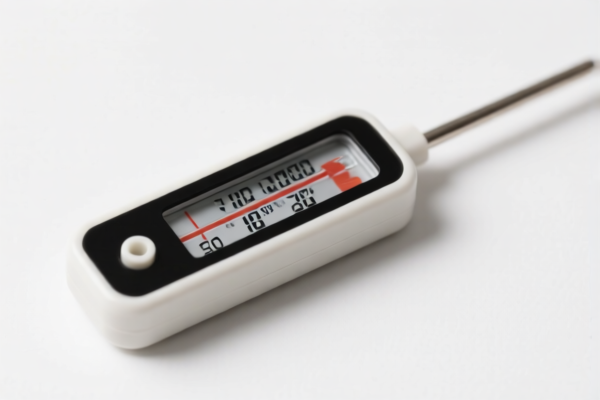
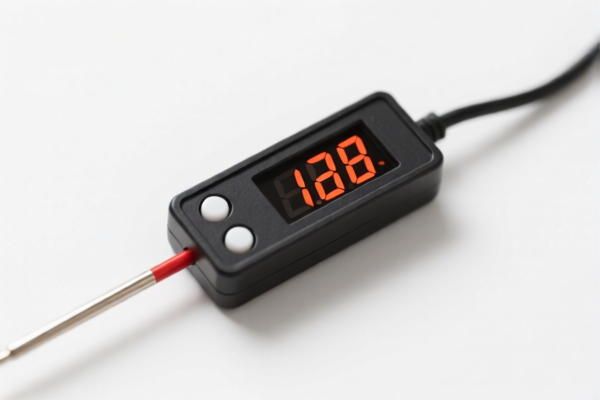
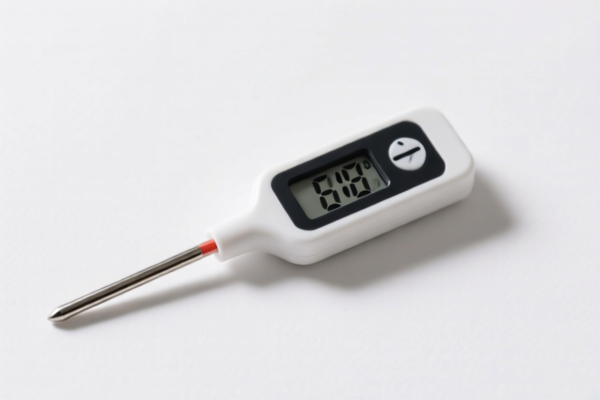
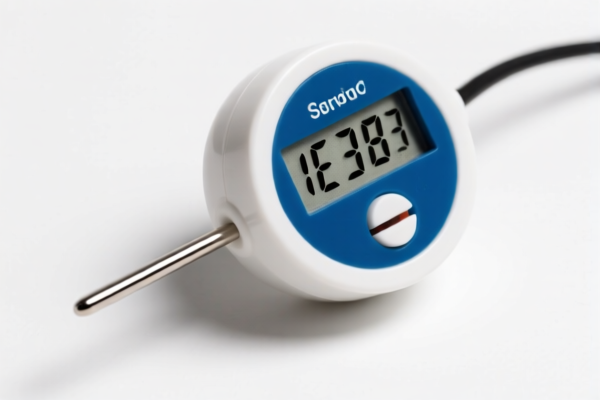
AI分析
🌡️ Temperature Sensors & Thermometers: Global Customs Classification & Duty Optimization Guide (2026)
🌐 HS Code Reference & Clearance Strategy | Latest 2026 Tariff Analysis | Professional Clearance Guidelines
📌 I. Product Definition & Classification: What Exactly Are You Declaring?
Temperature Sensors are critical components used to detect and measure thermal energy. In international trade, they are broadly categorized based on their application, functionality, and integration level.
Key Distinction Criteria: 1. Industrial Control Sensors: Used for monitoring and regulating temperature in machinery, HVAC, or manufacturing processes. 2. Medical/Scientific Thermometers: Used for direct human body temperature measurement or laboratory experiments. 3. Diagnostic Equipment: Integrated into larger medical devices for physiological parameter monitoring.
⚠️ Critical Classification Point:
- If the device is a standalone sensor for industrial control → Likely 9032.89.60
- If it is a general-purpose thermometer for electrical/scientific use → Likely 9025.80.10 or 9025.19.80
- If it is a medical diagnostic tool (e.g., clinical thermometer) → Likely 9018.19.95 or 9018.19.40
📦 II. HS Code Classification Matrix (Source Data Analysis)
Based on the provided data, here are the 5 possible HS Codes for "Temperature Sensors" with their specific tax implications and summaries.
| HS Code | Product Summary | Application Context | Total Tax Rate |
|---|---|---|---|
9032.89.60.40 |
Temperature Sensor matching attributes for temperature control instruments. No material conflict. | Industrial automation, HVAC control systems, machinery monitoring. | 36.7% |
9025.80.10.00 |
Temperature Sensor corresponding to thermometer usage, fitting electrical sensor characteristics. | General scientific instruments, electrical monitoring devices. | 36.7% |
9025.19.80.60 |
Temperature Sensor falling under temperature measurement category, adhering to the "catch-all" principle. | Generic temperature measurement tools not specified elsewhere. | 35.0% |
9018.19.95.50 |
Thermometer classified as an electro-diagnostic device, fitting medical use. | Clinical thermometers, hospital-grade monitoring devices. | 35.0% |
9018.19.40.00 |
Thermometer classified as physiological parameter check equipment in medical/scientific fields. | Medical diagnostics, scientific research devices for human/animal physiology. | 35.0% |
🔍 Key Insight:
- The Highest Tax Rate (36.7%) applies to general industrial/scientific sensors (9032and9025chapters).
- The Lower Tax Rate (35.0%) applies if the device can be classified as a medical or scientific diagnostic tool (9018chapter).
- Note: All listed rates include significant surcharges due to current trade policies (see Section III).
💰 III. 2026 Tariff Rate Breakdown (Detailed Tax Clause Explanation)
✅ Applicable Country: United States (US)
✅ Origin: China (CN) (Inferred from tax details)
✅ Effective Date: Current trade policy applies
🎯 1. Industrial & General Scientific Sensors (9032.89.60.40 & 9025.80.10.00)
| Tax Component | Rate | Legal Basis / Explanation |
|---|---|---|
| Base Duty | 1.7% | Standard MFN (Most Favored Nation) duty for Chapter 90 instruments. |
| Section 301 Tariff | 25.0% | Additional duty on Chinese goods under US Trade Law Section 301. |
| Section 122 Tariff | 10.0% | Additional duty under Section 122 (national security/emergency powers) for specific Chinese imports. |
| Total Effective Tax | 36.7% | Sum of all applicable duties. |
📌 Explanation:
- These classifications are treated as standard industrial/scientific goods.
- They are not exempt from Section 301 or Section 122 duties.
- Cost Impact: For every $1,000 CIF value, expect ~$367 in duties.
🎯 2. Temperature Measurement & Medical/Scientific Devices (9025.19.80.60, 9018.19.95.50, 9018.19.40.00)
| Tax Component | Rate | Legal Basis / Explanation |
|---|---|---|
| Base Duty | 0.0% | These subheadings often have lower base duties for specific diagnostic/measurement tools. |
| Section 301 Tariff | 25.0% | Still subject to Section 301 additional duty on Chinese goods. |
| Section 122 Tariff | 10.0% | Still subject to Section 122 additional duty. |
| Total Effective Tax | 35.0% | Sum of all applicable duties. |
📌 Explanation:
- The 0% Base Duty makes these options 1.7% cheaper than industrial sensors.
- However, they are still subject to the 25% + 10% surcharges.
- Strategic Advantage: If your product fits the medical/scientific diagnostic criteria, you save 1.7% on the base value.
🛠️ IV. Customs Clearance Best Practices & Recommendations
✅ 1. Documentation Checklist (Must-Have for Smooth Clearance)
| Document | Requirement | Purpose |
|---|---|---|
| Product Specification Sheet | ✔️ Mandatory | Clearly state: Type (Sensor/Thermometer), Range, Accuracy, Output Signal, Intended Use. |
| Technical Diagrams | ✔️ Strongly Recommended | Proves if the device is for industrial control (9032/9025) or medical diagnosis (9018). |
| Medical Device License (if applicable) | ✔️ If claiming 9018 | FDA registration number or equivalent to justify medical classification. |
| Commercial Invoice | ✔️ Mandatory | Must accurately describe the product using the HS Code description. |
| Country of Origin Certificate | ✔️ Mandatory | To determine applicability of Section 301/122 duties. |
✅ 2. Classification Strategy: How to Choose the Right HS Code?
| Scenario | Recommended HS Code | Why? |
|---|---|---|
| Industrial Automation Sensor (e.g., for factory machines) | 9032.89.60.40 |
Fits "temperature control instrument" attribute perfectly. |
| General Lab Thermometer (electrical, non-medical) | 9025.80.10.00 |
Best fit for "electrical sensor characteristics." |
| Generic Temperature Measurement Tool | 9025.19.80.60 |
Safe "catch-all" if specific use isn't clear. |
| Clinical/Medical Thermometer | 9018.19.95.50 |
Classified as "electro-diagnostic device" for medical use. |
| Scientific Physiological Monitor | 9018.19.40.00 |
For devices checking human/animal physiological parameters. |
💡 Pro Tip:
- If your sensor is also used in medical settings, consider declaring it under 9018 to save the 1.7% base duty.
- However, you must provide strong evidence (e.g., FDA approval, medical marketing materials) to justify the medical classification. Otherwise, customs may reclassify it to 9032/9025 and issue a penalty.
✅ 3. Common Clearance Pitfalls to Avoid
❌ Pitfall 1: Vague Description ("Temperature Sensor")
👉 Risk: Customs may assign the highest possible duty or request additional documentation.
✅ Solution: Use precise descriptions like "Industrial Temperature Control Sensor, Model XYZ, Range -50°C to 150°C."
❌ Pitfall 2: Misclassifying Medical Sensors as Industrial
👉 Risk: Missed savings (1.7%) and potential compliance issues if FDA records don't match.
✅ Solution: Align your commercial invoices and product labels with the chosen HS Code.
❌ Pitfall 3: Ignoring Section 122 Tariffs
👉 Risk: Unexpected costs at customs.
✅ Solution: Factor in the 10% Section 122 duty in your cost calculations for all Chinese-origin temperature sensors.
🌍 V. Global Market Comparison (2026)
| Market | Recommended HS Code | Estimated Total Duty | Key Requirement |
|---|---|---|---|
| 🇺🇸 USA | 9032.89.60.40 / 9025.80.10.00 |
36.7% | Section 301 & 122 apply. |
| 🇨🇳 China | 9032.89.60.40 / 9025.80.10.00 |
1.7% - 3.5% | No additional surcharges. |
| 🇪🇺 EU | 9025.80.10.00 |
0% - 2.5% | CE Marking required. |
| 🇯🇵 Japan | 9025.80.10.00 |
1.5% - 3.0% | PSE Certification for electrical devices. |
📌 Conclusion:
- The USA is the most expensive market due to Section 301 (25%) and Section 122 (10%) duties.
- Cost Optimization: If possible, classify products under 9018 (Medical/Scientific) to save 1.7% on the base duty.
- Documentation is Key: Accurate product descriptions and supporting technical documents are essential to avoid reclassification and penalties.
📌 VI. Final Recommendations for Exporters
- Pre-Classification Ruling: Apply for an HTSUS Ruling from U.S. Customs and Border Protection (CBP) if your product straddles industrial and medical categories.
- Supply Chain Diversification: Consider sourcing or assembling in non-China countries if possible to avoid Section 301/122 duties.
- Accurate Invoicing: Ensure your commercial invoice explicitly states the intended use (e.g., "For Medical Diagnostic Use") to support the lower-tax HS Code if applicable.
- Compliance Audit: Regularly review product specifications and HS Code classifications to ensure alignment with current trade policies.
🎯 Remember:
🔹 "HS Code defines your duty rate."
🔹 "Accurate description saves thousands."
🔹 "Medical classification saves 1.7% base duty."
📣 Take Action Today:
📞 Consult a licensed customs broker for a Pre-Shipment Ruling.
📄 Prepare comprehensive product documentation.
🚀 Streamline your clearance process and optimize costs!
✨ Professional Customs Clearance Starts with Precision!
💼 Your Profit Margin Depends on Correct Classification!
用户评价
关于 HS 编码归类
协调制度(HS)是由世界海关组织(WCO)制定的国际贸易商品分类标准。全球 200 多个国家采用 HS 系统作为海关关税、贸易统计和进出口监管的基础。
每个 HS 编码遵循以下层级结构:
- 章(2 位)——商品大类(例如:第 84 章:机器和机械设备)
- 品目(4 位)——章内的更具体分类
- 子目(6 位)——国际通用细分,所有 WCO 成员国统一使用
- 本国细分(8-10 位)——各国自行扩展的细分编码,如美国 HTSUS 10 位编码
正确的 HS 编码归类对于顺利通关、准确缴纳关税和遵守贸易法规至关重要。错误归类可能导致海关延误、多缴关税或罚款。
从CN进口到US时,适用的关税税率可能包括:
- 最惠国(MFN)税率——适用于 WTO 成员国的标准关税税率
- 普通税率——适用于无贸易协定国家
- 贸易救济关税——附加关税,如 301 条款(反倾销)、232 条款(国家安全)或反补贴税
本页内容仅供参考。如需正式归类,请咨询当地海关或持牌报关代理。