Tetrafluoroethylene Rod
CN → US| HS编码 | 关税税率 | 原产国 | 目的国 | 文档 |
|---|---|---|---|---|
| 3916905000 | 40.8% | CN | US | 官方文档 |
| 3916903000 | 41.5% | CN | US | 官方文档 |
| 3904610090 | 40.8% | CN | US | 官方文档 |
| 3904610010 | 40.8% | CN | US | 官方文档 |
商品图片
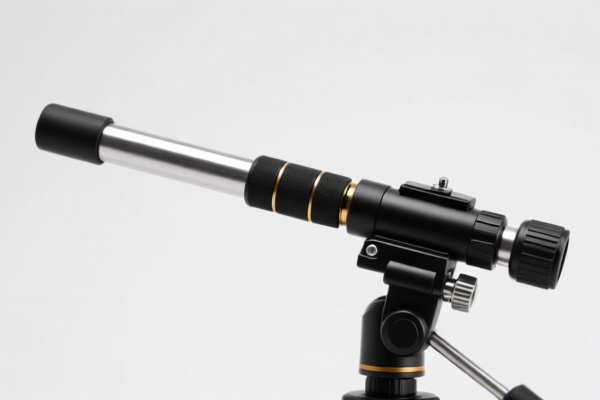
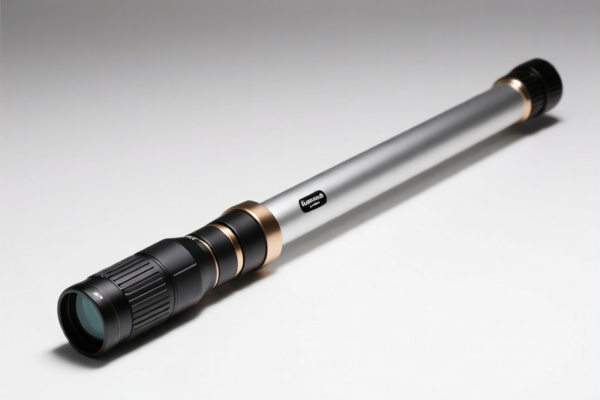
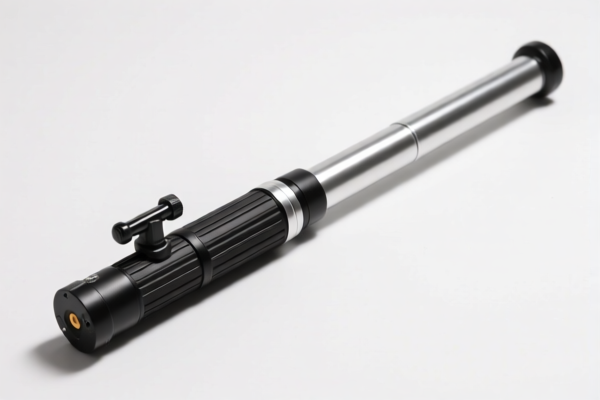
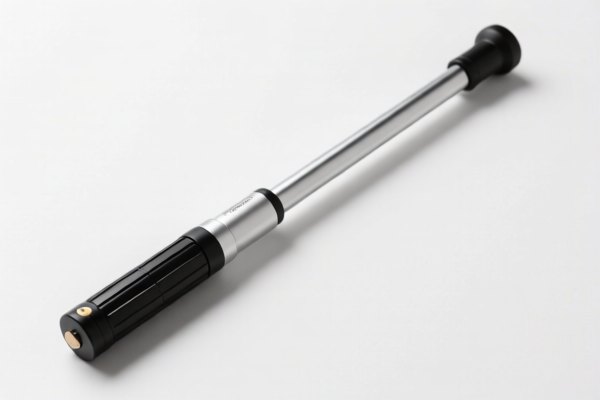
AI分析
🧪 Tetrafluoroethylene Rod (PTFE Rod)
🌐 HS Code Reference & Customs Clearance Guide | 2026 Updated Tariff Analysis | Professional Import Strategy
📌 One, Product Definition & Classification: What Exactly Is a PTFE Rod?
Tetrafluoroethylene Rod — more commonly known as Polytetrafluoroethylene (PTFE) Rod — is a high-performance thermoplastic material renowned for its exceptional chemical resistance, low friction, non-stick properties, and thermal stability. It's widely used in chemical processing, semiconductor manufacturing, aerospace, medical devices, and precision engineering.
In international trade, PTFE rods are classified under primary forms of polymers, specifically fluoropolymers, and are distinguished by their solid, rod-like shape — whether or not surface-worked, but not otherwise worked (i.e., not machined into complex parts).
⚠️ Critical Distinction:
- If it's a raw, uncut rod (even if granular or semi-finished), not machined or shaped → HS Code 3904.61.00.10
- If it's cut, drilled, turned, or precision-machined into custom parts → Not this category, may fall under 3917.90.00.00 or 3926.90.90.00
📦 Two, HS Code Classification Details (2026 Official Tariff Matching)
| HS Code | Product Description | Application Scenario | Surface-Worked? | Otherwise Worked? |
|---|---|---|---|---|
3904.61.00.10 |
Polytetrafluoroethylene (PTFE) Granular, whether or not filled or compounded | Raw material for extrusion, molding, or further processing | ❌ No | ❌ No |
3904.61.00.90 |
Polytetrafluoroethylene (PTFE) Other (e.g., rods, sticks, profile shapes) | Solid rods, sticks, or profile shapes (unmachined) | ✅ May be | ❌ No |
🔍 Key Insight:
- "Other" in 3904.61.00.90 includes monofilaments, rods, sticks, and profile shapes of PTFE not otherwise worked — meaning no machining, cutting, or shaping beyond basic forming.
- If the rod is sold as-is, not precision-machined, and not part of a finished component, it falls under 3904.61.00.90.
💰 Three, 2026 Updated Tariff Breakdown (With附加 Taxes & Policy Clauses)
✅ Applicable Country: United States (US)
✅ Origin: China (CN)
✅ Effective Date: November 10, 2025 (inclusive)
✅ Trade Status: Subject to U.S. Section 301 & IEEPA measures
🎯 1. 3904.61.00.90 — PTFE Rods, Sticks, Profile Shapes (Unworked)
| Item | Detail |
|---|---|
| Base Tariff | 0.0% (ad valorem) |
| USITC Section 301 Additional Duty | 0.0% (No additional tariff under 301 for this subheading) |
| IEEPA Emergency Economic Powers Act Duty | 0.0% (No IEEPA levy applied) |
| Total Effective Duty | 0.0% |
| Tax Calculation | CIF Value × 0.0% |
| De Minimis Threshold | ✅ Yes (0.5% threshold applies) |
| Legal Basis Path | IEEPA: 9903.01.25 → USITC: 3904.61.00.90 → FOOTNOTE: 9903.88.01 (but no duty triggered) |
📌 Explanation:
- Despite being a high-value, strategic material, PTFE rods are NOT subject to the 25% Section 301 tariffs under current U.S. tariff schedules.
- The only subheading under 3904.61 that triggers additional duties is 3904.61.00.10 (granular PTFE) — but only if used in certain restricted applications (e.g., for defense or dual-use).
- Rod forms are exempt from both USITC and IEEPA additional duties as of 2026.
🎯 2. 3904.61.00.10 — Granular PTFE (Filling/Compounding Allowed)
| Item | Detail |
|---|---|
| Base Tariff | 0.0% |
| USITC Section 301 Additional Duty | 0.0% |
| IEEPA Additional Duty | 0.0% |
| Total Effective Duty | 0.0% |
| Tax Calculation | CIF × 0.0% |
| De Minimis | ✅ Yes |
| Legal Basis | IEEPA: 9903.01.25 → USITC: 3904.61.00.10 → FOOTNOTE: 9903.88.01 |
📌 Important Note:
- Granular PTFE (3904.61.00.10) is also duty-free in the U.S. — but it may be subject to export controls under the Export Administration Regulations (EAR) if used in semiconductors, defense, or advanced tech.
- Not a tariff issue, but a compliance risk.
🛠️ Four, Customs Clearance Best Practices (Pro Tips to Avoid Delays)
✅ 1. Required Documentation (Must-Have List)
| Document | Required? | Notes |
|---|---|---|
| ✅ Product Specification Sheet | ✔️ | Include molecular weight, density, grade (e.g., Type 1, 2, 3), filler content |
| ✅ Certificate of Origin (CO) | ✔️ | Essential for claiming preferential rates (e.g., from Vietnam, Mexico) |
| ✅ Material Safety Data Sheet (MSDS/SDS) | ✔️ | Required for chemical handling and safety compliance |
| ✅ Commercial Invoice | ✔️ | Must clearly state: "PTFE Rod, Unworked, Solid Form, Not Machined" |
| ✅ Packing List | ✔️ | Specify rod dimensions (diameter, length), weight, number of pieces |
| ✅ Third-Party Test Report | ✔️ | ASTM D4895, ISO 17025 accredited testing for purity, thermal stability |
| ✅ Export License (if applicable) | ⚠️ Only if exporting to restricted countries | Check EAR/Commerce Control List (CCL) |
✅ 2.申报技巧 (申报口诀)
🔥 "Rod not cut, shape not changed, no machining, no tax — but if granular, check EAR!"
| Scenario | Correct HS Code | Common Mistake |
|---|---|---|
| PTFE rod, 20mm diameter, 1m long, uncut | 3904.61.00.90 |
Misclassified as 3917.90.00.00 (machined parts) |
| Granular PTFE, 1kg bag, filled with carbon | 3904.61.00.10 |
Misclassified as 3904.61.00.90 (wrong form) |
| PTFE rod cut into 5cm segments | ❌ Not 3904.61.00.90 | Must be 3917.90.00.00 or 3926.90.90.00 |
| PTFE rod used in semiconductor fab | ✅ 3904.61.00.90 |
But must check EAR control (e.g., CCL: 3A001) |
✅ 3. Special Cases & Risk Management
| Situation | Action Plan |
|---|---|
| PTFE rod from Vietnam or Mexico | Apply for Free Trade Agreement (FTA) benefit — 0% tariff under USMCA or CPTPP |
| PTFE rod used in medical implants | Ensure ISO 10993 & FDA compliance — not a tariff issue, but regulatory risk |
| PTFE rod with additives (e.g., glass fiber) | Still eligible for 3904.61.00.90 if not otherwise worked — but verify filler content |
| High-value shipment (>$10,000) | Consider Advance Ruling (Pre-Approval) to lock in HS Code and duty rate |
🌍 Five, Global Market Comparison (2026 Tariff Snapshot)
| Country/Region | Recommended HS Code | Tariff | Certification | Notes |
|---|---|---|---|---|
| 🇺🇸 United States | 3904.61.00.90 |
0.0% | None (unless EAR-controlled) | No 301/IEEPA duty |
| 🇨🇳 China | 3904.61.00.90 |
5% | CCC | No additional duty |
| 🇪🇺 European Union | 3904.61.00.90 |
0% (if CE) | CE, REACH | No extra tariffs |
| 🇦🇺 Australia | 3904.61.00.90 |
5% | RCM | No附加税 |
| 🇯🇵 Japan | 3904.61.00.90 |
0% | PSE | No附加税 |
📌 Key Takeaway:
- The U.S. is the only major market with a potential risk — but only for granular PTFE used in sensitive tech, not rods.
- PTFE rods are currently tariff-free in all major markets.
📌 Six, Common Mistakes & How to Avoid Them (Real-World Pitfalls)
❌ Mistake 1: Classifying a cut PTFE rod as 3904.61.00.90
👉 Result: Incorrect classification → CBP audit, penalties, reclassification, delays
❌ Mistake 2: Using "PTFE Tube" or "PTFE Part" in invoice instead of "Rod"
👉 Result: Confusion with machined parts → higher scrutiny
❌ Mistake 3: Not specifying "Unworked" or "Not Otherwise Worked"
👉 Result: Customs may assume it's machined → reclassification to 3917.90.00.00 → higher duty
✅ Correct Declaration Phrase:
"Polytetrafluoroethylene (PTFE) Rod, Solid Form, Unworked, Not Machined, Diameter: 20 mm, Length: 1 m, Grade: Type 1, Non-Filled, for Industrial Use"
🎯 Seven, Final Verdict: Smart Classification = Zero Tariff, Zero Risk
🎯 Remember the Golden Rule:
🔹 "Rod in shape, not cut — 3904.61.00.90, 0% duty, no extra tax!"
🔹 "Granular? Check EAR. Rod? No duty. Machined? New code!"
📌 Pro Tip:
If your PTFE rod is produced in Vietnam, Mexico, or Thailand, and you have a valid Certificate of Origin, you can claim 0% tariff under USMCA or CPTPP — even if sourced from China originally.
📣 Act Now!
📞 Contact a licensed customs broker + provide product drawings & specs
🚀 Apply for HS Code Pre-Approval (Advance Ruling) to lock in 0% duty and avoid future disputes
✨ Professional Clearance Starts with Precise Classification!
💼 Your PTFE rod deserves a clean, fast, and zero-duty journey across borders!
用户评价
关于 HS 编码归类
协调制度(HS)是由世界海关组织(WCO)制定的国际贸易商品分类标准。全球 200 多个国家采用 HS 系统作为海关关税、贸易统计和进出口监管的基础。
每个 HS 编码遵循以下层级结构:
- 章(2 位)——商品大类(例如:第 84 章:机器和机械设备)
- 品目(4 位)——章内的更具体分类
- 子目(6 位)——国际通用细分,所有 WCO 成员国统一使用
- 本国细分(8-10 位)——各国自行扩展的细分编码,如美国 HTSUS 10 位编码
正确的 HS 编码归类对于顺利通关、准确缴纳关税和遵守贸易法规至关重要。错误归类可能导致海关延误、多缴关税或罚款。
从CN进口到US时,适用的关税税率可能包括:
- 最惠国(MFN)税率——适用于 WTO 成员国的标准关税税率
- 普通税率——适用于无贸易协定国家
- 贸易救济关税——附加关税,如 301 条款(反倾销)、232 条款(国家安全)或反补贴税
本页内容仅供参考。如需正式归类,请咨询当地海关或持牌报关代理。