Textile Composite Plastic Board (for Automotive Interior)
CN → US| HS编码 | 关税税率 | 原产国 | 目的国 | 文档 |
|---|---|---|---|---|
| 9403708015 | 10.0% | CN | US | 官方文档 |
| 3926305000 | 22.8% | CN | US | 官方文档 |
| 9403704015 | 35.0% | CN | US | 官方文档 |
| 3921901100 | 39.2% | CN | US | 官方文档 |
| 5903102090 | 35.0% | CN | US | 官方文档 |
商品图片
AI分析
🚗 Textile Composite Plastic Board (for Automotive Interior)
🌐 HS Code Reference & Customs Clearance Guide | 2026 Latest Tariff Analysis | Professional Entry Strategy
📌 One, Product Definition and Classification: What Exactly is This Product?
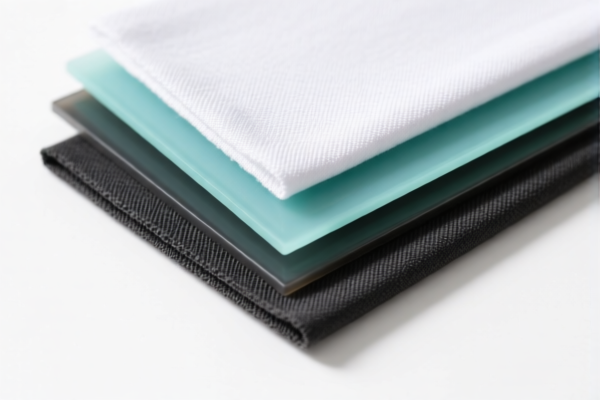
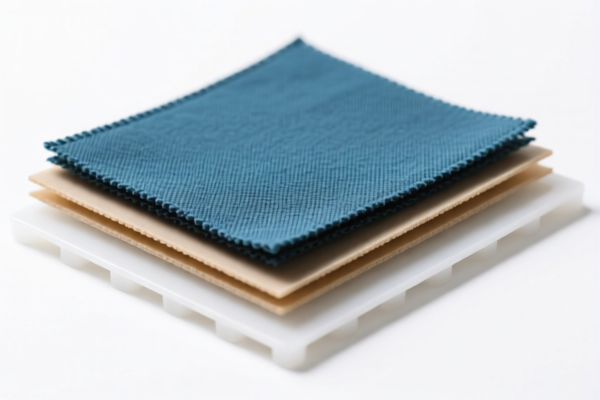
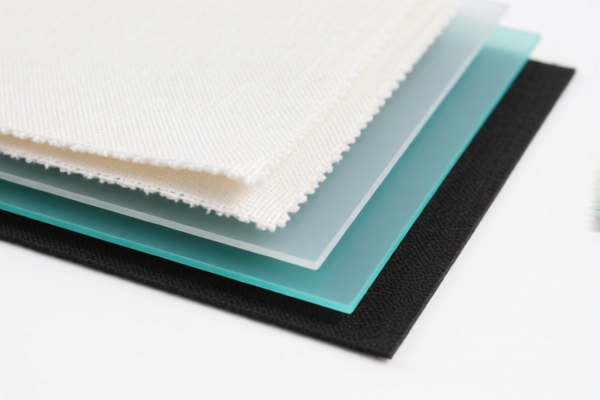
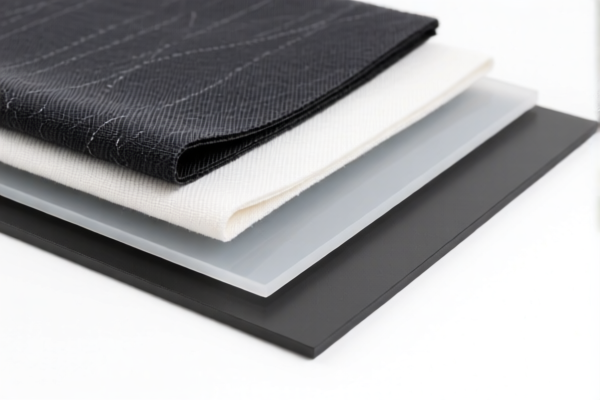
A "Textile Composite Plastic Board" for automotive interiors typically refers to materials formed by laminating, impregnating, or coating plastic (such as PVC, PE, or PP) with textile fabrics. These boards are used for door panels, ceiling headliners, trunk liners, and dashboard substrates.
In international trade, the classification depends heavily on the primary character of the composite material: * Plastic-Dominated: If the plastic provides the essential character (structural integrity, waterproofing), it falls under Chapter 39 (Plastics). * Textile-Dominated: If the fabric provides the essential character (surface finish, acoustic properties, structural base), it may fall under Chapter 59 (Textile Impregnated/Coated). * Furniture vs. Auto Parts: While intended for automotive use, the material form (Board/Sheet) often dictates classification under "Other Plastic Articles" or "Composite Textiles" rather than specific automotive parts, unless pre-formed into a specific vehicle part.
⚠️ Key Distinction Point:
- If the product is a rigid board with a plastic core and textile surface → Likely 3926 or 3921.
- If the product is a flexible sheet where plastic is coated onto textile → Likely 5903.
- If considered a component of plastic furniture/structure → Likely 9403.
📦 Two. HS Code Classification Details (2026 Latest Tariff Authority Comparison)
| HS Code | Product Description | Application Scenario | Classification Logic |
|---|---|---|---|
9403.70.80.15 |
Other furniture, of plastic; Other parts of plastic furniture | Plastic furniture components, structural boards for seating/storage | ✅ Furniture Component Logic: Interpreted as a "part/component" of plastic furniture due to "Furniture Board" naming. |
3926.30.50.00 |
Other articles of plastics: Other | Plastic articles for furniture fittings, decorative boards, general plastic components | ✅ General Plastic Article: "Other" category for plastic items with furniture-like utility but no specific sub-heading. |
9403.70.40.15 |
Other furniture, of plastic; Other | Plastic furniture parts, reinforced/laminated plastic boards | ✅ Reinforced Plastic Furniture: Specifically covers "reinforced or laminated plastic" used in furniture structures. |
3921.90.11.00 |
Other plates, sheets, film, foil and strip, of plastics | Composite plastic/textile boards (no specific weight/gauge given), general composite sheets | ✅ Composite Sheet: Falls under "Other" plates/sheets of plastics, assuming no conflict with textile-specific chapters. |
5903.10.20.90 |
Textile fabrics impregnated, coated, covered or laminated with plastics | Textile-based composite boards (plastic-coated fabric), advertising boards, interior trim | ✅ Textile Composite: Focuses on the "Textile Composite" aspect, where plastic is the coating/lamination on textile fabric. |
🔍 Critical Reminder:
- Material Dominance is Key: If the plastic layer is thicker/more significant structurally → 3921/3926.
- If the textile layer defines the surface and structure → 5903.
- Furniture vs. Auto: Even if for "Automotive Interior," if the product is a generic board/sheet, customs often classify it under Plastic Articles (Ch 39) or Textile Composites (Ch 59) rather than Auto Parts (Ch 87) or Furniture (Ch 94), unless it is a finished part. However, the provided data suggests a Furniture Component or General Plastic/Textile interpretation.
💰 Three. 2026 Latest Tariff Rate Breakdown (Including Surtaxes, Policy Add-ons)
✅ Applicable Country: United States (US)
✅ Origin: China (CN)
✅ Effective Date: From November 10, 2025 (including subsequent imports)
🎯 1. 9403.70.80.15 — Other Furniture, of Plastic; Other Parts
| Item | Content |
|---|---|
| Base Duty Rate | 0% (ad valorem) |
| Section 301 Surtax | +25% (From USITC Footnote 9903.88.01 / Section 301 List 3/4) |
| IEEPA Surtax | +10% (Targeting China/HK products, effective from Nov 10, 2025) |
| Total Rate | 35.0% |
| Tax Calculation | CIF Value × 35.0% |
| De Minimis Exemption | ❌ Not Eligible (deny_de_minimis) |
| Legal Authority Path | IEEPA:9903.01.25 → IEEPA:9903.01.24 → USITC:9403.70.80.15 → FOOTNOTE:9903.88.01 |
📌 Explanation:
- Although the base duty is 0%, the Section 301 surtax of 25% and IEEPA 10% create a high total burden.
- This classification treats the item as a furniture component, which is a specific strategic categorization for plastic boards.
🎯 2. 3926.30.50.00 — Other Articles of Plastics
| Item | Content |
|---|---|
| Base Duty Rate | 5.3% |
| Section 301 Surtax | +7.5% (Standard 301 surtax for many plastic articles) |
| IEEPA Surtax | +10% (China-specific) |
| Total Rate | 22.8% |
| Tax Calculation | CIF Value × 22.8% |
| De Minimis Exemption | ❌ Not Eligible (deny_de_minimis) |
| Legal Authority Path | IEEPA:9903.01.25 → IEEPA:9903.01.24 → USITC:3926.30.50.00 → FOOTNOTE:9903.88.01 |
📌 Explanation:
- This is a moderate tariff option.
- It classifies the board as a general plastic article ("Other").
- Lower than furniture classification but higher than base plastic sheeting in some cases.
🎯 3. 9403.70.40.15 — Other Furniture, of Plastic; Reinforced/Laminated
| Item | Content |
|---|---|
| Base Duty Rate | 0% |
| Section 301 Surtax | +25% |
| IEEPA Surtax | +10% |
| Total Rate | 35.0% |
| Tax Calculation | CIF Value × 35.0% |
| De Minimis Exemption | ❌ Not Eligible (deny_de_minimis) |
| Legal Authority Path | IEEPA:9903.01.25 → IEEPA:9903.01.24 → USITC:9403.70.40.15 → FOOTNOTE:9903.88.01 |
📌 Explanation:
- Specifically targets reinforced or laminated plastic furniture parts.
- High Risk: If customs determines this is not "furniture," it may reclassify to Chapter 39, leading to disputes.
- Total cost is 35%, same as 9403.70.80.15.
🎯 4. 3921.90.11.00 — Other Plates, Sheets, of Plastics (Composite)
| Item | Content |
|---|---|
| Base Duty Rate | 4.2% |
| Section 301 Surtax | +25% |
| IEEPA Surtax | +10% |
| Total Rate | 39.2% |
| Tax Calculation | CIF Value × 39.2% |
| De Minimis Exemption | ❌ Not Eligible (deny_de_minimis) |
| Legal Authority Path | IEEPA:9903.01.25 → IEEPA:9903.01.24 → USITC:3921.90.11.00 → FOOTNOTE:9903.88.01 |
📌 Explanation:
- This classification views the product as a composite plastic sheet without specifying textile dominance.
- Highest Total Rate (39.2%) due to the high Section 301 surtax on "Other Plastic Plates/Sheets."
- Risk: High cost makes this the least favorable option unless specific product characteristics force this classification.
🎯 5. 5903.10.20.90 — Textile Fabrics Impregnated/Coated with Plastics
| Item | Content |
|---|---|
| Base Duty Rate | 0% |
| Section 301 Surtax | +25% |
| IEEPA Surtax | +10% |
| Total Rate | 35.0% |
| Tax Calculation | CIF Value × 35.0% |
| De Minimis Exemption | ❌ Not Eligible (deny_de_minimis) |
| Legal Authority Path | IEEPA:9903.01.25 → IEEPA:9903.01.24 → USITC:5903.10.20.90 → FOOTNOTE:9903.88.01 |
📌 Explanation:
- Focuses on the Textile Composite nature.
- If the textile layer is dominant, this is the correct material classification.
- 35% Total Rate: Same as furniture options, but legally more accurate if the product is primarily textile-based.
🛠️ Four. Customs Clearance Practical Advice (Combat Pitfalls Guide)
✅ 1. Required Documentation List (None Can Be Omitted)
| Document | Mandatory | Description |
|---|---|---|
| ✅ Product Specification Sheet | ✔️ | Must detail: Material composition (Plastic % vs. Textile %), Layer structure, Thickness, Density. |
| ✅ Cross-Sectional Diagram | ✔️ | Crucial to prove whether Plastic or Textile is the "Essential Character." |
| ✅ Product Photos (Raw & Finished) | ✔️ | Show surface texture, edges, and any automotive-specific molding (if any). |
| ✅ Third-Party Test Report | ✔️ | Material safety (REACH, Prop 65), Flame Retardancy (critical for auto interiors). |
| ✅ Commercial Invoice | ✔️ | Must clearly state "Textile Composite Plastic Board for Automotive Interior." Avoid vague terms like "Plastic Board." |
| ✅ Bill of Lading | ✔️ | Ensure weight and dimensions match invoice. |
| ✅ Certificate of Origin (CO) | ✔️ | To prove China origin and apply surtaxes accurately. |
✅ 2. Declaration Tips (Key Mantras)
🔥 "Material Dominance Dictates Chapter, Not Just End Use!"
| Scenario | Correct Declaration Strategy | Wrong Practice |
|---|---|---|
| Plastic-heavy, rigid board | 3926.30.50.00 or 3921.90.11.00 |
Misdeclare as 5903 → Risk of penalty if plastic is dominant. |
| Textile-heavy, flexible board | 5903.10.20.90 |
Misdeclare as 9403 → Risk of penalty if not furniture-related. |
| Finished Auto Part (e.g., Door Panel) | 8708.29 or 8708.99 (if pre-formed) |
Misdeclare as "Board" → Risk of misclassification under Ch 39/59. |
| Generic Board (Unformed) | 3926 or 5903 |
Declare as "Furniture" → High scrutiny if no furniture link. |
✅ 3. Special Circumstances Handling
| Scenario | Handling Advice |
|---|---|
| Auto Interior Use | If the board is pre-formed to fit a specific car model, consider classifying as an auto part (Ch 87) if possible, which may have different tax treatments (though often similar surtaxes). If it's a generic sheet, stick to Ch 39/59. |
| Composite Structure | Provide a layer-by-layer breakdown. Customs will use the "Essential Character" test (GRI 3(b)). |
| Flame Retardancy | Automotive interiors require FLAME RETARDANT certification. Ensure this is documented to avoid delays at port entry. |
| Small Samples | De Minimis Exemption DOES NOT APPLY (deny_de_minimis) for China-origin goods under IEEPA/301. Even samples are subject to 10-39% duties. |
🌍 Five. Global Main Market Customs Comparison (2026 Latest)
| Country/Region | Recommended HS Code | Tariff (China Origin) | Certification Requirements | Notes |
|---|---|---|---|---|
| 🇺🇸 USA | 3926.30.50.00 / 5903.10.20.90 |
22.8% - 39.2% (incl. 301 & IEEPA) | Prop 65, REACH (if EU-bound), Flame Retardancy | High scrutiny on composite materials. |
| 🇨🇳 China | 3921.90 / 5903.10 |
5% - 10% (Base) | GB Standards (Flame Retardancy) | No 301/IEEPA surtaxes. |
| 🇪🇺 EU | 3921.10 / 5903.10 |
6.5% - 8.5% | REACH, RoHS, ECE R118 (Flame) | Strict chemical compliance. |
| 🇲🇽 Mexico | 3926.90 / 5903.10 |
0% - 5% (Under USMCA if rules met) | NOM Standards | Check USMCA rule of origin for auto parts. |
📌 Conclusion:
- USA is the most expensive market due to the combination of Base Duty + Section 301 (25%) + IEEPA (10%).
- Optimal HS Code:3926.30.50.00(22.8%) is the lowest total duty among the options provided, assuming the product can be justified as a general plastic article.
- Risk Mitigation: Use5903.10.20.90if the textile component is dominant, as it is legally more accurate for "Textile Composite" products, even if the tax rate is higher (35%).
📌 Six. Common Errors & Pitfall Guide (Lessons Learned)
❌ Error 1: Declaring as "Automotive Part" without proper pre-forming.
👉 Consequence: Customs reclassifies to Chapter 39/59 → Unexpected 22-39% tax.
❌ Error 2: Ignoring the "Composite" nature and declaring as pure Plastic or pure Textile.
👉 Consequence: Wrong HS Code → Penalties + Back Duties.
❌ Error 3: Assuming De Minimis exemption applies.
👉 Consequence: ALL shipments from China are subject to surtaxes, even samples.
❌ Error 4: Not providing cross-sectional diagrams for composite boards.
👉 Consequence: Customs cannot determine "Essential Character" → Delay + Inspection Fees.
✅ Correct Action:
"Textile-Composite Plastic Board, 5mm thick, PVC-coated polyester fabric, for automotive ceiling lining, Flame Retardant Certified."
🎯 Seven. Conclusion: Professional Declaration, Cost Optimization!
🎯 Remember the Mantra:
🔹 "Plastic Dominant? Go Ch 39. Textile Dominant? Go Ch 59. Furniture Link? Go Ch 94."
🔹 "USA Surtax is King: 35-39% Total Cost. Always Include IEEPA & 301."
📌 Pro Tip:
If your product is pre-formed into a specific automotive component (e.g., a complete door panel assembly), investigate HS Code 8708.29 or 8708.99. While still subject to 301/IEEPA, the base duty may differ, and it avoids the "Furniture" misclassification risk.
📣 Immediate Action:
📞 Consult with a Customs Broker to provide cross-section samples for Advance Ruling.
🚀 Optimize Supply Chain: If volume is high, consider trans-shipment to Southeast Asia (Vietnam/Thailand) to avoid China-specific surtaxes, subject to USMCA/FTA rules.
✨ Professional Customs Clearance Starts with Accurate Classification!
💼 Every Percent of Tax Saved is Pure Profit!
用户评价
关于 HS 编码归类
协调制度(HS)是由世界海关组织(WCO)制定的国际贸易商品分类标准。全球 200 多个国家采用 HS 系统作为海关关税、贸易统计和进出口监管的基础。
每个 HS 编码遵循以下层级结构:
- 章(2 位)——商品大类(例如:第 84 章:机器和机械设备)
- 品目(4 位)——章内的更具体分类
- 子目(6 位)——国际通用细分,所有 WCO 成员国统一使用
- 本国细分(8-10 位)——各国自行扩展的细分编码,如美国 HTSUS 10 位编码
正确的 HS 编码归类对于顺利通关、准确缴纳关税和遵守贸易法规至关重要。错误归类可能导致海关延误、多缴关税或罚款。
从CN进口到US时,适用的关税税率可能包括:
- 最惠国(MFN)税率——适用于 WTO 成员国的标准关税税率
- 普通税率——适用于无贸易协定国家
- 贸易救济关税——附加关税,如 301 条款(反倾销)、232 条款(国家安全)或反补贴税
本页内容仅供参考。如需正式归类,请咨询当地海关或持牌报关代理。