Textile Composite Plastic Moisture Proof Board
CN → US| HS编码 | 关税税率 | 原产国 | 目的国 | 文档 |
|---|---|---|---|---|
| 6306120000 | 18.8% | CN | US | 官方文档 |
| 3926905900 | 37.4% | CN | US | 官方文档 |
| 3926909989 | 22.8% | CN | US | 官方文档 |
| 3920992000 | 39.2% | CN | US | 官方文档 |
| 3921904090 | 39.2% | CN | US | 官方文档 |
商品图片
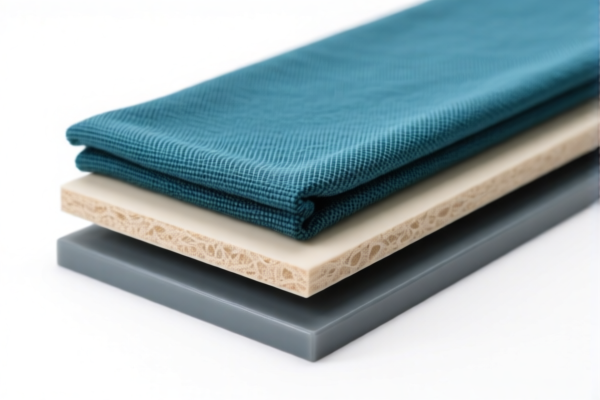
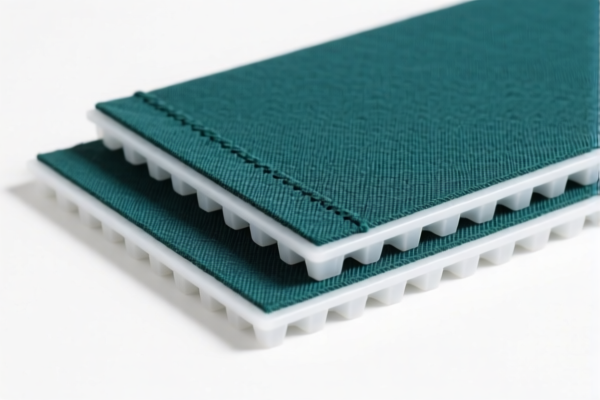
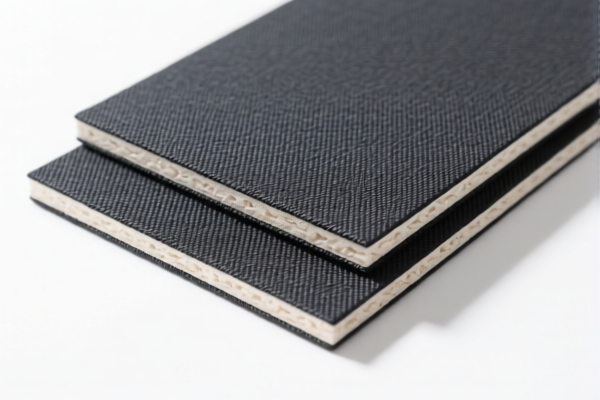
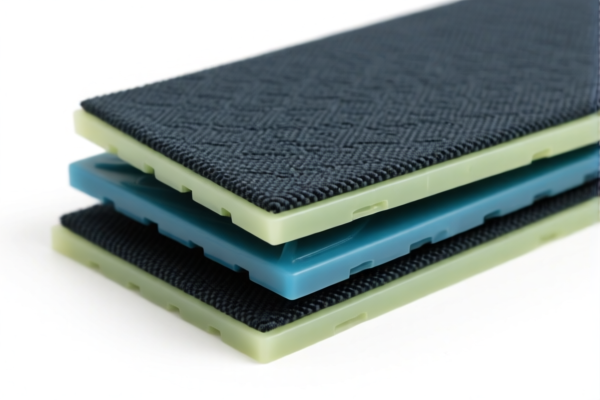
AI分析
🧱 Textile Composite Plastic Moisture Proof Board (复合塑料防潮板)
🌐 HS Code Reference & Customs Clearance Guide | 2026 Latest Tariff Analysis | Professional Entry Strategy
📌 I. Product Definition & Classification: What Exactly Is This Product?
A Textile Composite Plastic Moisture Proof Board is a specialized building or industrial material that combines the durability of plastics with the structural integrity of textiles. In international trade, it is classified based on its primary material composition and form factor.
The core debate lies in whether the product is viewed primarily as a textile product (shading/screening use) or a plastic article (construction/manufacturing use). This distinction drastically affects the tariff burden due to current trade policies (e.g., Section 301, Section 232, and IEEPA provisions).
⚠️ Key Distinction:
- If viewed as a "Shading Device" (Sunshade) made of synthetic fibers →归入 6306.12.00.00 (Lower Base Duty, High Total Duty)
- If viewed as a "Plastic Article" containing textile fibers →归入 3926.90.59.00 (High Total Duty due to 25% Section 301)
- If viewed as a "Composite Plastic Sheet" (Layered material) →归入 3920.99.20.00 or 3921.90.40.90 (Variable Duty based on specific layering)
📦 II. HS Code Classification Details (2026 Latest Tariff Authority)
Based on the product name "Textile Composite Plastic Moisture Proof Board", here are the potential classifications derived from the provided data. Note that the actual classification depends on the specific composition ratio and primary function confirmed by customs.
| HS Code | Product Description | Matching Logic & Summary | Total Tax Rate |
|---|---|---|---|
6306.12.00.00 |
Textile Shading Devices (Other than of knitted or crocheted fabric) | Match Basis: The term "Shading Board" implies a shading function. "Textile" + "Plastic" is inferred as being made of synthetic fibers for shading purposes. | 18.8% |
3926.90.59.00 |
Other Plastic Articles (Containing Textile Fibers) | Match Basis: The name includes "Plastic" and "Textile" features. Fits the description of plastic articles containing textile fibers in Chapter 39. | 37.4% |
3926.90.99.89 |
Other Plastic Articles (N.E.C. - Not Elsewhere Classified) | Match Basis: Material is "Plastic"; Form is a "Board" (article). Fits under Chapter 39, Heading 90 as other plastic articles. | 22.8% |
3920.99.20.00 |
Plastic Composite Board | Match Basis: "Plastic" meets material requirements. "Composite Board" fits the classification for "laminated, supported, or similar combined materials." | 39.2% |
3921.90.40.90 |
Other Plates, Sheets, Foils, Strip and Film (Plastic) | Match Basis: Material matches "Plastics"; Form matches "Board" (interpreted as plates/sheets). | 39.2% |
🔍 Critical Note:
- HS Code 6306 treats the item as a textile-based shading good.
- HS Codes 3926/3920/3921 treat the item as a plastic-based construction/manufacturing good.
- The presence of "Textile" triggers different legal footnotes and tax calculations depending on whether the textile is the primary character or just a component of the plastic.
💰 III. Detailed 2026 Tariff Rate Breakdown (Including Surcharges & Policy Add-ons)
✅ Applicable Country: USA (US)
✅ Origin: China (CN) (Assumed based on typical "Section 301" and "122 Clause" context in data)
✅ Effective Time: Current (2025-2026 Period)
🎯 1. 6306.12.00.00 – Textile Shading Devices (Inferred)
Logic: Treated as a textile article used for shading.
| Item | Content |
|---|---|
| Base Duty | 8.8% (Standard MFN Rate) |
| Section 301 Surcharge | 0.0% (No additional 25% tariff applied to this specific textile shading heading in the provided data) |
| 122 Clause (IEEPA) Surcharge | +10% (Targeted measure against China) |
| Total Tax Rate | 18.8% |
| Calculation | CIF Value × 18.8% |
| De Minimis Exemption | ❌ Not Applicable (Standard commercial shipment) |
| Legal Path | HTSUS:6306.12.00 → IEEPA:122_Clauses |
📌 Explanation:
- This code offers the lowest total tax rate (18.8%) among the options.
- However, customs may challenge this if the "plastic" content is dominant, potentially reclassifying it as a plastic article, which carries higher duties.
🎯 2. 3926.90.59.00 – Other Plastic Articles (Containing Textile Fibers)
Logic: Treated as a plastic article with textile reinforcement.
| Item | Content |
|---|---|
| Base Duty | 2.4% |
| Section 301 Surcharge | +25.0% (Aggressive tariff on Chinese plastic goods) |
| 122 Clause (IEEPA) Surcharge | +10% |
| Total Tax Rate | 37.4% |
| Calculation | CIF Value × 37.4% |
| De Minimis Exemption | ❌ Not Applicable |
| Legal Path | HTSUS:3926.90.59 → USITC:301_25pct → IEEPA:122_Clauses |
📌 Warning:
- This is a high-cost classification. The 25% Section 301 tariff significantly impacts profitability.
- Only use this if customs insists the product is primarily a "plastic article."
🎯 3. 3926.90.99.89 – Other Plastic Articles (N.E.C.)
Logic: Generic plastic article classification.
| Item | Content |
|---|---|
| Base Duty | 5.3% |
| Section 301 Surcharge | +7.5% (Reduced/Variable Section 301 rate for certain plastic articles) |
| 122 Clause (IEEPA) Surcharge | +10% |
| Total Tax Rate | 22.8% |
| Calculation | CIF Value × 22.8% |
| De Minimis Exemption | ❌ Not Applicable |
| Legal Path | HTSUS:3926.90.99 → USITC:301_7.5pct → IEEPA:122_Clauses |
📌 Opportunity:
- If the product does not strictly fit "containing textile fibers" (3926.90.59), it may fall here.
- 22.8% is a competitive rate compared to 37.4%, though higher than the textile option (18.8%).
🎯 4. 3920.99.20.00 & 3921.90.40.90 – Plastic Composite/Sheet
Logic: Treated as a layered plastic sheet/board.
| Item | Content |
|---|---|
| Base Duty | 4.2% |
| Section 301 Surcharge | +25.0% |
| 122 Clause (IEEPA) Surcharge | +10% |
| Total Tax Rate | 39.2% |
| Calculation | CIF Value × 39.2% |
| De Minimis Exemption | ❌ Not Applicable |
| Legal Path | HTSUS:3920/3921 → USITC:301_25pct → IEEPA:122_Clauses |
⚠️ Risk:
- These codes carry the highest total tax burden (39.2%).
- They apply if the product is strictly defined as a laminated plastic sheet/board without significant textile identity.
🛠️ IV. Customs Clearance Practical Advice (Avoid Pitfalls)
✅ 1. Documentation Checklist (Mandatory)
| Document | Required? | Purpose |
|---|---|---|
| Product Specification Sheet | ✅ Yes | Must detail: % of Plastic vs. Textile, Layering Structure, Moisture Proofing Method |
| Composition Analysis Report | ✅ Yes | Lab test proving material weight/volume ratio (Crucial for HS Code dispute) |
| Product Photos | ✅ Yes | Clear shots of cross-section (to show composite nature) and surface texture |
| Commercial Invoice | ✅ Yes | Must explicitly state: "Textile Composite Plastic Board," Function: Moisture Proofing/Shading |
| Packing List | ✅ Yes | Weight and dimensions of each pallet/box |
| Certificate of Origin | ✅ Yes | If applicable for any preferential treatment (though unlikely with current China tariffs) |
✅ 2. Declaration Strategy (Key Tips)
🔥 "Define the Primary Character: Is it Fabric or Plastic?"
| Scenario | Recommended HS Code | Reasoning |
|---|---|---|
| Textile dominates (>50% by weight) | 6306.12.00.00 |
Lowest duty (18.8%). Declare as "Textile Shading Board." |
| Plastic dominates, but contains textile | 3926.90.99.89 |
Middle ground (22.8%). Declare as "Plastic Article with Textile Reinforcement." |
| Purely Plastic/Laminated Structure | 3920.99.20.00 or 3921.90.40.90 |
Highest duty (39.2%). Only if textile is negligible. |
| Ambiguous Composition | Apply Advance Ruling | ⚠️ Do NOT guess. Submit sample and spec to CBP for an Advance Ruling to avoid penalties. |
⚠️ Warning:
- Do NOT declare as "Building Material" (Chapter 68/70) or "General Composite" without justification.
- The term "Moisture Proof Board" is descriptive, not classificatory. Customs will look at material composition.
✅ 3. Special Handling Cases
| Case | Handling Advice |
|---|---|
| OEM Custom Board | Provide client specs + material safety data sheet (MSDS) for plastic components. |
| Mixed Shipment | If shipping with pure plastic parts, segregate shipments. Mixed classifications complicate clearance and may trigger audits. |
| High-Value Shipment | Consider Section 301 Exclusions (if applicable and still valid) for HS 3926/3920. Check USTR exclusion lists. |
| Labeling | Ensure labels match the commercial invoice exactly. Mismatches cause delays. |
🌍 V. Global Market Comparison (2026 Overview)
| Market | Recommended HS Code | Est. Duty (China Origin) | Certification | Note |
|---|---|---|---|---|
| 🇺🇸 USA | 6306.12.00.00 (Best) |
18.8% | N/A | Lowest duty if textile character is proven. |
| 🇺🇸 USA | 3926.90.99.89 (Alternative) |
22.8% | N/A | If plastic character is dominant. |
| 🇪🇺 EU | 3926.90.99 |
~5-10% + VAT | CE, REACH | No Section 301 tariffs in EU. |
| 🇨🇳 China | 3926.90.99 |
~5% | CCC (if applicable) | Domestic consumption benefit. |
📌 Conclusion for US Importers:
- Fighting for classification under 6306.12.00.00 can save ~15-20% in duties compared to plastic classifications.
- Ensure your product design supports the "textile" identity (e.g., visible fabric weave, flexible nature).
📌 VI. Common Mistakes & Pitfalls (Lessons Learned)
❌ Mistake 1: Declaring as "Plastic Board" when it's 60% Textile.
👉 Result: Underpayment of duty → Penalty + Back Taxes.
❌ Mistake 2: Declaring as "Textile" when it's 90% Plastic.
👉 Result: Misclassification → Customs reverts to 3926/3920 → Higher duty + Delay.
❌ Mistake 3: Vague Description ("Composite Board").
👉 Result: CBP issues Request for Information (RFI) → 2-4 week delay.
✅ Correct Approach:
"Textile-Reinforced Plastic Moisture-Proof Board, 50/50 Composite, For Construction/Shading Use, Model ABC, FDA/REACH Compliant"
🎯 VII. Final Recommendation: Optimize Your Clearance
🎯 Strategic Advice:
1. Test the Product: Get a third-party lab report on material composition.
2. Seek Advance Ruling: If the value is high, submit a CBP Advance Ruling request for HS Code 6306.12.00.00 vs 3926.90.99.89.
3. Supplier Coordination: Ensure the supplier provides accurate material percentages.
💡 Pro Tip:
If the textile content is < 50%, do not force6306. Use3926.90.99.89(22.8%) as a safer, moderate-duty alternative to the punitive 39.2% rates.
📣 Immediate Action:
📞 Contact your freight forwarder with the material composition report.
📄 Request a proforma invoice draft for customs review.
🚀 Minimize duty leakage with precise classification!
✨ Precision in Classification = Profit in the Pocket!
💼 Don't let ambiguous descriptions cost you 20% of your margin!
用户评价
关于 HS 编码归类
协调制度(HS)是由世界海关组织(WCO)制定的国际贸易商品分类标准。全球 200 多个国家采用 HS 系统作为海关关税、贸易统计和进出口监管的基础。
每个 HS 编码遵循以下层级结构:
- 章(2 位)——商品大类(例如:第 84 章:机器和机械设备)
- 品目(4 位)——章内的更具体分类
- 子目(6 位)——国际通用细分,所有 WCO 成员国统一使用
- 本国细分(8-10 位)——各国自行扩展的细分编码,如美国 HTSUS 10 位编码
正确的 HS 编码归类对于顺利通关、准确缴纳关税和遵守贸易法规至关重要。错误归类可能导致海关延误、多缴关税或罚款。
从CN进口到US时,适用的关税税率可能包括:
- 最惠国(MFN)税率——适用于 WTO 成员国的标准关税税率
- 普通税率——适用于无贸易协定国家
- 贸易救济关税——附加关税,如 301 条款(反倾销)、232 条款(国家安全)或反补贴税
本页内容仅供参考。如需正式归类,请咨询当地海关或持牌报关代理。