Textile Composite Plastic Sheet for Packaging
CN → US| HS编码 | 关税税率 | 原产国 | 目的国 | 文档 |
|---|---|---|---|---|
| 6305330080 | 25.9% | CN | US | 官方文档 |
| 5903102090 | 35.0% | CN | US | 官方文档 |
| 5903102010 | 35.0% | CN | US | 官方文档 |
| 6305390000 | 25.9% | CN | US | 官方文档 |
商品图片
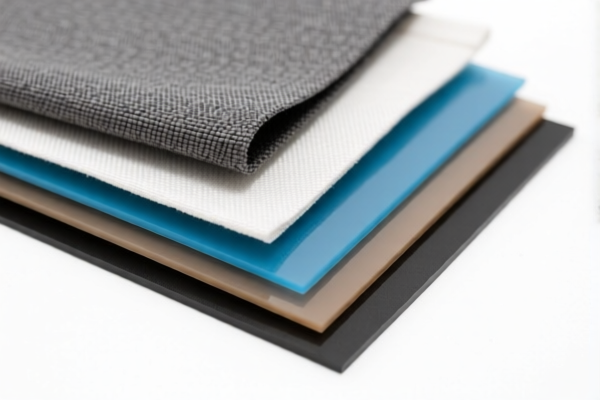


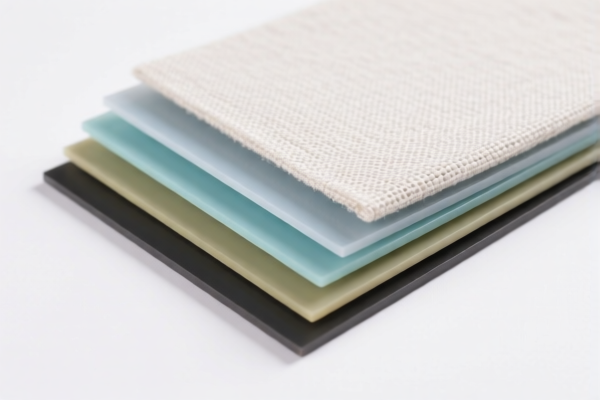
AI分析
📦 Textile Composite Plastic Sheet for Packaging
🌐 HS Code Reference & Customs Clearance Guide | 2026 Latest Tariff Analysis | Professional Clearance Strategy
📌 1. Product Definition & Classification: What is "Textile Composite Plastic Sheet"?
A Textile Composite Plastic Sheet (often referred to as woven fabric sacks, laminated bags, or composite packaging) consists of two primary components: 1. Textile Layer: Typically woven synthetic fabrics (e.g., PP woven fabric) providing strength and structure. 2. Plastic Layer: Polyethylene (PE) or Polypropylene (PP) film that is impregnated, coated, covered, or laminated onto the textile to provide moisture barrier and sealing properties.
⚠️ Key Distinction for Classification: * If the product is primarily a finished packaging container (e.g., bags, sacks) used for goods → It generally falls under Chapter 63 (Other made-up textile articles). * If the product is a raw material/roll defined by the lamination process itself (impregnated/coated textile) → It may fall under Chapter 59 (Textile fabrics coated, covered, or laminated). * Note: The provided data suggests these items are classified based on their nature as "packaging materials" and "composite textures," leading to variations in Chapter 63 (finished packaging) and Chapter 59 (composite fabric material).
📦 2. HS Code Classification Details (Based on Provided Data)
The following HS Codes are derived directly from the provided dataset for Textile Composite Plastic Sheets for Packaging. Note that slight differences in the description (e.g., "Man-made textile" vs. "Other") lead to different tax treatments.
| HS Code | Product Description & Logic | Total Tax Rate | Tax Breakdown |
|---|---|---|---|
| 6305.33.00.80 | Plastic Composite Textile Packaging Material. Material: Plastic + Textile. Form: Packaging material. Logic: Fits the characteristic of being made of man-made textile materials and used for packaging goods. |
25.9% | Basic Tariff: 8.4% Section 301 Tariff: 7.5% Section 122 Tariff: 10% |
| 5903.10.20.90 | Plastic Composite Textile Packaging Material. Plastic Composite: Impregnated, coated, covered, or laminated with plastic. Textile: Corresponds to textile fabric. Logic: Falls under the "Other" residual category for coated textiles. |
35.0% | Basic Tariff: 0.0% Section 301 Tariff: 25.0% Section 122 Tariff: 10% |
| 5903.10.20.10 | Plastic Composite Textile Packaging Material. Plastic Composite: Fits the characteristics of being impregnated, coated, covered, or laminated with plastic. Textile: Fits the form of textile fabric. Logic: Inferred from other categories for coated textile fabrics. |
35.0% | Basic Tariff: 0.0% Section 301 Tariff: 25.0% Section 122 Tariff: 10% |
| 6305.39.00.00 | Plastic Composite Textile Packaging Material. Material: Fits plastic and man-made textile materials. Use: Fits packaging material characteristics. Logic: Belongs to the category of man-made textile materials. |
25.9% | Basic Tariff: 8.4% Section 301 Tariff: 7.5% Section 122 Tariff: 10% |
🔍 Critical Analysis: * Chapter 63 (6305.33 / 6305.39) items have a lower total tariff (25.9%). They are viewed as finished packaging articles. * Chapter 59 (5903.10) items have a higher total tariff (35.0%). They are viewed as composite textile fabrics. * The difference lies in whether customs classifies the item as a packaging article (Ch 63) or a textile fabric (Ch 59).
💰 3. 2026 Latest Tariff Rate Details (With Additional Duties)
✅ Applicable Country: United States (US)
✅ Origin: China (CN) (Implied by Section 122 & 301 tariffs)
✅ Effective Time: Current regulations apply
🎯 1. 6305.33.00.80 & 6305.39.00.00 —— Packaging Articles (Lower Risk/Cost)
| Item | Content |
|---|---|
| Base Tariff | 8.4% (Ad valorem) |
| USITC Surcharge (Section 301) | +7.5% |
| Section 122 Tariff | +10% |
| Total Tax Rate | 25.9% |
| Tax Calculation | CIF Value × 25.9% |
| De Minimis Eligibility | ❌ No (Section 301 & 122 duties apply regardless of value) |
📌 Explanation:
- Base Tariff (8.4%): Standard Most Favored Nation (MFN) rate for plastic composite sacks/bags. - Section 301 Tariff (7.5%): Specific surcharge on certain Chinese-origin goods. - Section 122 Tariff (10%): Import duty on goods not meeting certain country-of-origin requirements or specific textile/trading rules. - Total 25.9%: This is the preferred classification if the product is clearly a finished packaging bag/sack.
🎯 2. 5903.10.20.90 & 5903.10.20.10 —— Composite Textile Fabrics (Higher Risk/Cost)
| Item | Content |
|---|---|
| Base Tariff | 0.0% (Often zero for plain coated fabrics, but subject to surcharges) |
| USITC Surcharge (Section 301) | +25.0% |
| Section 122 Tariff | +10% |
| Total Tax Rate | 35.0% |
| Tax Calculation | CIF Value × 35.0% |
| De Minimis Eligibility | ❌ No |
📌 Explanation:
- Base Tariff (0.0%): While the base rate is low, the Section 301 surcharge is significantly higher (25%) compared to the 7.5% in Chapter 63. - Why the difference? The US government applies heavier tariffs on certain textile and chemical composite products under Section 301. - Total 35.0%: This classification is more expensive. Avoid this if the product can be legally classified as a packaging article (Ch 63).
🛠️ 4. Customs Clearance Practical Advice (Real-World Pitfall Guide)
✅ 1. Preparation Checklist (缺一不可)
| Document | Required? | Notes |
|---|---|---|
| ✅ Product Specification Sheet | ✔️ | Must specify: Textile material (PP/PET), Plastic layer (PE), Lamination method, Weight per sq meter. |
| ✅ Product Photos | ✔️ | Show the composite structure (layers) and finished form (if it’s a bag vs. roll). |
| ✅ Commercial Invoice | ✔️ | Use precise language: "Plastic Laminated Woven Bags for Packaging" (Preferred for Ch 63) vs. "Impregnated Textile Fabric" (Ch 59). |
| ✅ Packing List | ✔️ | Detail dimensions, weight, and quantity. |
| ✅ Material Composition Statement | ✔️ | Explicitly state the percentage of textile vs. plastic to support the Ch 63 argument. |
✅ 2. Declaration Tips (Key Mantra)
🔥 "Finish vs. Material: Bags are 25.9%, Fabric is 35%! Declare as Packaging!"
| Scenario | Correct Declaration | Wrong Declaration | Consequence |
|---|---|---|---|
| Woven Polypropylene Bags (PP Bags) | 6305.33.00.80 or 6305.39.00.00 |
5903.10.20.90 |
Overpay 9.1% tax + Potential audit risk. |
| Laminated Fabric Rolls (Raw Material) | 5903.10.20.10 / .90 |
6305.39.00.00 |
Underpayment → Customs may reclassify and penalize. |
| Plastic Film with Textile Backing | Depends on principal character | Ambiguous description | Delay for Classification Ruling. |
📌 Strategy:
If the product is cut/sewn into bags, emphasize "Packaging Article" (Ch 63).
If the product is sold in rolls for further processing, it might fall under Ch 59, but argue for Ch 63 if it has specific packaging functions pre-formed.
✅ 3. Special Handling
| Situation | Recommendation |
|---|---|
| Mixed Packaging | If the bag has a plastic liner inside, still usually Ch 63. Provide diagrams. |
| Reusables vs. Single-use | Both can be Ch 63. Focus on the material composite aspect. |
| Section 122 Issues | Ensure the country of origin is clearly marked. Some Section 122 issues arise from transshipment or unclear origin. |
| HTS Code Dispute | If customs questions Ch 63, have technical data ready to prove it’s a "made-up article" (bag/sack) rather than just "fabric." |
🌍 5. Global Market Comparison (2026)
| Country/Region | Recommended HS Code | Estimated Total Duty | Notes |
|---|---|---|---|
| 🇺🇸 USA | 6305.33.00.80 / 6305.39.00.00 |
25.9% | Preferred to avoid 35% Ch 59 rate. |
| 🇺🇸 USA | 5903.10.20.xx |
35.0% | High cost. Only use if product is strictly fabric. |
| 🇨🇳 China | 6305.33.00.80 |
~5-10% (Varies) | Lower entry barriers for imported packaging. |
| 🇪🇺 EU | 6305.33.00.80 |
~2.7% + VAT | No Section 301/122 equivalent. Much cheaper. |
| 🇬🇧 UK | 6305.33.00.80 |
~2.7% + VAT | Post-Brexit rules apply. |
📌 Conclusion:
- USA is the most complex market due to Section 301 and 122 tariffs. - Classifying as Ch 63 (Packaging) saves you ~9% in duties compared to Ch 59 (Fabric). - Always provide proof of end-use (packaging) to support Ch 63 classification.
📌 6. Common Mistakes & Pitfalls (Blood & Tears Lessons)
❌ Mistake 1: Calling the product "Plastic Textile Fabric" in the invoice.
👉 Result: Customs may default to 5903.10 (35%).
👉 Fix: Use "Plastic Laminated Woven Bags for Packaging" or "Composite Packaging Material."
❌ Mistake 2: Ignoring Section 122 Tariff.
👉 Result: Surprise charge of 10% at border.
👉 Fix: Ensure origin documentation is flawless. Section 122 often applies to goods that don't meet strict origin rules or are subject to specific textile quotas/limitations.
❌ Mistake 3: Confusing Ch 63 with Ch 39 (Plastic Articles).
👉 Result: Incorrect classification.
👉 Fix: Since it contains textile, it cannot be purely Ch 39. It must be Ch 63 (Textile based) or Ch 59 (Coated textile). Ch 63 is usually the best fit for bags.
🎯 7. Conclusion: Smart Classification, Lower Costs!
🎯 Remember the Mantra:
🔹 "Bags are 25.9%, Fabric is 35%! Fight for Ch 63!"
🔹 "Describe as Packaging, Provide Composition, Avoid Section 301 Heavy Hit!"
📌 Pro Tip:
If your product is 100% Plastic (no textile), it might be Ch 39 (0-2.5% + 25% Section 301 = 27.5%).
If it is 100% Textile (no plastic), it might be Ch 63 (8.4% + 7.5% + 10% = 25.9%).
The Composite nature makes Ch 63 the safest and often cheapest route for packaging applications.
📣 Immediate Action:
📞 Contact a Customs Broker to confirm if your specific "Textile Composite Plastic Sheet" can be declared as 6305.33.00.80 or 6305.39.00.00.
🚀 Provide Photos + Specs to support the "Packaging Article" argument.
💼 Save 9.1% in duties by avoiding the Ch 59 classification!
✨ Professional Customs Clearance Starts with Accurate Classification!
💼 Every Dollar Saved in Tariffs is Pure Profit!
用户评价
关于 HS 编码归类
协调制度(HS)是由世界海关组织(WCO)制定的国际贸易商品分类标准。全球 200 多个国家采用 HS 系统作为海关关税、贸易统计和进出口监管的基础。
每个 HS 编码遵循以下层级结构:
- 章(2 位)——商品大类(例如:第 84 章:机器和机械设备)
- 品目(4 位)——章内的更具体分类
- 子目(6 位)——国际通用细分,所有 WCO 成员国统一使用
- 本国细分(8-10 位)——各国自行扩展的细分编码,如美国 HTSUS 10 位编码
正确的 HS 编码归类对于顺利通关、准确缴纳关税和遵守贸易法规至关重要。错误归类可能导致海关延误、多缴关税或罚款。
从CN进口到US时,适用的关税税率可能包括:
- 最惠国(MFN)税率——适用于 WTO 成员国的标准关税税率
- 普通税率——适用于无贸易协定国家
- 贸易救济关税——附加关税,如 301 条款(反倾销)、232 条款(国家安全)或反补贴税
本页内容仅供参考。如需正式归类,请咨询当地海关或持牌报关代理。