Textile Composite Plastic Strips for Garment
CN → US| HS编码 | 关税税率 | 原产国 | 目的国 | 文档 |
|---|---|---|---|---|
| 3926905900 | 37.4% | CN | US | 官方文档 |
| 3926905700 | 41.5% | CN | US | 官方文档 |
| 591190 | 0.0% | CN | US | 官方文档 |
| 580990 | 0.0% | CN | US | 官方文档 |
商品图片
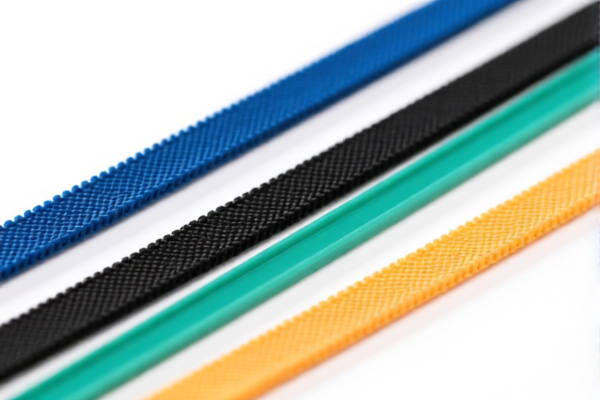
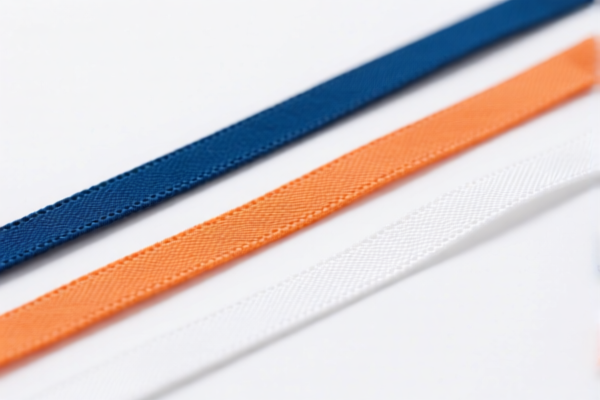
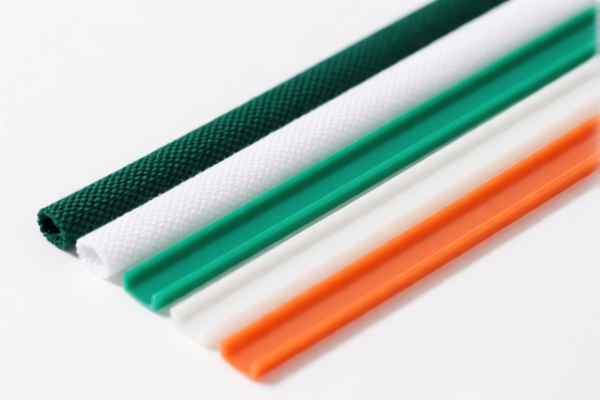
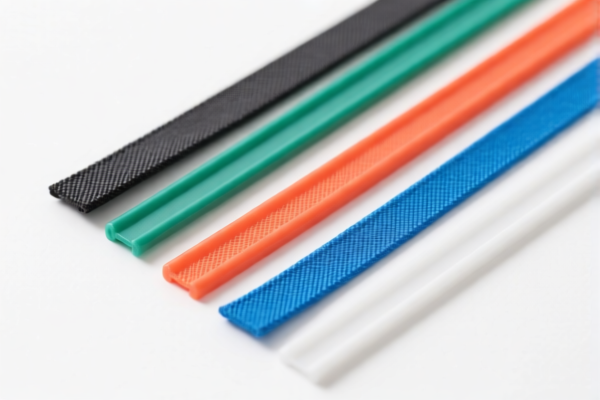
AI分析
🧵 Textile Composite Plastic Strips for Garment
🌐 HS Code Reference & Customs Clearance Guide | 2026 Latest Tariff Analysis | Professional Clearance Strategy
📌 I. Product Definition and Classification: What Are "Textile Composite Plastic Strips"?
These are specialized industrial materials consisting of a plastic matrix combined with textile fibers, specifically engineered for use in garment manufacturing (e.g., zippers, bias tape, decorative trims, structural reinforcements).
In international trade, the classification is critical and highly sensitive to the composition and manufacturing method. The key distinction lies between: 1. Plastic-Dominated Composites: Where plastic is the primary binding agent, and textile acts as reinforcement → Typically classified under Chapter 39 (Plastics). 2. Textile-Dominated Composites: Where the textile fabric is the base, coated/impregnated with plastic → Typically classified under Chapter 59 (Impregnated/Coated Textiles) or Chapter 58 (Special Woven Textiles).
⚠️ Key Differentiator:
- If the product is primarily a plastic sheet/stripe containing embedded textile fibers for strength → HS 3926.90.
- If the product is primarily a textile strip that has been coated, impregnated, or covered with plastic for garment use → HS 5911.90 or HS 5809.90.
📦 II. HS Code Classification Details (2026 Latest Tariff Mapping)
Based on the provided data, here are the only valid HS Codes and their corresponding tax implications.
| HS Code | Product Description | Key Classification Criteria | Tax Rate (US/CN Origin) |
|---|---|---|---|
3926.90.59.00 |
Other articles of plastics: Belting and belts, for machinery, containing textile fibers: Other | Plastic-based composite; textile fibers are minor/reinforcing; not specified elsewhere. | 27.4% (Base 2.4% + Surcharge 25.0%) |
3926.90.57.00 |
Other articles of plastics: Belting and belts, for machinery, containing textile fibers: With man-made fibers predominating | Plastic-based composite; man-made fibers > any other textile fiber by weight. | 0.0% (Base 0.0% + Surcharge 0.0%) |
5911.90 |
Textile composite plastic strips for garment: Textile impregnated, coated, or covered with plastic; Not elsewhere specified | Textile-based; plastic is a coating/impregnation; general "other" category for such composites. | Error (Failed to retrieve tax info – Requires manual verification) |
5809.90 |
Textile composite plastic strips for garment: Textile combined with plastic in composite form; Not elsewhere specified | Textile-based; specific composite structure for garments; not elsewhere specified. | Error (Failed to retrieve tax info – Requires manual verification) |
🔍 Critical Note:
- HS 3926.90.57.00 offers a 0% tax rate, making it the most attractive option if the product qualifies as "man-made fibers predominating" within a plastic composite.
- HS 3926.90.59.00 incurs a high 27.4% tax rate.
- HS 5911.90 and 5809.90 show "Failed to retrieve tax information". This is a high-risk area. In practice, these codes often have standard MFN rates (e.g., 5–8% for textiles), but the "Error" status in the data implies additional scrutiny, potential anti-dumping duties, or country-specific surcharges may apply. Do not assume 0% or low rates for these.
💰 III. Detailed Tax Clause Explanation
🎯 1. 3926.90.59.00 – Plastic Composite (Other)
- Base Tariff: 2.4% (Ad Valorem)
- Standard MFN rate for other plastic articles.
- Surcharge Tariff: 25.0%
- US Section 301 Tariff: Applied to products of Chinese origin under HTS 3926.90.59.
- Total Effective Rate: 27.4%
- Legal Basis:
USITC: 3926.90.59.00→Footnote 301: 25%- Applicability: Applies if the product is classified as a plastic article with textile reinforcement, but does not meet the specific "man-made fibers predominating" criterion for the 0% rate.
🎯 2. 3926.90.57.00 – Plastic Composite (Man-made Fibers Predominate)
- Base Tariff: 0.0%
- Surcharge Tariff: 0.0%
- Total Effective Rate: 0.0%
- Legal Basis:
USITC: 3926.90.57.00→ Exempt from Section 301 Surcharge- Why 0%? This specific subheading was carved out from the 25% surcharge list, likely due to trade agreements or specific policy exemptions for certain plastic-textile composites where synthetic fibers dominate.
- Condition: Man-made fibers (e.g., polyester, nylon) must account for more than 50% of the textile fiber weight in the composite.
🎯 3. 5911.90 & 5809.90 – Textile-Dominated Composites
- Tax Status: Error / Failed to Retrieve
- Implication:
- The system could not auto-fetch a reliable rate. This often indicates:
- Complex Classification: These codes are broad ("Other") and may have different rates for different countries.
- Additional Duties: May be subject to anti-dumping duties (AD/CVD), Section 201 safeguards, or high MFN rates (e.g., 10–15% for textiles).
- Manual Review Required: Customs brokers must verify the rate via the HTS Search Tool or consult a trade attorney.
- Risk: High. Incorrect classification here could lead to back taxes, penalties, or shipment delays.
🛠️ IV. Customs Clearance Practical Advice
✅ 1. Critical Documentation (Must-Have)
| Document | Purpose | Detail |
|---|---|---|
| Product Specification Sheet | Proves Composition | Must clearly state: % Plastic, % Textile Fiber Type (Natural vs. Man-made). |
| Manufacturing Process Description | Determines Chapter | Explain if plastic is coated onto textile (→ Ch 59/58) or textile is embedded in plastic (→ Ch 39). |
| Photos of Cross-Section | Visual Proof | Show layer structure. Is the textile the core? Is the plastic the outer layer? |
| Intended Use Statement | Supports Classification | "For use in garment zippers/trims" – but avoid stating "garment" if claiming Ch 39 (machinery belts). Warning: If declared for "garments," Ch 39 classification may be challenged. |
| Certificate of Origin (CO) | Tariff Eligibility | Essential for proving Chinese origin to apply surcharges (or exemptions). |
✅ 2. Classification Strategy (The "Golden Rule")
🔥 "Fiber Dominance Determines Tax!"
| Scenario | Recommended HS Code | Tax Rate | Action |
|---|---|---|---|
| Plastic matrix + Man-made fibers >50% of fiber weight | 3926.90.57.00 |
0.0% | BEST OPTION. Ensure technical data supports "man-made predominance." |
| Plastic matrix + Natural fibers or Man-made <50% | 3926.90.59.00 |
27.4% | High cost. Re-evaluate product design or supplier. |
| Textile base + Plastic coating/impregnation | 5911.90 / 5809.90 |
Unknown/Error | HIGH RISK. Do NOT use without verifying the exact rate with a broker. May incur 10%+ duties. |
✅ 3. Pitfalls to Avoid
❌ Error 1: Declaring a "Garment Trim" as "Machinery Belt" (3926)
👉 Consequence: Customs may reject Ch 39 classification because the use (garments) contradicts the HTS description ("belts for machinery"). This could force reclassification to Ch 59/63, triggering the "Error" status and higher duties.
👉 Solution: If used for garments, strongly consider Ch 59/58, but first verify the tax rate.
❌ Error 2: Ignoring the "Man-made Fiber" Predominance Test
👉 Consequence: Claiming 3926.90.57.00 when natural fibers (e.g., cotton) are used → Audit → Back taxes + penalties.
👉 Solution: Provide lab test results showing fiber composition.
❌ Error 3: Assuming "Error" means "Free" for 5911.90
👉 Consequence: Missing 10–15% MFN duty or AD/CVD duties.
👉 Solution: Use an HTS Lookup Tool or consult a customs broker to manually retrieve the rate for your specific country of import.
🌍 V. Global Market Comparison (2026)
| Market | Recommended Approach | Tax Risk |
|---|---|---|
| 🇺🇸 USA | Prefer 3926.90.57.00 (0%) if technically compliant. Avoid 3926.90.59.00 (27.4%). For Ch 59/58, verify manually. |
High (due to 301 tariffs) |
| 🇪🇺 EU | No Section 301 surcharges. MFN rates for Ch 39/59/58 are typically 0–4.5%. | Low |
| 🇨🇳 China | Import duties for Ch 39/59/58 are typically 5–8%. No surcharges. | Low |
| 🇬🇧 UK | Post-Brexit tariffs apply. Similar to EU but verify new UK HTS. | Medium |
📌 VI. Final Recommendation & Action Plan
- Analyze Composition: Determine if your product is plastic-first (Ch 39) or textile-first (Ch 59/58).
- Check Fiber Type: If Ch 39, confirm if man-made fibers predominate. If yes, target
3926.90.57.00for 0% tax. - Verify "Error" Codes: For
5911.90and5809.90, do not self-declare. Use a customs broker to retrieve the correct MFN rate and check for anti-dumping duties. - Documentation: Prepare a Technical Data Sheet highlighting fiber composition and manufacturing process to defend the HS Code choice.
- Use Case Alignment: Ensure the product description matches the HS Code. "Garment use" supports Ch 59/58 but weakens Ch 39.
🚀 Pro Tip:
If your product is 100% synthetic (nylon/polyester) and plastic-based, strive for3926.90.57.00. It is the only code in the dataset with a guaranteed 0% total tax rate. This can save 27.4% in duties on every shipment to the US.
✨ Precision in classification saves money. Ambiguity costs profits.
💼 Consult a licensed customs broker before finalizing your HS Code.
用户评价
关于 HS 编码归类
协调制度(HS)是由世界海关组织(WCO)制定的国际贸易商品分类标准。全球 200 多个国家采用 HS 系统作为海关关税、贸易统计和进出口监管的基础。
每个 HS 编码遵循以下层级结构:
- 章(2 位)——商品大类(例如:第 84 章:机器和机械设备)
- 品目(4 位)——章内的更具体分类
- 子目(6 位)——国际通用细分,所有 WCO 成员国统一使用
- 本国细分(8-10 位)——各国自行扩展的细分编码,如美国 HTSUS 10 位编码
正确的 HS 编码归类对于顺利通关、准确缴纳关税和遵守贸易法规至关重要。错误归类可能导致海关延误、多缴关税或罚款。
从CN进口到US时,适用的关税税率可能包括:
- 最惠国(MFN)税率——适用于 WTO 成员国的标准关税税率
- 普通税率——适用于无贸易协定国家
- 贸易救济关税——附加关税,如 301 条款(反倾销)、232 条款(国家安全)或反补贴税
本页内容仅供参考。如需正式归类,请咨询当地海关或持牌报关代理。