Textile Composite V Belt
CN → US| HS编码 | 关税税率 | 原产国 | 目的国 | 文档 |
|---|---|---|---|---|
| 5910001010 | 39.0% | CN | US | 官方文档 |
| 4010313000 | 38.4% | CN | US | 官方文档 |
| 4010323000 | 38.4% | CN | US | 官方文档 |
| 5910001010 | 39.0% | CN | US | 官方文档 |
| 4010313000 | 38.4% | CN | US | 官方文档 |
商品图片
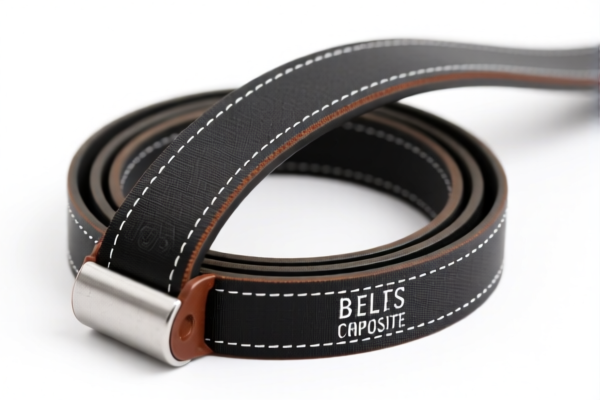
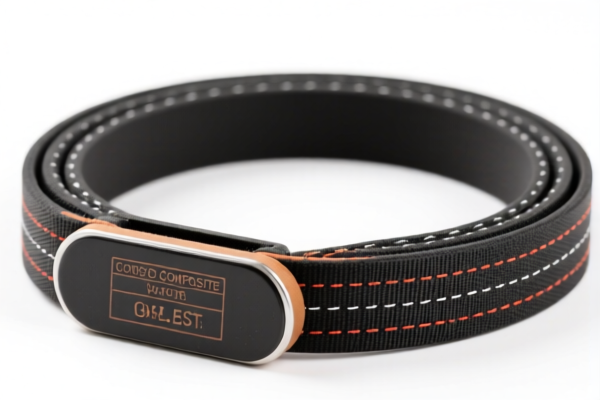
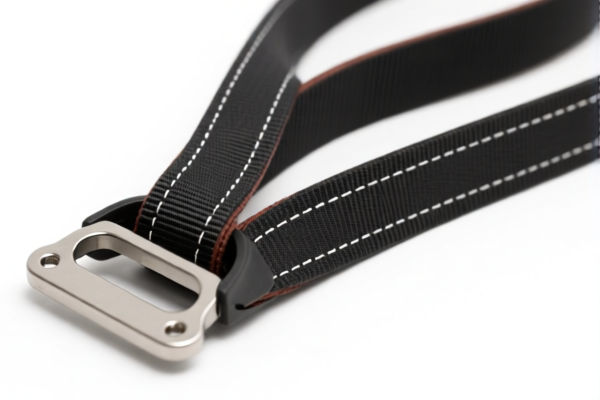
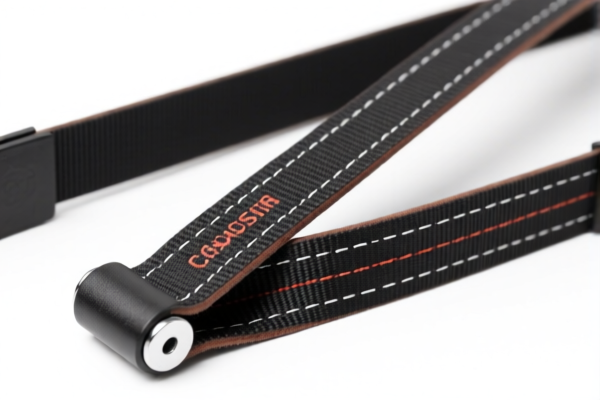
AI分析
🏭 Textile Composite V Belt (Fabric-Reinforced V-Belts)
🌐 HS Code Reference & Customs Clearance Guide | 2026 Latest Tariff Analysis | Professional Classification Strategy
📌 I. Product Definition & Classification: What Exactly is a "Textile Composite V Belt"?
A Textile Composite V Belt (also known as a Fabric-Reinforced V-Belt or Fibre V-Belt) is a type of power transmission belt characterized by: 1. Shape: Trapezoidal cross-section (V-shape) for friction drive in sheaves. 2. Material: Reinforced with textile materials (polyester, rayon, or nylon cords) embedded in rubber or polymer compounds. 3. Application: Primarily used in automotive engines, agricultural machinery, and industrial equipment for transmitting power.
⚠️ Critical Distinction:
- If the belt is reinforced with metallic wires (e.g., steel cords) and has a specific high-tension profile, it may fall under different subheadings.
- However, for standard textile/fabric-reinforced V-belts, the classification hinges on whether they are classified under Chapter 40 (Rubber) or Chapter 59 (Textiles Impregnated with Rubber).
- Key Trend: Modern textile-reinforced V-belts are overwhelmingly classified under Chapter 40 as "V-belts" made of rubber, even if they contain textile reinforcement, unless they are specifically identified as "flat belts" or non-V types.
📦 II. HS Code Classification Details (2026 Latest Tariff Authority Comparison)
Based on the provided data, there are two primary HS Code candidates. The choice depends on the specific interpretation of "textile reinforcement" vs. "rubber construction."
| HS Code | Product Description | Matching Logic from Data | Tax Rate |
|---|---|---|---|
4010.31.30.00 |
V-belts, of rubber, with a peripheral length ≤ 600 cm | ✅ Shape Match: "V-belt" matches trapezoidal section. ✅ Material Match: "Textile composite" is interpreted as being bound with textile materials, fitting the "rubber" chapter definition for reinforced belts. |
38.4% |
4010.32.30.00 |
V-belts, of rubber, with a peripheral length > 600 cm | ✅ Shape Match: "V-belt" matches trapezoidal section. ✅ Material Match: Same as above, but for longer belts. |
38.4% |
5910.00.10.10 |
V-belts, of textile materials impregnated, coated, covered or laminated with rubber, plastics or other materials | ⚠️ Alternative Interpretation: Matches "V-belt" shape and implies textile core. However, this chapter is typically for belts where textile is the primary structural component rather than rubber. | 39.0% |
🔍 Key Insight:
-4010.31/32(Rubber Chapter) is generally preferred for modern automotive/industrial V-belts where rubber is the matrix material, even with textile reinforcement.
-5910.00(Textile Chapter) may apply if the belt is constructed primarily of textile strips impregnated with rubber, but this is less common for standard "V-belts" in high-volume trade.
- Tax Difference:5910.00has a slightly higher base tariff (4.0% vs 3.4%), resulting in a higher total rate (39.0% vs 38.4%).
💰 III. 2026 Latest Tariff Rate Breakdown (Including Surtaxes & Policy Add-ons)
✅ Applicable Country: United States (US)
✅ Country of Origin: China (CN)
✅ Effective Date: From November 10, 2025 (and subsequent imports)
🎯 1. 4010.31.30.00 / 4010.32.30.00 — V-Belts (Rubber, Textile-Reinforced)
| Item | Details |
|---|---|
| Base Tariff | 3.4% (ad valorem) |
| Section 301 Surcharge | +25.0% (Applied to Chinese goods under USITC Footnote 9903.88.01) |
| IEEPA Surcharge | +10.0% (Against China/HK products, effective Nov 2025) |
| Total Tariff Rate | 38.4% |
| Calculation Basis | CIF Value × 38.4% |
| De Minimis Exemption? | ❌ No (Not eligible for de minimis) |
| Legal Basis Path | IEEPA:9903.01.25 → IEEPA:9903.01.24 → USITC:4010.31.30.00 → FOOTNOTE:9903.88.01 |
📌 Explanation:
- The 25% is the standard Section 301 tariff on rubber articles from China.
- The 10% is the additional IEEPA tariff targeting specific Chinese imports.
- Total: 38.4%. This is a high-cost classification. Misclassification to a lower-tax code without justification can lead to penalties.
🎯 2. 5910.00.10.10 — V-Belts (Textile Impregnated)
| Item | Details |
|---|---|
| Base Tariff | 4.0% (ad valorem) |
| Section 301 Surcharge | +25.0% |
| IEEPA Surcharge | +10.0% |
| Total Tariff Rate | 39.0% |
| Calculation Basis | CIF Value × 39.0% |
| De Minimis Exemption? | ❌ No |
| Legal Basis Path | IEEPA:9903.01.25 → IEEPA:9903.01.24 → USITC:5910.00.10.10 → FOOTNOTE:9903.88.01 |
📌 Note:
- This rate is 0.6% higher than the rubber classification.
- Use this only if the belt is explicitly declared as "textile impregnated with rubber" and lacks the standard rubber matrix definition of Chapter 40.
🛠️ IV. Customs Clearance Practical Advice (Proven Pitfall Avoidance)
✅ 1. Required Documentation Checklist
| Document | Mandatory? | Purpose |
|---|---|---|
| ✅ Product Specification Sheet | ✔️ | Must detail: Belt profile (A, B, C, etc.), length, material composition (% rubber vs. textile), and tensile strength. |
| ✅ Material Composition Statement | ✔️ | Explicitly state "Textile (Polyester/Rayon) reinforced in Rubber Matrix" to justify Chapter 40. |
| ✅ Product Photos | ✔️ | Clear images showing the V-profile, side view, and any labeling (e.g., "FAVCO", "Gates", etc.). |
| ✅ Commercial Invoice | ✔️ | Must clearly state "V-Belt, Textile Reinforced, Rubber, Automotive Use" — avoid vague terms like "Strap" or "Belt". |
| ✅ Packing List | ✔️ | Confirm quantity and weight per package. |
| ✅ Origin Certificate (CO) | ✔️ | If claiming non-Chinese origin (e.g., Vietnam, Thailand), this is critical to avoid Chinese tariffs. |
✅ 2. Declaration Strategy (Key Phrases)
🔥 “V-Profile is Key, Material Defines the Chapter, Origin Determines the Tax!”
| Scenario | Correct Declaration | Incorrect/ risky Declaration |
|---|---|---|
| Standard Automotive V-Belt | V-Belt, Textile Reinforced, Rubber, For Engine Drive, Model A-600 |
"Rubber Belt" or "Transmission Strap" (too vague) |
| Belt Made in Vietnam | V-Belt, VN Origin, HTS 4010.31.30.00 |
China Origin (triggers 38.4% instead of potentially 0-5%) |
| Fabric-Reinforced Flat Belt | Flat Belt, Textile Composite |
V-Belt (wrong shape → wrong HTS) |
✅ 3. Special Handling Tips
| Situation | Recommendation |
|---|---|
| OEM Belts | Provide OEM contract + design drawings to prove the specific profile and material. |
| Mixed Shipments | If shipping V-belts with other rubber parts, declare them separately. Do not lump under "Rubber Parts" (4016.99) to avoid audit flags. |
| Origin Labeling | Ensure every belt has "Made in [Country]" permanently marked. Lack of origin marking can lead to 300% penalty or return. |
| Pre-Ruling Application | If uncertain between 4010 and 5910, apply for a US CBP Advance Ruling 60-90 days before shipment. Cost: ~$500-$1000, but saves thousands in disputes. |
🌍 V. Global Market Comparison (2026 Update)
| Market | Recommended HS Code | Base Tariff | Key Certifications | Notes |
|---|---|---|---|---|
| 🇺🇸 USA | 4010.31.30.00 |
38.4% (CN origin) | No specific CE/FCC, but SAE J1456 standard reference helps | Highest tariffs due to 301 + IEEPA |
| 🇨🇳 China | 4010.31.30.00 |
3.4% | CCC (if applicable) | No surtaxes |
| 🇪🇺 EU | 4010.31.00.00 |
1.7% | REACH, RoHS | No anti-dumping duties on V-belts currently |
| 🇲🇽 Mexico | 4010.31.00 |
0% (if under USMCA) | N/A | Free trade benefit for US/CA goods |
📌 Conclusion:
- The US market is the most expensive due to layered surtaxes (38.4% total).
- Origin Diversification: Sourcing from Vietnam, Thailand, or Mexico can reduce the total tax to 0-5%, saving ~33% in landed cost.
- EU and China offer much more favorable rates for these goods.
📌 VI. Common Errors & Pitfalls (Lessons Learned)
❌ Error 1: Classifying as "Rubber Parts" (4016.99)
👉 Result: Duty drops to ~3.4%, but CBP rejects it because V-belts are specifically listed in 4010.
👉 Penalty: Back taxes + interest + potential fraud investigation.
❌ Error 2: Omitting "Textile Reinforcement" in Description
👉 Result: CBP may assume it's a plain rubber belt and audit the material composition.
👉 Penalty: Delayed clearance, inspection fees, and potential misclassification fines.
❌ Error 3: Wrong Origin Labeling
👉 Result: Declaring "China" when made in Vietnam.
👉 Penalty: 38.4% tax vs. 0% → Loss of profit margin.
❌ Error 4: Vague Description "Drive Belt"
👉 Result: CBP cannot determine shape (V vs. Flat vs. Timing).
👉 Penalty: Detention at port until clarification is provided.
✅ Correct Approach:
"V-Belt, Trapezoidal Cross-Section, Textile (Polyester) Reinforced, Rubber Matrix, Length: 1200mm, Width: 13mm, For Internal Combustion Engine, Made in Vietnam"
🎯 VII. Conclusion: Precision in Classification Saves Money!
🎯 Remember These Rules:
🔹 "V-Shape = Chapter 40" (Usually)
🔹 "China Origin = 38.4% Tariff"
🔹 "Vietnam/Mexico Origin = Potential 0-5% Tariff"
🔹 "Textile Reinforcement does NOT automatically mean Chapter 59"
📌 Pro Tip:
If you are importing significant volumes, consider supply chain restructuring to source from non-Chinese countries or apply for a Pre-Ruling to lock in the correct HS Code and avoid post-import audits.
📣 Action Now:
📞 Engage a Licensed Customs Broker
📄 Provide Detailed Material Specs
🚀 Optimize Origin Strategy for Max Savings
✨ Clear Classification, Smooth Clearance, Higher Profits!
💼 Every Percentage Point Matters in International Trade!
用户评价
关于 HS 编码归类
协调制度(HS)是由世界海关组织(WCO)制定的国际贸易商品分类标准。全球 200 多个国家采用 HS 系统作为海关关税、贸易统计和进出口监管的基础。
每个 HS 编码遵循以下层级结构:
- 章(2 位)——商品大类(例如:第 84 章:机器和机械设备)
- 品目(4 位)——章内的更具体分类
- 子目(6 位)——国际通用细分,所有 WCO 成员国统一使用
- 本国细分(8-10 位)——各国自行扩展的细分编码,如美国 HTSUS 10 位编码
正确的 HS 编码归类对于顺利通关、准确缴纳关税和遵守贸易法规至关重要。错误归类可能导致海关延误、多缴关税或罚款。
从CN进口到US时,适用的关税税率可能包括:
- 最惠国(MFN)税率——适用于 WTO 成员国的标准关税税率
- 普通税率——适用于无贸易协定国家
- 贸易救济关税——附加关税,如 301 条款(反倾销)、232 条款(国家安全)或反补贴税
本页内容仅供参考。如需正式归类,请咨询当地海关或持牌报关代理。