Textile Fabric Composite Board
CN → US| HS编码 | 关税税率 | 原产国 | 目的国 | 文档 |
|---|---|---|---|---|
| 5911900080 | 38.8% | CN | US | 官方文档 |
| 3921902100 | 41.5% | CN | US | 官方文档 |
| 3921902900 | 39.4% | CN | US | 官方文档 |
| 3921131500 | 41.5% | CN | US | 官方文档 |
| 3921131950 | 40.3% | CN | US | 官方文档 |
商品图片


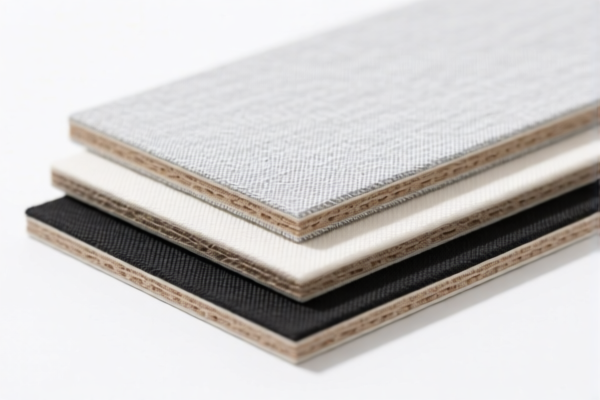

AI分析
🧵 Textile Fabric Composite Board
🌐 HS Code Reference & Customs Clearance Guide | 2024/2025 Latest Tariff Analysis | Professional Entry Strategy
📌 I. Product Definition & Classification: What Exactly Is a "Textile Fabric Composite Board"?
A "Textile Fabric Composite Board" refers to a rigid or semi-rigid panel formed by bonding textile materials (such as cotton, polyester, or blends) with other substrates (like plastic, PU, or other composites). In international trade, its classification depends heavily on the primary material character and the structure.
Because "composite" can imply either a textile-dominated product or a plastic-dominated product, customs authorities scrutinize: 1. Is the textile the essential character? → Likely Chapter 59. 2. Is the plastic/PU the essential character? → Likely Chapter 39.
⚠️ Key Distinction:
- If the board is primarily textile-based with a thin backing or coating → Chapter 59 (5911).
- If the board is primarily plastic/PU-based with a textile layer/lamination → Chapter 39 (3921).
📦 II. HS Code Classification Details (Based on Provided Data)
| HS Code | Product Description | Material Focus | Form | Tax Rate (Total) |
|---|---|---|---|---|
5911.90.00.80 |
Textile composite board, cotton material, textile-based technology product | Cotton | Composite Board | 38.8% |
3921.90.21.00 |
Composite board containing cotton, plastic-textile combination | Cotton + Plastic | Board | 41.5% |
3921.90.29.00 |
Composite board with textile characteristics, plastic-textile bond | Textile + Plastic | Board | 39.4% |
3921.13.15.00 |
PU-textile composite building board, PU material | Polyurethane (PU) | Composite Board (Building) | 41.5% |
3921.13.19.50 |
PU-textile composite building board, PU material | Polyurethane (PU) | Board (Building) | 40.3% |
🔍 Critical Insight:
- Chapter 59 (5911): Treats the item as a "Technical Textile Product." Lower base tariff (3.8%), but still high total due to US duties.
- Chapter 39 (3921): Treats the item as a "Plastic Plate/Sheet/Strip." Higher base tariffs (4.4%–6.5%) because the plastic/PU is deemed the essential character.
- Building Use: HS Codes starting with3921.13specifically target building materials, which may attract additional scrutiny for compliance (fire ratings, etc.).
💰 III. 2024/2025 Detailed Tariff Structure (US Imports from China)
✅ Applicable Country: United States (US)
✅ Origin: China (CN)
✅ 生效时间: Current (Post-Section 301 & IEEPA Measures)
🎯 1. 5911.90.00.80 —— Cotton Textile Composite Board (Technical Textile)
| Item | Content |
|---|---|
| Base Tariff | 3.8% |
| Section 301 Tariff | +25.0% |
| Section 122 Tariff | +10.0% |
| Total Rate | 38.8% |
| Calculation Base | CIF Value × 38.8% |
| De Minimis Exemption | ❌ Not Applicable (Section 301 goods are excluded) |
| Legal Path | USITC: 5911.90.00.80 → FOOTNOTE: 9903.88.01 (Section 301) → IEEPA (Section 122) |
📌 Explanation:
- This code classifies the product as a technical textile.
- The 3.8% base rate is the lowest among the options, but the 35% additional duties (25% + 10%) remain high.
- Risk: If the product is reclassified as plastic-based, the base rate increases, raising the total cost.
🎯 2. 3921.90.21.00 & 3921.90.29.00 —— Plastic-Textile Composite Boards
A. 3921.90.21.00 (Cotton-containing plastic composite)
| Item | Content |
|---|---|
| Base Tariff | 6.5% |
| Section 301 Tariff | +25.0% |
| Section 122 Tariff | +10.0% |
| Total Rate | 41.5% |
| Calculation Base | CIF Value × 41.5% |
| De Minimis Exemption | ❌ Not Applicable |
B. 3921.90.29.00 (Other textile-plastic composite boards)
| Item | Content |
|---|---|
| Base Tariff | 4.4% |
| Section 301 Tariff | +25.0% |
| Section 122 Tariff | +10.0% |
| Total Rate | 39.4% |
| Calculation Base | CIF Value × 39.4% |
📌 Note:
- These codes assume the plastic component gives the product its essential character.
-3921.90.21.00is slightly higher due to the specific cotton inclusion clause.
- Strategic Choice: If you can prove the textile is dominant,5911.90.00.80(38.8%) is cheaper than3921.90.21.00(41.5%).
🎯 3. 3921.13.15.00 & 3921.13.19.50 —— PU-Textile Building Boards
A. 3921.13.15.00 (PU Composite Board for Building)
| Item | Content |
|---|---|
| Base Tariff | 6.5% |
| Section 301 Tariff | +25.0% |
| Section 122 Tariff | +10.0% |
| Total Rate | 41.5% |
| Calculation Base | CIF Value × 41.5% |
B. 3921.13.19.50 (Other PU Composite Building Boards)
| Item | Content |
|---|---|
| Base Tariff | 5.3% |
| Section 301 Tariff | +25.0% |
| Section 122 Tariff | +10.0% |
| Total Rate | 40.3% |
| Calculation Base | CIF Value × 40.3% |
📌 Note:
- Building Materials often face stricter inspections (fire safety, environmental standards).
-3921.13.19.50offers the second-lowest total rate (40.3%) if the product is PU-based and for construction.
- However,5911.90.00.80(38.8%) remains the cheapest option if the textile character is dominant.
🛠️ IV. Customs Clearance Practical Advice (Pitfall Avoidance Guide)
✅ 1. Required Documentation Checklist
| Document | Must Provide | Purpose |
|---|---|---|
| ✅ Product Specification Sheet | ✔️ | Define material composition % (e.g., 70% Cotton / 30% PU). |
| ✅ Structure Diagram | ✔️ | Show layering: Is textile on surface or core? |
| ✅ Photos (Clear View) | ✔️ | Show texture, edges, and any branding. |
| ✅ Commercial Invoice | ✔️ | Explicitly state "Textile Composite Board" or "Plastic Composite Board" based on HS choice. |
| ✅ Origin Certificate | ✔️ | For Chinese origin proof. |
| ✅ Building Compliance Docs (If applicable) | ✔️ | For 3921.13 codes: Fire rating, EPA/TSCA compliance. |
✅ 2. Declaration Tips (Key Strategy)
🔥 “Character is King: Textile vs. Plastic!”
| Scenario | Correct Declaration | Risk if Wrong |
|---|---|---|
| Cotton-heavy board | 5911.90.00.80 (38.8%) |
If misdeclared as plastic → Higher base tax (up to 41.5%) |
| PU-heavy building board | 3921.13.19.50 (40.3%) |
If misdeclared as textile → Potential reclassification & penalty |
| General composite | 3921.90.29.00 (39.4%) |
Safe middle ground if composition is unclear |
📌 Rule of Thumb:
- If the product is flexible textile on a rigid plastic core, customs may lean toward Chapter 39.
- If the product is rigid textile matrix with plastic coating, Chapter 59 is more defensible.
🌍 V. Global Market Comparison (2024/2025)
| Country/Region | Recommended HS Code | Total Tariff (China Origin) | Key Requirements | Notes |
|---|---|---|---|---|
| 🇺🇸 USA | 5911.90.00.80 |
38.8% | Section 301 + IEEPA | Highest cost market due to 35% duties. |
| 🇺🇸 USA | 3921.13.19.50 |
40.3% | Section 301 + IEEPA | For PU building materials. |
| 🇨🇳 China | 5911.90.00.80 |
~5-10% | CCC (if applicable) | Low import tariff. |
| 🇪🇺 EU | 5911.90.00 |
~4-6% | CE, REACH | No Section 301 equivalent. |
| 🇦🇺 Australia | 5911.90.00 |
~5% | TAA Compliance | Moderate duty. |
📌 Conclusion:
- The US market is the most expensive due to叠加 tariffs (Section 301 + 122).
- Optimization Strategy: Try to classify under5911.90.00.80(38.8%) rather than Chapter 39 codes (39.4%-41.5%) if technically defensible.
📌 VI. Common Mistakes & Pitfalls (Blood & Tears Lessons)
❌ Mistake 1: Declaring a PU-heavy board as "Textile" to save duty
👉 Consequence: Customs audits the material composition. If PU > Textile by weight/character, they reclassify to 3921, charging higher base tax + penalties.
❌ Mistake 2: Ignoring "Section 122" Tariff
👉 Consequence: Assuming only Section 301 (25%) applies. In reality, an additional 10% is now applied, increasing total by 10 points.
❌ Mistake 3: Using "Composite Board" as generic description
👉 Consequence: Lack of detail leads to delays. Must specify Material (Cotton/PU) and Use (Building/Technical).
✅ Correct Practice:
"Cotton-Fabric Composite Board, Technical Use, 100% Cotton Face, Plastic Backing, Model XYZ, Compliant with Section 301"
🎯 VII. Conclusion: Professional Declaration Saves Money!
🎯 Remember the Golden Rule:
🔹 "Textile Dominant → 5911 (38.8%)"
🔹 "Plastic Dominant → 3921 (39.4%-41.5%)"
🔹 "Building PU Board → 3921.13 (40.3%-41.5%)"🔹 "Total Duty = Base + 25% (301) + 10% (122)"
📌 Pro Tip:
- If the product is for non-US markets, the tariff burden is significantly lower.
- For US imports, consider pre-classification rulings from CBP to lock in the 5911.90.00.80 rate if applicable, saving ~2-3% on CIF value.
📣 Immediate Action:
📞 Consult with a licensed customs broker.
📸 Provide detailed cross-section photos of the composite board.
🚀 Clarify Material Dominance to optimize tax liability!
✨ Precision in Classification, Profit in Clearance!
💼 Every percentage point counts in the age of trade wars.
用户评价
关于 HS 编码归类
协调制度(HS)是由世界海关组织(WCO)制定的国际贸易商品分类标准。全球 200 多个国家采用 HS 系统作为海关关税、贸易统计和进出口监管的基础。
每个 HS 编码遵循以下层级结构:
- 章(2 位)——商品大类(例如:第 84 章:机器和机械设备)
- 品目(4 位)——章内的更具体分类
- 子目(6 位)——国际通用细分,所有 WCO 成员国统一使用
- 本国细分(8-10 位)——各国自行扩展的细分编码,如美国 HTSUS 10 位编码
正确的 HS 编码归类对于顺利通关、准确缴纳关税和遵守贸易法规至关重要。错误归类可能导致海关延误、多缴关税或罚款。
从CN进口到US时,适用的关税税率可能包括:
- 最惠国(MFN)税率——适用于 WTO 成员国的标准关税税率
- 普通税率——适用于无贸易协定国家
- 贸易救济关税——附加关税,如 301 条款(反倾销)、232 条款(国家安全)或反补贴税
本页内容仅供参考。如需正式归类,请咨询当地海关或持牌报关代理。