Textile Reinforced Flame Retardant Plastic Board
CN → US| HS编码 | 关税税率 | 原产国 | 目的国 | 文档 |
|---|---|---|---|---|
| 3921902510 | 41.5% | CN | US | 官方文档 |
| 3926905600 | 40.1% | CN | US | 官方文档 |
| 3926905700 | 41.5% | CN | US | 官方文档 |
| 3921904010 | 39.2% | CN | US | 官方文档 |
| 3921904010 | 39.2% | CN | US | 官方文档 |
商品图片
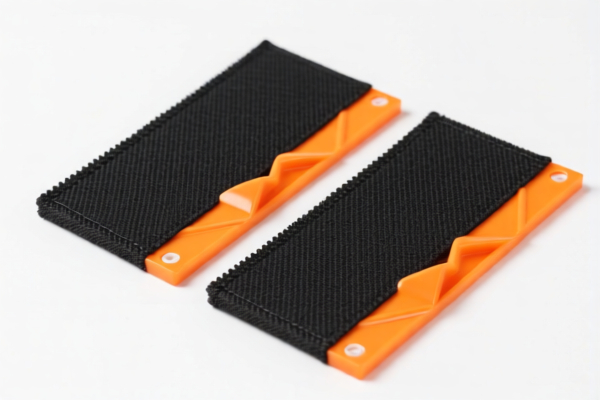
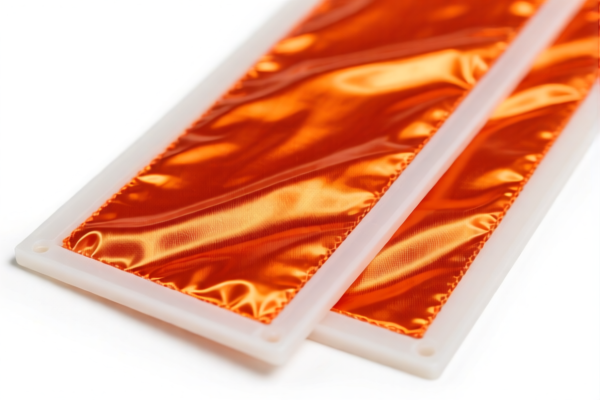
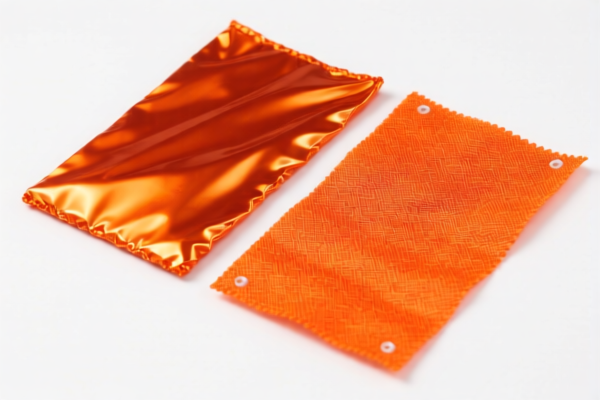
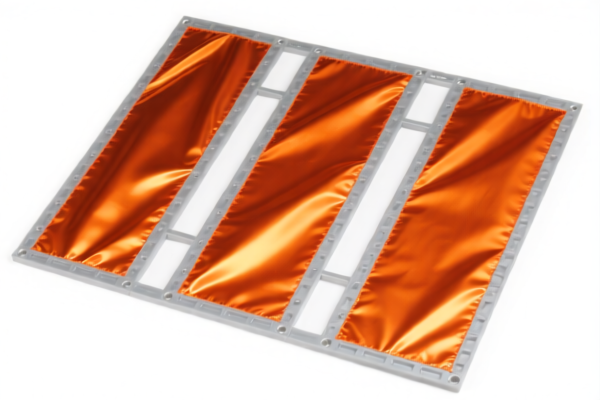
AI分析
🧱 Textile Reinforced Flame Retardant Plastic Board (TRF-PRB)
🌐 HS Code Classification & Customs Clearance Guide | 2026 Latest Tariff Analysis | Professional Strategy
📌 I. Product Definition & Core Characteristics: What Exactly Is It?
Textile Reinforced Flame Retardant Plastic Board is a composite material combining the structural integrity of textiles with the versatility and processing ease of plastics, specifically treated for fire safety.
In international trade, this product falls under Chapter 39 (Plastics and Articles Thereof), specifically focusing on the interaction between the plastic matrix and the reinforcing textile fibers. The classification hinges on: 1. Dominant Material: Is it primarily plastic with textile reinforcement, or textile with plastic coating? 2. Form Factor: Is it a rigid board, sheet, or plate? 3. End Use: Is it for general industrial use, decoration, or specific technical applications?
⚠️ Key Distinction:
- If the plastic content is dominant and provides the structural form (board/sheet) → Classified under Chapter 39, Heading 3921 (Other plates, sheets, film, foil, and strip, of plastics).
- If the textile component is significant and defines the character → Potential classification under Heading 3926 (Other articles of plastics).
- Flame Retardancy itself does not change the HS code, but it is a critical specification for customs declaration and safety compliance.
📦 II. HS Code Classification Details (Based on Provided Data)
The following 5 HS Codes represent the most likely classifications for this product, derived from the provided dataset. Each code reflects a different nuance of the "textile-reinforced plastic" description.
| HS Code | Product Description & Logic | Tax Rate (Total) | Key Tax Components |
|---|---|---|---|
| 3921.90.25.10 | High-Strength Textile-Reinforced Plastic Board • Logic: Plastic dominates; fits composite of textile component & plastic. |
41.5% | Base: 6.5% Add-on 25% Section 301 (122): 10% |
| 3926.90.56.00 | Plastic Articles Containing Textile Fibers • Logic: Infers inclusion of textile fibers based on high-strength reinforcement. |
40.1% | Base: 5.1% Add-on 25% Section 301 (122): 10% |
| 3926.90.57.00 | Plastic Sheet/Board Form with Textile Features • Logic: Board shape is consistent; textile reinforcement attributes align with fiber characteristics. |
41.5% | Base: 6.5% Add-on 25% Section 301 (122): 10% |
| 3921.90.40.10 | Plastic Board (Textile/Paper Reinforced Logic) • Logic: No material conflict; textile reinforcement treated similarly to paper reinforcement in broader categories. |
39.2% | Base: 4.2% Add-on 25% Section 301 (122): 10% |
| 3921.90.40.10 | Decorative Textile-Reinforced Plastic Board • Logic: Variant of plastic board; textile reinforcement does not create exclusionary conflict. |
39.2% | Base: 4.2% Add-on 25% Section 301 (122) 10% |
🔍 Analysis of Rates:
- Lowest Total Tax: 39.2% (HS Code3921.90.40.10)
- Highest Total Tax: 41.5% (HS Codes3921.90.25.10&3926.90.57.00)
- Middle Ground: 40.1% (HS Code3926.90.56.00)
💰 III. 2026 Tariff Rate Breakdown (Detailed Policy Explanation)
✅ Applicable Country: USA (US)
✅ Origin: China (CN)
✅ Effective Date: Post-2025 (Current Trade Environment)
All listed HS Codes share a common tax structure under current US-China trade policies. Here is the detailed breakdown:
🎯 1. Tax Structure Components
| Component | Rate | Source/Authority | Explanation |
|---|---|---|---|
| Base Duty Rate | 4.2% – 6.5% | HTSUS (Harmonized Tariff Schedule of the US) | Varies by specific subheading within Chapter 39. |
| Section 301 Additional Duty | +25.0% | USITC (United States International Trade Commission) | Applied to all Chinese-origin goods under List 3 & 4A. |
| Section 122 / IEEPA Additional Duty | +10.0% | IEEPA (International Emergency Economic Powers Act) | Specifically targeted at certain Chinese imports (often referred to as "122 Clause" or similar emergency provisions). |
| Total Effective Tax Rate | 39.2% – 41.5% | Calculated Sum | Base + 25% + 10% |
📌 Why the Total Tax is So High:
- Base Duty: The natural tariff for plastic articles is low (4.2–6.5%), but...
- Trade War Tariff (25%): This is the most significant factor. Any plastic board from China attracts this duty.
- Additional Penalty (10%): This layer adds further cost, making the total landed cost extremely sensitive to HS Code selection.
⚠️ Critical Note:
- De Minimis Exemption: ❌ NOT APPLICABLE. These goods are explicitly excluded from $800 de minimis relief due to their nature and origin.
- Calculation Basis: Tax is applied to the CIF Value (Cost, Insurance, Freight).
🛠️ IV. Customs Clearance Practical Advice (Avoiding Pitfalls)
✅ 1. Documentation Requirements (Mandatory)
| Document | Requirement | Reason |
|---|---|---|
| Commercial Invoice | Must state: "Textile Reinforced Flame Retardant Plastic Board" | Clear description prevents misclassification. |
| Product Specification Sheet | Detail: Plastic type (e.g., PVC, PE, PP), Textile type (e.g., Glass, Carbon, Polyester), Flame Retardant rating (UL94 V-0, etc.) | Proves composite nature; helps Customs decide between 3921 and 3926. |
| Composition Breakdown | % by weight/volume of Plastic vs. Textile | Critical for determining "Principal Character" (GRI 3(b)). |
| Test Reports | Flame retardancy test (UL, ASTM) | Verifies safety claims; may reduce inspection risk. |
| Country of Origin Certificate | Explicitly state China | Triggers correct Section 301 and 122 duties. |
✅ 2. Strategic Classification Advice
| Scenario | Recommended HS Code | Rationale |
|---|---|---|
| Rigid Board, Plastic Dominant | 3921.90.40.10 (39.2%) |
Best tax rate. Argue that the board form is primarily plastic, with textile as reinforcement. |
| Decorative Panel, Aesthetic Focus | 3921.90.40.10 (39.2%) |
"Decorative board" fits general plastic board category. |
| High-Strength Industrial Component | 3921.90.25.10 (41.5%) |
Use if product is specifically marketed as "High-Strength" structural part. |
| Textile-Integrated Plastic Article | 3926.90.56.00 (40.1%) |
Use if the textile fiber is visibly integrated and defines the article's function. |
🔥 "Golden Rule" for This Product:
Argue for3921.90.40.10(39.2%) if possible.
- Key Argument: The product is a plate/sheet/strip of plastic (Heading 3921) where the textile is merely a reinforcement (like fiberglass in PVC), not the primary material.
- Avoid3926if possible, as it is for "Other articles" and often carries higher scrutiny, though in this data set, one 3926 code (3926.90.56.00) is cheaper than two others. However,3921.90.40.10is the cheapest overall.
✅ 3. Common Mistakes to Avoid
| Mistake | Consequence |
|---|---|
| Declaring as "Textile Fabric" | Wrong Chapter (50-63). May lead to rejection or reclassification with penalties. |
| Ignoring "Flame Retardant" Spec | Customs may detain for safety compliance check (CPSC/UL). |
| Misidentifying Principal Character | If textile > 50% by weight, might be argued for different treatment, but plastic board form usually keeps it in Ch. 39. |
| Not Separating Line Items | If mixed with non-China goods, ensure proper segregation to apply correct duties. |
🌍 V. Global Market Comparison (2026 Context)
| Market | HS Code (Similar) | Est. Total Duty | Notes |
|---|---|---|---|
| 🇺🇸 USA | 3921.90.40.10 | 39.2% | High due to Section 301 + 122. |
| 🇨🇳 China (Export) | 3921.90.40.10 | 0% – 5% | Depends on export policy; generally low. |
| 🇪🇺 EU | 3921.90 | ~3.7% | No Section 301 equivalent; may have anti-dumping duties depending on plastic type. |
| 🇨🇦 Canada | 3921.90 | ~5% – 10% | CUSMA may offer 0% if originating from US/Mexico. |
📌 Conclusion:
USA is the most expensive market for this product due to layered tariffs.
Cost Optimization Strategy:
1. Pre-Ruling: Apply for an Binding Tariff Information (BTI) or US CBP Ruling to lock in3921.90.40.10.
2. Supply Chain: Consider if assembly in Vietnam/Mexico can qualify for Rules of Origin to bypass Section 301.
3. Documentation: Ensure "Plastic Board" is the primary descriptor, with "Textile Reinforced" as a secondary technical feature.
📌 VI. Final Checklist for Clearance
✅ Product Name: Use "Plastic Board, Textile Reinforced" as primary name.
✅ HS Code: Aim for 3921.90.40.10 (39.2% Total).
✅ Duty Calculation: CIF Value × 39.2%.
✅ Exemptions: None available for China origin.
✅ Safety: Ensure Flame Retardant specs are documented to avoid detention.
🎯 Pro Tip:
"Plastic Form, Textile Strength, Board Shape, Low Tax Target!"
By emphasizing the board form and plastic dominance, you can secure the 39.2% rate instead of 41.5%, saving 2.3% on every $1,000 shipment.
📣 Immediate Action:
📄 Prepare a Technical Data Sheet highlighting plastic weight % vs. textile weight %.
📞 Consult a Customs Broker to file a Pre-Ruling Request with CBP for3921.90.40.10.
🚀 Minimize Risk, Maximize Savings!
✨ Smart Classification = Lower Landed Cost
💼 Every Percentage Point Counts in Trade Compliance!
用户评价
关于 HS 编码归类
协调制度(HS)是由世界海关组织(WCO)制定的国际贸易商品分类标准。全球 200 多个国家采用 HS 系统作为海关关税、贸易统计和进出口监管的基础。
每个 HS 编码遵循以下层级结构:
- 章(2 位)——商品大类(例如:第 84 章:机器和机械设备)
- 品目(4 位)——章内的更具体分类
- 子目(6 位)——国际通用细分,所有 WCO 成员国统一使用
- 本国细分(8-10 位)——各国自行扩展的细分编码,如美国 HTSUS 10 位编码
正确的 HS 编码归类对于顺利通关、准确缴纳关税和遵守贸易法规至关重要。错误归类可能导致海关延误、多缴关税或罚款。
从CN进口到US时,适用的关税税率可能包括:
- 最惠国(MFN)税率——适用于 WTO 成员国的标准关税税率
- 普通税率——适用于无贸易协定国家
- 贸易救济关税——附加关税,如 301 条款(反倾销)、232 条款(国家安全)或反补贴税
本页内容仅供参考。如需正式归类,请咨询当地海关或持牌报关代理。