Textile Reinforced Plastic Sheets
CN → US| HS编码 | 关税税率 | 原产国 | 目的国 | 文档 |
|---|---|---|---|---|
| 3921902510 | 41.5% | CN | US | 官方文档 |
| 4823902000 | 35.0% | CN | US | 官方文档 |
| 4823908000 | 35.0% | CN | US | 官方文档 |
| 4411940040 | 35.0% | CN | US | 官方文档 |
| 4411940010 | 35.0% | CN | US | 官方文档 |
商品图片


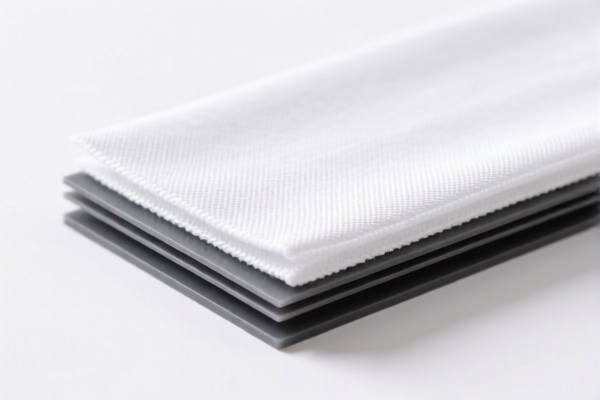
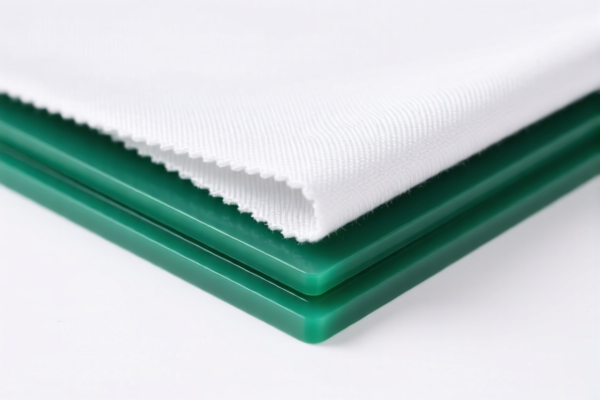
AI分析
🧱 Textile Reinforced Plastic Sheets (TRPS)
🌐 HS Code Reference & Clearance Guide | 2026 Latest Tariff Analysis | Professional Customs Strategy
📌 I. Product Definition & Classification: Do You Really Understand "Textile Reinforced Plastic"?
Textile Reinforced Plastic Sheets (also known as composite plates or laminates) are essential materials in aerospace, automotive, marine, and construction industries. In international trade, they are defined by two critical criteria: composition (plastic + textile) and weight (specific gravity/thickness).
Key Classification Logic:
1. Material Composition: Must contain both plastic (headings 3901–3914) and textile fibers.
2. Weight Threshold: The classification hinges on whether the product weighs more than 1.492 kg/m².
3. Fiber Dominance: Within the textile component, whether man-made fibers or vegetable fibers predominate by weight.
⚠️ Critical Distinction:
- If the sheet weighs ≤ 1.492 kg/m²: It generally falls under 3920 (Other plates, sheets, film, foil and strip) or 3921 depending on structure, but often has different duty rates. - If the sheet weighs > 1.492 kg/m²: It falls under 3921.90.25 (Combined with textile materials, weighing more than 1.492 kg/m²). - Note: The provided data only covers the > 1.492 kg/m² category combined with textiles.
📦 II. HS Code Classification Details (2026 Latest Tariff Authority Alignment)
Based on the provided data, all applicable HS codes fall under Heading 3921: Other plates, sheets, film, foil and strip, of plastics. Specifically, they are categorized under "Combined with textile materials and weighing more than 1.492 kg/m²".
| HS Code | Product Description | Key Criteria | Textile Fiber Type |
|---|---|---|---|
3921.90.25.10 |
Other plates, sheets, film, foil and strip, of plastics: Other: Combined with textile materials and weighing more than 1.492 kg/m²: Products with textile components in which man-made fibers predominate by weight over any other single textile fiber Over 70 percent by weight of plastics | Weight > 1.492 kg/m² + Plastic > 70% | Man-made fibers predominate (e.g., Polyester, Nylon, Aramid) |
3921.90.25.50 |
Other plates, sheets, film, foil and strip, of plastics: Other: Combined with textile materials and weighing more than 1.492 kg/m²: Products with textile components in which man-made fibers predominate by weight over any other single textile fiber Other | Weight > 1.492 kg/m² + Plastic ≤ 70% (or not specified as >70%) | Man-made fibers predominate (e.g., Polyester, Nylon, Aramid) |
3926.90.57.00 |
Other articles of plastics and articles of other materials of headings 3901 to 3914: Other: Belting and belts, for machinery: Containing textile fibers: Other: With textile components in which man-made fibers predominate by weight over any other textile fiber | Specific Article: Machinery Belts | Man-made fibers predominate |
3926.90.56.00 |
Other articles of plastics and articles of other materials of headings 3901 to 3914: Other: Belting and belts, for machinery: Containing textile fibers: Other: With textile components in which vegetable fibers predominate by weight over any other textile fiber | Specific Article: Machinery Belts | Vegetable fibers predominate (e.g., Cotton, Jute) |
🔍 重点提醒 (Key Notes):
- Sheets vs. Belts: If the product is a sheet/plate (used for cladding, lining, structural panels), use3921.... If it is a belt (used for conveyor or drive systems), use3926.... - Plastic Content Threshold: For3921.90.25.10, the plastic content must be over 70% by weight. If less, it may fall under3921.90.25.50(if man-made fibers dominate) or other subcategories. - Fiber Type: Man-made fibers (synthetic) vs. Vegetable fibers (natural) determine the specific subheading under3926for belts, but for sheets (3921), only man-made fiber dominance is listed in the data.
💰 III. 2026 Latest Tariff Rate Details (Detailed Breakdown)
✅ Applicable Countries: United States (US)
✅ Origin: China (CN)
✅ Effective Time: Current rates apply
🎯 1. 3921.90.25.10 – Plastic Sheets with Textile Reinforcement (>1.492 kg/m², Man-made Fibers, >70% Plastic)
| Item | Content |
|---|---|
| Base Tariff | 0.0% (ad valorem) |
| Section 301 Additional Tariff | 0.0% (As per provided data) |
| Total Tax Rate | 0.0% |
| Tax Detail | Base: 0.0%, Additional: 0.0% |
| De Minimis Exemption | ✅ Eligible (Likely, as total tax is 0%, but verify if product is on exclusion list) |
| Legal Basis | USITC Tariff Schedule, Heading 3921 |
📌 Explanation:
- The provided data indicates a 0.0% total tax rate for this specific classification.
- This is significantly lower than many other plastic products.
- Caution: Ensure the product truly meets the "man-made fibers predominate" and ">70% plastic" criteria to avoid misclassification penalties.
🎯 2. 3921.90.25.50 – Other Plastic Sheets with Textile Reinforcement (>1.492 kg/m², Man-made Fibers, Other)
| Item | Content |
|---|---|
| Base Tariff | 0.0% |
| Section 301 Additional Tariff | 0.0% |
| Total Tax Rate | 0.0% |
| Tax Detail | Base: 0.0%, Additional: 0.0% |
| Legal Basis | USITC Tariff Schedule, Heading 3921 |
📌 Explanation:
- Also 0.0%.
- Use this if the plastic content is not over 70% or if other specific conditions of.10are not met, but it still falls under "man-made fibers predominate".
🎯 3. 3926.90.57.00 – Machinery Belts (Plastic + Textile, Man-made Fibers)
| Item | Content |
|---|---|
| Base Tariff | 0.0% |
| Section 301 Additional Tariff | 0.0% |
| Total Tax Rate | 0.0% |
| Tax Detail | Base: 0.0%, Additional: 0.0% |
| Legal Basis | USITC Tariff Schedule, Heading 3926 |
📌 Explanation:
- Also 0.0%.
- Note: This code is for belts, not sheets. Misclassifying a sheet as a belt could lead to scrutiny.
🎯 4. 3926.90.56.00 – Machinery Belts (Plastic + Textile, Vegetable Fibers)
| Item | Content |
|---|---|
| Base Tariff | 0.0% |
| Section 301 Additional Tariff | 0.0% |
| Total Tax Rate | 0.0% |
| Tax Detail | Base: 0.0%, Additional: 0.0% |
| Legal Basis | USITC Tariff Schedule, Heading 3926 |
📌 Explanation:
- Also 0.0%.
- Applicable if the textile component is primarily vegetable fiber (e.g., cotton).
🛠️ IV. Customs Clearance Practical Advice (Real-World Pitfall Avoidance Guide)
✅ 1. Required Documentation Checklist
| Document | Mandatory? | Description |
|---|---|---|
| ✅ Product Specification Sheet | ✔️ | Must detail: Weight per m², Plastic type, Textile type, Fiber composition % |
| ✅ Weight Verification | ✔️ | Proof that weight > 1.492 kg/m² (for 3921.90.25 codes) |
| ✅ Fiber Analysis Report | ✔️ | Laboratory report confirming man-made vs. vegetable fiber dominance |
| ✅ Plastic Content Declaration | ✔️ | Confirm if plastic > 70% by weight (critical for .10 vs .50) |
| ✅ Commercial Invoice | ✔️ | Must clearly state "Plastic Sheets with Textile Reinforcement" or "Machinery Belts" |
| ✅ Packing List | ✔️ | Detail dimensions and weight per unit |
| ✅ Photos | ✔️ | Show cross-section to prove layered/composite structure |
✅ 2. Declaration Tips (Key Mnemonics)
🔥 "Weight Matters, Fiber Counts, Plastic Tells, Sheet vs. Belt!"
| Situation | Correct HS Code | Wrong Approach |
|---|---|---|
| Sheet, >1.492 kg/m², Man-made fiber, >70% Plastic | 3921.90.25.10 |
Misclassify as 3921.90.25.50 (still 0%, but incorrect description) |
| Sheet, >1.492 kg/m², Man-made fiber, ≤70% Plastic | 3921.90.25.50 |
Misclassify as .10 |
| Machinery Belt, Man-made fiber | 3926.90.57.00 |
Classify as sheet (3921) → Audit Risk |
| Machinery Belt, Vegetable fiber | 3926.90.56.00 |
Classify as man-made → Penalty Risk |
✅ 3. Special Handling
| Situation | Recommendation |
|---|---|
| Composite Structure | Provide cross-section photos to prove it is not just "coated" but "reinforced/laminated" |
| Mixed Fibers | If multiple textile fibers are present, the one with the highest weight percentage determines the classification |
| Borderline Weight | If weight is close to 1.492 kg/m², provide certified testing reports to avoid reclassification |
| Belts vs. Sheets | If the product can be used as both, classify based on principal use. If primarily for structural panels, use 3921. If for power transmission, use 3926 |
🌍 V. Global Market Comparison (2026 Latest)
| Country/Region | Recommended HS Code | Tariff (China Origin) | Notes |
|---|---|---|---|
| 🇺🇸 USA | 3921.90.25.10 / .50 |
0.0% | Low duty, but strict documentation on weight and fiber |
| 🇨🇳 China | 3921.90.25 |
Varies | Check local Chinese customs for import duties |
| 🇪🇺 EU | 3921.90 |
~5-7% | Different classification system (CN codes) |
| 🇦🇺 Australia | 3921.90 |
~5% | Check for anti-dumping measures |
📌 Conclusion:
- The US provides 0% duty for these specific textile-reinforced plastic sheets and belts, provided they meet the precise criteria.
- The key risk is misclassification (e.g., wrong fiber type, wrong weight threshold, or wrong product type: sheet vs. belt).
📌 VI. Common Errors & Pitfall Guide (Blood & Tears Lessons)
❌ Error 1: Classifying a sheet as a belt (3926 instead of 3921)
👉 Consequence: While both are 0% in this data, it may trigger additional scrutiny for anti-dumping or specific use regulations.
❌ Error 2: Ignoring the 1.492 kg/m² weight threshold
👉 Consequence: If weight is ≤ 1.492 kg/m², the product may fall under a different subheading with different duties.
❌ Error 3: Failing to specify fiber type (man-made vs. vegetable)
👉 Consequence: If vegetable fibers predominate in a belt, it must go to 3926.90.56.00. Using .57 is a misdeclaration.
❌ Error 4: Not verifying plastic content >70%
👉 Consequence: If plastic is ≤70%, it cannot be classified as .10. It must be .50 (if man-made) or another code.
✅ Correct Practice:
"Textile-Reinforced Plastic Sheet, Glass Fiber/Polyester, Weight: 2.0 kg/m², Plastic Content: 75%, For Structural Lining, Model XYZ"
🎯 VII. Conclusion: Precision in Classification Saves Costs!
🎯 Remember the Mnemonic:
🔹 "Weight > 1.492, Fiber Dominates, Plastic >70% for .10, Man-made for .50"
🔹 "Belts go to 3926, Sheets to 3921, Zero Tax if Correct!"
📌 Tip:
If your product is borderline in weight or fiber composition, consider obtaining a Binding Tariff Information (BTI) or Advance Ruling from US Customs and Border Protection (CBP) to ensure compliance and avoid future penalties.
📣 Immediate Action:
📞 Consult with a customs broker
📄 Prepare detailed technical specifications
🚀 Ensure smooth clearance with 0.0% duty efficiency!
✨ Professional Classification Starts with Accurate Data!
💼 Every Percent of Duty Saved is Pure Profit!
用户评价
关于 HS 编码归类
协调制度(HS)是由世界海关组织(WCO)制定的国际贸易商品分类标准。全球 200 多个国家采用 HS 系统作为海关关税、贸易统计和进出口监管的基础。
每个 HS 编码遵循以下层级结构:
- 章(2 位)——商品大类(例如:第 84 章:机器和机械设备)
- 品目(4 位)——章内的更具体分类
- 子目(6 位)——国际通用细分,所有 WCO 成员国统一使用
- 本国细分(8-10 位)——各国自行扩展的细分编码,如美国 HTSUS 10 位编码
正确的 HS 编码归类对于顺利通关、准确缴纳关税和遵守贸易法规至关重要。错误归类可能导致海关延误、多缴关税或罚款。
从CN进口到US时,适用的关税税率可能包括:
- 最惠国(MFN)税率——适用于 WTO 成员国的标准关税税率
- 普通税率——适用于无贸易协定国家
- 贸易救济关税——附加关税,如 301 条款(反倾销)、232 条款(国家安全)或反补贴税
本页内容仅供参考。如需正式归类,请咨询当地海关或持牌报关代理。