Textile reinforced Plastic Building Sheets
CN → US| HS编码 | 关税税率 | 原产国 | 目的国 | 文档 |
|---|---|---|---|---|
| 6815190000 | 35.0% | CN | US | 官方文档 |
| 3921905010 | 39.8% | CN | US | 官方文档 |
| 3921904010 | 39.2% | CN | US | 官方文档 |
| 4823902000 | 35.0% | CN | US | 官方文档 |
| 3921905010 | 39.8% | CN | US | 官方文档 |
商品图片
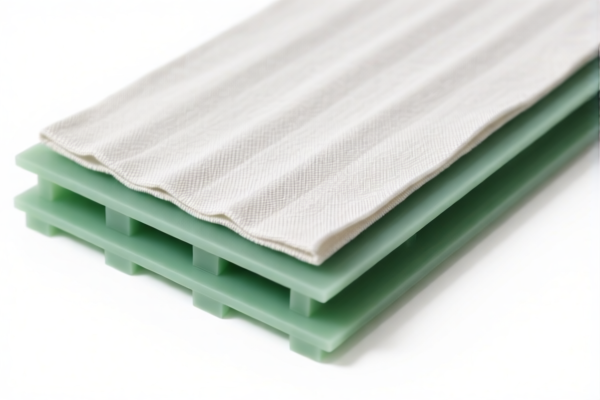
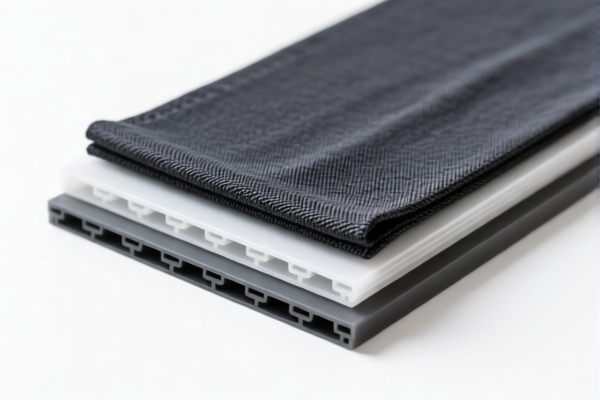
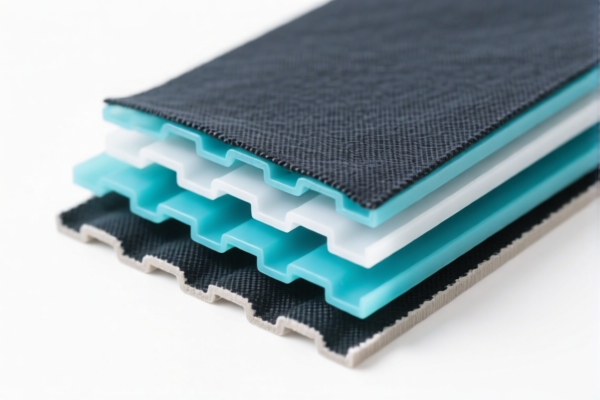
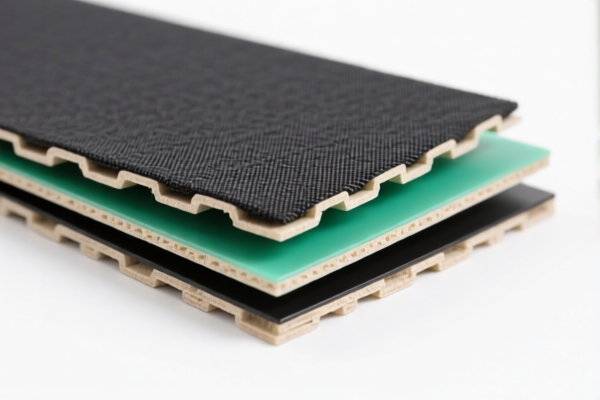
AI分析
🏗️ Textile Reinforced Plastic Building Sheets (TRP Sheets)
🌐 HS Code Reference & Customs Clearance Guide | 2026 Tariff Authority Analysis | Professional Entry Strategy
📌 1. Product Definition & Classification: What are "Textile Reinforced Plastic Building Sheets"?
Textile Reinforced Plastic (TRP) Building Sheets are composite materials consisting of a plastic matrix reinforced with textile fibers. They are primarily used in construction for façade cladding, interior decoration, roofing, or structural reinforcement. The key differentiator in classification is whether the product is viewed as a composite mineral-based product (if carbon/graphite fibers dominate or it mimics stone properties) or a plastic composite board.
⚠️ Key Classification Point:
- If the sheet is perceived as a carbon-fiber-like composite with stone-like properties, it falls under Chapter 68 (Articles of Stone, Plaster, Cement, Asbestos, Mica or Similar Materials).
- If the sheet is primarily a plastic board with textile reinforcement layers, it falls under Chapter 39 (Plastics and Articles Thereof).
- If the sheet contains significant cellulose/plant fibers, it might fall under Chapter 48 (Paper and Paperboard).
📦 2. HS Code Classification Details (2026 Latest Tariff Authority Data)
| HS Code | Product Description | Application Scenario | Composition Logic |
|---|---|---|---|
6815.19.00.00 |
Articles of stone or other mineral substances, including carbon fibers and similar fiber articles, other than those of heading 6801 or 6802. | High-end decorative boards, carbon-fiber lookalikes, mineral-composite cladding. | Mineral/Composite Logic: Treated as stone-like or carbon-fiber reinforced composite boards. |
3921.90.50.10 |
Other plates, sheets, film, foil and strip, of plastics, reinforced, laminated, supported or similarly combined with other materials. | Plastic decorative boards, high-pressure laminates (HPL), textile-reinforced plastic cladding. | Plastic Logic: Plastic base with textile reinforcement layer, matching HPL structure. |
3921.90.40.10 |
Other plates, sheets, film, foil and strip, of plastics, reinforced, laminated, supported or similarly combined with other materials. | General plastic boards where textile is a variant reinforcement. | Plastic Logic: Plastic board form, textile reinforcement considered a variant of plastic composites. |
4823.90.20.00 |
Other paper, paperboard, cardboard, matrices and articles of paper pulp, cellulose wadding or webs of cellulose fibers. | Plant fiber reinforced boards, cellulose-based composite panels. | Cellulose Logic: Board contains significant cellulose/plant fiber components, treated as paperboard/composite. |
🔍 Critical Reminder:
- Chapter 68 (6815.19.00.00) applies if the product is deemed a mineral/carbon-fiber composite. This is often the case for "carbon fiber like" decorative boards.
- Chapter 39 (3921.90.50.10/3921.90.40.10) applies if the product is a plastic composite board. This is the most common classification for "plastic decorative sheets" with textile reinforcement.
- Chapter 48 (4823.90.20.00) is a niche classification for boards with high plant fiber/cellulose content.
💰 3. 2026 Latest Tariff Rate Details (Including Surcharge & Policy Add-ons)
✅ Applicable Country: USA (US)
✅ Origin: China (CN)
✅ Effective Date: November 10, 2025 (and onwards)
🎯 1. 6815.19.00.00 — Carbon Fiber / Mineral Composite Boards
| Item | Detail |
|---|---|
| Base Tariff | 0.0% |
| Section 301 Surcharge | +25.0% |
| IEEPA Section 122 Surcharge | +10.0% |
| Total Tariff Rate | 35.0% |
| Tax Calculation | CIF Value × 35% |
| De Minimis Eligibility | ❌ Not Eligible (No de_minimis exemption for Section 301/122 goods) |
| Legal Basis Path | USITC:6815.19.00.00 → FOOTNOTE:301:25% → IEEPA:122:10% |
📌 Explanation:
- This classification treats TRP sheets as mineral/carbon-fiber composites.
- The 35% total tariff (0% base + 25% Section 301 + 10% IEEPA 122) is significantly lower than the plastic composite rates.
- Key Advantage: If your product can be successfully classified here, it saves 4.8%–4.8% compared to the plastic classifications.
🎯 2. 3921.90.50.10 — Plastic Boards with Textile Reinforcement (HPL-like)
| Item | Detail |
|---|---|
| Base Tariff | 4.8% |
| Section 301 Surcharge | +25.0% |
| IEEPA Section 122 Surcharge | +10.0% |
| Total Tariff Rate | 39.8% |
| Tax Calculation | CIF Value × 39.8% |
| De Minimis Eligibility | ❌ Not Eligible |
| Legal Basis Path | USITC:3921.90.50.10 → FOOTNOTE:301:25% → IEEPA:122:10% |
📌 Explanation:
- This is the most common classification for plastic-based decorative sheets with textile reinforcement.
- It aligns with High-Pressure Laminate (HPL) structures where textile is a reinforcement layer.
- Total Rate: 39.8% (4.8% base + 25% + 10%).
🎯 3. 3921.90.40.10 — Other Plastic Boards with Textile Reinforcement
| Item | Detail |
|---|---|
| Base Tariff | 4.2% |
| Section 301 Surcharge | +25.0% |
| IEEPA Section 122 Surcharge | +10.0% |
| Total Tariff Rate | 39.2% |
| Tax Calculation | CIF Value × 39.2% |
| De Minimis Eligibility | ❌ Not Eligible |
| Legal Basis Path | USITC:3921.90.40.10 → FOOTNOTE:301:25% → IEEPA:122:10% |
📌 Explanation:
- Similar to3921.90.50.10, but categorized under a slightly different subheading for plastic boards.
- Total Rate: 39.2% (4.2% base + 25% + 10%).
- Savings: 0.6% lower than3921.90.50.10, but still higher than6815.19.00.00.
🎯 4. 4823.90.20.00 — Plant Fiber/Cellulose Reinforced Boards
| Item | Detail |
|---|---|
| Base Tariff | 0.0% |
| Section 301 Surcharge | +25.0% |
| IEEPA Section 122 Surcharge | +10.0% |
| Total Tariff Rate | 35.0% |
| Tax Calculation | CIF Value × 35.0% |
| De Minimis Eligibility | ❌ Not Eligible |
| Legal Basis Path | USITC:4823.90.20.00 → FOOTNOTE:301:25% → IEEPA:122:10% |
📌 Explanation:
- Only applicable if the board is primarily cellulose/plant fiber-based.
- If your TRP sheet is truly plastic-based, this classification is incorrect and risks audit.
- Total Rate: 35.0% (same as Chapter 68), but higher risk of misclassification if not cellulose-rich.
🛠️ 4. Customs Clearance Practical Advice (Pitfall Avoidance Guide)
✅ 1. Preparation Checklist (Essential Documents)
| Document | Mandatory? | Description |
|---|---|---|
| ✅ Product Specification Sheet | ✔️ | Detailed composition: % of plastic, % of textile, % of mineral/cellulose. |
| ✅ Material Safety Data Sheet (MSDS) | ✔️ | For chemical compliance and safety classification. |
| ✅ Product Photos (Labeled) | ✔️ | Clear images of cross-sections showing layers (plastic, textile, filler). |
| ✅ Bill of Materials (BOM) | ✔️ | To prove if it’s a "composite" or "plastic board." |
| ✅ Commercial Invoice | ✔️ | Accurate description: "Textile-Reinforced Plastic Composite Board, Not for Construction Load-Bearing." |
| ✅ Packing List | ✔️ | Weight and dimensions per unit. |
| ✅ Certificate of Origin (CO) | ✔️ | If claiming preferential treatment under other FTAs (unlikely for China-US). |
✅ 2. Declaration Tips (Key Mnemonics)
🔥 "Composition is King! Plastic vs. Mineral!"
| Scenario | Recommended HS Code | Reason |
|---|---|---|
| Carbon-fiber look / Stone-like composite | 6815.19.00.00 |
Classified as mineral/carbon-fiber composite → 35.0% Tariff. |
| Plastic base + Textile layer (HPL style) | 3921.90.50.10 |
Classified as plastic board with reinforcement → 39.8% Tariff. |
| General Plastic Board + Textile | 3921.90.40.10 |
Classified as other plastic board → 39.2% Tariff. |
| Plant Fiber/Cellulose Rich Board | 4823.90.20.00 |
Classified as paperboard composite → 35.0% Tariff (High Risk if misapplied). |
📌 Critical Advice:
- Do not simply declare as "Plastic Sheet." Be specific: "Textile-Reinforced Plastic Composite Board."
- If the product is carbon-fiber reinforced, push for 6815.19.00.00 to save 4.8%.
- If it’s a standard plastic laminate, 3921.90.50.10 is the safest and most common.
✅ 3. Special Cases Handling
| Case | Handling Suggestion |
|---|---|
| OEM Custom TRP Sheets | Provide client design specs. Ensure description matches the primary material (plastic vs. mineral). |
| Mixed Materials (Plastic + Textile + Resin) | Declare as 3921.90.50.10 (Plastic Board). The plastic matrix defines the chapter. |
| High Carbon Content | Push for 6815.19.00.00 if the carbon fibers dominate and mimic stone/carbon articles. |
| Wood/Cellulose Fillers | If >50% cellulose, consider 4823.90.20.00, but be prepared for customs challenge. |
🌍 5. Global Market Comparison (2026 Latest)
| Country/Region | Recommended HS Code | Tariff (China Origin) | Notes |
|---|---|---|---|
| 🇺🇸 USA | 3921.90.50.10 |
39.8% | High tariff due to Section 301 + IEEPA. |
| 🇺🇸 USA | 6815.19.00.00 |
35.0% | Lower if classified as mineral/carbon composite. |
| 🇨🇳 China | 3921.90.50.10 |
~4-5% | Low import duty, no surcharges. |
| 🇪🇺 EU | 3921.90.99 |
0-6.5% | Depends on specific plastic type. No Section 301. |
| 🇬🇧 UK | 3921.90.99 |
0-6.5% | Post-Brexit tariffs apply. |
📌 Conclusion:
- USA is the most expensive market due to Section 301 and IEEPA 122 surcharges.
- Mineral/Carbon Composite (6815) is the most tariff-efficient classification for US exports.
- Plastic Composite (3921) is the most common but has a higher tariff burden.
📌 6. Common Mistakes & Pitfalls (Lessons Learned)
❌ Mistake 1: Declaring as "Plastic Sheet" without mentioning "Textile Reinforcement."
👉 Consequence: Customs may classify as plain plastic (3921.90.00.00), leading to penalties or higher scrutiny.
❌ Mistake 2: Using 6815.19.00.00 for a standard plastic board.
👉 Consequence: Customs will reject, reclassify to 3921.90.50.10, and charge additional tariffs + penalties.
❌ Mistake 3: Ignoring IEEPA Section 122.
👉 Consequence: Even if you get the right HS code, forgetting to account for the 10% IEEPA surcharge leads to underpayment.
❌ Mistake 4: Using 4823.90.20.00 for plastic sheets.
👉 Consequence: Misclassification. If not cellulose-based, customs will force 3921 classification.
✅ Correct Approach:
"Textile-Reinforced Plastic Composite Board, Plastic Matrix, Carbon/Textile Reinforcement, for Façade Cladding. Model: XYZ, FCC/CE Certified."
🎯 7. Conclusion: Professional Declaration, Cost Optimization!
🎯 Key Takeaway:
🔹 "If it looks like carbon/stone, use 6815 (35%). If it’s plastic, use 3921 (39.2%-39.8%)."
🔹 "Textile reinforcement doesn't change the chapter; the matrix material does."
🔹 "Always account for 35% (6815) or 39.8% (3921) for US imports from China."
📌 Pro Tip:
If your product can be technically argued as a carbon-fiber composite (mineral/carbon logic), apply for an Advance Ruling from US Customs to lock in the 35.0% tariff rate instead of 39.8%. This saves 4.8% on every shipment!
📣 Immediate Action:
📞 Contact your customs broker with material composition data.
🚀 Optimize your HS Code to minimize duty burden.
✨ Accurate classification saves money!
✨ Professional Customs Clearance Starts with Precise Classification!
💼 Every percentage point counts in international trade!
用户评价
关于 HS 编码归类
协调制度(HS)是由世界海关组织(WCO)制定的国际贸易商品分类标准。全球 200 多个国家采用 HS 系统作为海关关税、贸易统计和进出口监管的基础。
每个 HS 编码遵循以下层级结构:
- 章(2 位)——商品大类(例如:第 84 章:机器和机械设备)
- 品目(4 位)——章内的更具体分类
- 子目(6 位)——国际通用细分,所有 WCO 成员国统一使用
- 本国细分(8-10 位)——各国自行扩展的细分编码,如美国 HTSUS 10 位编码
正确的 HS 编码归类对于顺利通关、准确缴纳关税和遵守贸易法规至关重要。错误归类可能导致海关延误、多缴关税或罚款。
从CN进口到US时,适用的关税税率可能包括:
- 最惠国(MFN)税率——适用于 WTO 成员国的标准关税税率
- 普通税率——适用于无贸易协定国家
- 贸易救济关税——附加关税,如 301 条款(反倾销)、232 条款(国家安全)或反补贴税
本页内容仅供参考。如需正式归类,请咨询当地海关或持牌报关代理。