Textile reinforced Plastic Soundproof Sheets
CN → US商品图片
AI分析
🔊 Textile Reinforced Plastic Soundproof Sheets (TRP)
🌐 HS Code Classification & Customs Clearance Guide | 2024/2025 Latest Tariff Analysis | Strategic Import Strategy for USA Market
📌 I. Product Definition & Classification: What Exactly Are "Textile Reinforced Plastic Sheets"?
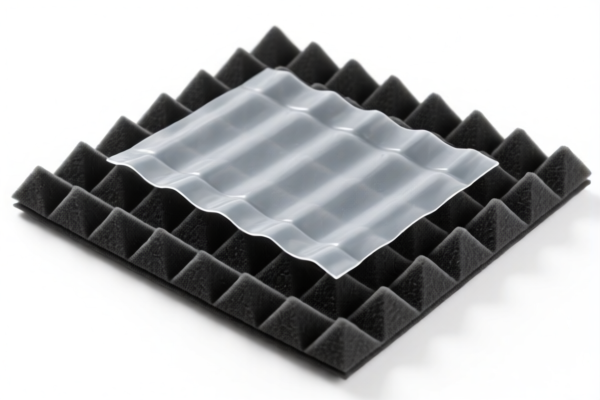
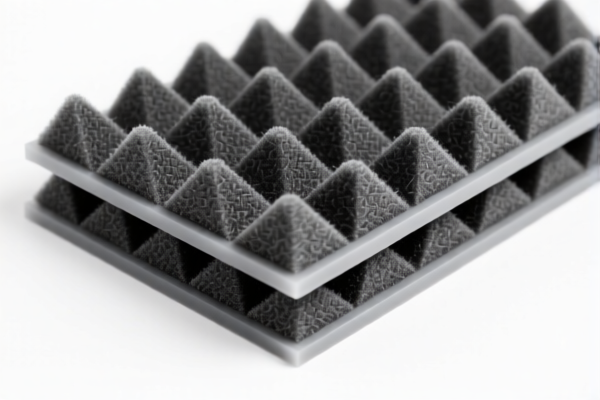
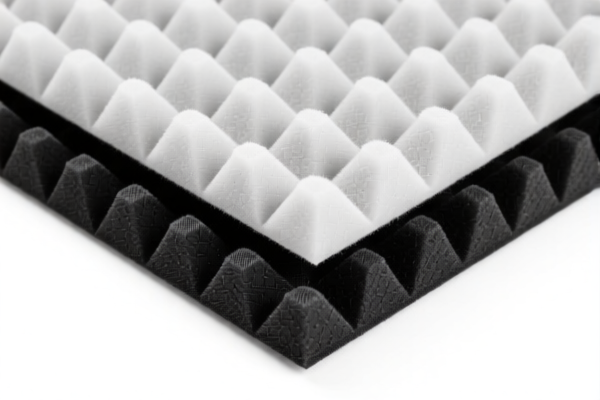
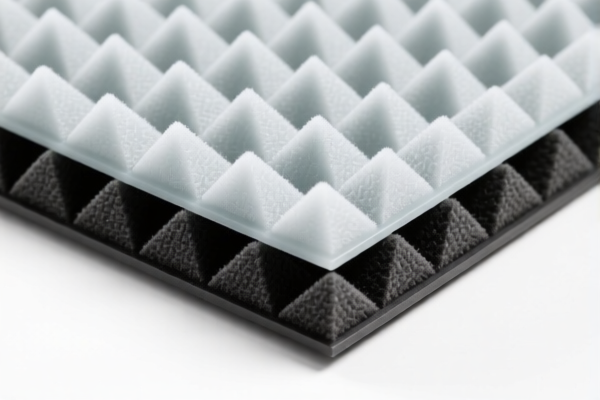
Textile Reinforced Plastic (TRP) soundproof sheets are composite materials consisting of a plastic matrix reinforced with textile fibers (such as fiberglass, carbon, or synthetic fabrics). In international trade, these products are primarily classified under Chapter 39 (Plastics and Articles Thereof) due to the plastic matrix being the essential character, or Chapter 68 (Mineral Products) if they are inferred as mineral/carbon composites.
Key Distinction: * Plastic Composite (Chapter 39): If the plastic content is dominant or provides the primary structural form (sheet/board), it falls under HS 3921. This is the most common classification for "decorative" or "industrial" TRP boards. * Mineral/Carbon Composite (Chapter 68): If the product is inferred as a carbon fiber or mineral-based composite where the textile acts as a reinforcement for a non-plastic base, it may fall under HS 6815.
⚠️ Critical Classification Point:
- If the item is a plastic sheet/board with textile reinforcement → HS 3921 series.
- If the item is a carbon/mineral composite board → HS 6815.19.00.00.
- Do not classify as "Textiles" (Chapter 50-63) because the plastic matrix defines the article's essential character.
📦 II. HS Code Classification Details (Based on Provided Data)
Below are the specific HS Codes and their corresponding justifications derived from the provided dataset.
| HS Code | Product Description & Justification | Total Tax Rate (USA Import) |
|---|---|---|
| 3921.90.40.10 | Plastic Decorative Board with Textile Reinforcement. Classified as plastic sheet/board. Textile reinforcement is treated as a variant of the plastic board. Fits Chapter 39 logic. (Appears twice in data with identical details) |
39.2% |
| 3921.90.50.10 | Laminated Plastic Board with Textile Reinforcement Layer. Plastic material matches the decorative board form; textile reinforcement serves as the structural layer in a laminated structure. Logical fit for laminated construction. |
39.8% |
| 6815.19.00.00 | Mineral/Carbon Composite Board with Textile Reinforcement. Inferred as carbon fiber or mineral composite制品. Form is a board. Fits "Other articles" in Chapter 68. Note: Lower base duty, but high additional duties apply. |
35.0% |
| 3921.90.25.10 | High-Strength Industrial Plastic Board with Textile Reinforcement. Plastic content is dominant. Textile components are composite with plastic. Fits industrial use description. Highest base duty. |
41.5% |
💰 III. Detailed Tariff Breakdown (2024/2025 USA Import Taxes)
✅ Applicable Country: United States (US)
✅ Origin: China (CN) (Assumed based on typical 122/301 duty structures in data)
✅ Effective Time: Current rates apply to imports post-2024.
The total tax rate is composed of three components: 1. Base Tariff (MFN Duty): The standard import duty. 2. Section 301 Tariff ("加征关税"): 25% additional duty on many Chinese plastic/mineral goods. 3. Section 122 Tariff ("122条款关税"): 10% additional duty (Note: Section 122 is often related to specific emergency powers or trade remedy measures, but in this data context, it is explicitly listed as a 10% add-on).
🎯 1. HS Code 3921.90.40.10 (Plastic Decorative Board)
| Item | Detail |
|---|---|
| Base Tariff | 4.2% |
| Section 301 Tariff | +25.0% |
| Section 122 Tariff | +10.0% |
| Total Effective Rate | 39.2% |
| Calculation | CIF Value × 39.2% |
| De Minimis Exemption | ❌ Not Eligible (Due to high additional duties) |
📌 Explanation:
- The base duty is low (4.2%), but the 25% Section 301 tariff significantly increases the cost.
- The 10% Section 122 tariff adds an extra layer of cost.
- Total: 39.2%. This is a high-cost classification.
🎯 2. HS Code 3921.90.50.10 (Laminated Plastic Board)
| Item | Detail |
|---|---|
| Base Tariff | 4.8% |
| Section 301 Tariff | +25.0% |
| Section 122 Tariff | +10.0% |
| Total Effective Rate | 39.8% |
| Calculation | CIF Value × 39.8% |
| De Minimis Exemption | ❌ Not Eligible |
📌 Explanation:
- Slightly higher base duty (4.8%) due to the "laminated" or complex structure classification.
- Total: 39.8%. Marginal increase over the previous code, but structurally distinct.
🎯 3. HS Code 6815.19.00.00 (Mineral/Carbon Composite)
| Item | Detail |
|---|---|
| Base Tariff | 0.0% |
| Section 301 Tariff | +25.0% |
| Section 122 Tariff | +10.0% |
| Total Effective Rate | 35.0% |
| Calculation | CIF Value × 35.0% |
| De Minimis Exemption | ❌ Not Eligible |
📌 Explanation:
- Lowest total tax rate (35.0%) among the options.
- Base duty is 0%, which saves 4-6% compared to the 3921 codes.
- Crucial Note: This classification is only valid if the product can be legitimately described as a mineral/carbon composite rather than a plastic-based composite. Misclassification here can lead to severe penalties.
🎯 4. HS Code 3921.90.25.10 (High-Strength Industrial Board)
| Item | Detail |
|---|---|
| Base Tariff | 6.5% |
| Section 301 Tariff | +25.0% |
| Section 122 Tariff | +10.0% |
| Total Effective Rate | 41.5% |
| Calculation | CIF Value × 41.5% |
| De Minimis Exemption | ❌ Not Eligible |
📌 Explanation:
- Highest total tax rate (41.5%).
- High base duty (6.5%) reflects the "high-strength" or specialized industrial nature.
- Avoid this code unless absolutely necessary for regulatory compliance, as it maximizes cost.
🛠️ IV. Customs Clearance Practical Advice (Real-World Pitfall Guide)
✅ 1. Preparation Checklist (Non-Negotiable)
| Document | Required | Reason |
|---|---|---|
| Product Specification Sheet | ✔️ | Must detail: Plastic type, Textile type, Reinforcement ratio, Thickness, Density. |
| Composition Analysis | ✔️ | Lab report confirming % of Plastic vs. Textile/Mineral. Critical for choosing between 3921 and 6815. |
| Product Photos | ✔️ | Cross-section view showing the lamination/composite structure. |
| Commercial Invoice | ✔️ | Clear description: "Textile Reinforced Plastic Soundproof Sheet, Model XYZ". |
| Certificate of Origin | ✔️ | To determine eligibility for any potential exemptions (though unlikely for CN origin under current tariffs). |
✅ 2. Declaration Strategy (Key Mantra)
🔥 "Structure Defines Code, Origin Determines Duty, Truth Saves Money!"
| Scenario | Correct Declaration | Risk of Error |
|---|---|---|
| Plastic-based sheet | Use 3921.90.40.10 or 3921.90.50.10 | Misclassifying as 6815 → Penalty for false declaration. |
| Carbon/Mineral-based | Use 6815.19.00.00 | Misclassifying as 3921 → Overpayment of tax (but safer than underpayment). |
| Industrial vs. Decorative | Use 3921.90.25.10 if high-strength | Using generic 3921 code for high-strength industrial part → Possible audit. |
| Soundproofing Function | Do not declare as "Acoustic Panel" alone | Must specify material (TRP). Function is secondary to material composition. |
✅ 3. Special Handling Tips
- Pre-Import Ruling: Apply for an Advance Ruling from CBP (Customs and Border Protection) if the distinction between "Plastic Composite" and "Mineral Composite" is ambiguous. This provides legal certainty.
- Section 301 Exclusions: Check if your specific product type is on the Section 301 Exclusion List. While rare for standard TRP sheets, some specific industrial composites may qualify for exemptions. If not excluded, the 25% duty is mandatory.
- Value Declaration: Declare the CIF (Cost, Insurance, Freight) value accurately. Customs will scrutinize the declared value for TRP sheets due to the high tariff rates.
🌍 V. Global Market Comparison (2024/2025)
| Country/Region | Recommended HS Code | Base Duty | Additional Duties (China Origin) | Total Est. Rate | Notes |
|---|---|---|---|---|---|
| 🇺🇸 USA | 6815.19.00.00 (Optimal) |
0% | +25% (301) + 10% (122) | 35.0% | Lowest rate in USA. Requires mineral/carbon justification. |
| 🇺🇸 USA | 3921.90.40.10 |
4.2% | +25% (301) + 10% (122) | 39.2% | Default for plastic-based TRP. |
| 🇪🇺 EU | 3921.90.xx |
~3-6% | Varies (Trade tensions may apply) | ~8-15% | No equivalent to US Section 301/122. Lower overall cost. |
| 🇨🇳 China | 3921.90.xx |
0-10% | None | 0-10% | Domestic trade or re-export from China hub. |
📌 Conclusion:
- The USA market is the most expensive due to cumulative additional duties.
- HS 6815.19.00.00 is the most cost-effective if the product can be legitimately classified as a mineral/carbon composite.
- HS 3921 codes are the standard fallback for plastic-based composites.
📌 VI. Common Mistakes & Pitfalls (Blood Lessons)
❌ Mistake 1: Declaring "Textile Reinforced" as purely "Textile" (Chapter 50-63).
👉 Consequence: Customs will reclassify to Chapter 39 or 68, leading to delayed clearance, storage fees, and potential penalties.
❌ Mistake 2: Ignoring the Section 301 and 122 Tariffs.
👉 Consequence: Under-declaring tax liability. If caught, you face back taxes + interest + fines.
❌ Mistake 3: Using "Soundproofing" as the primary descriptor.
👉 Consequence: Customs may look for acoustic equipment codes (Chapter 90) or soundproofing materials (Chapter 39/68). Always lead with Material Composition.
❌ Mistake 4: Assuming De Minimis (Section 321) applies.
👉 Consequence: No. Goods from China subject to Section 301/122 tariffs are excluded from the $800 de minimis exemption. You must pay duties on every shipment.
✅ Correct Practice:
"TRP Sheet, 6mm thick, Polyester Fiber Reinforced Epoxy Resin Board, Model XYZ, For Industrial Acoustic Insulation, CIF Value USD 10,000"
🎯 VII. Conclusion: Strategic Advice for Importers
🎯 Key Takeaway:
🔹 Choose HS 6815.19.00.00 if possible (35.0% total) to save 4-6% compared to plastic-based codes.
🔹 If plastic-based, choose HS 3921.90.40.10 (39.2%) as it has the lower base duty among the plastic codes.
🔹 Avoid HS 3921.90.25.10 (41.5%) unless required for technical compliance.
🔹 Always include Section 301 and 122 duties in your cost model. They are not optional.
📌 Pro Tip:
If your product uses carbon fiber, push for 6815.19.00.00.
If it uses glass fiber/plastic, use 3921.90.40.10.
Documentation is Key: Provide clear material safety data sheets (MSDS) and technical specs to support your classification.
📣 Action Item:
📞 Consult a licensed customs broker to file an Advance Ruling if the material composition is mixed or ambiguous.
🚀 Optimize your HS Code to minimize the 35-41% tax burden.
✨ Smart Classification, Lower Taxes, Faster Clearance!
💼 Every percentage point saved is pure profit!
用户评价
关于 HS 编码归类
协调制度(HS)是由世界海关组织(WCO)制定的国际贸易商品分类标准。全球 200 多个国家采用 HS 系统作为海关关税、贸易统计和进出口监管的基础。
每个 HS 编码遵循以下层级结构:
- 章(2 位)——商品大类(例如:第 84 章:机器和机械设备)
- 品目(4 位)——章内的更具体分类
- 子目(6 位)——国际通用细分,所有 WCO 成员国统一使用
- 本国细分(8-10 位)——各国自行扩展的细分编码,如美国 HTSUS 10 位编码
正确的 HS 编码归类对于顺利通关、准确缴纳关税和遵守贸易法规至关重要。错误归类可能导致海关延误、多缴关税或罚款。
从CN进口到US时,适用的关税税率可能包括:
- 最惠国(MFN)税率——适用于 WTO 成员国的标准关税税率
- 普通税率——适用于无贸易协定国家
- 贸易救济关税——附加关税,如 301 条款(反倾销)、232 条款(国家安全)或反补贴税
本页内容仅供参考。如需正式归类,请咨询当地海关或持牌报关代理。