Thatching Machine
CN → US| HS编码 | 关税税率 | 原产国 | 目的国 | 文档 |
|---|---|---|---|---|
| 8436800020 | 35.0% | CN | US | 官方文档 |
| 8436800040 | 35.0% | CN | US | 官方文档 |
商品图片
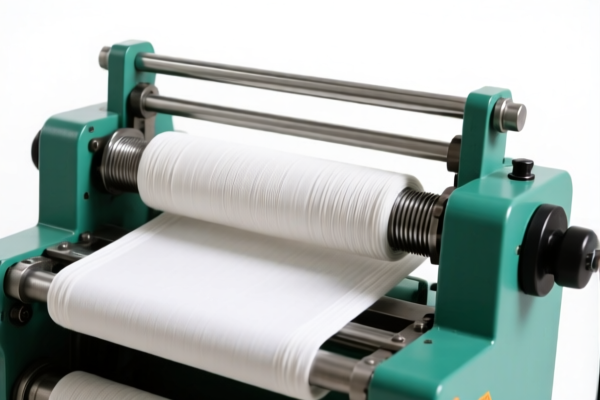
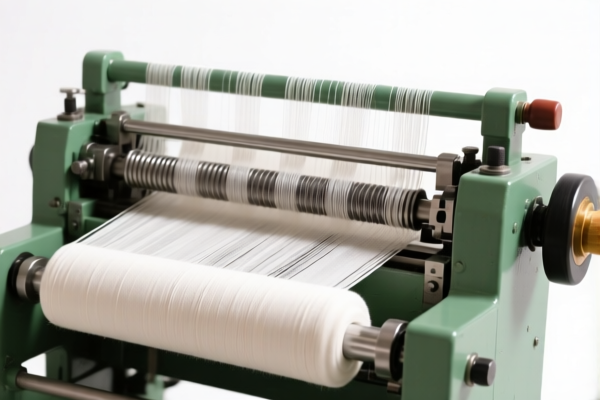
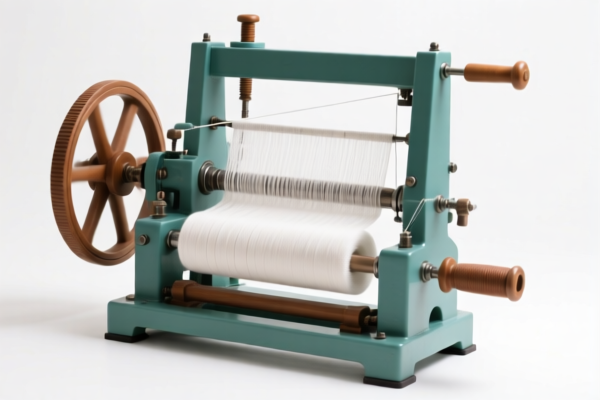
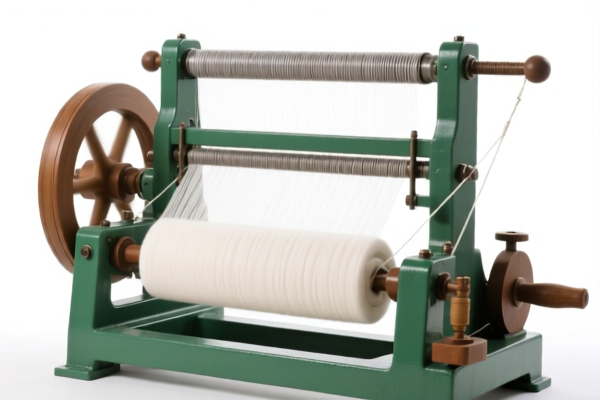
AI分析
🌾 Thatching Machine & Roofing Machinery (Agricultural & Forestry Machinery)
🌐 HS Code Reference & Customs Clearance Guide | 2026 Latest Tariff Analysis | Professional Compliance Strategy
📌 I. Product Definition & Classification: What is a "Thatching Machine"?
A Thatching Machine refers to mechanical equipment used in the preparation, processing, or application of thatch (straw, reeds, grass) for roofing. In international trade and customs classification, these machines are generally categorized under Chapter 84: Nuclear Reactors, Boilers, Machinery and Mechanical Appliances; Parts Thereof.
Specifically, they fall under Heading 8436, which covers:
"Other agricultural, horticultural, forestry, poultry-keeping or bee-keeping machinery, including germination plant fitted with mechanical or thermal equipment; poultry incubators and brooders; parts thereof."
While "thatching" is primarily a construction/roofing activity, the machinery used to process the raw materials (straw/reeds) into usable thatch bundles or to assist in the mechanical application is often classified as agricultural or forestry processing machinery if it involves cutting, bundling, or treating the plant materials.
⚠️ Key Distinction:
- If the machine is used purely for manual roof repair with no mechanical processing of materials → It may be considered a hand tool or general purpose hardware (Chapter 82/83).
- If the machine mechanically processes straw/reeds (cutting, pressing, bundling) or is a specialized forestry/agricultural implement for handling plant matter → It falls under HS Code 8436.
📦 II. HS Code Classification Details (2026 Latest Tariff Alignment)
Based on the provided <DATA>, the following HS Codes apply to agricultural/forestry machinery, including parts:
| HS Code | Product Description | Applicability for Thatching/Agri-Machinery |
|---|---|---|
8436.80.00.20 |
Other machinery: Forestry machinery | ✅ Most Likely: If the machine processes wood, branches, or dense reeds used in thatching, it is classified as forestry machinery. This includes mechanized cutters or processors. |
8436.80.00.40 |
Other machinery: Barn and barnyard machines | ✅ Possible: If the machine is used for preparing straw/reeds for animal bedding or roof thatch within a barn setting (e.g., balers, strippers, or processing lines for agricultural residues). |
🔍 Critical Note:
- No Dedicated "Thatching" HS Code Exists: There is no specific 8-digit code for "rooftop thatching tools." Customs agencies typically classify them based on material processing function.
- If it cuts/handles plant matter → Look to 8436.80 (Forestry/Agricultural).
- If it is a simple handheld tool → It might be classified under Chapter 82 (Tools) or Chapter 95 (Sports/Recreation), but mechanical units go to 8436.
💰 III. 2026 Latest Tariff Rate Breakdown (Including Additional Duties)
✅ Applicable Country: United States (US)
✅ Country of Origin: China (CN)
✅ Effective Date: Post-2025 (Current Trade Policy Context)
🎯 1. 8436.80.00.20 —— Forestry Machinery
| Item | Detail |
|---|---|
| Product Description | Other agricultural, horticultural, forestry, poultry-keeping or bee-keeping machinery; Parts thereof: Other machinery: Forestry machinery |
| Base Tariff (MFN) | 0.0% |
| Section 301 Additional Duty | +25.0% |
| Total Tariff Rate | 25.0% |
| Tax Calculation | CIF Value × 25% |
| De Minimis Exemption | ❌ Not Applicable (Mechanical machinery is excluded from de minimis thresholds for certain Chinese origins under recent enforcement trends, though traditionally under $800 is exempt for most items, machinery often faces stricter scrutiny). |
| Legal Reference | HTSUS 8436.80.00.20; USITC Section 301 List |
📌 Explanation:
- The 0% base rate reflects the standard MFN tariff for most agricultural/forestry machinery.
- The 25% additional duty is imposed under Section 301 of the Trade Act of 1974 on Chinese imports. This is a significant cost that must be factored into your landed cost calculation.
- No IEEPA 10% applies here (IEEPA tariffs are currently applied to specific electronics, batteries, and semiconductors, not typically general machinery like this, unless specifically targeted).
🎯 2. 8436.80.00.40 —— Barn and Barnyard Machines
| Item | Detail |
|---|---|
| Product Description | Other agricultural, horticultural, forestry, poultry-keeping or bee-keeping machinery; Parts thereof: Other machinery: Other: Barn and barnyard machines |
| Base Tariff (MFN) | 0.0% |
| Section 301 Additional Duty | +25.0% |
| Total Tariff Rate | 25.0% |
| Tax Calculation | CIF Value × 25% |
| De Minimis Exemption | ❌ Not Applicable (Same as above) |
| Legal Reference | HTSUS 8436.80.00.40; USITC Section 301 List |
📌 Explanation:
- If your thatching preparation equipment is used in a barn setting (e.g., straw processing for roof thatch and animal bedding), it falls here.
- Same 25% tariff as forestry machinery.
🛠️ IV. Customs Clearance Practical Advice (Avoiding Pitfalls)
✅ 1. Document Checklist (Essential for Clearance)
| Document | Required | Purpose |
|---|---|---|
| ✅ Commercial Invoice | ✔️ | Must clearly state: "Thatching Machine" or "Straw Processing Machinery." Avoid vague terms like "Construction Tool." |
| ✅ Product Specification Sheet | ✔️ | Detail the machine’s function: Is it a cutter, baler, or applicator? Does it process agricultural/forestry products? |
| ✅ Function Description | ✔️ | Explain how it is used. If it cuts reeds/straw, emphasize agricultural/forestry processing. |
| ✅ HS Code Justification Memo | ✔️ | Explain why it falls under 8436 (Agricultural/Forestry Machinery) and not general construction equipment. |
| ✅ Photos of the Machine | ✔️ | Show control panels, engines, or mechanical components to prove it is machinery, not a hand tool. |
✅ 2. Classification Strategy (Key Tips)
🔥 Golden Rule: "If it processes plants, it’s Agri/Forestry (8436). If it’s just a tool, it’s Chapter 82/83."
| Scenario | Recommended HS Code | Risk |
|---|---|---|
| Mechanical straw reed cutter/baler | 8436.80.00.20 (Forestry) |
Low risk if function is plant processing. |
| Barn straw processing line | 8436.80.00.40 (Barn) |
Low risk if used in agricultural setting. |
| Handheld thatching comb/trowel | Not 8436 | Must use Chapter 82 (Tools) or 83 (Parts). Do not force 8436 for hand tools. |
| Motorized roof thatching gun | Check Chapter 84 | If it’s a spray applicator for adhesives, it might be 8424 (Spray machines). Clarify function! |
✅ 3. Special Cases & Warnings
| Case | Handling Advice |
|---|---|
| OEM/White Label Machines | Ensure the manufacturer’s name and country of origin are clear. Mislabeling origin can lead to severe penalties for Section 301 evasion. |
| Mixed Shipments | If shipping with other goods, ensure thatching machines are separated in the packing list to avoid misclassification of non-duty items. |
| Parts vs. Complete Machine | If shipping only parts (e.g., blades, motors), they may also fall under 8436.90 (Parts) with the same 25% additional duty. Ensure parts are clearly described. |
🌍 V. Global Market Comparison (2026 Overview)
| Country/Region | Recommended HS Code | Tariff (China Origin) | Notes |
|---|---|---|---|
| 🇺🇸 USA | 8436.80.00.20 / .40 |
25% | High Section 301 duty. |
| 🇨🇳 China | 8436.80 |
Low (5-10%) | Import duty into China is lower; focus on domestic sales. |
| 🇪🇺 EU | 8436.80 |
0-5% | No Section 301 equivalent. CE certification required. |
| 🇬🇧 UK | 8436.80 |
0-5% | Post-Brexit, UK applies its own tariffs. Generally low for agri-machinery. |
| 🇨🇦 Canada | 8436.80 |
0-5% | Low duty; CUSMA may apply if originated in US/Mexico. |
📌 Conclusion:
- USA is the highest cost market due to the 25% Section 301 tariff.
- EU and UK are more favorable with lower duties but require strict safety certifications (CE/UKCA).
📌 VI. Common Mistakes & Pitfalls (Lessons Learned)
❌ Mistake 1: Classifying a motorized thatching machine as a "Hand Tool" (Chapter 82)
👉 Consequence: Misclassification. CBP may reassess and apply 8436 + 25% duty + penalties.
❌ Mistake 2: Using vague descriptions like "Roofing Tool"
👉 Consequence: CBP may classify under Chapter 73/83 (General Metal Works) or 8479 (Other Machinery), leading to different, potentially higher tariffs or delays.
❌ Mistake 3: Ignoring Section 301
👉 Consequence: Underpaying 25% duty leads to audits, back taxes, and interest.
✅ Correct Approach:
"Thatching Machine, Motorized, for Processing Straw/Reeds, Model XYZ, Made in China, HS 8436.80.00.20"
🎯 VII. Conclusion: Precise Classification Saves Money!
🎯 Key Takeaway:
🔹 "If it processes plants, it’s 8436. If it’s motorized, it’s not a hand tool."
🔹 "25% Duty is Inevitable for China-Origin Machinery in the US."
🔹 "Always provide function details to justify 8436 classification."
📌 Pro Tip:
If your machine is electric and used for spraying adhesives for thatch, it might fall under 8424 (Spray Machines). Consult a customs broker to determine the exact function-based classification.
📣 Next Steps:
📞 Contact a Licensed Customs Broker for an Advance Ruling (Pre-Classification).
📄 Prepare Detailed Specs highlighting plant-processing capabilities.
🚀 Ensure Accurate Tariff Calculation (CIF × 25%) in your pricing model.
✨ Professional Customs Compliance Starts with Accurate HS Codes!
💼 Every Dollar Counts in International Trade!
用户评价
关于 HS 编码归类
协调制度(HS)是由世界海关组织(WCO)制定的国际贸易商品分类标准。全球 200 多个国家采用 HS 系统作为海关关税、贸易统计和进出口监管的基础。
每个 HS 编码遵循以下层级结构:
- 章(2 位)——商品大类(例如:第 84 章:机器和机械设备)
- 品目(4 位)——章内的更具体分类
- 子目(6 位)——国际通用细分,所有 WCO 成员国统一使用
- 本国细分(8-10 位)——各国自行扩展的细分编码,如美国 HTSUS 10 位编码
正确的 HS 编码归类对于顺利通关、准确缴纳关税和遵守贸易法规至关重要。错误归类可能导致海关延误、多缴关税或罚款。
从CN进口到US时,适用的关税税率可能包括:
- 最惠国(MFN)税率——适用于 WTO 成员国的标准关税税率
- 普通税率——适用于无贸易协定国家
- 贸易救济关税——附加关税,如 301 条款(反倾销)、232 条款(国家安全)或反补贴税
本页内容仅供参考。如需正式归类,请咨询当地海关或持牌报关代理。