Thermal Printer
CN → US| HS编码 | 关税税率 | 原产国 | 目的国 | 文档 |
|---|---|---|---|---|
| 8443321050 | 17.5% | CN | US | 官方文档 |
| 8443321090 | 17.5% | CN | US | 官方文档 |
| 8471609050 | 35.0% | CN | US | 官方文档 |
| 8471601050 | 35.0% | CN | US | 官方文档 |
商品图片
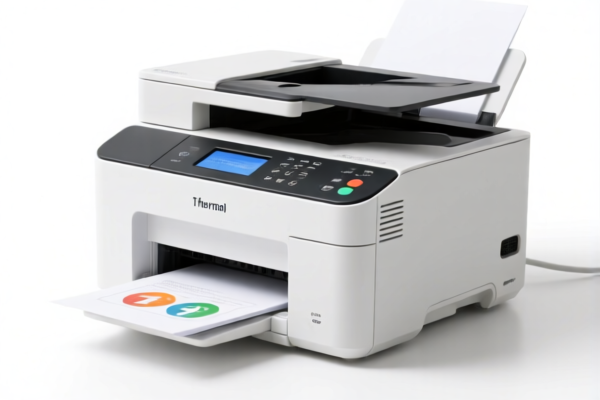
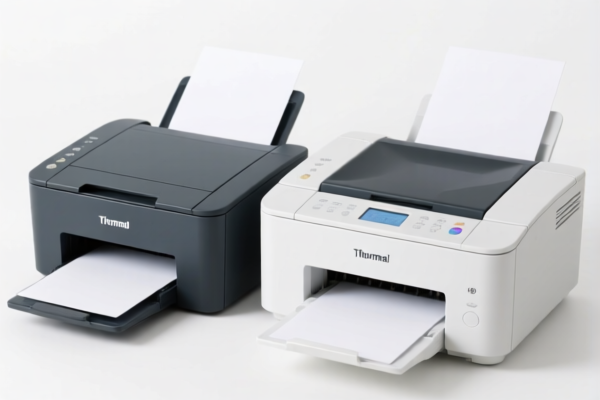
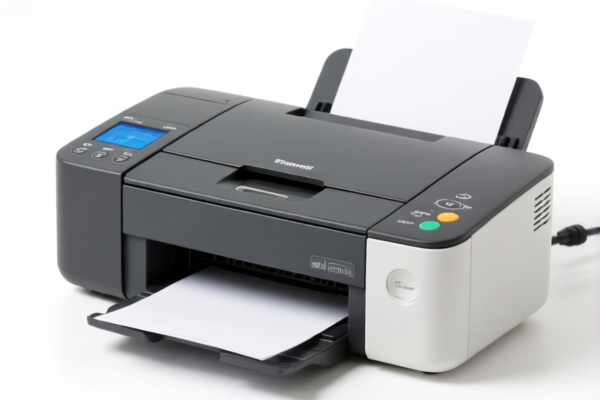
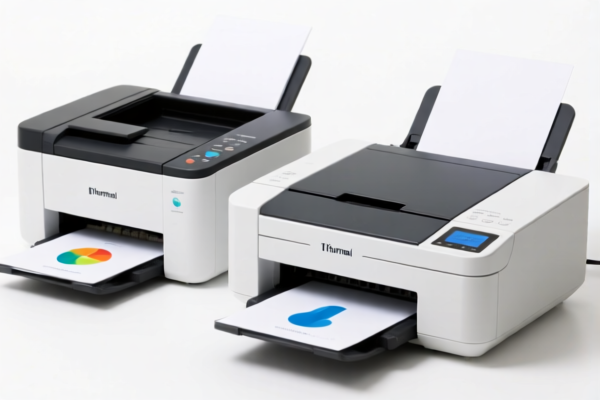
AI分析
🖨️ Thermal Printers (Thermal Transfer & Thermal Print Heads)
🌐 HS Code Reference & Customs Clearance Guide | 2026 Latest Tariff Analysis | Professional Clearance Strategy
📌 I. Product Definition & Classification: Do You Really Understand "Thermal Printers"?
Thermal printers are critical components in logistics, retail, healthcare, and financial sectors, used for printing shipping labels, receipts, and barcodes. In international trade, they are primarily classified under Heading 8443 (Printing machinery), specifically distinguished by their printing technology (Thermal Transfer vs. Other) and connectivity.
⚠️ Key Distinction Point:
- If it is a Thermal Transfer Printer (uses ribbon/film) capable of connecting to a computer/network → 8443.32.10.50
- If it is an Other Printer (e.g., Direct Thermal, Dot Matrix, Inkjet) capable of connecting to a computer/network → 8443.32.10.90
📦 II. HS Code Classification Details (2026 Latest Tariff Authority Comparison)
Based on the provided data, here are the two specific HS codes for Thermal Printers and their corresponding tax implications.
| HS Code | Product Description | Applicable Scenario | Tax Rate (China to US) |
|---|---|---|---|
8443.32.10.50 |
Printer units Thermal transfer | Thermal Transfer Printers (uses ribbon) | 7.5% |
8443.32.10.90 |
Printer units Other | Direct Thermal, Dot Matrix, or other non-transfer printers | 7.5% |
🔍 Important Note:
- Both categories fall under "Other printers, copying machines and facsimile machines, whether or not combined, capable of connecting to an automatic data processing machine or to a network."
- The key difference lies in the printing mechanism:
- Thermal Transfer (...50): Requires a ribbon/film to transfer ink onto the label. Common for durable shipping labels.
- Other (...90): Includes Direct Thermal (heat-sensitive paper, no ribbon) or other technologies. Common for receipt printing.
💰 III. 2026 Latest Tariff Rate Details (Including Additional Taxes & Policies)
✅ Applicable Country: United States (US)
✅ Origin: China (CN)
✅ Effective Time: 2025 (Based on provided data)
🎯 1. 8443.32.10.50 – Thermal Transfer Printer Units
| Item | Content |
|---|---|
| Base Tariff | 0.0% (Ad Valorem) |
| Additional Tariff | +7.5% (Section 301 / Trade War Tariff) |
| Total Tax Rate | 7.5% |
| Tax Calculation | CIF Value × 7.5% |
| De Minimis Exemption | ❌ Not Applicable (Standard import duty applies) |
| Legal Basis | USITC: 8443.32.10.50 → Section 301 Surcharge |
📌 Explanation:
- The Base Tariff is 0%, meaning no general MFN duty applies.
- However, a 7.5% Additional Tariff is imposed due to trade restrictions on Chinese-origin data processing peripherals.
- Total Cost Impact: For every $1,000 CIF value, you pay $75 in tariffs.
🎯 2. 8443.32.10.90 – Other Printer Units
| Item | Content |
|---|---|
| Base Tariff | 0.0% (Ad Valorem) |
| Additional Tariff | +7.5% (Section 301 / Trade War Tariff) |
| Total Tax Rate | 7.5% |
| Tax Calculation | CIF Value × 7.5% |
| De Minimis Exemption | ❌ Not Applicable |
| Legal Basis | USITC: 8443.32.10.90 → Section 301 Surcharge |
📌 Note:
- The tariff structure is identical to Thermal Transfer Printers.
- Whether you import a Direct Thermal receipt printer (.90) or a Thermal Transfer label printer (.50), the 7.5% additional tariff applies.
🛠️ IV. Customs Clearance Practical Advice (Battle-Tested Pitfall Avoidance Guide)
✅ 1. Required Document Checklist (Non-negotiable)
| Document | Must Provide | Description |
|---|---|---|
| ✅ Product Specifications | ✔️ | Must specify: Printing Method (Thermal Transfer/Direct), Resolution (DPI), Interface (USB/Ethernet/Wi-Fi), and Ribbon Compatibility. |
| ✅ Product Photos | ✔️ | Clear images of the label, model number, and ports. Must show if it’s a standalone unit or part of a POS system. |
| ✅ Commercial Invoice | ✔️ | Description must explicitly state "Thermal Printer" or "Direct Thermal Printer" and the correct HS Code. Avoid vague terms like "Printer." |
| ✅ Packing List | ✔️ | Detail contents: Printer main unit, power cord, ribbon core (if any), and software CD/drivers. |
| ✅ FCC Declaration | ✔️ | Mandatory for US import. Wireless/Ethernet printers require FCC ID compliance. |
✅ 2. Declaration Tips (Key Mantra)
🔥 "Specify the Method, Don't Just Say 'Printer'!"
| Scenario | Correct Declaration | Incorrect Action |
|---|---|---|
| Thermal Transfer Printer | Thermal Transfer Printer, for Logistics Labels, USB/Ethernet |
Generic "Computer Printer" → Risk of misclassification |
| Direct Thermal Receipt Printer | Direct Thermal Receipt Printer, POS Compatible |
Vague "POS Printer" → May delay customs review |
| Printer + Ribbon | Declare Printer under 8443.32.10.x0, Ribbon separately if significant |
Bundling without detail → Customs may question the nature of goods |
✅ 3. Special Situation Handling
| Situation | Handling Advice |
|---|---|
| Printer with Integrated Scanner/Scale | If the primary function is printing, classify under 8443. If scanning is dominant, consider 8471 or 9031. Crucial: Provide functional hierarchy explanation. |
| OEM/White Label Printers | Provide OEM agreement or branding authorization to prove brand ownership, avoiding trademark issues at customs. |
| Parts (Print Heads) | Do NOT classify print heads as printers. Print heads are parts (8443.90) and have different tariff implications. Ensure the importer distinguishes between Units (.32) and Parts (.90). |
🌍 V. Global Market Clearance Comparison (2026 Latest)
| Country/Region | Recommended HS Code | Tariff Rate | Certification Requirements | Notes |
|---|---|---|---|---|
| 🇺🇸 United States | 8443.32.10.50 / .90 |
7.5% | FCC + RoHS | High scrutiny on origin. Ensure CN origin is clearly declared. |
| 🇨🇳 China | 8443.32.10 |
0% - 5% | CCC (if applicable) | Low entry barrier. |
| 🇪🇺 European Union | 8443.31 or 8443.32 |
0% - 1.7% | CE + WEEE | Generally lower duties than US. |
| 🇯🇵 Japan | 8443.31 or 8443.32 |
0% - 2.5% | PSE (for electrical parts) | Stable trade environment. |
📌 Conclusion:
- The US is the most costly market for thermal printers due to the 7.5% additional tariff.
- EU and Japan offer more favorable tariff structures, making them potential alternative markets for diversification.
📌 VI. Common Errors & Pitfall Avoidance (Lessons Learned)
❌ Error 1: Classifying a Thermal Printer as "Part of Automatic Data Processing Machine" (8471)
👉 Consequence: If misclassified, customs may reject the declaration or apply incorrect duties. Printers are explicitly excluded from 8471 output units if they are standalone.
👉 Correct: Always use Heading 8443.
❌ Error 2: Failing to specify "Thermal Transfer" vs. "Direct Thermal"
👉 Consequence: Customs may query the classification between .50 and .90. While the tax is the same, incorrect description slows clearance.
👉 Correct: Be specific in the invoice description.
❌ Error 3: Ignoring FCC Certification
👉 Consequence: Seizure or Return of goods. All electronic printers connecting to networks/computers require FCC compliance for the US.
👉 Correct: Obtain FCC ID before shipment.
✅ Best Practice Example:
"Model XYZ Thermal Transfer Printer, 300dpi, USB & Ethernet, for Shipping Labels, FCC Certified, Origin: China"
🎯 VII. Conclusion: Precision in Classification Saves Money!
🎯 Remember the Mantra:
🔹 "Thermal Transfer is .50, Other is .90."
🔹 "7.5% US Tax is Fixed, Base is Zero."
🔹 "FCC is Mandatory, Don't Skip It!"
📌 Pro Tip:
If your thermal printers are direct-thermal only (no ribbon) and used strictly for receipts, ensure you are not over-declaring them as "Thermal Transfer" if they don't use ribbons. However, tax-wise, both are 7.5%, so the financial impact is neutral. Focus on accurate description to avoid customs delays.
📣 Immediate Action:
📞 Verify FCC Compliance before shipping to the US.
📄 Clearly State "Thermal Transfer" or "Direct Thermal" on your commercial invoice.
🚀 Calculate the 7.5% Cost into your landed cost model to maintain profit margins.
✨ Professional Clearance Starts with Accurate Classification!
💼 Every Percentage Point Counts in Global Trade!
用户评价
关于 HS 编码归类
协调制度(HS)是由世界海关组织(WCO)制定的国际贸易商品分类标准。全球 200 多个国家采用 HS 系统作为海关关税、贸易统计和进出口监管的基础。
每个 HS 编码遵循以下层级结构:
- 章(2 位)——商品大类(例如:第 84 章:机器和机械设备)
- 品目(4 位)——章内的更具体分类
- 子目(6 位)——国际通用细分,所有 WCO 成员国统一使用
- 本国细分(8-10 位)——各国自行扩展的细分编码,如美国 HTSUS 10 位编码
正确的 HS 编码归类对于顺利通关、准确缴纳关税和遵守贸易法规至关重要。错误归类可能导致海关延误、多缴关税或罚款。
从CN进口到US时,适用的关税税率可能包括:
- 最惠国(MFN)税率——适用于 WTO 成员国的标准关税税率
- 普通税率——适用于无贸易协定国家
- 贸易救济关税——附加关税,如 301 条款(反倾销)、232 条款(国家安全)或反补贴税
本页内容仅供参考。如需正式归类,请咨询当地海关或持牌报关代理。