Thermal Protection Device
CN → US| HS编码 | 关税税率 | 原产国 | 目的国 | 文档 |
|---|---|---|---|---|
| 7019801090 | 39.9% | CN | US | 官方文档 |
| 3926305000 | 22.8% | CN | US | 官方文档 |
| 3926909989 | 22.8% | CN | US | 官方文档 |
| 7019801010 | 39.9% | CN | US | 官方文档 |
| 6806900090 | 35.0% | CN | US | 官方文档 |
商品图片
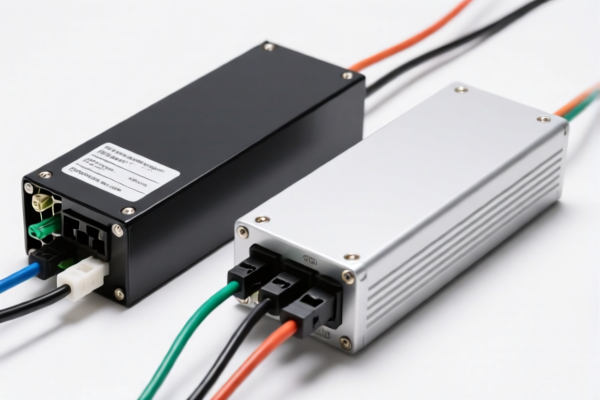
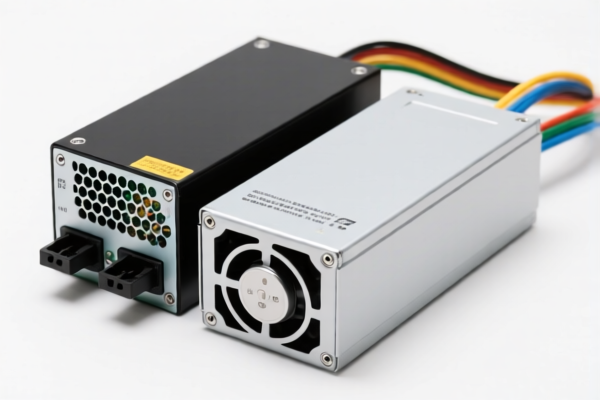
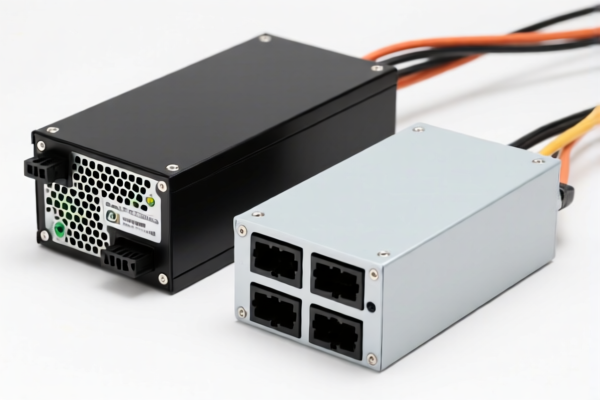
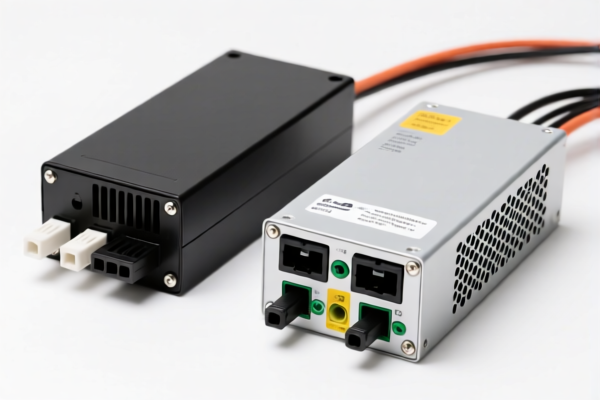
AI分析
🌡️ Thermal Protection Devices (Thermal Cutoffs, Fuses & Switches)
🌐 HS Code Reference & Customs Clearance Guide | 2026 Latest Tariff Analysis | Professional Clearance Strategy
📌 1. Product Definition & Classification: What Exactly Is a "Thermal Protection Device"?
Thermal Protection Devices are critical safety components used in electrical appliances, automotive parts, and industrial machinery to prevent overheating. They function by cutting off the electrical circuit when a specific temperature threshold is reached.
In international trade, these products are classified based on their material composition and functional nature. The primary confusion often lies between distinguishing between insulating materials (like glass wool/mineral fibers) and plastic/rubber housing components.
⚠️ Key Distinction Point:
- If the device is primarily valued for its insulating/thermal barrier properties using glass wool or mineral fibers → Likely falls under Chapter 70 (Glass) or Chapter 68 (Mineral Products).
- If the device is primarily a plastic connector, housing, or accessory → Likely falls under Chapter 39 (Plastics).
- If it is a composite or general "other" plastic/rubber article → Falls under General Residual Categories in Chapter 39.
📦 2. HS Code Classification Details (2026 Latest Tariff Authority Comparison)
| HS Code | Product Description | Applicable Scenario | Key Material/Feature |
|---|---|---|---|
7019.80.10.90 |
Other articles of glass wool and similar mineral fibers | Insulation products where the primary value is the glass wool/mineral fiber insulating material. | ✅ Glass Wool / Mineral Fiber |
3926.30.50.00 |
Other fittings for furniture, coachwork, etc. | Plastic connectors, terminals, or附属 structural parts that serve as connection points. | ✅ Plastic Fittings/Connectors |
3926.90.99.89 |
Other articles of plastics and articles of other materials | A residual category for plastic, rubber, or composite thermal devices not specified elsewhere. | ✅ Plastic/Rubber/Composite |
7019.80.10.10 |
Other articles of glass wool and similar mineral fibers | Specific insulating products classified under glass wool, matching the functional "insulation" category logic. | ✅ Glass Wool / Insulation Material |
6806.90.00.90 |
Other articles of mineral materials | Mineral material products, often involving mineral fibers or silicates used for thermal resistance. | ✅ Mineral Fibers / Silicates |
🔍 Critical Reminder:
- If your product is a standalone thermal fuse made largely of plastic, it may still fall under 3926.90.99.89 as a "general plastic article."
- If the product is a thermal insulator blanket or pad using glass wool, it must go to 7019.80. Misclassifying an insulation product as a plastic part can lead to severe tariff discrepancies.
- Mineral fiber products (like vermiculite or expanded perlite thermal blocks) should strictly avoid Chapter 39 and use 6806.90 or 7019.80.
💰 3. 2026 Latest Tariff Rate Breakdown (Including Surcharges & Policy Add-ons)
✅ Applicable Country: United States (US)
✅ Origin: China (CN)
✅ Effective Date: From Nov 10, 2025 (including subsequent imports)
🎯 1. 7019.80.10.90 & 7019.80.10.10 —— Glass Wool / Mineral Fiber Insulation Articles
| Item | Detail |
|---|---|
| Base Tariff | 4.9% (ad valorem) |
| Section 301 Surcharge | +25.0% (USITC Footnote) |
| Section 122 Tariff | +10.0% (Specific 122 clause surcharge) |
| Total Tax Rate | 39.9% |
| Tax Calculation | CIF Value × 39.9% |
| De Minimis Exemption | ❌ Not Eligible (deny_de_minimis) |
| Legal Basis Path | USITC:7019.80.10.x0 → FOOTNOTE:Section 301 → Section 122 Clause |
📌 Explanation:
- The 4.9% is the standard Most Favored Nation (MFN) rate for glass wool products.
- The 25% is the standard trade war tariff on Chinese goods.
- The 10% is an additional surcharge under specific Section 122 provisions (often related to supply chain security or specific material controls).
- Total 39.9% is a high tariff. Ensure proper labeling as "Insulation Material" rather than general "Plastic Part."
🎯 2. 3926.30.50.00 —— Plastic Fittings / Connectors
| Item | Detail |
|---|---|
| Base Tariff | 5.3% (ad valorem) |
| Section 301 Surcharge | +7.5% (Reduced rate for specific plastic categories or negotiated tier) |
| Section 122 Tariff | +10.0% |
| Total Tax Rate | 22.8% |
| Tax Calculation | CIF Value × 22.8% |
| De Minimis Exemption | ❌ Not Eligible (deny_de_minimis) |
| Legal Basis Path | USITC:3926.30.50.00 → FOOTNOTE:Section 301 → Section 122 Clause |
📌 Explanation:
- This classification applies if the thermal device is viewed primarily as a plastic fitting or connector.
- The base rate is slightly higher than some electronics but lower than glass wool due to the specific 301 rate of 7.5% (instead of 25%) for certain plastic articles.
- Still subject to the 10% Section 122 surcharge.
🎯 3. 3926.90.99.89 —— Other Plastic Articles (Residual Category)
| Item | Detail |
|---|---|
| Base Tariff | 5.3% (ad valorem) |
| Section 301 Surcharge | +7.5% |
| Section 122 Tariff | +10.0% |
| Total Tax Rate | 22.8% |
| Tax Calculation | CIF Value × 22.8% |
| De Minimis Exemption | ❌ Not Eligible (deny_de_minimis) |
| Legal Basis Path | USITC:3926.90.99.89 → FOOTNOTE:Section 301 → Section 122 Clause |
📌 Explanation:
- This is the "catch-all" for plastic thermal devices that don’t fit specific fittings or insulation categories.
- Often used for plastic-cased thermal cut-offs or rubber-sealed thermal switches.
- Same tariff structure as3926.30.50.00.
🎯 4. 6806.90.00.90 —— Other Mineral Material Articles
| Item | Detail |
|---|---|
| Base Tariff | 0.0% (ad valorem) |
| Section 301 Surcharge | +25.0% |
| Section 122 Tariff | +10.0% |
| Total Tax Rate | 35.0% |
| Tax Calculation | CIF Value × 35.0% |
| De Minimis Exemption | ❌ Not Eligible (deny_de_minimis) |
| Legal Basis Path | USITC:6806.90.00.90 → FOOTNOTE:Section 301 → Section 122 Clause |
📌 Explanation:
- While the base rate is 0%, the high 301 surcharge (25%) pushes the total to 35.0%.
- This is a reasonable alternative if your product is made of mineral wool, silicates, or expanded perlite and doesn't qualify as "glass wool" (Chapter 70) or plastic (Chapter 39).
- Cost-effective compared to Chapter 70 (39.9%) if you can justify the "Mineral Material" classification.
🛠️ 4. Customs Clearance Operational Advice (Practical Pitfall Guide)
✅ 1. Document Checklist (Mandatory)
| Document | Required | Description |
|---|---|---|
| ✅ Product Specification Sheet | ✔️ | Must detail material composition (e.g., % Glass Wool vs. % Plastic). |
| ✅ Material Safety Data Sheet (MSDS) | ✔️ | Crucial for mineral fiber products to prove non-hazardous nature. |
| ✅ Product Photos (Clear) | ✔️ | Must show the internal structure (e.g., exposed fiber vs. plastic casing). |
| ✅ Commercial Invoice | ✔️ | Clearly state "Thermal Insulation Material" or "Plastic Thermal Fuse," NOT just "Electrical Part." |
| ✅ Packing List | ✔️ | Indicate packaging weight vs. product weight to help assess density (mineral vs. plastic). |
| ✅ Third-Party Test Report | ✔️ | UL, CE, or RoHS reports that specify the core material. |
✅ 2. Declaration Tips (Key Mantra)
🔥 "Material Defines Code, Insulation is Glass, Fitting is Plastic, Don't Mix Them!"
| Scenario | Correct Declaration | Wrong Practice |
|---|---|---|
| Thermal Pad made of Glass Wool | 7019.80.10.90 (Insulation) |
Misdeclare as "Plastic Part" → Risk of audit for undervaluation. |
| Thermal Fuse with Plastic Housing | 3926.90.99.89 (Plastic Article) |
Misdeclare as "Insulation" → Wrong tax basis. |
| Mineral Wool Thermal Blanket | 6806.90.00.90 (Mineral) |
Misdeclare as "Glass Wool" (7019) if it's actually expanded perlite/silicate. |
| Composite Device (Plastic + Fiber) | Analyze principal value | If fiber >50% value → 7019 or 6806; If plastic >50% → 3926. |
✅ 3. Special Case Handling
| Situation | Handling Suggestion |
|---|---|
| OEM Custom Thermal Cutoffs | Provide client order + design drawing. If the plastic housing is the dominant feature, use 3926. If the internal thermal element is glass wool, argue for 7019. |
| Mineral Fiber Products | Ensure the product is not "woven fabric" (which might fall under Chapter 59). If it's loose-fill or batts, 6806 or 7019 is correct. |
| High-Temperature Silicone Rubber Parts | Falls under 3926.90.99.89. Do not declare as "Glass Wool." |
| Hybrid Products | If a device has both plastic casing and mineral insulation, consult a customs broker for binding ruling. Often, the essential character rule applies. |
🌍 5. Global Market Clearance Comparison (2026 Latest)
| Country/Region | Recommended HS Code | Tariff (China Origin) | Certification Requirements | Notes |
|---|---|---|---|---|
| 🇺🇸 USA | 3926.90.99.89 or 7019.80.10.90 |
22.8% (Plastic) or 39.9% (Glass Wool) | FCC (if electrical), UL, RoHS | High Surcharges apply. |
| 🇨🇳 China | 3926.90.99.89 or 7019.80.10.90 |
5.3% (Plastic) or 4.9% (Glass Wool) | CCC (if applicable) | No Section 301 surcharges. |
| 🇪🇺 EU | 3926.90 or 7019.80 |
0-4.5% (Most Free) | CE, REACH, RoHS | No additional trade war tariffs. |
| 🇦🇺 Australia | 3926.90 or 7019.80 |
5% (Plastic) / 5% (Glass) | RCM | Liberal trade agreement with China. |
| 🇯🇵 Japan | 3926.90 or 7019.80 |
0-5% | PSE | Stable tariff environment. |
📌 Conclusion:
- USA is the most challenging market due to Section 301 and Section 122 surcharges.
- Plastic-based thermal devices (3926) offer a 22.8% total tax, which is ~17% cheaper than Glass Wool (7019) in the US market.
- Mineral Materials (6806) offer a 35.0% total tax, which is a middle ground.
📌 6. Common Errors & Pitfalls (Lessons Learned)
❌ Error 1: Declaring a Glass Wool Insulator as a "Plastic Part" to avoid higher tariffs.
👉 Consequence: Customs may detect the high density/weight inconsistency → Audit, Penalty, and Retrospective Tax + 25% Surcharge on the difference.
❌ Error 2: Declaring a Plastic Thermal Fuse as "Glass Wool Insulation".
👉 Consequence: Incorrect valuation and potential rejection if documentation doesn't match physical inspection.
❌ Error 3: Ignoring Section 122 (10% surcharge) in cost calculations.
👉 Consequence: Profit margin erosion. Many brokers forget this layer. Always include it in Landed Cost models.
❌ Error 4: Using vague terms like "Electrical Component" in the description.
👉 Consequence: Customs will classify based on the worst-case or highest tariff scenario → Likely 8536 (Electrical Apparatus) which may have different, potentially higher, surcharge structures.
✅ Correct Practice:
"Thermal Insulation Pad, Made of Glass Wool, for Appliance Use, Model XYZ, UL Listed"
OR
"Thermal Cutoff Switch, Plastic Housing, 100°C Trip Point, Model ABC, RoHS Compliant"
🎯 7. Conclusion: Precision in Classification Saves Money!
🎯 Remember the Mantra:
🔹 "If it's Fibrous & Insulating → Think Glass/Mineral (7019/6806)"
🔹 "If it's Plastic & Connector-like → Think Fittings (3926)"
🔹 "USA Surcharges are Real: 25% + 10% are Standard!"
🔹 "Check Section 122: Don't let the extra 10% kill your margin!"
📌 Pro Tip:
If your product is a hybrid (e.g., plastic housing with mineral insulation core), consider if the plastic housing can be declared separately or if the insulation is the essential character. In the US, Chapter 39 (22.8%) is significantly cheaper than Chapter 70 (39.9%). If structurally possible, emphasize the plastic component (as a fitting or article) to optimize duty costs, provided it meets the essential character test.
📣 Immediate Action:
📞 Engage a US Customs Broker for a Pre-Ruling if your product is complex.
📤 Ensure your Commercial Invoice explicitly states the material composition.
🚀 Optimize your supply chain by choosing HS Codes that minimize the 301+122 impact.
✨ Professional Clearance Starts with Accurate Classification!
💼 Every percentage point of tax saved is pure profit!
用户评价
关于 HS 编码归类
协调制度(HS)是由世界海关组织(WCO)制定的国际贸易商品分类标准。全球 200 多个国家采用 HS 系统作为海关关税、贸易统计和进出口监管的基础。
每个 HS 编码遵循以下层级结构:
- 章(2 位)——商品大类(例如:第 84 章:机器和机械设备)
- 品目(4 位)——章内的更具体分类
- 子目(6 位)——国际通用细分,所有 WCO 成员国统一使用
- 本国细分(8-10 位)——各国自行扩展的细分编码,如美国 HTSUS 10 位编码
正确的 HS 编码归类对于顺利通关、准确缴纳关税和遵守贸易法规至关重要。错误归类可能导致海关延误、多缴关税或罚款。
从CN进口到US时,适用的关税税率可能包括:
- 最惠国(MFN)税率——适用于 WTO 成员国的标准关税税率
- 普通税率——适用于无贸易协定国家
- 贸易救济关税——附加关税,如 301 条款(反倾销)、232 条款(国家安全)或反补贴税
本页内容仅供参考。如需正式归类,请咨询当地海关或持牌报关代理。