Thermoplastic Resin
CN → US| HS编码 | 关税税率 | 原产国 | 目的国 | 文档 |
|---|---|---|---|---|
| 3901909000 | 41.5% | CN | US | 官方文档 |
| 3906902000 | 41.3% | CN | US | 官方文档 |
| 3906905000 | 39.2% | CN | US | 官方文档 |
| 3901905501 | 41.5% | CN | US | 官方文档 |
| 3902900050 | 41.5% | CN | US | 官方文档 |
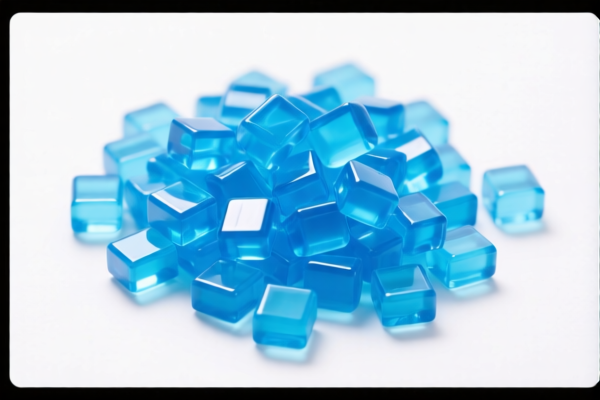
商品图片



AI分析
🧪 Thermoplastic Resins (Primary Forms)
🌐 HS Code Reference & Customs Clearance Guide | 2026 Latest Tariff Analysis | Professional Level Clearance Strategy
📌 I. Product Definition & Classification: What Exactly Are "Thermoplastic Resins"?
Thermoplastic resins are synthetic polymers that soften when heated and harden when cooled, a process that is reversible. In international trade, these raw materials are primarily imported in primary forms (powders, granules, liquids, or irregular masses) for further manufacturing.
The classification depends strictly on the chemical composition (e.g., Ethylene vs. Acrylic) and the specific polymer type (homopolymer vs. copolymer). Misclassification can lead to significant tariff discrepancies due to the complex layer of additional duties.
⚠️ Key Distinction Points: - Ethylene-based: Look for keywords like "Polyethylene," "Ethylene Copolymer," or "Ethylene Polymer." → Generally HS 3901 - Acrylic-based: Look for keywords like "Acrylic Resin," "Methyl Methacrylate (MMA)," or "Acrylic Polymer." → Generally HS 3906 - Other Olefins: Propylene or other alkene polymers not covered elsewhere. → Generally HS 3902
📦 II. HS Code Classification Details (2026 Latest Tariff Authority Mapping)
| HS Code | Product Description | Application Scenario | Chemical Basis |
|---|---|---|---|
3901.90.90.00 |
Thermoplastic resin adhesive, matching ethylene polymer category, primary form | General PE resins, low/high-density polyethylene powders/granules | Ethylene |
3901.90.55.01 |
Thermoplastic resin adhesive, matching ethylene copolymer, primary shape raw material | Ethylene-Vinyl Acetate (EVA), Ethylene-Acrylic Acid copolymers | Ethylene Copolymer |
3906.90.20.00 |
Thermoplastic resin adhesive, matching acrylic resin material, primary form | Methyl Methacrylate (PMMA) powders, standard acrylic granules | Acrylic Resin |
3906.90.50.00 |
Thermoplastic resin adhesive, matching acrylic polymer, thermoplastic primary form | Specific acrylic polymers (distinct from general "resin" category), thermoplastic state | Acrylic Polymer |
3902.90.00.50 |
Thermoplastic plastic, matching propylene or other olefin polymers, other catch-all category | Propylene-based resins, other alkene polymers not specified in 3901/3906 | Other Olefins |
🔍 Critical Reminder: - All items listed above are Primary Forms (raw materials for injection molding, extrusion, etc.). - If the product is in finished goods (e.g., sheets, films, pipes) or secondary forms (solutions), these HS codes do not apply. - The term "Adhesive" in the summary often refers to the nature of the resin in certain trade contexts, but chemically these are polymer resins. Ensure your chemical composition matches the "Matching" description.
💰 III. 2026 Latest Tariff Rate Breakdown (Including Additional Duties & Policy Surcharges)
✅ Applicable Country: USA (US)
✅ Country of Origin: China (CN)
✅ Effective Date: From November 10, 2025 (including subsequent imports)
🎯 1. Ethylene-Based Resins (3901.90.90.00 & 3901.90.55.01)
| Item | Content |
|---|---|
| HS Codes | 3901.90.90.00 / 3901.90.55.01 |
| Base Tariff | 6.5% |
| Section 301 Surcharge | +25.0% |
| Section 122 Tariff | +10.0% |
| Total Tax Rate | 41.5% |
| Tax Calculation | CIF Value × 41.5% |
| De Minimis Eligibility | ❌ No (Denied) |
| Legal Basis Path | Base: 3901.xxxx → Sec301: 9903.01.25 → Sec122: 9903.01.24 |
📌 Explanation: - Base 6.5%: Standard Most Favored Nation (MFN) rate for polyolefins. - Section 301 (+25%): The standard Trump-era/Biden-administration surcharge on Chinese chemical goods. - Section 122 (+10%): The additional tariff imposed under Section 122 of the Trade Expansion Act of 1962 for imports that threaten to impair US national security. - Total 41.5%: This is a high-cost input. Precise classification is vital to avoid paying higher rates for misclassified goods.
🎯 2. Acrylic-Based Resins (3906.90.20.00 & 3906.90.50.00)
| Item | Content |
|---|---|
| HS Codes | 3906.90.20.00 / 3906.90.50.00 |
| Base Tariff | 6.3% (for .20) / 4.2% (for .50) |
| Section 301 Surcharge | +25.0% |
| Section 122 Tariff | +10.0% |
| Total Tax Rate | 41.3% (for .20) / 39.2% (for .50) |
| Tax Calculation | CIF Value × Total Rate |
| De Minimis Eligibility | ❌ No (Denied) |
| Legal Basis Path | Base: 3906.xxxx → Sec301: 9903.01.25 → Sec122: 9903.01.24 |
📌 Note: -
3906.90.20.00(41.3%): For general "Acrylic Resin" matches. -3906.90.50.00(39.2%): For specific "Acrylic Polymer" matches. Note the lower base rate (4.2%) reduces the total duty. - Optimization Opportunity: If your product chemically qualifies as3906.90.50.00, you save 2.1% in total duty compared to3906.90.20.00.
🎯 3. Other Olefin Polymers (3902.90.00.50)
| Item | Content |
|---|---|
| HS Code | 3902.90.00.50 |
| Base Tariff | 6.5% |
| Section 301 Surcharge | +25.0% |
| Section 122 Tariff | +10.0% |
| Total Tax Rate | 41.5% |
| Tax Calculation | CIF Value × 41.5% |
| De Minimis Eligibility | ❌ No (Denied) |
| Legal Basis Path | Base: 3902.xxxx → Sec301: 9903.01.25 → Sec122: 9903.01.24 |
📌 Note: - This is a "Catch-all" for propylene and other alkenes not specified in HS 3901. - The rate structure is identical to Ethylene-based resins (41.5%).
🛠️ IV. Customs Clearance Practical Advice (Combat Pitfalls Guide)
✅ 1. Documentation Checklist (Missing Items Are Fatal)
| Document | Required? | Explanation |
|---|---|---|
| ✅ Chemical Composition Statement | ✔️ | Must detail monomer types (e.g., "Ethylene 100%" or "Methyl Methacrylate >95%"). |
| ✅ Physical Form Description | ✔️ | Explicitly state "Primary Form: Granules/Powder/Liquid." No finished articles. |
| ✅ TDS/MSDS (Technical Data Sheet) | ✔️ | Proves thermal properties (Thermoplastic) and chemical structure. |
| ✅ Product Photo (Raw Material) | ✔️ | Show granules/powder in bags/bulk. No molded parts. |
| ✅ Commercial Invoice | ✔️ | Must match HS Code summary exactly (e.g., "Ethylene Polymer Resin"). |
| ✅ Certificate of Origin | ✔️ | Crucial for proving CN origin to apply the correct surcharges. |
✅ 2. Declaration Tips (Key Mantras)
🔥 "Form Matters, Chemistry Defines, Don't Split Bags!"
| Scenario | Correct Declaration | Wrong Practice |
|---|---|---|
| Ethylene Homopolymer | 3901.90.90.00 |
Mislabeling as Acrylic → Higher scrutiny |
| Ethylene Copolymer (e.g., EVA) | 3901.90.55.01 |
Mislabeling as Homopolymer → Potential audit |
| Acrylic Resin (Standard) | 3906.90.20.00 |
N/A |
| Acrylic Polymer (Specific) | 3906.90.50.00 |
N/A (Use if chemically accurate) |
| Propylene Resin | 3902.90.00.50 |
N/A |
| Finished Parts (e.g., Sheets) | NOT these codes | Misdeclaring finished goods as raw resin → Seizure |
📌 Warning: - Do not declare "Plastic Pellets" generically. Specify the resin type. - If the product is a solution (dissolved in solvent), it may fall under a different HS code (e.g., 3906.90.90 or 3901.90.90 with different sub-headers). Ensure "Primary Form" means solid/liquid polymer, not a finished adhesive solution.
✅ 3. Special Circumstances Handling
| Scenario | Handling Advice |
|---|---|
| Blends/Mixtures | If mixed with other resins, classify based on the essential character (usually the primary polymer). If >50% Ethylene, likely 3901. |
| Additives/Fillers | If filled with calcium carbonate or glass fibers, it may still be primary form, but check if it changes the "character." Generally, standard industrial fills remain in the resin HS. |
| Regranulated Plastic | If it is recycled/regranulated, it may still fall under 3901/3906, but documentation must prove it is "primary form" usable for direct molding. |
| Small Samples | For samples under $800, check if De Minimis applies. ❌ Note: For CN origin, Section 301 and 122 often deny De Minimis exemption for these chemical categories. Check current CBP rulings. |
🌍 V. Global Market Clearance Comparison (2026 Latest)
| Country/Region | Recommended HS Code | Tariff (Base) | Additional Duties (CN) | Remarks |
|---|---|---|---|---|
| 🇺🇸 USA | 3901.90.90.00 etc. |
4.2% - 6.5% | +35% (Sec 301 + 122) | Total ~41.5%. High barrier. |
| 🇨🇳 China | 3901.90.90.00 etc. |
6.5% | 0% | No additional surcharges for domestic trade. |
| 🇪🇺 EU | 3901.90.90 etc. |
6.5% | 0% | No Section 301/122 equivalent for CN chemicals. |
| 🇦🇺 Australia | 3901.90.90 etc. |
5.0% | 0% | FTA benefits may apply depending on specific rules. |
📌 Conclusion: - USA is the most challenging market for these goods due to the layered surcharges. - China, EU, and Australia have significantly lower tariff burdens for these raw materials. - Cost analysis for US-bound shipments must include the ~41.5% duty, which can erode margins significantly.
📌 VI. Common Errors & Pitfalls Guide (Lessons Learned)
❌ Error 1: Declaring "Plastic Granules" without specifying Ethylene vs. Acrylic. 👉 Consequence: Customs holds shipment for chemical analysis. Delays of 2-4 weeks.
❌ Error 2: Misclassifying Acrylic Polymer (3906.90.50.00) as Acrylic Resin (3906.90.20.00).
👉 Consequence: Overpaying by 2.1% on total value. Significant cost over time.
❌ Error 3: Ignoring Section 122 Tariff. 👉 Consequence: Underpayment of 10%. CBP will issue a Post Summary Correction (PSC) bill + penalties.
❌ Error 4: Declaring finished plastic parts as "Primary Form Resin." 👉 Consequence: Fraud/Smuggling risk. Goods seized. Fines up to 100% of value.
✅ Correct Practice:
"Thermoplastic Ethylene Copolymer Resin, Primary Form, Powder, CAS No. XXXXX, for Injection Molding"
🎯 VII. Conclusion: Precise Classification, Cost Control, Efficient Clearance!
🎯 Remember the Mantra:
🔹 "Chemistry is King, Form is Queen." (Ethylene vs. Acrylic determines the code; Granule vs. Part determines the chapter.) 🔹 "US Market = High Duty." (Prepare for ~41.5% total tax burden.) 🔹 "Don't Guess, Specify." (Ambiguous descriptions lead to audits.)
📌 Pro Tip: If your thermoplastic resin contains high-value additives or is a specialty copolymer, request an Advance Ruling (AR) from US CBP. This locks in the HS Code and tariff rate, protecting your supply chain from sudden audits or reclassifications.
📣 Immediate Action:
📞 Contact a licensed customs broker + Provide TDS/MSDS + Apply for HS Code Advance Ruling 🚀 Ensure your thermoplastic resins clear customs smoothly, legally, and cost-effectively!
✨ Professional Clearance Begins with Accurate Classification!
💼 Every cent of duty saved is profit earned!
用户评价
关于 HS 编码归类
协调制度(HS)是由世界海关组织(WCO)制定的国际贸易商品分类标准。全球 200 多个国家采用 HS 系统作为海关关税、贸易统计和进出口监管的基础。
每个 HS 编码遵循以下层级结构:
- 章(2 位)——商品大类(例如:第 84 章:机器和机械设备)
- 品目(4 位)——章内的更具体分类
- 子目(6 位)——国际通用细分,所有 WCO 成员国统一使用
- 本国细分(8-10 位)——各国自行扩展的细分编码,如美国 HTSUS 10 位编码
正确的 HS 编码归类对于顺利通关、准确缴纳关税和遵守贸易法规至关重要。错误归类可能导致海关延误、多缴关税或罚款。
从CN进口到US时,适用的关税税率可能包括:
- 最惠国(MFN)税率——适用于 WTO 成员国的标准关税税率
- 普通税率——适用于无贸易协定国家
- 贸易救济关税——附加关税,如 301 条款(反倾销)、232 条款(国家安全)或反补贴税
本页内容仅供参考。如需正式归类,请咨询当地海关或持牌报关代理。