Thermosetting Resin Compound
CN → US| HS编码 | 关税税率 | 原产国 | 目的国 | 文档 |
|---|---|---|---|---|
| 3907300000 | 41.1% | CN | US | 官方文档 |
| 3907995050 | 41.5% | CN | US | 官方文档 |
| 3909310000 | 41.5% | CN | US | 官方文档 |
| 3909400000 | 41.5% | CN | US | 官方文档 |
| 3911904500 | 40.8% | CN | US | 官方文档 |
商品图片


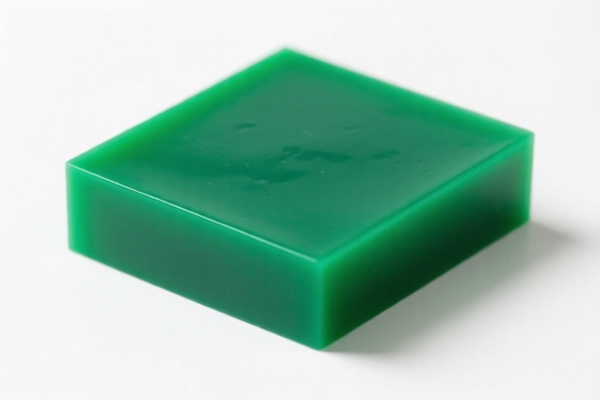
AI分析
🧪 Thermosetting Resin Compound (高分子热固性材料)
🌐 HS Code Reference & Customs Clearance Guide | 2026 Latest Tariff Breakdown | Strategic Entry Strategy for US Import
📌 I. Product Definition: What Exactly is a "Thermosetting Resin Compound"?
Thermosetting resins are polymers that irreversibly cure (harden) when heated or chemically treated. Unlike thermoplastics, they cannot be remelted. In international trade, these compounds are critical for adhesives, encapsulants, coatings, composites, and electronic components.
Under US Customs and Border Protection (CBP) rules, these materials are primarily classified under Chapter 39 (Plastics and Articles Thereof). However, due to the complexity of chemical composition, they fall into several distinct subheadings depending on the base resin type (e.g., Epoxy, Polyester, Amino, Phenolic).
⚠️ Critical Distinction Point:
- Epoxy Resins → Typically 3907.30.00.00
- Unsaturated Polyester Resins → Typically 3907.99.50.50
- Amino/Phenolic/Polyurethane Resins → Typically 3909.31.00.00 / 3909.40.00.00
- Other/Unspecified Thermosetting Resins → Typically 3911.90.45.00
📦 II. HS Code Classification Matrix (Based on Provided Data)
The following table maps your specific product descriptions to their precise HS Codes and tax implications.
| HS Code | Product Description (Summary) | Base Resin Type | Primary Application |
|---|---|---|---|
3907.30.00.00 |
Thermosetting material, matching Epoxy resins | Epoxy | Electronics encapsulation, adhesives, composite laminates |
3907.99.50.50 |
Thermosetting material, covering Polyester polymers | Unsaturated Polyester | Boat hulls, automotive parts, FRP tanks |
3909.31.00.00 |
Thermosetting material, Amino, Phenolic, Polyurethane | Amino/Phenolic/PU | Molding powders, varnishes, coatings |
3909.40.00.00 |
Thermosetting material, consistent with Phenolic resins | Phenolic | Electrical insulators, brake linings, laminates |
3911.90.45.00 |
Thermosetting material, fully consistent with Thermosetting characteristics | Other/General | General-purpose thermosets, mixtures |
🔍 Key Insight:
- Do not group all thermosets together! The chemical base (Epoxy vs. Polyester vs. Phenolic) dictates the HS Code.
- Misclassification (e.g., declaring Epoxy as "Other Thermosetting") can lead to customs holds, audits, and penalties.
💰 III. 2026 Tariff Rate Analysis (High-Cost Scenario)
✅ Applicable Country: United States (US)
✅ Country of Origin: China (CN)
✅ Effective Date: Current rates apply (Section 301 + IEEPA)
✅ Nature: HIGH TARIFF – These products are heavily scrutinized and taxed.
All listed HS Codes share a similar tax structure due to trade restrictions on Chinese polymer materials.
🎯 1. 3907.30.00.00 – Epoxy Resins (Typical Case)
| Item | Detail |
|---|---|
| Base Duty Rate | 6.1% |
| Section 301 Additional Duty | +25.0% |
| IEEPA (Section 122) Additional Duty | +10.0% |
| Total Effective Tax Rate | 41.1% |
| Calculation Basis | CIF Value (Cost + Insurance + Freight) × 41.1% |
| De Minimis Exemption | ❌ Not Eligible (Deny de minimis) |
| Legal Authority | Section 301 Tariff List + IEEPA Proclamations |
📌 Explanation:
- 6.1% Base: Standard MFN (Most Favored Nation) duty for epoxy resins.
- 25% Section 301: Retaliatory tariff on Chinese goods under US Trade Act Section 301.
- 10% IEEPA: Additional levy under the International Emergency Economic Powers Act targeting specific Chinese industrial inputs.
- Total 41.1%: This is a significant cost burden. Profit margins must account for this.
🎯 2. 3907.99.50.50 – Polyester Resins
| Item | Detail |
|---|---|
| Base Duty Rate | 6.5% |
| Section 301 Additional Duty | +25.0% |
| IEEPA (Section 122) Additional Duty | +10.0% |
| Total Effective Tax Rate | 41.5% |
| Calculation Basis | CIF Value × 41.5% |
| De Minimis Exemption | ❌ Not Eligible |
🎯 3. 3909.31.00.00 & 3909.40.00.00 – Amino/Phenolic/Polyurethane
| Item | Detail |
|---|---|
| Base Duty Rate | 6.5% |
| Section 301 Additional Duty | +25.0% |
| IEEPA (Section 122) Additional Duty | +10.0% |
| Total Effective Tax Rate | 41.5% |
| Calculation Basis | CIF Value × 41.5% |
| De Minimis Exemption | ❌ Not Eligible |
🎯 4. 3911.90.45.00 – Other Thermosetting Resins
| Item | Detail |
|---|---|
| Base Duty Rate | 5.8% |
| Section 301 Additional Duty | +25.0% |
| IEEPA (Section 122) Additional Duty | +10.0% |
| Total Effective Tax Rate | 40.8% |
| Calculation Basis | CIF Value × 40.8% |
| De Minimis Exemption | ❌ Not Eligible |
📌 Summary:
- All thermosetting resin compounds from China face ~41% total duty.
- No de minimis exemption applies (packages under $800 do not qualify for duty-free entry for these goods).
- Voluntary Disclosure: If misclassified, use USCBP’s Voluntary Disclosure Program to mitigate penalties.
🛠️ IV. Customs Clearance Practical Advice (Avoiding Pitfalls)
✅ 1. Documentation Checklist (Mandatory)
| Document | Required? | Purpose |
|---|---|---|
| Product Spec Sheet | ✅ Yes | Must specify chemical composition (e.g., "100% Epoxy," "Unsaturated Polyester"). Vague terms like "Resin Compound" are rejected. |
| MSDS (Material Safety Data Sheet) | ✅ Yes | Required for safety classification and hazardous material handling. |
| Chemical Formula/Structure | ✅ Yes | Customs officers need to verify the base resin type against HS Code definitions. |
| Commercial Invoice | ✅ Yes | Must list HS Code, CIF Value, and Country of Origin. |
| Certificate of Origin | ✅ Yes | To confirm Chinese origin for Section 301/IEEPA application. |
| Packaging List | ✅ Yes | Weight, dimensions, and package count. |
✅ 2. Declaration Best Practices
🔥 "Be Specific, Be Precise, Be Chemically Accurate!"
| Scenario | Recommended Declaration | Why? |
|---|---|---|
| Epoxy Resin | "Thermosetting Epoxy Resin, Liquid/Solid, for Electronics Encapsulation" | Matches 3907.30.00.00 |
| Polyester Resin | "Unsaturated Polyester Resin Compound, for FRP Laminates" | Matches 3907.99.50.50 |
| Phenolic Resin | "Phenolic Resin, Powder/Granule, for Electrical Insulators" | Matches 3909.40.00.00 |
| Mixed/Other | "Thermosetting Resin Compound, Not Elsewhere Specified, Based on [Base Chemical]" | Matches 3911.90.45.00 |
❌ Avoid: "Plastic Resin," "Chemical Compound," or "Glue" without specificity.
✅ Do: Include CAS Numbers (Chemical Abstracts Service) if possible, to accelerate clearance.
✅ 3. Special Considerations
| Issue | Strategy |
|---|---|
| Misclassification Risk | High. If you declare Epoxy as "Other Resin," you risk a 10% duty difference + penalties. Request a Pre-Ruling from CBP if unsure. |
| Section 301 Exclusions | Check if your specific HS Code was excluded from Section 301 tariffs (rare for resins, but verify current list). |
| IEEPA 122 Clause | This 10% tax is non-negotiable for most Chinese-origin industrial chemicals. Factor it into pricing. |
| Hazardous Materials | Many thermosetting resins are flammable or corrosive. Ensure proper DOT labeling and Hazard Class declaration to avoid shipping delays. |
🌍 V. Global Market Comparison (2026)
| Country/Region | Recommended HS Code | Est. Total Duty (China Origin) | Key Certifications | Notes |
|---|---|---|---|---|
| 🇺🇸 USA | 3907.30.00.00 (Epoxy) |
41.1% | None required for import, but product safety standards apply | Highest barrier due to Section 301 + IEEPA |
| 🇨🇳 China | 3907.30.00 |
~5-6% | CCC (if applicable) | Low duty, but high environmental compliance costs |
| 🇪🇺 EU | 3907.30 |
~6.5% | REACH Registration | REACH compliance is mandatory and costly for resins |
| 🇯🇵 Japan | 3907.30 |
~3.8% | JIS Standards | Lower duties, but strict quality control |
📌 Conclusion:
- The US market is the most expensive for importing thermosetting resins from China due to the 41%+ tariff burden.
- EU requires REACH registration, which is a long-term compliance hurdle.
- Consider Supply Chain Diversification: Sourcing resins from Vietnam, India, or Mexico may avoid US Section 301 tariffs (verify Rules of Origin).
📌 VI. Common Mistakes & Pitfalls (Learn from Others)
❌ Mistake 1: Declaring "Resin" without specifying the type (Epoxy/Polyester/Phenolic).
👉 Result: CBP assigns a "Catch-All" code with higher scrutiny and potential penalties.
❌ Mistake 2: Ignoring the 10% IEEPA tax.
👉 Result: Underpayment of duties, leading to reputation damage and future audits.
❌ Mistake 3: Using "De Minimis" (Section 321) for small shipments.
👉 Result: Shipment seizure. Thermosetting resins are explicitly excluded from de minimis treatment for Chinese origin.
❌ Mistake 4: Incorrect CAS Number on MSDS.
👉 Result: Customs may classify it as a "Hazardous Material" unnecessarily, causing storage delays and extra fees.
✅ Best Practice:
"Thermosetting Epoxy Resin Compound, CAS No. 25068-38-6, 50kg Drum, For Circuit Board Encapsulation, Made in China"
🎯 VII. Final Recommendations
- Verify Chemical Composition: Work with your supplier to get the exact base resin type and CAS numbers. This is the foundation of correct HS Code selection.
- Budget for 41% Duty: Ensure your pricing model includes the 41.1%–41.5% total tax burden. Do not assume low duties.
- Apply for Pre-Ruling: If the resin is a new formulation or mixture, file a Binding Ruling Request with USCBP before shipping.
- Compliance First: Ensure REACH (if exporting to EU) and TSCA (if exporting to US) compliance. Non-compliance can lead to product bans.
📣 Immediate Action:
📞 Contact your customs broker with the full chemical specification.
📦 Prepare accurate MSDS and Spec Sheets.
💡 Calculate landed cost including 41% duty before finalizing supplier contracts.
✨ Precision in classification saves thousands in duties and delays.
💼 Thermosetting resins are high-risk, high-cost imports. Plan accordingly.
用户评价
关于 HS 编码归类
协调制度(HS)是由世界海关组织(WCO)制定的国际贸易商品分类标准。全球 200 多个国家采用 HS 系统作为海关关税、贸易统计和进出口监管的基础。
每个 HS 编码遵循以下层级结构:
- 章(2 位)——商品大类(例如:第 84 章:机器和机械设备)
- 品目(4 位)——章内的更具体分类
- 子目(6 位)——国际通用细分,所有 WCO 成员国统一使用
- 本国细分(8-10 位)——各国自行扩展的细分编码,如美国 HTSUS 10 位编码
正确的 HS 编码归类对于顺利通关、准确缴纳关税和遵守贸易法规至关重要。错误归类可能导致海关延误、多缴关税或罚款。
从CN进口到US时,适用的关税税率可能包括:
- 最惠国(MFN)税率——适用于 WTO 成员国的标准关税税率
- 普通税率——适用于无贸易协定国家
- 贸易救济关税——附加关税,如 301 条款(反倾销)、232 条款(国家安全)或反补贴税
本页内容仅供参考。如需正式归类,请咨询当地海关或持牌报关代理。