Thermostatic Valve
CN → US| HS编码 | 关税税率 | 原产国 | 目的国 | 文档 |
|---|---|---|---|---|
| 9032100090 | 36.7% | CN | US | 官方文档 |
| 7307995045 | 89.3% | CN | US | 官方文档 |
| 8481809015 | 37.0% | CN | US | 官方文档 |
| 9032100060 | 36.7% | CN | US | 官方文档 |
| 7307290090 | 90.0% | CN | US | 官方文档 |
商品图片
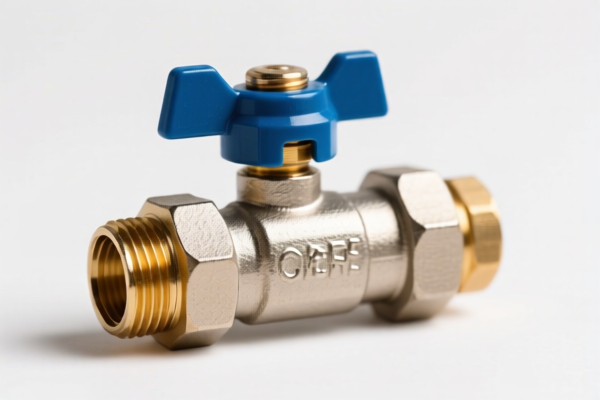
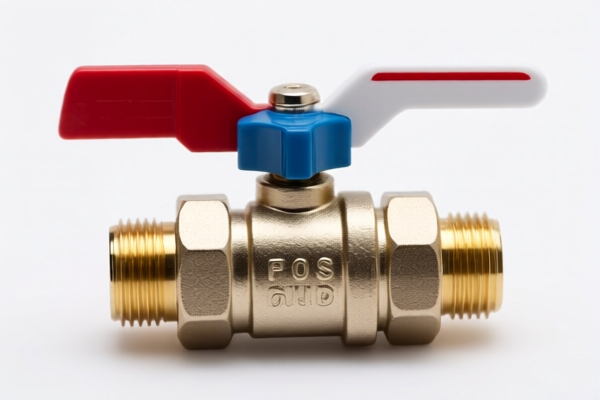
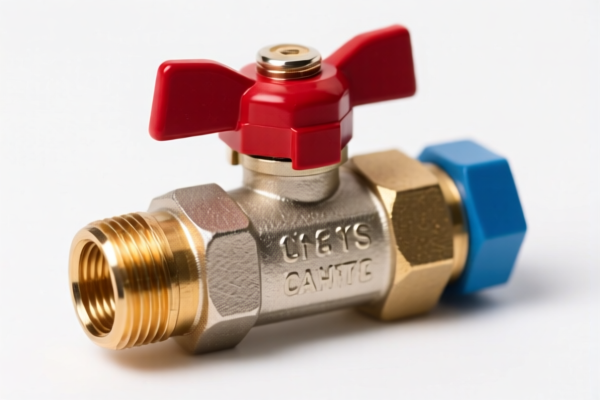
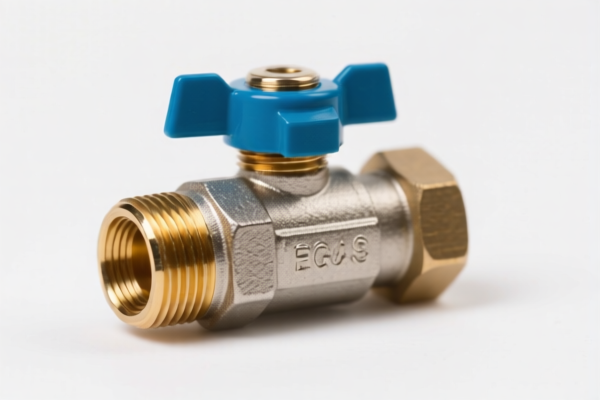
AI分析
❄️ Thermostatic Valve (恒温控制阀)
🌐 HS Code Reference & Customs Clearance Guide | 2026 Latest Tariff Analysis | Professional Clearance Strategy
📌 I. Product Definition & Classification: Do You Really Understand “Thermostatic Valves”?:
Thermostatic valves are critical components in HVAC systems, plumbing, and industrial temperature control. In international trade, their classification is highly contested because they sit at the intersection of hydraulic fittings and automated control instruments.
Key Distinction Logic: - Control Function Dominates: If the primary purpose is temperature regulation via a sensor/actuator mechanism → Tends toward Chapter 90 (Instruments). - Material/Structure Dominates: If classified primarily as a metal pipe fitting without complex electronic control logic → Tends toward Chapter 73 (Iron/Steel Articles). - General Valve Function: If viewed simply as a flow-regulating valve without specific temperature-specific classification → Tends toward Chapter 84 (Machinery).
⚠️ Critical Classification Trap:
- If the valve is an electronic/mechanical thermostat unit regulating temp → 9032.10
- If the valve is a metal pipe fitting (e.g., brass/steel) with basic thermostatic wax element → 7307 or 8481
- Misclassification Risk: Declaring a complex control valve as a simple pipe fitting can lead to severe penalties due to the massive difference in tariff rates (e.g., 37% vs. 90%).
📦 II. HS Code Classification Details (2026 Latest Tariff Authority Comparison)
Based on the provided data, here are the five most likely HS Codes for Thermostatic Valves, ranked by tax burden and logical fit.
| HS Code | Product Description & Logic | Applicable Scenario | Total Tax Rate | Risk Level |
|---|---|---|---|---|
9032.10.00.90 |
Thermostatically Controlled Valves Regarded as temperature regulators under "Other" category. |
Electronic or mechanical thermostatic controls focusing on temperature regulation function. | 36.7% | ✅ Lowest Tax (Best if function is key) |
9032.10.00.60 |
Thermostatically Controlled Valves Matches "Temperature Regulators" under "Other". |
Same as above; slight sub-category variation in the "Other" classification. | 36.7% | ✅ Lowest Tax (Functionally equivalent to above) |
8481.80.90.15 |
Regulating Valves (Other) Valves for regulating flow, defaulting to general regulation category. |
Valves where the regulation aspect is emphasized over the temperature aspect, or for general industrial use. | 37.0% | ⚠️ Medium Tax (Slightly higher due to 2.0% base duty) |
7307.99.50.45 |
Pipe Fittings (Other) Inferred as metal pipe accessories based on material. |
Metal (steel/copper/aluminum) thermostatic valves where the body material defines the classification. | 89.3% | 🔴 High Tax (Due to 50% Section 301 surcharge) |
7307.29.00.90 |
Stainless Steel Pipe Fittings (Other) Inferred as stainless steel pipe accessories. |
High-end stainless steel thermostatic valves, classified strictly as steel pipe fittings. | 90.0% | 🔴 Highest Tax (Highest base duty + 50% surcharge) |
🔍 Key Insight:
- The difference between 36.7% (Chapter 90) and 90.0% (Chapter 73) is 53.3 percentage points!
- Why the gap? Chapter 73 items are subject to an additional 50% tariff on steel/copper/aluminum products (Section 301), whereas Chapter 90 instruments are not.
- Recommendation: If your product has any electronic component or is marketed as a "temperature control device," fight for 9032.10. If it is a simple metal fitting with a wax pellet, you may be forced into 7307, but try to argue for 8481 as a middle ground.
💰 III. 2026 Latest Tariff Rate Breakdown (Including Surtaxes & Policy Add-ons)
✅ Applicable Country: United States (US)
✅ Origin: China (CN)
✅ Effective Date: Post-November 2025 (Includes Section 301 & IEEPA)
🎯 1. 9032.10.00.90 & 9032.10.00.60 — Thermostatically Controlled Valves (Preferred Classification)
| Item | Content |
|---|---|
| Base Duty Rate | 1.7% (Ad valorem) |
| Section 301 Surcharge | +25.0% (USITC Footnote from 301 Tariffs) |
| IEEPA Surcharge | +10.0% (针对中国产品,自2025年11月10日起生效) |
| Total Tax Rate | 36.7% |
| Tax Calculation | CIF Value × 36.7% |
| De Minimis Eligibility | ❌ No (Deny de minimis) |
| Legal Basis Path | IEEPA:9903.01.25 → IEEPA:9903.01.24 → USITC:9032.10.00.90 |
📌 Explanation:
- This is the most favorable classification if defensible.
- The 10% IEEPA tariff applies specifically to Chinese origin goods under the latest executive orders.
- Total 36.7% is still high but significantly better than Chapter 73.
🎯 2. 8481.80.90.15 — Regulating Valves (General Industrial)
| Item | Content |
|---|---|
| Base Duty Rate | 2.0% (Ad valorem) |
| Section 301 Surcharge | +25.0% |
| IEEPA Surcharge | +10.0% |
| Total Tax Rate | 37.0% |
| Tax Calculation | CIF Value × 37.0% |
| De Minimis Eligibility | ❌ No |
| Legal Basis Path | IEEPA:9903.01.25 → IEEPA:9903.01.24 → USITC:8481.80.90.15 |
📌 Note:
- Only 0.3% more expensive than Chapter 90.
- Use this if the valve is clearly a general-purpose regulating valve (e.g., for pressure or flow) but has thermostatic capability.
🎯 3. 7307.99.50.45 & 7307.29.00.90 — Pipe Fittings (High Risk Classification)
| Item | Content |
|---|---|
| Base Duty Rate | 4.3% (for 7307.99) / 5.0% (for 7307.29) |
| Section 301 Surcharge | +25.0% |
| IEEPA Surcharge | +10.0% |
| Section 301 Specific Surcharge (Steel/Copper/Aluminum) | +50.0% (Additional tariff on steel/copper/aluminum products) |
| Total Tax Rate | 89.3% / 90.0% |
| Tax Calculation | CIF Value × 89.3-90.0% |
| De Minimis Eligibility | ❌ No |
| Legal Basis Path | IEEPA:9903.01.25 → IEEPA:9903.01.24 → USITC:7307.xx.xx.xx → FOOTNOTE:301 Steel/Copper/Aluminum 50% |
📌 Critical Warning:
- The 50% additional tariff is applied on top of the base, 25%, and 10%.
- This is a punitive tariff aimed at specific metal products.
- If your valve is made of stainless steel, brass, or aluminum, and you classify it as a "pipe fitting," you will pay ~90% tax. This makes the product uncompetitive in the US market.
🛠️ IV. Customs Clearance Practical Advice (Avoiding Pitfalls)
✅ 1. Preparation Checklist (Must-Haves)
| Document | Required | Description |
|---|---|---|
| ✅ Product Specifications | ✔️ | Must clearly state: "Thermostatic Control," "Temperature Regulator," or "Flow Regulating Valve." |
| ✅ Functional Diagram | ✔️ | Show the sensing element (wax pellet, electronic sensor) and how it controls the valve. |
| ✅ Photos (Including Nameplate) | ✔️ | Must show model number, brand, and input/output ports. |
| ✅ Commercial Invoice | ✔️ | Do not just write "Valve." Use: "Thermostatic Control Valve for HVAC System" or "Temperature Regulating Valve." |
| ✅ Origin Certificate | ✔️ | To confirm China origin (if applicable) and manage IEEPA tariffs. |
✅ 2. Declaration Strategies (Key Mantra)
🔥 "Function Over Material, Control Over Pipe!"
| Scenario | Correct Declaration | Wrong Declaration |
|---|---|---|
| Electronic Thermostatic Valve | 9032.10.00.90 (36.7%) |
7307.99.50.45 (89.3%) → Overpay 52%! |
| Wax-Pellet Thermostatic Valve | 9032.10.00.60 (36.7%) |
7307.29.00.90 (90.0%) → Overpay 53%! |
| General Regulating Valve | 8481.80.90.15 (37.0%) |
9032.10 (36.7%) → Acceptable, but function must be non-temp specific |
| Metal Pipe Fitting (No Control) | 7307.29.00.90 (90.0%) |
None → If it's just a fitting, no alternative. |
📌 Key Argument for Customs:
- Emphasize the "Thermostatic Control Function" rather than the "Metal Body Material."
- Highlight that the valve automatically adjusts based on temperature, making it an instrument (Chapter 90) rather than a passive fitting (Chapter 73).
✅ 3. Special Situations
| Situation | Handling Advice |
|---|---|
| Stainless Steel Body | Be extra careful. Customs often classifies SS items as Chapter 73. Provide strong evidence that the thermostatic mechanism is the essential character. |
| Brass/Plastic Body | Plastic bodies are less likely to be classified as Chapter 73. Argue for Chapter 90 more easily. |
| OEM Custom Valves | Provide client design specs showing the control logic. |
| Valve with Electronic Controller | Definitely classify under 9032.10. The electronic component solidifies its status as an instrument. |
🌍 V. Global Market Comparison (2026 Latest)
| Country/Region | Recommended HS Code | Total Tax (China Origin) | Certification | Notes |
|---|---|---|---|---|
| 🇺🇸 USA | 9032.10.00.90 |
36.7% | FCC/UL (if electric) | Critical to avoid Chapter 73 (90%)! |
| 🇨🇳 China | 9032.10.00.90 |
~5-10% | CCC | No Section 301/IEEPA |
| 🇪🇺 EU | 9032.10 |
0-4% | CE/RoHS | No additional surcharges like US |
| 🇦🇺 Australia | 9032.10 |
5% | RCM | No surcharges |
| 🇯🇵 Japan | 9032.10 |
0-10% | PSE (if electric) | No surcharges |
📌 Conclusion:
- USA is the most challenging market due to the Section 301 50% surcharge on metal fittings.
- Every dollar of tax saved is crucial. Getting classified as9032.10instead of7307saves you ~53% in tariffs.
- Europe, Asia, and Australia are friendly markets with standard low tariffs.
📌 VI. Common Errors & Pitfalls (Blood Tears Lessons)
❌ Error 1: Declaring "Thermostatic Valve" as "Pipe Fitting"
👉 Consequence: Tax jumps from 36.7% to 90.0%. Loss of profit margin!
❌ Error 2: Ignoring the IEEPA 10% surcharge
👉 Consequence: Under-declaring tax by 10% → Penalties + Back Taxes at US Customs.
❌ Error 3: Using vague descriptions like "Metal Valve"
👉 Consequence: Customs may assign the wrong code. Use "Thermostatically Controlled Valve" clearly.
❌ Error 4: Assuming all valves are Chapter 84
👉 Consequence: Chapter 84 (8481.80.90.15) is 37.0%, which is close to Chapter 90, but if the function is explicitly temperature control, Chapter 90 is more accurate and slightly cheaper.
✅ Correct Declaration Example:
"Thermostatically Controlled Temperature Regulating Valve, Model XYZ, Housing: Brass/Stainless Steel, Control Mechanism: Wax Element/Electronic, For HVAC Systems"
🎯 VII. Conclusion: Precise Classification Saves Millions!
🎯 Remember the Mantra:
🔹 "Control is King, Material is Queen!"
🔹 "Chapter 90 (37%), Chapter 73 (90%)!"
🔹 "Don't let metal body trick you into 90% tax!"
📌 Pro Tip:
If your valve is made in Vietnam, Mexico, or Thailand, you can apply for IEEPA Exemption or Section 301 Exclusion, potentially reducing tax to 0-5%.
For Chinese-origin goods, ensure you have strong technical documentation proving the thermostatic control function to secure HS Code 9032.10.
📣 Immediate Action:
📞 Consult a licensed US Customs Broker
📄 Submit Product Specs + Functional Diagram
🚀 Secure the 36.7% Rate, Avoid the 90% Pitfall!
✨ Professional Customs Clearance Starts with Accurate Classification!
💼 Every Percent Saved is Profit Added!
用户评价
关于 HS 编码归类
协调制度(HS)是由世界海关组织(WCO)制定的国际贸易商品分类标准。全球 200 多个国家采用 HS 系统作为海关关税、贸易统计和进出口监管的基础。
每个 HS 编码遵循以下层级结构:
- 章(2 位)——商品大类(例如:第 84 章:机器和机械设备)
- 品目(4 位)——章内的更具体分类
- 子目(6 位)——国际通用细分,所有 WCO 成员国统一使用
- 本国细分(8-10 位)——各国自行扩展的细分编码,如美国 HTSUS 10 位编码
正确的 HS 编码归类对于顺利通关、准确缴纳关税和遵守贸易法规至关重要。错误归类可能导致海关延误、多缴关税或罚款。
从CN进口到US时,适用的关税税率可能包括:
- 最惠国(MFN)税率——适用于 WTO 成员国的标准关税税率
- 普通税率——适用于无贸易协定国家
- 贸易救济关税——附加关税,如 301 条款(反倾销)、232 条款(国家安全)或反补贴税
本页内容仅供参考。如需正式归类,请咨询当地海关或持牌报关代理。