Thermotropic Liquid Crystal Polyester Industrial Raw Material
CN → US商品图片

AI分析
🧪 Thermotropic Liquid Crystal Polyester (TLCP) Industrial Raw Material
🌐 HS Code Reference & Customs Clearance Guide | 2026 Latest Tariff Analysis | Professional Clearance Strategy
📌 I. Product Definition & Classification: Do You Really Understand "TLCP"?
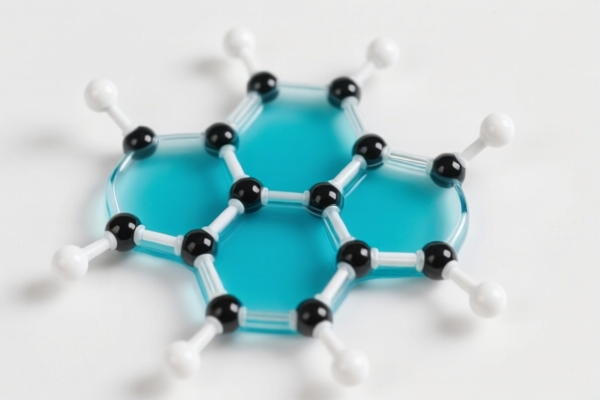
Thermotropic Liquid Crystal Polyester (TLCP), often referred to in the industry as LCP Resin or Liquid Crystal Polymer, is a high-performance engineering plastic. Unlike standard polymers, TLCP self-assembles into ordered structures when heated, offering exceptional thermal stability, chemical resistance, and mechanical strength.
In international trade, it is categorized based on its physical state and chemical composition:
1. Raw Polymer Resin (Unmelted/Unshaped):
Solid pellets, granules, or powder form of the polyester polymer. This is the raw material used for further processing (injection molding, extrusion, etc.).
2. Semi-Finished Articles (Already Shaped):
If the material has been molded into preforms, films, fibers, or reinforced composite sheets (e.g., carbon-fiber reinforced LCP), it may fall under different chapters.
⚠️ Key Distinction:
- If it is pure resin powder/pellets → Classified under Chapter 39 (Plastics).
- If it is fibers or yarns → Classified under Chapter 54 (Man-made filaments).
- If it is reinforced composite preforms → May be classified under Chapter 39 (Articles of plastics) or Chapter 39 (Composites), depending on structure.
📦 II. HS Code Classification Details (2026 Latest Tariff Authority Comparison)
| HS Code | Product Description | Application Scenario | Physical State |
|---|---|---|---|
3907.99.90.00 |
Other polyesters, in primary forms (e.g., TLCP Resin) | Raw material for injection molding, automotive parts, connectors | ✅ Pellets/Powder |
3908.90.00.00 |
Polyimides in primary forms | Note: TLCP is NOT polyimide, but often confused. Ensure correct chemical identification. | ✅ N/A for TLCP |
3916.90.00.00 |
Monofilament, strip, or similar shapes of plastics | LCP fibers, filaments, or fibers for reinforcement | ✅ Fibers/Filaments |
3920.10.00.00 |
Other plates, sheets, film, foil, and strip of plastics | LCP films (transparent, high-temp) | ✅ Films/Sheets |
3926.90.97.00 |
Other articles of plastics | Pre-molded LCP connectors, housings, finished components | ✅ Finished Articles |
5402.33.00.00 |
Synthetic filaments, textured, of synthetic polymers | LCP yarns for industrial weaving | ✅ Yarns |
🔍 Key Reminder:
- Most common import scenario: TLCP as a raw resin for electronics/automotive manufacturing →3907.99.90.00.
- Do NOT misclassify as "Chemicals" (Chapter 29): TLCP is a polymer/plastic, not a simple organic chemical.
- Do NOT misclassify as "Textiles": Unless it is explicitly sold as yarn/fiber, it stays in Chapter 39.
💰 III. 2026 Latest Tariff Rate Details (Including Surtaxes & Policy Add-ons)
✅ Applicable Country: United States (US)
✅ Country of Origin: China (CN)
✅ Effective Date: November 10, 2025 (and subsequent imports)
🎯 1. 3907.99.90.00 —— Other Polyesters (TLCP Resin Raw Material)
| Item | Content |
|---|---|
| Base Tariff Rate | 5.3% (General/AD Valorem) |
| USITC Surtax (Section 301) | +7.5% (Footnote 9903.88.03 applies to many plastics) |
| IEEPA Surtax (China-specific) | +10% (Effective Nov 10, 2025, for China-origin goods) |
| Total Effective Rate | 22.8% |
| Tax Calculation | CIF Value × 22.8% |
| De Minimis Eligibility | ❌ Not Eligible (deny_de_minimis) |
| Legal Basis Path | IEEPA:9903.01.25 → IEEPA:9903.01.24 → USITC:3907.99.90.00 → FOOTNOTE:9903.88.03 |
📌 Explanation:
- The 7.5% Section 301 surtax applies to most plastics and resin materials not listed in specific exemption lists.
- The 10% IEEPA surtax is a new layer added on top of Section 301 tariffs for Chinese-origin goods starting late 2025.
- Total 22.8% is significantly higher than the base 5.3%, impacting cost structures for high-volume buyers.
🎯 2. 3920.10.00.00 —— LCP Films (If imported as sheets/films)
| Item | Content |
|---|---|
| Base Tariff Rate | 5.3% |
| USITC Surtax (Section 301) | +7.5% |
| IEEPA Surtax (China-specific) | +10% |
| Total Effective Rate | 22.8% |
| De Minimis Eligibility | ❌ Not Eligible |
| Legal Basis Path | Same as above |
📌 Note:
- If the TLCP is imported as reinforced composite films (e.g., carbon-fiber LCP), ensure the description matches3920.10.00.00or3921.13.00.00(cellular plastics), but tariff rates remain similar due to Section 301/IEEPA coverage.
🛠️ IV. Customs Clearance Practical Advice (Real-World Pitfall Avoidance Guide)
✅ 1. Required Documentation Checklist (None of the following can be omitted)
| Document | Mandatory? | Description |
|---|---|---|
| ✅ Material Safety Data Sheet (MSDS) | ✔️ | Must confirm it is not hazardous (though LCP is generally safe, customs require classification proof). |
| ✅ Technical Specification Sheet | ✔️ | Must specify: Polymer Type (LCP/TLCP), Melt Flow Index (MFI), Tensile Strength, Supplier Certificate. |
| ✅ Commercial Invoice | ✔️ | Clearly state: "Thermotropic Liquid Crystal Polyester Resin, Primary Form, Unmelted" |
| ✅ Certificate of Origin (CO) | ✔️ | Critical for applying any potential tariff exemptions or verifying origin for IEEPA rules. |
| ✅ Packing List | ✔️ | Detail net weight/gross weight per bag/pallet. |
| ✅ FCC/REACH Compliance (if applicable) | ✔️ | If used in electronics, prove no restricted substances (RoHS/REACH). |
✅ 2. Declaration Tips (Key Mantra)
🔥 "Resin stays in Ch39, Film stays in Ch39, Fiber goes to Ch54, Don't mix them!"
| Scenario | Correct Declaration | Wrong Practice |
|---|---|---|
| TLCP Pellets/Powder | 3907.99.90.00 as "Polyester Resin" |
Misdeclaring as "Chemical Raw Material" (Ch29) → Audit risk |
| TLCP Films | 3920.10.00.00 as "Plastic Films" |
Misdeclaring as "Packaging" → Tariff error |
| TLCP Fibers/Yarn | 5402.33.00.00 as "Synthetic Filament Yarn" |
Misdeclaring as "Resin" → Incorrect classification |
| Finished LCP Connectors | 3926.90.97.00 as "Plastic Articles" |
Misdeclaring as "Raw Material" → Tariff mismatch |
✅ 3. Special Case Handling
| Scenario | Handling Advice |
|---|---|
| OEM Custom Resin | Provide supplier's formulation sheet (without trade secrets) to prove it is LCP. |
| Reinforced LCP (Carbon/Glass Fiber) | Declare as "Composite Plastic". If fiber content >50%, some countries may shift classification, but US typically still uses Ch39 if polymer is continuous phase. |
| Sample Shipments | Even small samples are subject to 22.8% tariff if from China. Do not use "Gift" or "Sample" to bypass, as customs will assess value. |
| High-Performance Grade | If the material is modified LCP (blended with PBT, PP, etc.), still classify under 3907.99.90.00 unless it becomes a "Prepared Plastic" (3916/3917), but 3907 is safer for raw blends. |
🌍 V. Global Market Comparison (2026 Latest)
| Country/Region | Recommended HS Code | Tariff (China Origin) | Certification Requirement | Notes |
|---|---|---|---|---|
| 🇺🇸 USA | 3907.99.90.00 |
22.8% (Total) | FCC (if end-use), RoHS | High surtax impact. |
| 🇨🇳 China | 3907.99.90.00 |
5.3% | CCC (if end-use) | No IEEPA/301 add-ons. |
| 🇪🇺 EU | 3907.99.90.00 |
6.5% | REACH Registration | Lower than US, but REACH compliance is strict. |
| 🇬🇧 UK | 3907.99.90.00 |
6.5% | UKCA/REACH | Post-Brexit rules apply. |
| 🇯🇵 Japan | 3907.99.90.00 |
5.5% | PSE (if end-use) | Competitive, no major surtax. |
📌 Conclusion:
- USA is the most expensive market for TLCP imports from China due to Section 301 + IEEPA combined tariffs.
- EU and Japan remain more cost-effective, but REACH (EU) requires significant chemical registration efforts.
📌 VI. Common Mistakes & Pitfall Guide (Lessons from Blood & Tears)
❌ Mistake 1: Declaring LCP as "Chemical Raw Material" (Chapter 29)
👉 Consequence: Customs will reclassify to 3907 and apply 22.8% tariff + penalties for misdeclaration.
👉 Why: LCP is a polymer, not a monomer or simple organic chemical.
❌ Mistake 2: Mixing "Pellets" and "Finished Connectors" in one shipment without separate lines
👉 Consequence: Customs may audit the entire shipment, delaying clearance for weeks.
👉 Fix: Always separate raw materials from finished goods.
❌ Mistake 3: Ignoring the IEEPA 10% Surtax (Nov 2025+)
👉 Consequence: Underestimating landed cost by 10% on top of Section 301.
👉 Fix: Update cost models immediately for all China-origin plastic imports.
❌ Mistake 4: Using generic terms like "Plastic Powder"
👉 Consequence: Customs may classify under 3902 (Polyolefins) or 3909 (Amino-resins), leading to incorrect HS codes.
👉 Fix: Use precise terminology: "Thermotropic Liquid Crystal Polyester (LCP) Resin, Primary Form".
✅ Correct Declaration Example:
"Thermotropic Liquid Crystal Polyester (TLCP) Resin, Amorphous, Black Pellets, MFI 45g/10min, for High-Temp Electronics Connectors, Unmodified, Made in China"
🎯 VII. Conclusion: Precise Classification Saves Money!
🎯 Remember the Mantra:
🔹 "LCP is Plastic, Not Chemical! Ch39 is King, Ch29 is King of Errors!"
🔹 "US Tariff 22.8%, EU 6.5%, Plan Your Supply Chain!"
🔹 "De Minimis No Longer Works for Plastics from China!"
📌 Pro Tip:
If your TLCP is originating from Vietnam, Thailand, or Malaysia, you may be eligible for IEEPA Exemption or lower Section 301 rates.
Recommendation: Apply for a Pre-Ruling (Advance Ruling) from CBP to confirm the HS Code before shipment. This avoids surprises at the port.
📣 Immediate Action:
📞 Contact your customs broker + Provide Technical Data Sheet + Request HS Code Pre-Ruling
🚀 Ensure your TLCP shipments are clear, compliant, and cost-optimized!
✨ Professional Clearance Starts with Accurate Classification!
💼 Every Percent of Tariff Saved is Pure Profit!
用户评价
关于 HS 编码归类
协调制度(HS)是由世界海关组织(WCO)制定的国际贸易商品分类标准。全球 200 多个国家采用 HS 系统作为海关关税、贸易统计和进出口监管的基础。
每个 HS 编码遵循以下层级结构:
- 章(2 位)——商品大类(例如:第 84 章:机器和机械设备)
- 品目(4 位)——章内的更具体分类
- 子目(6 位)——国际通用细分,所有 WCO 成员国统一使用
- 本国细分(8-10 位)——各国自行扩展的细分编码,如美国 HTSUS 10 位编码
正确的 HS 编码归类对于顺利通关、准确缴纳关税和遵守贸易法规至关重要。错误归类可能导致海关延误、多缴关税或罚款。
从CN进口到US时,适用的关税税率可能包括:
- 最惠国(MFN)税率——适用于 WTO 成员国的标准关税税率
- 普通税率——适用于无贸易协定国家
- 贸易救济关税——附加关税,如 301 条款(反倾销)、232 条款(国家安全)或反补贴税
本页内容仅供参考。如需正式归类,请咨询当地海关或持牌报关代理。