Thoroughbred racehorse
CN → US商品图片


AI分析
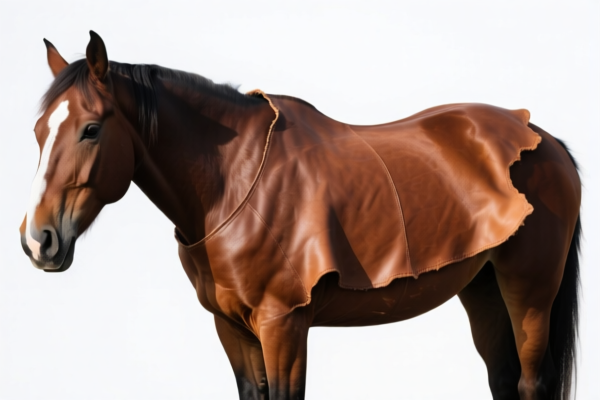
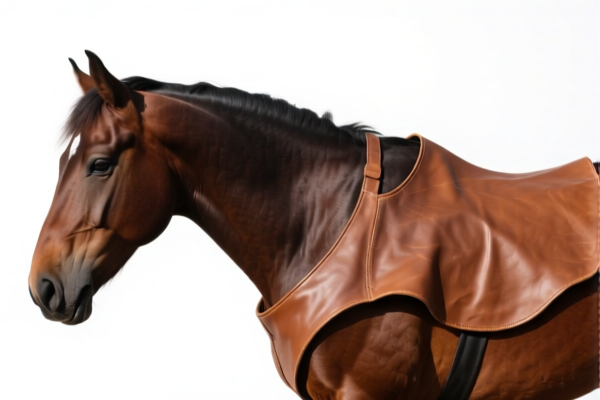
🐎 Thoroughbred Racehorse (Pure-Bred Breeding Horse)
🌐 HS Code Reference & Customs Clearance Guide | 2026 Latest Tariff Analysis | Professional Livestock Entry Strategy
📌 I. Product Definition & Classification: Do You Understand "Thoroughbred Racehorses"?
The Thoroughbred is a specific breed of horse developed primarily for flat racing. In international trade, the classification depends strictly on the animal's purpose (breeding vs. non-breeding) and status (live animal).
Key Distinction: * Pure-Bred Breeding Animals: Horses registered with recognized studbooks, intended for reproduction. * Other Horses: Horses that are Thoroughbreds or other breeds but are not classified as pure-bred breeding stock (e.g., racing prospects not yet registered for breeding, working horses, or horses for sport/leisure without breeding status).
⚠️ Critical Differentiation:
- If the horse is registered and intended for breeding → 0101.21
- If the horse is NOT pure-bred breeding stock (even if it is a Thoroughbred) → 0101.29
📦 II. HS Code Classification Details (2026 Tariff Authority Comparison)
| HS Code | Product Description | Applicable Scenario | Breeding Status |
|---|---|---|---|
0101.21 |
Live Pure-Bred Breeding Horses | Registered stud horses, broodmares intended for breeding | ✅ Yes |
0101.29 |
Live Horses (Other than Pure-Bred Breeding) | Racing prospects, performance horses, unregistered Thoroughbreds, other uses | ❌ No |
🔍 Key Reminder:
- The term "Thoroughbred" alone does not guarantee0101.21.
- If the horse is a Thoroughbred but not designated for breeding (e.g., a racehorse sold for riding or sport), it must be declared under 0101.29.
- Misclassification can lead to delays, as customs may require studbook registration certificates.
💰 III. 2026 Latest Tariff Rate Details (Including Surcharges & Policy Additions)
✅ Applicable Country: United States (US)
✅ Origin: China (CN)
✅ Effective Date: November 10, 2025 (including subsequent imports)
🎯 1. 0101.21 – Live Pure-Bred Breeding Horses
| Item | Content |
|---|---|
| Base Tariff Rate | 0% (ad valorem) |
| USITC Surtax | +25% (from USITC Footnote 9903.88.01) |
| IEEPA Surtax | +10% (For China/Hong Kong products, effective Nov 10, 2025) |
| Total Tax Rate | 35% |
| Tax Calculation | CIF Value × 35% |
| De Minimis Exemption | ❌ Not Available (deny_de_minimis) |
| Legal Basis Path | IEEPA:9903.01.25 → IEEPA:9903.01.24 → USITC:0101.21 → FOOTNOTE:9903.88.01 |
📌 Explanation:
- Despite being live animals, pure-bred breeding horses are subject to the same high surtaxes as technology goods under the current trade policies.
- The 35% total rate is significant and must be factored into the cost of importing breeding stock from China.
🎯 2. 0101.29 – Live Horses (Other than Pure-Bred Breeding)
| Item | Content |
|---|---|
| Base Tariff Rate | 0% |
| USITC Surtax | +25% |
| IEEPA Surtax | +10% |
| Total Tax Rate | 35% |
| Tax Calculation | CIF × 35% |
| De Minimis Exemption | ❌ Not Available |
| Legal Basis Path | IEEPA:9901.25 → IEEPA:9903.01.24 → USITC:0101.29 → FOOTNOTE:9903.88.01 |
📌 Note:
- Both subheadings under 0101.2x are subject to the identical tax structure.
- Whether the horse is a racehorse, a show jumper, or a gelding, if it is not "Pure-Bred Breeding Stock," it falls here.
- There is no tax advantage to misclassifying a breeding horse as "other" to avoid scrutiny, as the rate is the same.
🛠️ IV. Customs Clearance Practical Advice (Real-World Pitfall Guide)
✅ 1. Required Documentation Checklist (Mandatory)
| Document | Must Provide | Description |
|---|---|---|
| ✅ Veterinary Health Certificate | ✔️ | Issued by authorized government vet, confirming freedom from infectious diseases (Equine Influenza, EIA, etc.) |
| ✅ Import Permit | ✔️ | Required from USDA-APHIS (Animal and Plant Health Inspection Service) |
| ✅ Studbook Registration Certificate | ✔️ | Only if claiming 0101.21. Must prove "Pure-Bred Breeding" status. |
| ✅ Commercial Invoice | ✔️ | Must clearly state "Live Horse," breed, age, sex, and purpose (breeding vs. other) |
| ✅ Air Waybill / Bill of Lading | ✔️ | Standard transport document |
| ✅ Certificate of Origin | ✔️ | To determine applicable surtaxes (e.g., IEEPA) |
✅ 2. Declaration Tips (Key Mantra)
🔥 "Purpose Defines Code, Health Certs Clear the Gate, Breeding Proof for .21, Other Use for .29!"
| Scenario | Correct Declaration | Wrong Practice |
|---|---|---|
| Registered Breeding Stallion/Mare | 0101.21 |
Misclassifying as 0101.29 (minor error, but inconsistent with documents) |
| Racehorse for Sport (Not Breeding) | 0101.29 |
Claiming 0101.21 without Studbook Proof → Seizure/Return |
| Horse with Health Issues | Do Not Ship | Attempting to declare with incomplete veterinary docs → Quarantine/Rejection |
✅ 3. Special Case Handling
| Case | Handling Advice |
|---|---|
| Live Transport | Ensure compliance with IATA Live Animals Regulations. Provide animal handler details. |
| OEM/Broker Horses | If the horse is imported by a broker but intended for private breeding, the importer must prove breeding status if claiming 0101.21. |
| Mixed Shipments | If importing a group of horses (some breeding, some not), each must be listed separately with correct HS code. Do not bulk declare. |
| Veterinary Inspection | USDA may require quarantine upon arrival. Plan for logistics near the port of entry. |
🌍 V. Global Market Comparison for Horses (2026 Latest)
| Country/Region | Recommended HS Code | Tariff (China Origin) | Certification Requirements | Notes |
|---|---|---|---|---|
| 🇺🇸 United States | 0101.21 / 0101.29 |
35% (China) | USDA Permit + Health Cert | High duty; strict health checks |
| 🇪🇺 European Union | 0101.21 / 0101.29 |
0% (Most) | EU Health Cert + Tattoo/Chip | No IEEPA surtax; easier entry |
| 🇬🇧 United Kingdom | 0101.21 / 0101.29 |
0% | UK Health Cert | Post-Brexit rules apply |
| 🇯🇵 Japan | 0101.21 / 0101.29 |
0% | Japan Veterinary Inspection | High demand for thoroughbreds |
| 🇦🇺 Australia | 0101.21 / 0101.29 |
5% | AQIS Permit | Strict biosecurity |
📌 Conclusion:
- The US imposes the highest barrier due to the 35% combined tariff for horses from China.
- EU, UK, Japan, and Australia offer significantly lower or zero tariffs, making them more attractive markets for Chinese horse exports.
- Biosecurity and Veterinary Health are the primary non-tariff barriers globally.
📌 VI. Common Mistakes & Pitfall Guide (Blood & Tears Lessons)
❌ Mistake 1: Declaring a breeding horse as "Other" (0101.29) to simplify paperwork
👉 Consequence: While tax is the same, customs may request breeding proof later. If it’s actually a breeding horse, it’s correct. But if it’s not, you avoid no benefit. Consistency is key.
❌ Mistake 2: Failing to provide Studbook Registration for 0101.21
👉 Consequence: Customs will reclassify to 0101.29 and may penalize for inaccurate declaration. Always have the certificate ready.
❌ Mistake 3: Ignoring IEEPA Surtax
👉 Consequence: Underestimating landed cost by 10%. Budget for the full 35% for China-origin horses.
❌ Mistake 4: Incomplete Veterinary Health Certificate
👉 Consequence: Rejection at the border. Horses cannot be cleared without a USDA-approved health certificate.
✅ Correct Approach:
"Live Horse, Thoroughbred, Male, 3 Years, Intended for Breeding, Pure-Bred [Attach Studbook], Imported under USDA Permit #XXXX, HS Code
0101.21"
🎯 VII. Conclusion: Precision in Livestock Trade
🎯 Remember the Mantra:
🔹 "Breeding Needs Proof, Other Needs Clarity, 35% is the US Price, Health Certs are the Key."
🔹 "HS Code0101.21vs0101.29: Know the Purpose, Avoid the Dispute!"
📌 Pro Tip:
- For non-Chinese origins (e.g., Australia, UK, Ireland), the US tariff is often 0% for live horses, making the US a more competitive destination for global breeding stock.
- Always apply for an Advance Ruling from CBP if the breeding status is ambiguous.
📣 Immediate Action:
📞 Contact USDA-APHIS for Import Permits
📞 Engage a specialized veterinary customs broker
🚀 Ensure your horse’s documentation is airtight before departure!
✨ Professional Clearance Starts with Accurate Classification!
💼 Your Horse’s Journey, Smoothly Navigated!
用户评价
关于 HS 编码归类
协调制度(HS)是由世界海关组织(WCO)制定的国际贸易商品分类标准。全球 200 多个国家采用 HS 系统作为海关关税、贸易统计和进出口监管的基础。
每个 HS 编码遵循以下层级结构:
- 章(2 位)——商品大类(例如:第 84 章:机器和机械设备)
- 品目(4 位)——章内的更具体分类
- 子目(6 位)——国际通用细分,所有 WCO 成员国统一使用
- 本国细分(8-10 位)——各国自行扩展的细分编码,如美国 HTSUS 10 位编码
正确的 HS 编码归类对于顺利通关、准确缴纳关税和遵守贸易法规至关重要。错误归类可能导致海关延误、多缴关税或罚款。
从CN进口到US时,适用的关税税率可能包括:
- 最惠国(MFN)税率——适用于 WTO 成员国的标准关税税率
- 普通税率——适用于无贸易协定国家
- 贸易救济关税——附加关税,如 301 条款(反倾销)、232 条款(国家安全)或反补贴税
本页内容仅供参考。如需正式归类,请咨询当地海关或持牌报关代理。