Tinplate
CN → US| HS编码 | 关税税率 | 原产国 | 目的国 | 文档 |
|---|---|---|---|---|
| 7204300000 | 35.0% | CN | US | 官方文档 |
| 7204490080 | 35.0% | CN | US | 官方文档 |
| 7210110000 | 35.0% | CN | US | 官方文档 |
| 7210120000 | 35.0% | CN | US | 官方文档 |
| 7212100000 | 35.0% | CN | US | 官方文档 |
| 7212500000 | 35.0% | CN | US | 官方文档 |
商品图片
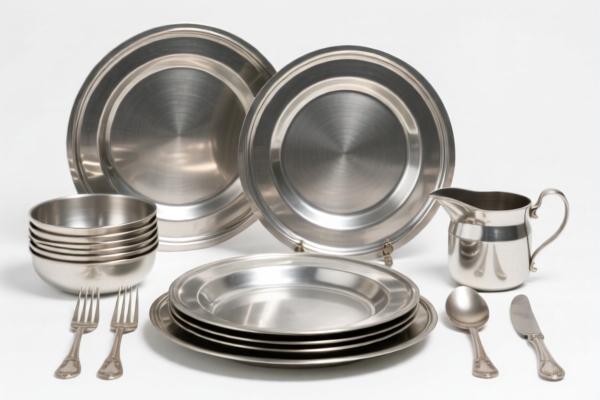


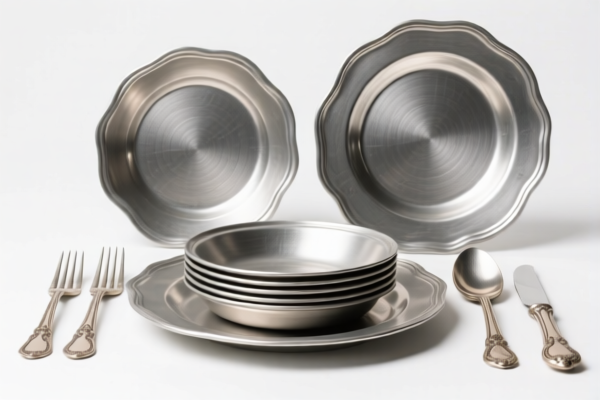
AI分析
🚀 Tinplate Scraps (Tinplate Waste & Scrap)
🌐 HS Code Reference & Customs Clearance Guide | 2026 Latest Tariff Analysis | Professional Clearance Strategy
📌 I. Product Definition & Classification: Do You Really Understand "Tinplate Scrap"?
Tinplate Scrap refers to waste and scrap materials derived from tinplate, which is essentially tin-coated iron or steel. In international trade, these materials are categorized based on their form (e.g., general scrap, rolled product residues) and chemical composition (iron or alloy steel).
⚠️ Key Distinction Points:
- General Scrap/Shreds: If the material is simply waste, shreds, or general scrap from tinplate products, it falls under 7204.30.00.00 or 7204.49.00.80.
- Rolled Product Residues: If the material consists of residual or secondary forms of flat-rolled products (such as cut-offs, edge trimmings, or defective sheets) that are still recognizable as processed tinplate, it falls under 7210.11.00.00, 7210.12.00.00, 7212.10.00.00, or 7212.50.00.00.
📦 II. HS Code Classification Details (2026 Latest Tariff Authority Comparison)
| HS Code | Product Description | Applicable Scenario | Form/State |
|---|---|---|---|
7204.30.00.00 |
Tinplate scrap (Waste and scrap of tinplate) | General waste, shreds, or bulk scrap from tinplate production/use | ✅ General Scrap |
7204.49.00.80 |
Tinplate scrap (Waste and scrap of iron or steel) | General waste classified under iron/steel categories | ✅ General Scrap |
7210.11.00.00 |
Tinplate scrap (Residues of tinplate flat-rolled products) | Residual parts from tinplate (tin-coated steel) flat rolling processes | ✅ Flat-Rolled Residue |
7210.12.00.00 |
Tinplate scrap (Residues of tinplate sheet/strip) | Residual/secondary forms of tinplate sheets/strips | ✅ Flat-Rolled Residue |
7212.10.00.00 |
Tinplate scrap (Subsequent processed forms) | Scrap from tin-coated iron/non-alloy steel after further processing | ✅ Processed Scrap |
7212.50.00.00 |
Tinplate scrap (Coated metal waste) | Metal waste after coating treatment (iron/non-alloy steel) | ✅ Coated Scrap |
🔍 Key Reminder:
- All listed HS codes for Tinplate Scrap from China to the US are subject to high additional tariffs.
- Whether classified as "general scrap" (7204.xx) or "flat-rolled residue" (7210.xx/7212.xx), the total tax burden is identical: 35.0%.
- Do not assume that "scrap" automatically qualifies for lower tariffs; the origin and additional trade policies dictate the final cost.
💰 III. 2026 Latest Tariff Rate Breakdown (Including Additional Taxes & Policy Surcharges)
✅ Applicable Country: United States (US)
✅ Country of Origin: China (CN)
✅ Effective Time: Current (Applicable to imports including subsequent entries)
🎯 1. All HS Codes (7204.30.00.00, 7204.49.00.80, 7210.11.00.00, 7210.12.00.00, 7212.10.00.00, 7212.50.00.00)
| Item | Content |
|---|---|
| Base Tariff Rate | 0.0% (ad valorem) |
| Section 301 Tariff | +25.0% (Additional tariff imposed under Section 301 of the Trade Act of 1974) |
| Section 122 Tariff | +10.0% (Specific tariff clause for Chinese origin goods, often linked to recent trade measures) |
| Total Tariff Rate | 35.0% |
| Tax Calculation | CIF Value × 35% |
| De Minimis Exemption | ❌ Not Applicable (Scrap metals are generally excluded from de minimis low-value shipment exemptions) |
| Legal Basis Path | USITC: [HS Code] → Section 301: 25% → Section 122: 10% → Total: 35% |
📌 Explanation:
- The Base Rate is 0% because scrap metals often enjoy lower standard import duties in the US.
- However, the 25% Section 301 Tariff is the dominant cost driver for Chinese-origin steel/iron products.
- The 10% Section 122 Tariff adds further pressure, bringing the total to 35%.
- Total Liability: For every $10,000 CIF value, you must pay $3,500 in duties alone.
🛠️ IV. Customs Clearance Practical Advice (Battle-Tested Pitfall Avoidance Guide)
✅ 1. Required Document Checklist (None Can Be Omitted)
| Document | Must Provide | Description |
|---|---|---|
| ✅ Commercial Invoice | ✔️ | Must clearly state "Tinplate Scrap," "Waste and Scrap of Iron/Steel," or "Residue of Flat-Rolled Products." Avoid vague terms like "Metal Waste." |
| ✅ Packing List | ✔️ | Detail the weight, quantity, and packaging type. Ensure consistency with the invoice. |
| ✅ Product Photos | ✔️ | Clear images showing the condition of the scrap (shredded, sheets, coiled, etc.) to verify HS code classification. |
| ✅ Certificate of Origin (CO) | ✔️ | Proof of Chinese origin, triggering the additional tariffs. |
| ✅ Material Test Report | ✔️ | Optional but recommended to prove composition (Iron/Steel vs. Alloy) if challenged. |
| ✅ Bill of Lading/Air Waybill | ✔️ | Standard transport document. |
✅ 2. Declaration Tips (Key Mnemonics)
🔥 “Classify by Form, Declare by Origin, Tariff is 35%, Don’t Guess!”
| Scenario | Correct Declaration | Wrong Practice |
|---|---|---|
| General Tinplate Shreds/Waste | 7204.30.00.00 or 7204.49.00.80 |
Misclassifying as "Alloy Steel" to seek lower rates → Audit risk |
| Flat-Rolled Residues (Trim/Edge) | 7210.11.00.00 / 7210.12.00.00 |
Declaring as "General Scrap" → May trigger customs inquiry on form |
| Coated Scrap (Post-processing) | 7212.50.00.00 |
Declaring as "Uncoated Scrap" → Misclassification penalty |
| All Cases | Total Tax: 35% | Assuming 0% base rate means no tax → Missed 35% Liability! |
✅ 3. Special Case Handling
| Situation | Handling Advice |
|---|---|
| Mixed Scrap (Tin + Other Metals) | If contaminated with non-ferrous metals, HS code may change. Ensure purity for accurate classification. |
| Contaminated Scrap | If the scrap contains oil, paint, or non-metallic residues, it may be classified differently. Cleanliness affects valuation. |
| Origin Marking | Ensure all packages clearly mark "Made in China." Hidden origin can lead to severe penalties. |
| Valuation Disputes | Customs may question the CIF value of scrap. Provide purchase contracts and market price references for tinplate scrap. |
🌍 V. Global Market Clearance Comparison (2026 Latest)
| Country/Region | Recommended HS Code | Tariff (China Origin) | Certification | Note |
|---|---|---|---|---|
| 🇺🇸 USA | 7204.30.00.00 / 7210.xx |
35% (25% S301 + 10% S122) | None specific | High barrier. Total tax is 35%. |
| 🇨🇳 China | 7204.30.00.00 |
0% | None | Import of scrap is often restricted or taxed differently (export vs import). |
| 🇪🇺 EU | 7204.30.00.00 |
Varies (0-6.5%) | REACH | No Section 301 equivalent, but environmental standards are strict. |
| 🇬🇧 UK | 7204.30.00.00 |
Varies | UKCA | Post-Brexit tariffs apply. |
| 🇦🇺 Australia | 7204.30.00.00 |
Varies | RCM | No major anti-dumping duties on tinplate scrap generally. |
📌 Conclusion:
- The US is the most difficult market for tinplate scrap due to the 35% total tariff burden.
- EU and other regions may have lower tariff rates, but environmental and recycling regulations are stricter.
- Cost-Benefit Analysis: Ensure the profit margin exceeds the 35% duty + logistics + handling costs before exporting to the US.
📌 VI. Common Mistakes & Pitfall Guide (Lessons Learned)
❌ Mistake 1: Declaring "Tinplate Scrap" with a 0% base rate and forgetting the 35% additional taxes.
👉 Consequence: Seizure of goods, heavy fines, and back-payment of duties + interest.
❌ Mistake 2: Misclassifying "Flat-Rolled Residues" (7210.xx) as "General Scrap" (7204.xx) to avoid scrutiny.
👉 Consequence: Customs audit, delay in clearance, and potential penalty for misdeclaration.
❌ Mistake 3: Using vague descriptions like "Metal Waste" in the commercial invoice.
👉 Consequence: Customs may detain goods for re-classification, leading to storage fees and demurrage charges.
❌ Mistake 4: Ignoring the "Section 122" tariff component.
👉 Consequence: Underpayment of duties. The 10% is separate from the 25% Section 301 tax.
✅ Correct Practice:
"Tinplate Scrap, Waste and Scrap of Tin-Coated Iron or Steel, HS Code 7204.30.00.00, Origin: China, Total Duty: 35%"
🎯 VII. Conclusion: Precise Classification Saves Money!
🎯 Remember the Mnemonic:
🔹 "Base 0%, S301 25%, S122 10%, Total 35%!"
🔹 "Form Matters: General Scrap vs. Rolled Residue, But Tax is Same!"
🔹 "China Origin, US Market, High Tariff, Plan Ahead!"
📌 Pro Tip:
- Apply for Advance Rulings: If you are a large importer, consider requesting a Binding Tariff Information (BTI) or Advance Ruling from US Customs and Border Protection (CBP) to confirm the HS code and tariff liability.
- Supply Chain Adjustment: If the 35% tariff is prohibitive, consider processing in third countries (subject to rules of origin) or selling to markets with lower tariffs (e.g., EU, Southeast Asia).
📣 Immediate Action:
📞 Contact a licensed customs broker + Provide product images + Verify HS code
🚀 Ensure accurate classification to avoid costly delays and penalties!
✨ Professional Clearance Starts with Precise Classification!
💼 Every Percent of Tax Counts in Your Profit Margin!
用户评价
关于 HS 编码归类
协调制度(HS)是由世界海关组织(WCO)制定的国际贸易商品分类标准。全球 200 多个国家采用 HS 系统作为海关关税、贸易统计和进出口监管的基础。
每个 HS 编码遵循以下层级结构:
- 章(2 位)——商品大类(例如:第 84 章:机器和机械设备)
- 品目(4 位)——章内的更具体分类
- 子目(6 位)——国际通用细分,所有 WCO 成员国统一使用
- 本国细分(8-10 位)——各国自行扩展的细分编码,如美国 HTSUS 10 位编码
正确的 HS 编码归类对于顺利通关、准确缴纳关税和遵守贸易法规至关重要。错误归类可能导致海关延误、多缴关税或罚款。
从CN进口到US时,适用的关税税率可能包括:
- 最惠国(MFN)税率——适用于 WTO 成员国的标准关税税率
- 普通税率——适用于无贸易协定国家
- 贸易救济关税——附加关税,如 301 条款(反倾销)、232 条款(国家安全)或反补贴税
本页内容仅供参考。如需正式归类,请咨询当地海关或持牌报关代理。