Transfer Machine
CN → US| HS编码 | 关税税率 | 原产国 | 目的国 | 文档 |
|---|---|---|---|---|
| 8428700000 | 35.0% | CN | US | 官方文档 |
| 8428900390 | 35.0% | CN | US | 官方文档 |
| 8479500000 | 37.5% | CN | US | 官方文档 |
| 8479909599 | 0.0% | CN | US | 官方文档 |
商品图片
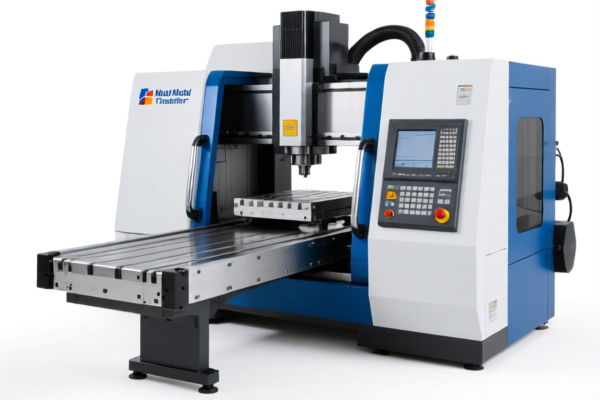
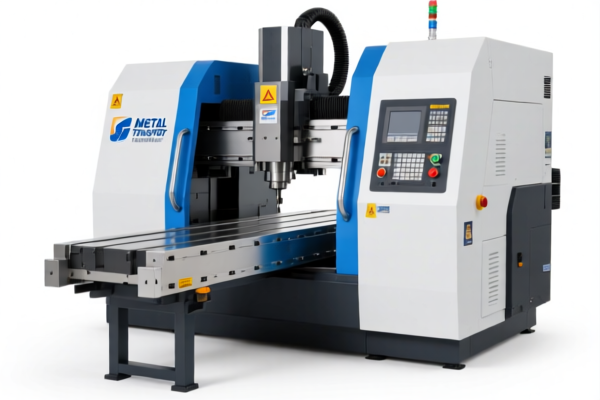
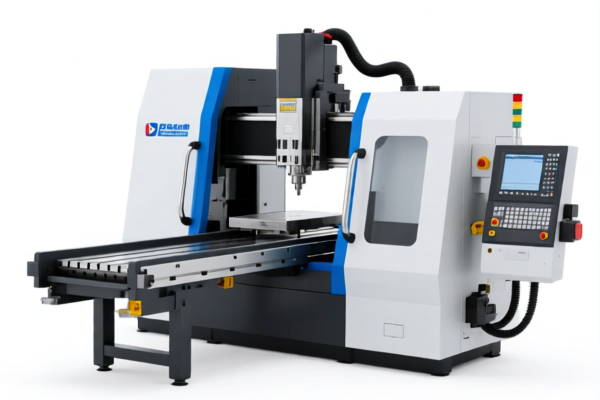
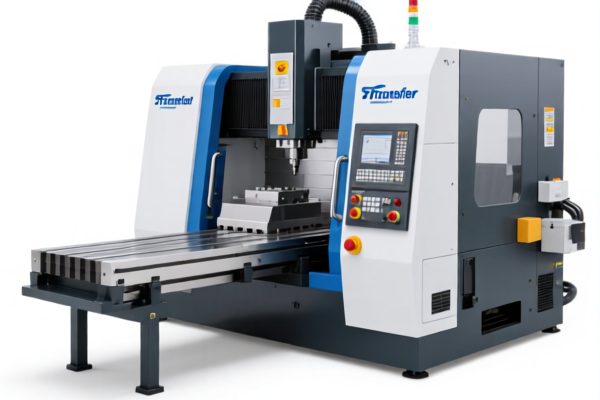
AI分析
🤖 Industrial Transfer & Handling Machinery (Robotics & Automation)
🌐 HS Code Reference & Customs Clearance Guide | 2026 Latest Tariff Analysis | Professional Clearance Strategy
📌 I. Product Definition & Classification: What is a "Transfer Machine"?
In industrial automation and logistics, a "Transfer Machine" is a broad term. It typically refers to equipment designed to move, lift, handle, load, or unload materials within a factory or warehouse. The most common interpretation in international trade is Industrial Robots (specifically articulated arms, SCARA, or delta robots used for pick-and-place, welding, or assembly) or Conveyor/Lifting Systems.
Key Distinction: - Integrated Robotic Cell: A robot arm mounted on a base, used for specific tasks (welding, painting, loading). → Often classified under Chapter 84.28 or 84.79. - Continuous Conveying System: Belt, chain, or roller systems moving goods continuously. → Often classified under 84.28. - Parts of Machinery: Spare parts, controllers, or arms not classified as complete machines. → Often classified under 84.79.
⚠️ Critical Classification Point:
- If the machine is an industrial robot (programmable, automatic, used for manufacturing/assembly), it may fall under 8479.50.
- If it is a general lifting/handling device (like an elevator, escalator, or generic conveyor), it falls under 8428.
- Never classify a complete robot as a "part" to avoid higher scrutiny or incorrect duty rates.
📦 II. HS Code Classification Details (2026 Latest Tariff Alignment)
Based on the provided data, here are the relevant HS Codes for Transfer/Handling Machinery:
| HS Code | Product Description | Applicable Scenario | Key Characteristic |
|---|---|---|---|
8428.70.00.00 |
Other lifting, handling, loading or unloading machinery (e.g., elevators, escalators, conveyors, teleferics): Industrial robots | Robots used specifically for lifting, handling, or loading tasks (e.g., palletizing robots) | ✅ Robot + Handling Function |
8428.90.03.90 |
Other lifting, handling, loading or unloading machinery: Other machinery Other | Generic conveyors, stackers, or handling equipment not specified elsewhere | ✅ General Handling Equipment |
8479.50.00.00 |
Machines and mechanical appliances having individual functions, not specified elsewhere: Industrial robots, not elsewhere specified or included | Standard industrial robots (articulated, SCARA, Delta) used for assembly, welding, or general automation | ✅ Dedicated Industrial Robot |
8479.90.95.99 |
Machines and mechanical appliances having individual functions: Other machines and mechanical appliances: Other: Other Other | Parts, accessories, or miscellaneous machinery components not covered above | ✅ Parts or Undefined Machinery |
🔍 Important Note:
- 8428.70.00.00 and 8479.50.00.00 are the primary codes for complete industrial robots.
- The choice depends on whether the robot is primarily a "lifting/handling" device (8428) or a "general function" machine (8479).
- 8479.90.95.99 is for parts. Misclassifying a complete robot as a part can lead to severe penalties.
💰 III. 2026 Latest Tariff Rate Breakdown (Including Additional Duties)
✅ Applicable Country: United States (US)
✅ Country of Origin: China (CN)
✅ Effective Date: 2025–2026 (Current Trade Policy)
🎯 1. 8428.70.00.00 – Industrial Robots (Lifting/Handling Type)
| Item | Details |
|---|---|
| Base Duty Rate | 0% (ad valorem) |
| Section 301 Additional Duty | +25% |
| Total Duty Rate | 25% |
| Calculation Basis | CIF Value × 25% |
| De Minimis Exemption | ❌ Not Applicable (Deny de minimis) |
| Legal Basis | USITC:8428.70.00.00 → Section 301: Footnote 9903.88.01 |
📌 Explanation:
- 0% Base: Industrial handling robots often have low base duties due to trade agreements or specific subheading benefits.
- 25% Surcharge: Subject to US Section 301 tariffs on Chinese goods.
- Total 25%: This is a significant cost factor. Plan accordingly.
🎯 2. 8428.90.03.90 – Other Handling Machinery
| Item | Details |
|---|---|
| Base Duty Rate | 0% (ad valorem) |
| Section 301 Additional Duty | +25% |
| Total Duty Rate | 25% |
| Calculation Basis | CIF Value × 25% |
| De Minimis Exemption | ❌ Not Applicable |
| Legal Basis | USITC:8428.90.03.90 → Section 301: Footnote 9903.88.01 |
📌 Note:
- Applies to non-specific conveyors, stackers, or handling systems.
- Same 25% total duty as robotic handling units.
🎯 3. 8479.50.00.00 – General Industrial Robots
| Item | Details |
|---|---|
| Base Duty Rate | 2.5% (ad valorem) |
| Section 301 Additional Duty | +25% |
| Total Duty Rate | 27.5% |
| Calculation Basis | CIF Value × 27.5% |
| De Minimis Exemption | ❌ Not Applicable |
| Legal Basis | USITC:8479.50.00.00 → Section 301: Footnote 9903.88.01 |
📌 Critical Difference:
- 2.5% Base + 25% Surcharge = 27.5%.
- This is 0.5% higher than the 8428 classification.
- Why? 8479 is a "residual" chapter for machines not specifically listed elsewhere. Some specific handling robots (8428) benefit from lower base rates.
- Recommendation: If your robot is primarily for lifting/handling (e.g., palletizing), argue for 8428.70.00.00 to save 0.5%.
🎯 4. 8479.90.95.99 – Parts & Other Machinery
| Item | Details |
|---|---|
| Base Duty Rate | Error / Unavailable |
| Section 301 Additional Duty | Error / Unavailable |
| Total Duty Rate | Error |
| Note | Tax information unavailable in current dataset. |
| Legal Basis | USITC:8479.90.95.99 |
📌 Warning:
- Do NOT use this code for complete machines. It is intended for parts.
- Using it for a complete robot risks:
1. Customs Detention: CBP may reclassify it.
2. Penalties: Fines for misdeclaration.
3. Unclear Duties: As shown, tax data is "Error," indicating high risk.
- Action: Always declare complete robots under 8428.70.00.00 or 8479.50.00.00.
🛠️ IV. Customs Clearance Practical Advice (Avoiding Pitfalls)
✅ 1. Essential Documentation Checklist
| Document | Required? | Purpose |
|---|---|---|
| ✅ Product Specification Sheet | ✔️ | Must detail: Type (Robot/Conveyor), Function (Lifting/Assembly), Power, Weight, Dimensions. |
| ✅ Technical Diagrams | ✔️ | Show structure: Is it a complete machine or a part? |
| ✅ Commercial Invoice | ✔️ | Clear description: "Industrial Robot, Model XYZ, Used for Palletizing" (Not just "Transfer Machine"). |
| ✅ Packing List | ✔️ | List all items. If parts are shipped separately, declare them correctly (8479.90). |
| ✅ Certificate of Origin | ✔️ | To confirm China origin (subject to 301 tariffs). |
| ✅ FCC/CE Certification | ✔️ | For electronic components (robots have controllers). |
✅ 2. Classification Strategy (The "Robot" vs. "Conveyor" Dilemma)
| Scenario | Correct HS Code | Reason |
|---|---|---|
| Robotic Arm for Palletizing | 8428.70.00.00 |
Primary function is "lifting/handling." Lower base duty (0%). |
| Robotic Arm for Welding/Assembly | 8479.50.00.00 |
Primary function is "industrial process," not just handling. Higher base duty (2.5%). |
| Belt Conveyor System | 8428.90.03.90 |
Continuous handling, not a robot. |
| Robot Controller/Arm Only | 8479.90.95.99 |
Parts only. Do not use for complete systems. |
| "Transfer Machine" (Vague) | ⚠️ Reclassify | CBP will reject vague terms. Define function clearly. |
🔥 Pro Tip:
- If your robot does both assembly and handling, argue for 8428.70.00.00 if handling is the primary purpose (e.g., moving heavy loads).
- If it’s a general-purpose robot (like a 6-axis arm for welding), 8479.50.00.00 is safer.
✅ 3. Common Mistakes & How to Avoid Them
❌ Mistake 1: Declaring a complete robot as "Parts" (8479.90.95.99)
👉 Consequence: CBP reclassification, penalties, and delayed clearance.
✅ Solution: Always declare complete machines under 8428 or 8479.50.
❌ Mistake 2: Using "Transfer Machine" as the product name
👉 Consequence: Ambiguity leads to audits.
✅ Solution: Use specific terms: "Industrial Robotic Arm," "Conveyor System," "Palletizing Robot."
❌ Mistake 3: Ignoring the 25% Section 301 Surcharge
👉 Consequence: Underpayment of duties, leading to audits and interest.
✅ Solution: Budget for 25–27.5% total duty for Chinese-origin handling robots.
❌ Mistake 4: Misclassifying conveyors as robots
👉 Consequence: Incorrect duty rate application.
✅ Solution: Conveyors = 8428.90. Robots = 8428.70 or 8479.50.
🌍 V. Global Market Comparison (2026)
| Market | Recommended HS Code | Total Duty (China Origin) | Notes |
|---|---|---|---|
| 🇺🇸 USA | 8428.70.00.00 or 8479.50.00.00 |
25% – 27.5% | Section 301 tariffs apply. No de minimis. |
| 🇨🇳 China | 8428.70.00.00 or 8479.50.00.00 |
0% – 5% | Low import duties. No 301 tariffs. |
| 🇪🇺 EU | 8428.70.00.00 or 8479.50.00.00 |
0% – 4.5% | Check for CE compliance. No Section 301. |
| 🇬🇧 UK | 8428.70.00.00 or 8479.50.00.00 |
0% – 4.5% | Post-Brexit tariffs may vary. |
| 🇦🇺 Australia | 8428.70.00.00 or 8479.50.00.00 |
5% | Generally favorable. |
📌 Key Insight:
- The US market is the most expensive for Chinese-origin transfer machinery due to the 25% Section 301 surcharge.
- Consider third-country assembly (e.g., Vietnam, Mexico) for US-bound robots to mitigate duties (if rules of origin are met).
📌 VI. Final Recommendations
- Precise Description: Never use "Transfer Machine." Use "Industrial Robotic Arm" or "Conveyor System."
- Function-Based Classification: Determine if the primary function is lifting/handling (8428) or general automation (8479.50).
- Budget for Tariffs: Plan for 25–27.5% total duty for US imports from China.
- Avoid Parts Classification for Whole Machines: Do not use
8479.90.95.99for complete robots. - Documentation: Provide clear technical specs and diagrams to support your classification.
🎯 Remember:
🔹 "Robots are not parts. Conveyors are not robots. Be specific, be accurate, be profitable."
🔹 "25% surcharge is real. Plan your costs accordingly."
📣 Action Plan:
📞 Consult a licensed customs broker for a Binding Ruling if unsure about classification.
📝 Ensure all invoices and packing lists reflect the exact HS Code and product description.
🚀 Optimize your supply chain to mitigate high tariffs.
✨ Professional Clearance Starts with Accurate Classification!
💼 Minimize Risk, Maximize Efficiency, Protect Your Margins.
用户评价
关于 HS 编码归类
协调制度(HS)是由世界海关组织(WCO)制定的国际贸易商品分类标准。全球 200 多个国家采用 HS 系统作为海关关税、贸易统计和进出口监管的基础。
每个 HS 编码遵循以下层级结构:
- 章(2 位)——商品大类(例如:第 84 章:机器和机械设备)
- 品目(4 位)——章内的更具体分类
- 子目(6 位)——国际通用细分,所有 WCO 成员国统一使用
- 本国细分(8-10 位)——各国自行扩展的细分编码,如美国 HTSUS 10 位编码
正确的 HS 编码归类对于顺利通关、准确缴纳关税和遵守贸易法规至关重要。错误归类可能导致海关延误、多缴关税或罚款。
从CN进口到US时,适用的关税税率可能包括:
- 最惠国(MFN)税率——适用于 WTO 成员国的标准关税税率
- 普通税率——适用于无贸易协定国家
- 贸易救济关税——附加关税,如 301 条款(反倾销)、232 条款(国家安全)或反补贴税
本页内容仅供参考。如需正式归类,请咨询当地海关或持牌报关代理。