Transmission Belts
CN → US| HS编码 | 关税税率 | 原产国 | 目的国 | 文档 |
|---|---|---|---|---|
| 4010313000 | 38.4% | CN | US | 官方文档 |
| 4010316000 | 37.8% | CN | US | 官方文档 |
| 5910001010 | 39.0% | CN | US | 官方文档 |
| 4010125000 | 43.0% | CN | US | 官方文档 |
| 4010125500 | 41.4% | CN | US | 官方文档 |
商品图片
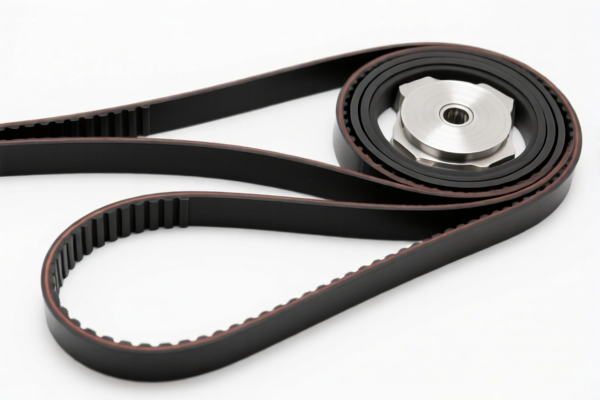
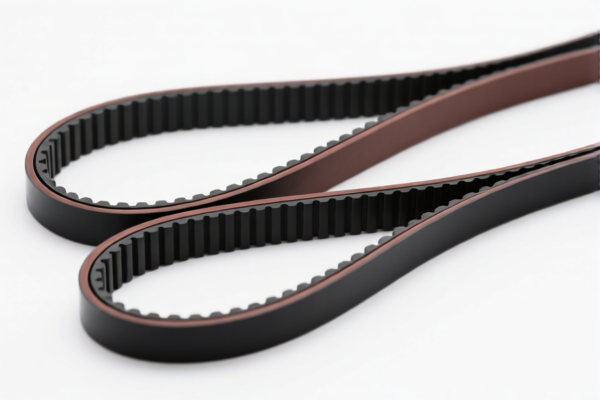
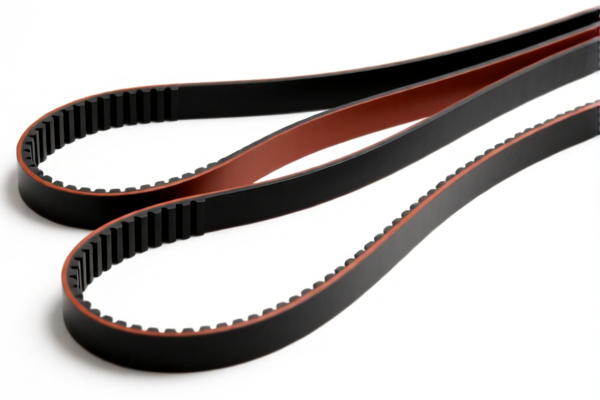
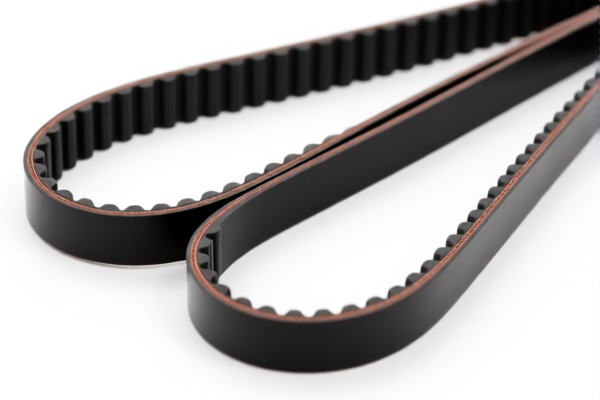
AI分析
🏭 Transmission Belts: The High-Stakes Cross-Border Clearance Guide
🌐 HS Code Reference & Customs Clearance Strategy | 2026 Latest Tariff Analysis | Professional Entry Strategy
📌 I. Product Definition & Classification: What Exactly Are "Transmission Belts"?
Transmission belts are critical mechanical components used to transmit power and motion between rotating shafts. In international trade, they are strictly classified based on their material composition and structural reinforcement. The two primary categories are:
- Rubber Belts (Chapter 40): Belts made of vulcanized rubber. These are further split based on whether they are reinforced with textile materials or pure rubber.
- Textile/Composite Belts (Chapter 59 or 40): Belts where the tensile strength comes from textile cords (nylon, polyester) or other synthetic materials, potentially combined with rubber or fabric covers.
⚠️ Key Classification Distinction:
- If the belt is vulcanized rubber (even with textile reinforcement), it typically falls under Chapter 40 (Rubber and Articles Thereof).
- If the belt is purely textile or uses artificial fibers as the primary structural element (e.g., V-belts made of synthetic materials), it may fall under Chapter 59 (Impregnated, Coated, Covered or Coated Textile Fabrics).
- Do NOT confuse with timing belts or specialized industrial belts that might fall under different machinery parts chapters. The data provided here focuses on standard transmission belts.
📦 II. HS Code Classification Matrix (2026 Latest Tariff Authority)
Based on the provided <DATA>, here is the precise breakdown for importing Transmission Belts into the US from China.
| HS Code | Product Description & Summary | Primary Material/Structure | Tax Rate (Total) |
|---|---|---|---|
4010.31.30.00 |
Rubber Transmission Belts: Matches vulcanized rubber material and belt form. | Vulcanized Rubber (Pure/Standard) | 38.4% |
4010.31.60.00 |
Rubber Transmission Belts: Matches vulcanized rubber material and belt purpose/use. | Vulcanized Rubber (Specific Use) | 37.8% |
5910.00.10.10 |
Transmission Belts: Matches V-belt form and artificial fiber/synthetic material category. | Artificial Fiber/Synthetic (V-Belt Type) | 39.0% |
4010.12.50.00 |
Textile Transmission Belts: Matches reinforcement solely with textile materials and belt use. | Textile Reinforced (Vulcanized Rubber Context) | 43.0% |
4010.12.55.00 |
Textile Transmission Belts: Matches reinforcement solely with textile materials and vulcanized rubber material. | Textile Reinforced + Vulcanized Rubber | 41.4% |
🔍 Critical Note on Chapter 40 vs. Chapter 59:
- Codes starting with 4010 refer to belts made of vulcanized rubber, regardless of whether they have textile cords for strength.
- Codes starting with 5910 refer to belts made of textile materials (like synthetic fibers) impregnated or coated, often seen in specific V-belt configurations using artificial fibers.
- The distinction often lies in the primary structural identity: Is it a rubber product with textile reinforcement (4010), or a textile product coated/formed into a belt (5910)?
💰 III. Detailed Tariff Breakdown (China Origin → USA)
✅ Applicable Country: USA (US)
✅ Country of Origin: China (CN)
✅ Effective Date: 2025/2026 Tariff Schedule
✅ Base Tariff Structure: Includes Base Duty + Section 301 (Add'l Tariff) + Section 122 (if applicable)
🎯 1. 4010.31.30.00 – Rubber Transmission Belts (Vulcanized)
| Item | Detail |
|---|---|
| Base Duty Rate | 3.4% (ad valorem) |
| Section 301 Additional Tariff | +25.0% |
| Section 122 Tariff | +10.0% |
| Total Effective Rate | 38.4% |
| Calculation Basis | CIF Value × 38.4% |
| De Minimis Exemption | ❌ Not Eligible (Section 301 goods are generally excluded from 80/621 de minimis exemptions) |
| Legal Authority Path | HTSUS:4010.31.30 → USITC Footnote 301 → USTR List 3/4 |
📌 Explanation:
- This is a standard vulcanized rubber belt.
- The 25% additional tariff is imposed under Section 301 of the Trade Act of 1974 against Chinese goods.
- The 10% Section 122 tariff may apply depending on specific bilateral trade agreements or temporary provisions (note: Section 122 is often temporary or specific to certain categories; ensure current validity).
- Total Cost Impact: Nearly 40% of the declared value is tax.
🎯 2. 4010.31.60.00 – Rubber Transmission Belts (Specific Use)
| Item | Detail |
|---|---|
| Base Duty Rate | 2.8% (ad valorem) |
| Section 301 Additional Tariff | +25.0% |
| Section 122 Tariff | +10.0% |
| Total Effective Rate | 37.8% |
| Calculation Basis | CIF Value × 37.8% |
| De Minimis Exemption | ❌ Not Eligible |
| Legal Authority Path | HTSUS:4010.31.60 → USITC Footnote 301 |
📌 Explanation:
- Slightly lower base duty (2.8% vs 3.4%) due to specific use classification.
- Same Additional Taxes: 25% (301) + 10% (122).
- Total: 37.8%. This is the lowest cost option among the rubber belts but still very high.
🎯 3. 5910.00.10.10 – V-Belts (Artificial Fiber/Synthetic)
| Item | Detail |
|---|---|
| Base Duty Rate | 4.0% (ad valorem) |
| Section 301 Additional Tariff | +25.0% |
| Section 122 Tariff | +10.0% |
| Total Effective Rate | 39.0% |
| Calculation Basis | CIF Value × 39.0% |
| De Minimis Exemption | ❌ Not Eligible |
| Legal Authority Path | HTSUS:5910.00.10 → USITC Footnote 301 |
📌 Explanation:
- Classified under Chapter 59 because it is primarily an artificial fiber/synthetic product formed into a V-belt.
- Higher base duty (4.0%) results in the highest total rate (39.0%) among the listed codes.
- Ensure the product is indeed synthetic fiber-based and not rubber-compound based.
🎯 4. 4010.12.50.00 – Textile-Reinforced Transmission Belts (Use)
| Item | Detail |
|---|---|
| Base Duty Rate | 8.0% (ad valorem) |
| Section 301 Additional Tariff | +25.0% |
| Section 122 Tariff | +10.0% |
| Total Effective Rate | 43.0% |
| Calculation Basis | CIF Value × 43.0% |
| De Minimis Exemption | ❌ Not Eligible |
| Legal Authority Path | HTSUS:4010.12.50 → USITC Footnote 301 |
📌 Explanation:
- These are belts reinforced solely with textile materials.
- The base duty is significantly higher (8.0%) because textile-reinforced rubber articles are often viewed as more specialized or less standard than plain rubber belts.
- Total Rate: 43.0% – This is the highest cost option. Avoid if possible unless the product fits this exact description.
🎯 5. 4010.12.55.00 – Textile-Reinforced Transmission Belts (Vulcanized Rubber)
| Item | Detail |
|---|---|
| Base Duty Rate | 6.4% (ad valorem) |
| Section 301 Additional Tariff | +25.0% |
| Section 122 Tariff | +10.0% |
| Total Effective Rate | 41.4% |
| Calculation Basis | CIF Value × 41.4% |
| De Minimis Exemption | ❌ Not Eligible |
| Legal Authority Path | HTSUS:4010.12.55 → USITC Footnote 301 |
📌 Explanation:
- Combines textile reinforcement with vulcanized rubber.
- Base duty is 6.4%, leading to a total of 41.4%.
- Still very expensive compared to pure rubber belts (37.8%–38.4%).
🛠️ IV. Customs Clearance Practical Advice (Pitfall Avoidance)
✅ 1. Required Documentation Checklist
| Document | Mandatory? | Notes |
|---|---|---|
| ✅ Product Specification Sheet | ✔️ | Must clearly state material (Vulcanized Rubber vs. Synthetic Fiber) and structure (Textile Reinforced? V-Belt?). |
| ✅ Material Composition Statement | ✔️ | Explicitly declare % of rubber, textile, or synthetic fiber. Critical for distinguishing between 4010 and 5910. |
| ✅ Commercial Invoice | ✔️ | Must describe goods as "Transmission Belt, Vulcanized Rubber" or "Synthetic V-Belt" precisely matching HS Code. |
| ✅ Packing List | ✔️ | Include net/gross weight. Ensure no hidden accessories that could trigger reclassification. |
| ✅ Certificate of Origin | ✔️ | Confirm China origin to verify applicability of Section 301 tariffs. |
| ✅ Manufacturer’s Declaration | ✔️ | Confirm vulcanization process if claiming Chapter 40. |
✅ 2. Strategic Classification Tips (Key Mantras)
🔥 "Material Dictates Chapter, Reinforcement Dictates Subheading, Tax Dictates Profit!"
| Scenario | Correct HS Code | Incorrect Code | Consequence |
|---|---|---|---|
| Pure Rubber Belt (with or without internal cords) | 4010.31.30.00 or 4010.31.60.00 |
5910.00.10.10 |
Underpayment Risk: If misclassified as 5910 (39.0%) instead of 4010 (38.4/37.8%), you may overpay slightly, but if misclassified the other way, you face penalties. |
| V-Belt made of Synthetic Fiber | 5910.00.10.10 |
4010.12.50.00 |
Overpayment Risk: 5910 (39.0%) is cheaper than 4010.12.50 (43.0%). Correct classification saves 4%. |
| Textile-Reinforced Rubber Belt | 4010.12.55.00 |
4010.31.60.00 |
High Penalty Risk: Misclassifying a textile-reinforced belt as a standard rubber belt (4010.31) is a major error. Base duty is 6.4% vs 2.8%. Penalty + Back Taxes. |
✅ 3. Special Scenarios
| Scenario | Handling Advice |
|---|---|
| Mixed Shipments | Do not mix rubber belts and synthetic belts in one HS Code entry. Customs may audit the entire shipment. |
| OEM Custom Belts | Provide drawings and material specs. If the belt has a unique shape (e.g., serpentine), ensure it still fits "Transmission Belt" definitions. |
| Samples vs. Commercial | Samples are still subject to tariffs if declared as samples with commercial value. Use correct HS Code even for samples. |
| Section 122 Validity | Verify: Section 122 tariffs can change. Always check the latest USITC database before filing. |
🌍 V. Global Market Comparison (2026)
| Region | Recommended HS Code | Est. Total Tax Rate | Key Certification | Notes |
|---|---|---|---|---|
| 🇺🇸 USA | 4010.31.30.00 / 4010.12.55.00 etc. |
37.8% – 43.0% | None specific, but ensure China Origin declaration | Highest Tax Burden due to 301 & 122 tariffs. |
| 🇨🇳 China | 4010.31.30.00 |
~2.5% - 4.0% (Import Duty) | CCC (if applicable) | Low import duty, but VAT applies. |
| 🇪🇺 EU | 4010.31 or 5910.00 |
~0% - 4.0% (MFN) | REACH, RoHS | No Section 301 equivalent, but anti-dumping may apply in some rubber sectors. |
| 🇲🇽 Mexico | 4010.31 |
0% - 5% (Under USMCA) | NOM | If manufactured in Mexico, USMCA benefits apply. |
📌 Conclusion:
- USA is the most expensive market for Chinese-made transmission belts due to punitive tariffs.
- Cost Optimization: If possible, shift sourcing to Vietnam, Thailand, or Mexico to avoid Section 301 tariffs (25%).
- Classification Accuracy: Misclassification can lead to audits, seizures, or penalties. Use the correct material-based HS Code.
📌 VI. Common Mistakes & Pitfalls (Blood Lessons)
❌ Mistake 1: Calling all belts "Rubber Belts" without specifying reinforcement.
👉 Result: If it’s textile-reinforced, it may fall under 4010.12 (higher base duty) instead of 4010.31. Error in valuation.
❌ Mistake 2: Using 5910 for pure rubber belts to save 0.6% tax.
👉 Result: Customs will reject it as "not textile-based". Shipment delay or seizure.
❌ Mistake 3: Ignoring Section 122 and Section 301 in cost calculations.
👉 Result: Profit margins wiped out. Financial loss.
❌ Mistake 4: Shipping under "De Minimis" (under $800) for belts.
👉 Result: Section 301 goods are NOT eligible for de minimis exemption. Customs will seize and tax.
✅ Correct Action:
"Vulcanized Rubber Transmission Belt, Textile Reinforced, Model X, Origin: China"
🎯 VII. Conclusion: Precision is Profit!
🎯 Remember the Mantra:
🔹 "Material First: Rubber = 4010, Synthetic = 5910."
🔹 "Reinforcement Matters: Textile = Higher Base Duty."
🔹 "Tariffs are Fixed: 301 (25%) + 122 (10%) are unavoidable for China Origin."
📌 Pro Tip:
For large volumes, apply for an Advance Ruling from US Customs and Border Protection (CBP) to lock in the HS Code classification. This prevents future audits and ensures consistent tax treatment.
📣 Immediate Action Required:
📞 Engage a Licensed Customs Broker.
📄 Provide Detailed Material Specs (Rubber % vs. Textile %).
💡 Evaluate Supply Chain Shift to non-China origins to mitigate 35%+ tax burden.
✨ Professional Clearance, From Accurate Classification!
💼 Your Margins Depend on Your HS Code!
用户评价
关于 HS 编码归类
协调制度(HS)是由世界海关组织(WCO)制定的国际贸易商品分类标准。全球 200 多个国家采用 HS 系统作为海关关税、贸易统计和进出口监管的基础。
每个 HS 编码遵循以下层级结构:
- 章(2 位)——商品大类(例如:第 84 章:机器和机械设备)
- 品目(4 位)——章内的更具体分类
- 子目(6 位)——国际通用细分,所有 WCO 成员国统一使用
- 本国细分(8-10 位)——各国自行扩展的细分编码,如美国 HTSUS 10 位编码
正确的 HS 编码归类对于顺利通关、准确缴纳关税和遵守贸易法规至关重要。错误归类可能导致海关延误、多缴关税或罚款。
从CN进口到US时,适用的关税税率可能包括:
- 最惠国(MFN)税率——适用于 WTO 成员国的标准关税税率
- 普通税率——适用于无贸易协定国家
- 贸易救济关税——附加关税,如 301 条款(反倾销)、232 条款(国家安全)或反补贴税
本页内容仅供参考。如需正式归类,请咨询当地海关或持牌报关代理。