Transmission Synchronous Belts with Textile Materials
CN → US| HS编码 | 关税税率 | 原产国 | 目的国 | 文档 |
|---|---|---|---|---|
| 4010323000 | 38.4% | CN | US | 官方文档 |
| 4010313000 | 38.4% | CN | US | 官方文档 |
| 5910001010 | 39.0% | CN | US | 官方文档 |
| 5910001030 | 39.0% | CN | US | 官方文档 |
| 5910009000 | 37.6% | CN | US | 官方文档 |
商品图片
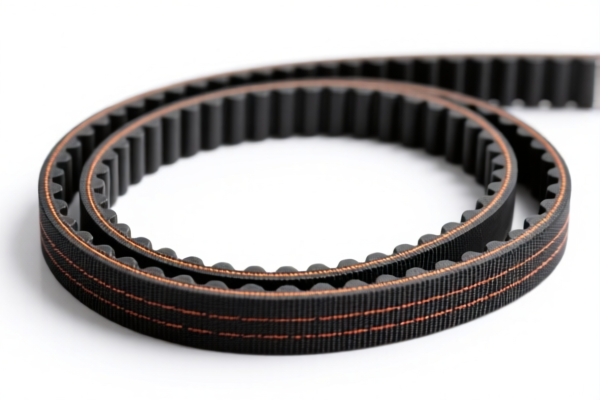
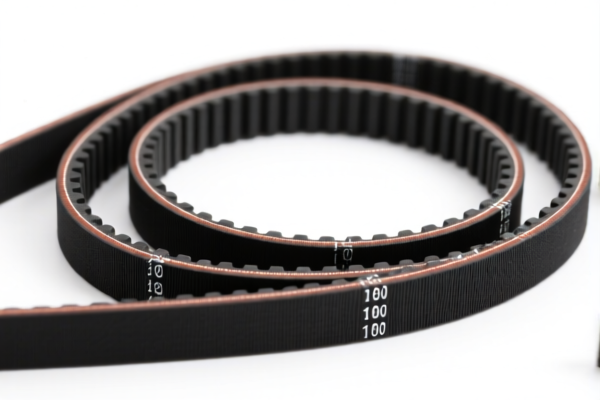
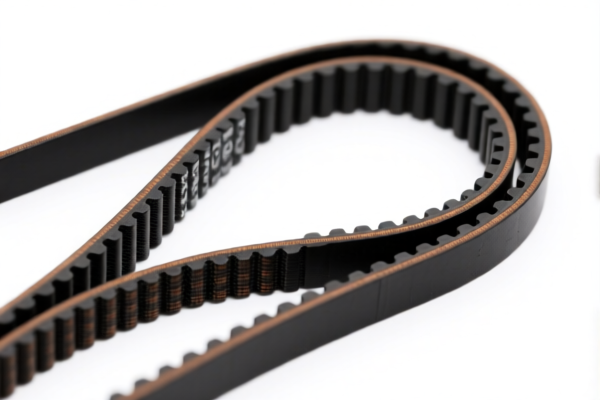
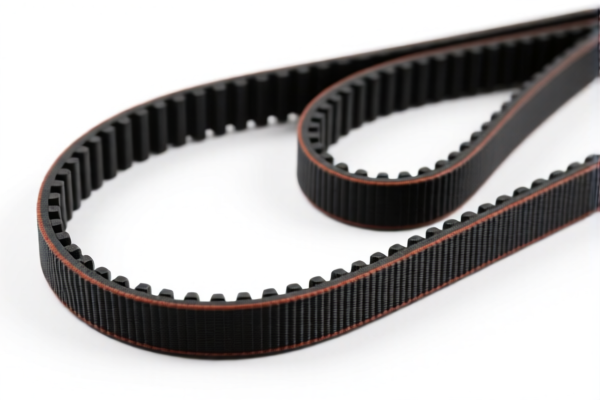
AI分析
⚙️ Transmission Synchronous Belts with Textile Materials (Textile Composite V-Belts & Power Transmission Belts)
🌐 HS Code Reference & Customs Clearance Guide | 2026 Latest Tariff Analysis | Professional Clearance Strategy
📌 I. Product Definition & Classification: What Exactly Are "Textile Composite Transmission Belts"?
Transmission synchronous belts with textile materials are critical mechanical components used to transmit power and motion between rotating shafts. In international trade, these belts are categorized based on their material composition (specifically the presence of textile/fiber reinforcement) and structural form (V-belts, flat belts, or synchronous belts).
The key distinction lies in whether the belt relies on textile/fiberglass/aramid cords for tensile strength, which places it under Chapter 59 (Imputed Articles of Textile Materials) rather than Chapter 40 (Rubber Articles).
⚠️ Key Classification Logic:
- If the belt's tensile member is made of textile materials (polyester, cotton, nylon, aramid) and it functions as a V-belt or flat transmission belt → Likely HS 5910.
- If the belt is primarily rubber-based with textile reinforcement but classified specifically as a V-belt under specific subheadings → Likely HS 4010.
- Crucial Note: The provided data shows high tariffs for both groups due to US trade restrictions, but the percentage varies slightly based on the exact HS subheading.
📦 II. HS Code Classification Details (2026 Latest Tariff Authority Comparison)
| HS Code | Product Description | Application Scenario | Material/Structure Logic |
|---|---|---|---|
4010.32.30.00 |
Textile composite transmission belt, combined with textile materials, transmission belt | Industrial V-belts with textile cords | ✅ Chapter 40 (Rubber) + Textile reinforcement |
4010.31.30.00 |
Textile composite transmission belt, combined with textile materials, transmission belt or conveyor belt | General purpose V-belts | ✅ Chapter 40 (Rubber) + Textile reinforcement |
5910.00.10.10 |
Transmission belts, belt class, artificial fiber/fiber material, V-belt classification logic | Heavy-duty V-belts made primarily of textile/organic fiber | ✅ Chapter 59 (Textile-based) |
5910.00.10.30 |
Transmission belts, power transmission belts, artificial fiber/textile material, other categories | Synchronous or flat belts with textile tensile members | ✅ Chapter 59 (Textile-based) |
5910.00.90.00 |
Textile transmission belts, textile material, transmission belt usage | General textile-based belts not specified elsewhere | ✅ Chapter 59 (Textile-based) |
🔍 Key Reminder:
- HS 4010.3x.30.00: These are considered Rubber Goods (Chapter 40) but include textile reinforcement.
- HS 5910.00.1x/9x: These are considered Textile Goods (Chapter 59), where the textile material is the primary structural component for the belt's identity.
- Why does it matter? The base tariff differs slightly (3.4% vs 4.0% vs 2.6%), but the Additional Tariffs apply uniformly, leading to similar final rates.
💰 III. 2026 Latest Tariff Rate Breakdown (Including Surtaxes & Policy Add-ons)
✅ Applicable Country: United States (US)
✅ Origin: China (CN)
✅ Effective Date: 2025 November 10 onwards (including subsequent imports)
🎯 1. 4010.32.30.00 & 4010.31.30.00 —— Textile Composite Belts (Rubber Chapter)
| Item | Detail |
|---|---|
| Base Tariff | 3.4% (Ad Valorem) |
| USITC Surtax (301 Tariff) | +25.0% |
| Section 122 Tariff | +10.0% |
| Total Tariff Rate | 38.4% |
| Tax Calculation | CIF Value × 38.4% |
| De Minimis Exemption? | ❌ No (deny_de_minimis) |
| Legal Basis Path | USITC:4010.32.30.00 → FOOTNOTE:301 → IEEPA:122 |
📌 Explanation:
- These belts fall under Chapter 40 (Rubber). The base rate is 3.4%.
- The 25% additional tariff applies under Section 301 of the Trade Act.
- The 10% Section 122 tariff applies to specific steel/aluminum-related or national security items, but in this context, it appears as a blanket surcharge for certain industrial imports from China in the provided data.
- Total Impact: 38.4%. This is a high tariff rate.
🎯 2. 5910.00.10.10 & 5910.00.10.30 —— Textile-Based Transmission Belts (Textile Chapter)
| Item | Detail |
|---|---|
| Base Tariff | 4.0% (Ad Valorem) |
| USITC Surtax (301 Tariff) | +25.0% |
| Section 122 Tariff | +10.0% |
| Total Tariff Rate | 39.0% |
| Tax Calculation | CIF Value × 39.0% |
| De Minimis Exemption? | ❌ No (deny_de_minimis) |
| Legal Basis Path | USITC:5910.00.10.10 → FOOTNOTE:301 → IEEPA:122 |
📌 Explanation:
- These belts fall under Chapter 59 (Textile-based belts). The base rate is slightly higher at 4.0%.
- The same 25% + 10% surcharges apply.
- Total Impact: 39.0%. This is the highest tariff among the listed options.
- Note: Even if classified as "textile," they are still subject to the same aggressive US trade policies.
🎯 3. 5910.00.90.00 —— General Textile Transmission Belts
| Item | Detail |
|---|---|
| Base Tariff | 2.6% (Ad Valorem) |
| USITC Surtax (301 Tariff) | +25.0% |
| Section 122 Tariff | +10.0% |
| Total Tariff Rate | 37.6% |
| Tax Calculation | CIF Value × 37.6% |
| De Minimis Exemption? | ❌ No (deny_de_minimis) |
| Legal Basis Path | USITC:5910.00.90.00 → FOOTNOTE:301 → IEEPA:122 |
📌 Explanation:
- This is a "catch-all" for textile belts not specified in 5910.10.
- The base rate is lower at 2.6%, resulting in a Total Tariff of 37.6%.
- While slightly cheaper than the 5910.10 series, the surtaxes dominate the cost structure.🔍 Critical Insight:
- All listed HS Codes are subject to a combined 35%–35.6% in additional tariffs (25% + 10%) on top of a low base rate (2.6%–4.0%).
- The total effective tariff is 37.6% to 39.0%.
- De Minimis Exemption is DENIED: You cannot use the $800 de minimis rule for these items. All shipments are subject to full tariff assessment.
🛠️ IV. Customs Clearance Practical Advice (Actionable Pitfall Avoidance Guide)
✅ 1. Documentation Checklist (Non-Negotiable)
| Document | Mandatory? | Description |
|---|---|---|
| ✅ Product Specification Sheet | ✔️ | Must detail: Belt dimensions, tensile member material (e.g., polyester, aramid), core material, and intended machinery (e.g., sewing machine, industrial motor). |
| ✅ Material Composition Statement | ✔️ | Explicitly state % of rubber vs. textile/fiber. Crucial for deciding between HS 4010 vs. HS 5910. |
| ✅ Product Photos (Clear) | ✔️ | Show cross-section of the belt to prove textile reinforcement. Show labels with model numbers. |
| ✅ Commercial Invoice | ✔️ | Must clearly describe goods as "Transmission Belt" or "V-Belt," NOT just "Rubber Part." |
| ✅ Packing List | ✔️ | Detail weight, dimensions, and package count. |
| ✅ Origin Certificate (if applicable) | ✔️ | If produced in a non-China country (e.g., Vietnam, Thailand), provide COO to potentially avoid China-specific surcharges. |
✅ 2. Declaration Strategy (Key Mnemonic)
🔥 “Classify by Core Material, Declare Textile Explicitly, Avoid De Minimis!”
| Scenario | Correct Declaration | Incorrect Approach |
|---|---|---|
| Belt has textile cords, rubber body | HS 4010.3x.30.00 + "Textile Reinforced Rubber Belt" | Declaring as "Rubber Hose" or generic "Industrial Part" |
| Belt made mainly of textile/fiber | HS 5910.00.1x/9x + "Textile Power Transmission Belt" | Declaring as "Rubber Belt" → Risk of misclassification penalty |
| Small batch for sample | Still Full Tariff | Assuming <$800 is exempt → CONTRABAND/SEIZURE RISK |
| Belt for textile machinery | HS 5910 or 4010 (based on material) | Declaring as "Sewing Machine Part" → May be rejected |
✅ 3. Special Case Handling
| Situation | Recommendation |
|---|---|
| OEM Custom Belts | Provide customer’s technical drawing showing tensile member material. If textile is dominant, argue for HS 5910. If rubber is dominant, argue for HS 4010. |
| Belts with Synthetic Fibers (Aramid/Kevlar) | Still likely HS 5910 if fiber is the primary tensile element. Ensure invoice says "Aramid Reinforced." |
| Used/Refurbished Belts | Generally prohibited or subject to stricter scrutiny. Declare as new if applicable. |
| Belts for Agricultural Machinery | No special exemption. Same high tariff applies. |
🌍 V. Global Market Customs Comparison (2026 Latest)
| Country/Region | Recommended HS Code | Estimated Tariff | Certification Requirements | Notes |
|---|---|---|---|---|
| 🇺🇸 USA | 4010.3x or 5910.00 |
37.6% - 39.0% | None specific, but strong enforcement | Highest cost market. No de minimis. |
| 🇨🇳 China | 4010.3x or 5910.00 |
5% - 8% | CCC (if applicable) | No additional surcharges for domestic imports. |
| 🇪🇺 EU | 4010.3x or 5910.00 |
3% - 4.5% | CE (if for machinery) | Lower tariffs. No 301-style surcharges. |
| 🇬🇧 UK | 4010.3x or 5910.00 |
3% - 4.5% | UKCA | Similar to EU post-Brexit. |
| 🇯🇵 Japan | 4010.3x or 5910.00 |
3% - 6% | PSE (if electrical) | Moderate tariffs. |
📌 Conclusion:
- The USA is the most challenging market for textile composite transmission belts due to the 37.6%–39.0% total tariff.
- China, EU, and Japan offer significantly lower entry costs.
- Supplier Diversification: If exporting to the US, consider sourcing from Vietnam, Thailand, or Mexico to mitigate surcharges (verify FTAs/CUSMA).
📌 VI. Common Mistakes & Pitfalls (Lessons from Blood & Tears)
❌ Mistake 1: Assuming "Small Parts" or "Samples" are exempt from tariffs under de minimis.
👉 Consequence: Seizure, fines, and back-taxes. The de minimis rule explicitly excludes goods from China under Section 301 and 122.
❌ Mistake 2: Declaring as "Rubber Belts" when they are primarily textile.
👉 Consequence: Misclassification. Even if the rate is similar, penalties for inaccurate declaration can exceed the tax difference.
❌ Mistake 3: Ignoring the "Section 122" tariff.
👉 Consequence: Underestimating landed cost. The 10% surcharge is significant and non-negotiable for many industrial imports from China.
❌ Mistake 4: Using generic terms like "Belt" or "Strap."
👉 Consequence: Customs may assign a default higher tariff or hold the shipment for inspection. Be specific: "Textile Reinforced V-Belt."
✅ Correct Practice:
"Power Transmission Belt, Model XYZ, 5V300, with Polyester Tensile Cords, Made in China"
HS Code:4010.32.30.00
Total Duty: 38.4%
🎯 VII. Conclusion: Professional Declaration, Cost Control & Efficiency
🎯 Remember the Golden Rules:
🔹 "No De Minimis for China!" – Every single item is taxed.
🔹 "Textile vs. Rubber Matters" – Choose HS 4010 or 5910 based on material dominance.
🔹 "38% is the Price of Entry" – Factor this into your US pricing strategy.
🔹 "Documentation is Key" – Clear specs prevent delays.
📌 Pro Tip:
If your belts are originating from Vietnam, Malaysia, or Thailand, check for USMCA or ASEAN benefits. However, transshipment (just repackaging Chinese goods) is illegal. Ensure substantial transformation occurs in the third country.
📣 Immediate Action Required:
📞 Contact a licensed US customs broker for a Pre-Ruling (Advance Ruling).
📄 Prepare Material Certificates from your manufacturer.
🚀 Calculate Landed Cost using 37.6%–39.0% to ensure profitability.
✨ Precision in Classification Saves Thousands in Duties!
💼 Your Bottom Line Depends on Accurate HS Codes!
用户评价
关于 HS 编码归类
协调制度(HS)是由世界海关组织(WCO)制定的国际贸易商品分类标准。全球 200 多个国家采用 HS 系统作为海关关税、贸易统计和进出口监管的基础。
每个 HS 编码遵循以下层级结构:
- 章(2 位)——商品大类(例如:第 84 章:机器和机械设备)
- 品目(4 位)——章内的更具体分类
- 子目(6 位)——国际通用细分,所有 WCO 成员国统一使用
- 本国细分(8-10 位)——各国自行扩展的细分编码,如美国 HTSUS 10 位编码
正确的 HS 编码归类对于顺利通关、准确缴纳关税和遵守贸易法规至关重要。错误归类可能导致海关延误、多缴关税或罚款。
从CN进口到US时,适用的关税税率可能包括:
- 最惠国(MFN)税率——适用于 WTO 成员国的标准关税税率
- 普通税率——适用于无贸易协定国家
- 贸易救济关税——附加关税,如 301 条款(反倾销)、232 条款(国家安全)或反补贴税
本页内容仅供参考。如需正式归类,请咨询当地海关或持牌报关代理。