Transparent Tape For Sealing
CN → US| HS编码 | 关税税率 | 原产国 | 目的国 | 文档 |
|---|---|---|---|---|
| 3919102040 | 40.8% | CN | US | 官方文档 |
| 3919905040 | 40.8% | CN | US | 官方文档 |
| 3926904510 | 38.5% | CN | US | 官方文档 |
| 3926904590 | 38.5% | CN | US | 官方文档 |
| 3919102055 | 40.8% | CN | US | 官方文档 |
商品图片
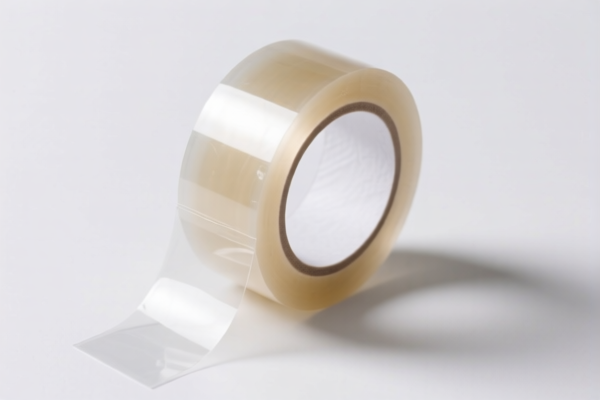



AI分析
📦 Transparent Tape for Sealing (BOPP/Polymer Films)
🌐 HS Code Reference & Customs Clearance Guide | 2026 Latest Tariff Analysis | Professional Clearance Strategy
📌 I. Product Definition: What Exactly is "Sealing Tape"?
Transparent sealing tape, commonly known as BOPP Tape (Biaxially Oriented Polypropylene) or Polymer Film Tape, is a ubiquitous packaging material. In international trade, it is strictly classified based on its form (flat strip/band) and material composition.
Key Distinction: * Plastic Tape/Strip (Chapter 39): If the tape is made of plastics (like BOPP, PVC, PET) and is in flat rolls, it generally falls under Chapter 39. * Adhesive Products: Unlike paper tapes or fabric tapes, plastic sealing tapes are predominantly classified under HS 3919 (Self-adhesive plates, sheets, film, tape, tape and other flat shapes) or HS 3926 (Other articles of plastics).
⚠️ Critical Classification Point: * If it is a flat strip of plastic with adhesive → HS 3919 is the primary category. * If it is categorized as a general plastic article not specifically as a "strip" or if the adhesive nature is secondary to the plastic film structure in some jurisdictions → HS 3926 may apply (though less common for standard BOPP packing tape, the provided data includes these codes).
📦 II. HS Code Classification Details (Based on Provided Data)
The following HS Codes are derived strictly from the provided <DATA> source. Note the slight variations in summary and tax rates, reflecting different interpretations of "specific use" vs. "general material."
| HS Code | Product Description (Summary) | Tax Rate | Key Characteristics |
|---|---|---|---|
| 3919.10.20.40 | Economic type sealing tape, material & form match sealing scenario | 40.8% | Standard Economic BOPP Tape |
| 3919.90.50.40 | Transparent tape, flat-shaped strip, material matches common tape knowledge | 40.8% | General Flat Plastic Strip |
| 3926.90.45.10 | Sealing tape, plastic material, non-specific use category | 38.5% | General Plastic Article (Lower Base Duty) |
| 3926.90.45.90 | Sealing tape, made of polymer film, sticky sealing purpose | 38.5% | Polymer Film Based Seal |
| 3919.10.20.55 | Sealing tape, flat-shaped strip, plastic material such as BOPP | 40.8% | Specific BOPP Material Identification |
🔍 Key Observation: * Codes ending in .40 and .55 under 3919 have a higher total tax rate (40.8%). * Codes under 3926 have a slightly lower total tax rate (38.5%) due to a lower base tariff (3.5% vs 5.8%), but the additional duties remain the same. * Base Tariff Difference: 5.8% (for 3919) vs. 3.5% (for 3926).
💰 III. 2026 Latest Tariff Rate Breakdown (Detailed Tax Clauses)
✅ Applicable Country: United States (US)
✅ Origin: China (CN)
✅ Effective Time: Ongoing / 2025-2026 Cycle
All codes in the provided data share the same additional tax structure, which drastically impacts the total landed cost.
🎯 Common Tax Structure for All Listed HS Codes
| Tax Component | Rate | Legal Basis / Explanation |
|---|---|---|
| 1. Base Tariff | 5.8% (for 3919) 3.5% (for 3926) |
Standard MFN (Most Favored Nation) duty for plastic tapes/articles. |
| 2. Section 301 Additional Duty | +25.0% | Imposed on Chinese goods under US Trade Act Section 301. |
| 3. Section 122 Clause Duty | +10.0% | Specific additional tariff clause (likely referring to IEEPA or specific trade enforcement measures). |
| 4. Total Effective Tax Rate | 40.8% (for 3919) 38.5% (for 3926) |
Sum of Base + 301 + Section 122. |
📌 Detailed Calculation Example: * For HS 3919.10.20.40:
$5.8\% (\text{Base}) + 25.0\% (\text{301}) + 10\% (\text{122}) = \mathbf{40.8\%}$ * For HS 3926.90.45.10:
$3.5\% (\text{Base}) + 25.0\% (\text{301}) + 10\% (\text{122}) = \mathbf{38.5\%}$🔥 Critical Insight: * The 25% Section 301 and 10% Section 122 duties are non-negotiable for Chinese-origin goods in this dataset. * The only variable is the Base Tariff. Choosing a 3926 code might save 2.3% in base duty, but classification must be accurate. Misclassification to save 2.3% can lead to severe penalties.
🛠️ IV. Customs Clearance Practical Advice (Pitfall Avoidance)
✅ 1. Documentation Checklist (Must-Have)
| Document | Required | Notes |
|---|---|---|
| Product Specification | ✔️ | Must specify material (e.g., "BOPP Film"), thickness (microns), width, length, and adhesive type (water-activated or pressure-sensitive). |
| Commercial Invoice | ✔️ | Must clearly state "Transparent Sealing Tape" or "BOPP Packing Tape". Avoid vague terms like "Plastic Film". |
| Certificate of Origin (CO) | ✔️ | Crucial for confirming Chinese origin to apply (or avoid) specific trade remedies. |
| Material Safety Data Sheet (MSDS) | ✔️ | Especially if the adhesive contains solvents or special chemicals. |
| Packaging List | ✔️ | Detail number of rolls, weight, and dimensions per carton. |
✅ 2. Classification Strategy & Tips
🔥 Golden Rule:
"Material & Form First: Plastic Strip = 3919. General Article = 3926."
| Scenario | Recommended HS Code | Why? |
|---|---|---|
| Standard BOPP Packing Tape (Clear, yellow, or printed) | 3919.10.20.40 or 3919.10.20.55 | These are explicitly "Self-adhesive plates, sheets, film, tape... of plastics". |
| Tape with unusual core or non-standard form | 3919.90.50.40 | Falls under "Other" self-adhesive tapes. |
| Large rolls of adhesive plastic film (not yet cut/used as tape) | 3926.90.45.10 / .90 | If argued as "other articles of plastics" rather than "tape". Riskier classification. |
⚠️ Warning: * Do NOT classify as "Paper Tape" or "Fabric Tape" (Chapter 48 or 59) if it is plastic. This is a common error that leads to audits. * Ensure the adhesive is part of the plastic strip. If the adhesive is on a different material (e.g., cloth backing), classification changes entirely.
✅ 3. Special Considerations
- Section 122 Clause: This 10% duty is significant. Ensure your supplier's declaration matches the product exactly. Any discrepancy in material description can trigger additional scrutiny.
- De Minimis Threshold: With a ~40% tax rate, the De Minimis exemption (for small packages under $800) does NOT apply if the goods are subject to Section 301 and Section 122. Most Section 301 goods are explicitly excluded from De Minimis exemptions.
- Pre-Clearance: Given the high tax rate, consider applying for a Binding Ruling from US Customs and Border Protection (CBP) if you are a high-volume importer. This locks in the HS Code and tax rate, providing legal certainty.
🌍 V. Global Market Context (Comparison)
| Market | HS Code (Typical) | Base Duty | Section 301 (US Only) | Total Est. Rate (US) |
|---|---|---|---|---|
| 🇺🇸 USA | 3919.10.20.40 | 5.8% | +25% + 10% | 40.8% |
| 🇨🇳 China (Import) | 3919.10.20.40 | ~5-8% | None | ~5-8% |
| 🇪🇺 EU | 3919.10.20.20 | 4.5% | None | 4.5% |
| 🇬🇧 UK | 3919.10.20.20 | 4.5% | None | 4.5% |
📌 Conclusion: * The US market is the most expensive for Chinese-origin transparent sealing tape due to the叠加 (stacking) of Base + Section 301 + Section 122 duties. * Cost Optimization: If possible, consider sourcing from non-China origins (e.g., Vietnam, Thailand) to potentially avoid Section 301 duties, provided the rules of origin are met.
📌 VI. Common Errors & Pitfalls (Lessons Learned)
❌ Error 1: Classifying BOPP Tape under "Plastic Packaging Bags" (HS 3923).
👉 Consequence: Incorrect classification, potential penalties, and delay. Tape is a "strip," not a "bag."
❌ Error 2: Ignoring the Section 122 Clause.
👉 Consequence: Under-declaration of duty. The 10% additional duty is often missed by importers not familiar with recent trade enforcement measures.
❌ Error 3: Misidentifying the Material.
👉 Consequence: If the tape is PVC-based instead of BOPP, the HS Code might differ slightly, though the tax structure remains similar. Accurate material specs are vital.
✅ Correct Approach:
"Self-adhesive tape of plastic, in flat rolls, of BOPP material, for industrial packaging."
🎯 VII. Conclusion: Professional Declaration, Cost Control
🎯 Remember the Formula:
🔹 Total Tax = Base (3.5-5.8%) + Section 301 (25%) + Section 122 (10%)
🔹 For 3919 Codes: Total = 40.8%
🔹 For 3926 Codes: Total = 38.5%
📌 Action Item: 1. Verify Material: Confirm it is Plastic (BOPP/PVC/PET) and Self-Adhesive. 2. Choose Correct HS: Prefer 3919 codes for standard BOPP tape. 3. Calculate Landed Cost: Include the full ~40% tax burden in your pricing model. 4. Consult Customs Broker: For large shipments, request a CBP Binding Ruling to mitigate risk.
✨ Accurate Classification Starts Here!
💼 Every Percent Counts in High-Tariff Environments!
用户评价
关于 HS 编码归类
协调制度(HS)是由世界海关组织(WCO)制定的国际贸易商品分类标准。全球 200 多个国家采用 HS 系统作为海关关税、贸易统计和进出口监管的基础。
每个 HS 编码遵循以下层级结构:
- 章(2 位)——商品大类(例如:第 84 章:机器和机械设备)
- 品目(4 位)——章内的更具体分类
- 子目(6 位)——国际通用细分,所有 WCO 成员国统一使用
- 本国细分(8-10 位)——各国自行扩展的细分编码,如美国 HTSUS 10 位编码
正确的 HS 编码归类对于顺利通关、准确缴纳关税和遵守贸易法规至关重要。错误归类可能导致海关延误、多缴关税或罚款。
从CN进口到US时,适用的关税税率可能包括:
- 最惠国(MFN)税率——适用于 WTO 成员国的标准关税税率
- 普通税率——适用于无贸易协定国家
- 贸易救济关税——附加关税,如 301 条款(反倾销)、232 条款(国家安全)或反补贴税
本页内容仅供参考。如需正式归类,请咨询当地海关或持牌报关代理。