Travel Backpack
CN → US| HS编码 | 关税税率 | 原产国 | 目的国 | 文档 |
|---|---|---|---|---|
| 4202923120 | 52.6% | CN | US | 官方文档 |
| 6307909891 | 24.5% | CN | US | 官方文档 |
| 4202923131 | 52.6% | CN | US | 官方文档 |
| 6307909875 | 24.5% | CN | US | 官方文档 |
| 3923290000 | 38.0% | CN | US | 官方文档 |
商品图片
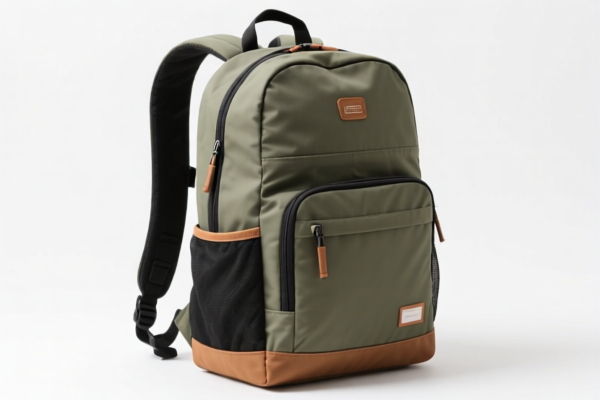
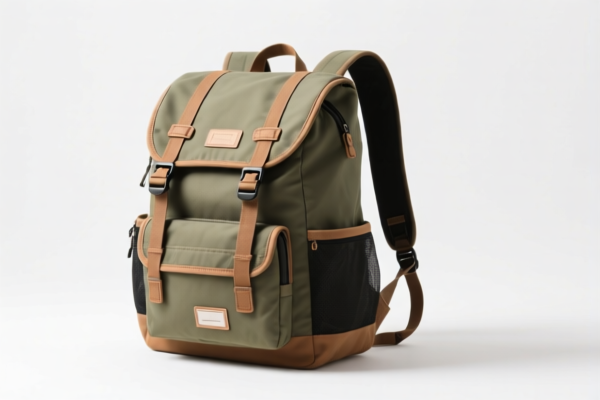
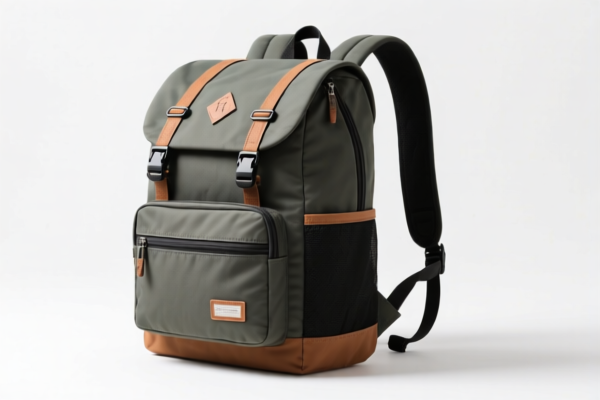
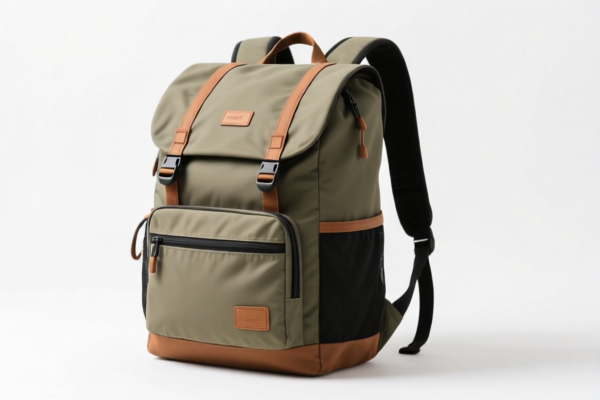
AI分析
🎒 Travel Backpacks & Storage Solutions (HS Code Classification & Customs Clearance Guide)
🌐 HS Code Reference & Customs Clearance Guide | 2026 Latest Tariff Analysis | Professional Compliance Strategy
📌 I. Product Definition: What Exactly Is a "Travel Backpack"?
In international trade, the term "Travel Backpack" is ambiguous and can refer to two distinct product categories, leading to significant tax differences. Proper classification depends entirely on Material Composition and Specific Form/Function.
1. Hard/Soft Shell Backpacks (4202 Series):
Characterized as structured bags with handles or shoulder straps, typically made of textile, leather, or synthetic materials. These are classified under Chapter 42 (Articles of Leather; Saddlery and Harness).
2. Soft Storage Pouches/Toiletry Bags (6307/3923 Series):
Characterized as unstructured, flexible bags (often cylindrical or rectangular pouches) used for organizing smaller items within a larger bag. These are classified under Chapter 63 (Other Made-Up Textile Articles) or Chapter 39 (Plastics).
⚠️ Critical Distinction:
- If it is a main carry-on backpack with structure, zippers, and shoulder straps → HS 4202
- If it is a packing cube, toiletry bag, or compression sack → HS 6307 or HS 3923
📦 II. HS Code Classification Matrix (Based on Provided Data)
The following classifications are derived strictly from the provided data, analyzing material and form.
| HS Code | Product Description | Material Inference | Tax Rate | Key Characteristics |
|---|---|---|---|---|
4202.92.31.20 |
Backpack (Main Carry-on) | Textile/Synthetic Fiber | 52.6% | Form & Use fully match; structured bag with straps. |
6307.90.98.91 |
Travel Storage Bag (Textile) | Textile (Inferred) | 24.5% | Finished consumer good; flexible/pouch form. |
4202.92.31.31 |
Travel Storage Bag (Textile) | Textile Material | 52.6% | Matches travel bag usage; outer surface textile. |
6307.90.98.75 |
Travel Storage Bag (Textile) | Textile Material | 24.5% | Finished consumer good; fits Chapter 63. |
3923.29.00.00 |
Travel Storage Bag (Plastic) | Plastic/Synthetic | 38.0% | Sack/Bag shape; plastic or synthetic material. |
🔍 Key Insight:
- Backpacks (4202) are subject to a much higher total tax rate (52.6%) compared to Storage Pouches (6307/3923) (24.5% - 38.0%).
- Misclassifying a structured backpack as a simple "storage bag" can lead to severe customs penalties.
- Conversely, over-classifying a simple plastic sack as a "backpack" may result in unnecessary high duties.
💰 III. 2026 Tariff Rate Breakdown (Detailed Tax Clause Analysis)
✅ Applicable Country: United States (US)
✅ Origin: China (CN)
✅ Effective Date: Post-2025 Regulations (Including Section 301 & IEEPA Measures)
🎯 1. Category A: Structured Backpacks & Travel Bags (HS 4202.92.31.x1)
Total Tax Rate: 52.6%
| Component | Rate | Source/Legal Basis |
|---|---|---|
| Basic Tariff | 17.6% | General MFN Rate for Articles of Leather/Textile Bags |
| Section 301 Tariff | 25.0% | USITC Footnote regarding Chinese Goods |
| 122 Clause Tariff | 10.0% | IEEPA Additional Duty (Section 122/Trade Act) |
| TOTAL | 52.6% | Cumulative |
📌 Explanation:
- The 17.6% is the standard duty for textile/synthetic bags under HS 4202.
- The 25% is the punitive tariff added under Section 301 of the Trade Act.
- The 10% is an additional surcharge often associated with recent trade enforcement clauses (referred to as "122 Clause" in the data).
- Total Liability: For every $100 of CIF value, $52.60 is due in duties.
🎯 2. Category B: Flexible Storage Pouches (HS 6307.90.98.91/75)
Total Tax Rate: 24.5%
| Component | Rate | Source/Legal Basis |
|---|---|---|
| Basic Tariff | 7.0% | General Rate for Other Made-Up Textile Articles |
| Section 301 Tariff | 7.5% | USITC Footnote (Lower rate for specific textile subsets) |
| 122 Clause Tariff | 10.0% | IEEPA Additional Duty |
| TOTAL | 24.5% | Cumulative |
📌 Explanation:
- These items are classified as "Other Made-Up Textile Articles."
- The base duty is significantly lower (7.0% vs 17.6%).
- However, the 10% surcharge remains constant, dragging the total to 24.5%.
- Savings: ~$28 per $100 compared to structured backpacks.
🎯 3. Category C: Plastic/Synthetic Sacks (HS 3923.29.00.00)
Total Tax Rate: 38.0%
| Component | Rate | Source/Legal Basis |
|---|---|---|
| Basic Tariff | 3.0% | General Rate for Articles of Plastics for Transport |
| Section 301 Tariff | 25.0% | USITC Footnote |
| 122 Clause Tariff | 10.0% | IEEPA Additional Duty |
| TOTAL | 38.0% | Cumulative |
📌 Explanation:
- Plastic sacks have the lowest base duty (3.0%).
- The 25% Section 301 and 10% Surcharge still apply.
- Intermediate Cost: Higher than textile pouches, but lower than structured backpacks.
🛠️ IV. Customs Clearance Practical Advice
✅ 1. Documentation Checklist (Must-Haves)
| Document | Requirement | Why It Matters |
|---|---|---|
| Product Photos | ✅ Clear images of front, back, inside, and zippers | Distinguishes "Backpack" (straps/structure) from "Pouch" (flexible/sack). |
| Material Spec Sheet | ✅ Breakdown of outer fabric, lining, zippers | Determines if it falls under Chapter 42 (Bag) or 63/39 (Accessory/Sack). |
| Commercial Invoice | ✅ Accurate description: "Travel Backpack" vs. "Packing Cube" | Prevents classification disputes. |
| Origin Certificate | ✅ Certificate of Origin (China) | Required for calculating Section 301 and IEEPA duties. |
✅ 2. Classification Strategy (The "Shape & Use" Test)
| Scenario | Recommended HS Code | Reasoning |
|---|---|---|
| Main Carry-On Bag with shoulder straps, laptop compartment, and structured frame. | 4202.92.31.20 |
Fully matches "Backpack" definition. High tax (52.6%). |
| Soft Packing Cubes/Organizers made of nylon/polyester, no stiff structure. | 6307.90.98.91 or 6307.90.98.75 |
Classified as "Other Made-Up Textile Articles." Lower tax (24.5%). |
| Waterproof Sacks or Compression Bags made of PVC or TPU. | 3923.29.00.00 |
Classified as "Plastic Bags/Sacks." Medium tax (38.0%). |
📌 Pro Tip:
- If you sell backpacks, do NOT try to classify them as "storage bags" to save tax. Customs will inspect the shape. If it has shoulder straps and is designed to be worn on the back, it MUST be 4202.
- If you sell accessories (packing cubes), emphasize they are not standalone bags but "organizers" to potentially qualify for 6307.
✅ 3. Common Pitfalls to Avoid
❌ Error 1: Calling a "Packing Cube" a "Travel Bag"
👉 Risk: If the description is vague, customs may default to the higher rate or request a physical inspection.
👉 Solution: Use precise terms like "Nylon Packing Cube" or "Textile Storage Pouch."
❌ Error 2: Ignoring the "122 Clause" 10% Surcharge
👉 Risk: Calculating tax based only on Basic + Section 301 leads to underpayment.
👉 Solution: Always include the 10% IEEPA surcharge in your cost model.
❌ Error 3: Misidentifying Material
👉 Risk: Classifying a leather backpack as textile.
👉 Solution: Verify if the outer surface is leather, textile, or plastic. The data assumes "Textile/Synthetic" for 4202.92.
🌍 V. Market Comparison & Cost Impact
| Market | HS Code | Base Duty | Section 301 | IEEPA/Other | Total Effective Rate |
|---|---|---|---|---|---|
| 🇺🇸 USA (China Origin) | 4202.92.31.20 |
17.6% | 25.0% | 10.0% | 52.6% |
| 🇺🇸 USA (China Origin) | 6307.90.98.91 |
7.0% | 7.5% | 10.0% | 24.5% |
| 🇺🇸 USA (China Origin) | 3923.29.00.00 |
3.0% | 25.0% | 10.0% | 38.0% |
| 🇪🇺 EU | Similar Codes | Varies | N/A | N/A | Lower (No 301/IEEPA) |
| 🇨🇳 China | Similar Codes | Varies | N/A | N/A | Low (Import Duty) |
📌 Conclusion:
- The US market imposes a heavy burden on Chinese-origin bags due to the combination of MFN + Section 301 + IEEPA.
- Structural Difference is Key: A $20 backpack faces ~$10.52 in tax, while a $20 packing cube faces ~$4.90 in tax.
- Strategy: If possible, market products as "Organizers" or "Storage Solutions" (if structurally accurate) rather than "Backpacks" to reduce liability.
📌 VI. Final Recommendations
- Pre-Clearance Ruling: If unsure, apply for an Advance Ruling from US Customs (CBP) to confirm if your specific product is "4202" (Backpack) or "6307" (Pouch).
- Accurate Description: On the Commercial Invoice, use:
- For Backpacks: "Textile Travel Backpack with Shoulder Straps, Model XYZ"
- For Pouches: "Textile Packing Cube/Organizer, No Straps, Model ABC"
- Cost Calculation: Always budget for the Total Tax Rate (Basic + 301 + 122), not just the basic duty.
✨ Professional Clearance Starts with Precise Classification!
💼 Don't let a 28% tax difference (52.6% vs 24.5%) erase your profit margin.
🚀 Clarify your product form today, save money tomorrow.
用户评价
关于 HS 编码归类
协调制度(HS)是由世界海关组织(WCO)制定的国际贸易商品分类标准。全球 200 多个国家采用 HS 系统作为海关关税、贸易统计和进出口监管的基础。
每个 HS 编码遵循以下层级结构:
- 章(2 位)——商品大类(例如:第 84 章:机器和机械设备)
- 品目(4 位)——章内的更具体分类
- 子目(6 位)——国际通用细分,所有 WCO 成员国统一使用
- 本国细分(8-10 位)——各国自行扩展的细分编码,如美国 HTSUS 10 位编码
正确的 HS 编码归类对于顺利通关、准确缴纳关税和遵守贸易法规至关重要。错误归类可能导致海关延误、多缴关税或罚款。
从CN进口到US时,适用的关税税率可能包括:
- 最惠国(MFN)税率——适用于 WTO 成员国的标准关税税率
- 普通税率——适用于无贸易协定国家
- 贸易救济关税——附加关税,如 301 条款(反倾销)、232 条款(国家安全)或反补贴税
本页内容仅供参考。如需正式归类,请咨询当地海关或持牌报关代理。