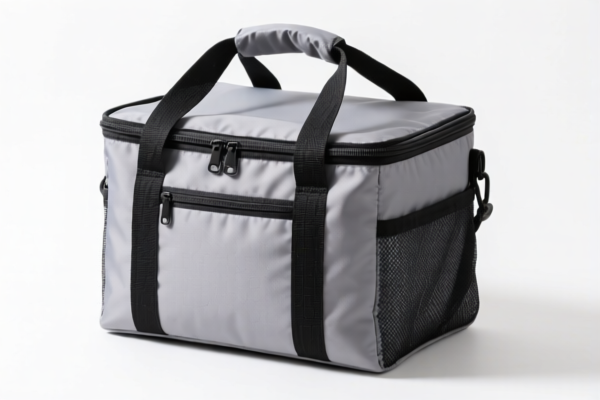
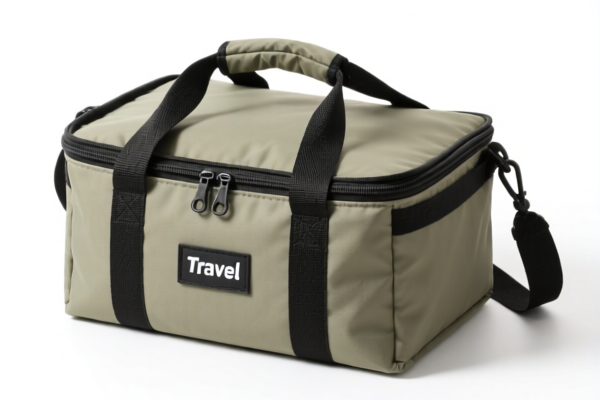
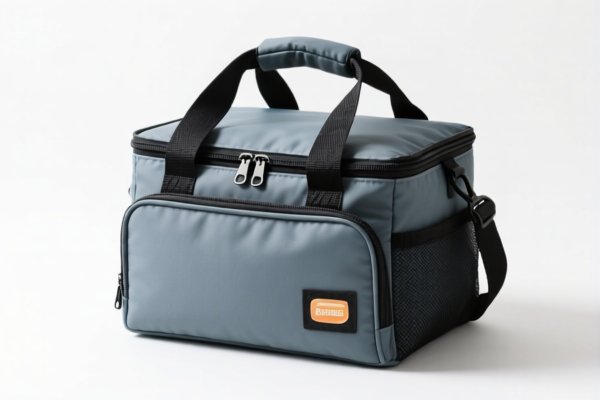
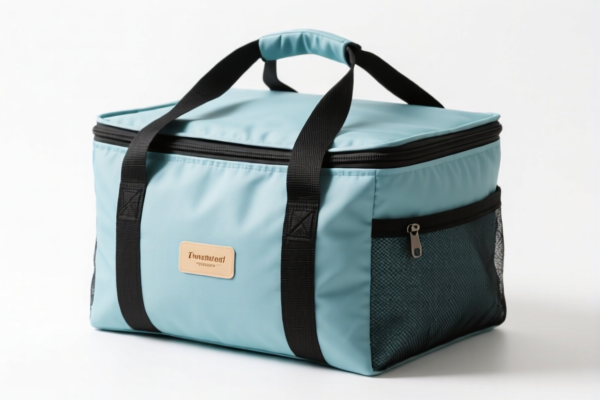
Travel Insulated Food Bag
CN → US| HS编码 | 关税税率 | 原产国 | 目的国 | 文档 |
|---|---|---|---|---|
| 6307909891 | 24.5% | CN | US | 官方文档 |
| 6307909875 | 24.5% | CN | US | 官方文档 |
| 3923900080 | 38.0% | CN | US | 官方文档 |
| 4202920809 | 42.0% | CN | US | 官方文档 |
| 3923290000 | 38.0% | CN | US | 官方文档 |
商品图片
AI分析
🍱 Travel Insulated Food Bag (The "Lunchbox Hero")
🌐 HS Code Reference & Customs Clearance Guide | 2026 Latest Tariff Analysis | Professional Clearance Strategy
📌 I. Product Definition & Classification: Do You Really Understand "Insulated Bags"?
An Insulated Food Bag is a specialized container designed to maintain the temperature of food items (keeping them hot or cold) during transport. In international trade, its classification is highly sensitive and depends heavily on two factors: 1. Outer Material: Is it made of textiles (fabric, neoprene, canvas) or plastics (PVC, vinyl, coated nylon)? 2. Form/Function: Is it a finished consumer good (like a lunch tote) or a packaging material (like a plastic liner)?
⚠️ Key Distinction Point:
- If the outer surface is textile-based (e.g., polyester, canvas) and it is a finished bag → It is likely classified under Chapter 42 (Articles of Apparel Accessories).
- If the outer surface is plastic-based or made of coated fabric acting as a liner/wrapper → It is likely classified under Chapter 39 (Plastics) or Chapter 63 (Other Made-up Textile Articles).
- Note: The "Insulation" itself (e.g., foam lining) is usually ignored for classification unless it changes the essential character significantly. The outer material dictates the heading.
📦 II. HS Code Classification Details (2026 Latest Tariff Authority Comparison)
Based on the provided data, here are the 5 possible HS Codes with their logical justifications:
| HS Code | Product Description | Application Scenario | Material/Form Logic |
|---|---|---|---|
4202.92.08.09 |
Insulated Bag (Textile Outer) | Matches use (insulation) and form. Outer surface is textile-based (e.g., nylon, polyester). | ✅ Best Fit for Fabric Bags |
6307.90.98.91 |
Other Made-up Goods (Bag Shape) | Classified as a "finished product/consumer good". Form is a bag. Fits "Other" categories logic. | ✅ Fallback for Unspecified Textiles |
6307.90.98.75 |
Finished Consumer Good (Wallet/Thermal Bag) | Specifically for warm-insulating bags (wallet-style). Fits finished consumer good category. | ✅ For Small Thermal Wallets |
3923.90.00.80 |
Packaging/Containment Article | Material inferred as plastic or synthetic. Used for packaging or containment. | ⚠️ For Plastic-Coated/Plastic Bags |
3923.29.00.00 |
Plastic Sack/Bag | Form is a bag. Material inferred as plastic film or coating. Fits plastic sack classification. | ⚠️ For Thin Plastic Liners/Pouches |
🔍 Critical Reminder:
- Most standard "Lunch Boxes" with fabric exteriors fall under4202.92.08.09because the textile outer layer defines the article's character.
- If the bag is essentially a plastic bag with foam insulation (like a delivery pouch), it may fall under3923series.
- Do not assume "Insulation" changes the code to Chapter 85 (Electrical) or Chapter 94 (Furniture). It remains a textile or plastic article.
💰 III. 2026 Latest Tariff Rate Breakdown (Including Surcharges & Policy Add-ons)
✅ Applicable Country: United States (US)
✅ Origin: China (CN)
✅ Effective Time: 2025/2026 (Current Trade Environment)
🎯 1. 4202.92.08.09 —— Insulated Bag (Textile Outer)
This is the most common code for high-quality fabric lunch bags.
| Item | Content |
|---|---|
| Base Tariff | 7.0% (ad valorem) |
| Section 301 Surcharge | 25.0% |
| Section 122 Surcharge | 10.0% |
| Total Tariff Rate | 42.0% |
| Tax Calculation | CIF Value × 42% |
| De Minimis Exemption | ❌ Not Applicable (Deny De Minimis for these codes) |
| Legal Basis Path | USITC:4202.92.08.09 → Section 301: Footnote 9903.88.01 → Section 122 |
📌 Explanation:
- The 7% is the standard MFN (Most Favored Nation) rate for textile bags.
- The 25% is the significant penalty under US Trade Act Section 301 for Chinese goods.
- The 10% is an additional surcharge (Section 122) often applied to specific consumer goods.
- Total 42% is very high. Cost control is essential.
🎯 2. 6307.90.98.91 & 6307.90.98.75 —— Other Made-up Textile Articles
Used if the bag doesn't fit the specific "bag" definition of Ch 42 but is still a textile product.
| Item | Content |
|---|---|
| Base Tariff | 7.0% |
| Section 301 Surcharge | 7.5% |
| Section 122 Surcharge | 10.0% |
| Total Tariff Rate | 24.5% |
| Tax Calculation | CIF Value × 24.5% |
| De Minimis Exemption | ❌ Not Applicable |
| Legal Basis Path | USITC:6307.90.98.xx → Section 301 → Section 122 |
📌 Note:
- This category is cheaper than the4202category but requires strict proof that the item is not a "bag" under Ch 42.
-6307.90.98.75is specifically for "thermal/wallet" style items.
- Risk: US Customs may reject this classification if the item clearly resembles a bag, reclassifying it to4202(42%) + penalties.
🎯 3. 3923.90.00.80 & 3923.29.00.00 —— Plastic/Synthetic Bags
Used for bags made primarily of plastic materials (e.g., PVC, vinyl, plastic-coated fabric).
| Item | Content |
|---|---|
| Base Tariff | 3.0% |
| Section 301 Surcharge | 25.0% |
| Section 122 Surcharge | 10.0% |
| Total Tariff Rate | 38.0% |
| Tax Calculation | CIF Value × 38.0% |
| De Minimis Exemption | ❌ Not Applicable |
| Legal Basis Path | USITC:3923.xx.xx → Section 301 → Section 122 |
📌 Note:
- Lower base tariff (3%) than textiles, but still high due to surcharges.
- Must ensure the outer material is predominantly plastic. If it's fabric with plastic lining,4202is safer.
🛠️ IV. Customs Clearance Practical Advice (Battle-Tested Pitfall Guide)
✅ 1. Documentation Checklist (Non-Negotiable)
| Document | Mandatory? | Description |
|---|---|---|
| ✅ Product Spec Sheet | ✔️ | Detailed breakdown: Outer material (e.g., 100% Polyester), Lining (e.g., Aluminum foil + PE foam), Dimensions. |
| ✅ Material Composition Proof | ✔️ | Lab test or supplier declaration confirming % of textile vs. plastic. Critical for Ch 42 vs. Ch 39. |
| ✅ Product Photos | ✔️ | Clear shots of the exterior, interior, zippers, and any branding. Show it's a "Finished Good," not a raw material. |
| ✅ Commercial Invoice | ✔️ | Description must match HS Code logic: "Insulated Lunch Bag, Polyester Outer, Foam Lined." Avoid vague terms like "Container." |
| ✅ Packing List | ✔️ | Weight and dimensions to verify volume/weight ratios. |
✅ 2. Classification Strategy (Key Mantra)
🔥 "Outer Material Dictates Code! Fabric = Ch 42/63, Plastic = Ch 39. Don't Hide the Foam!"
| Scenario | Recommended HS Code | Risk Level |
|---|---|---|
| Standard Lunch Bag (Canvas/Polyester exterior, foam lining) | 4202.92.08.09 |
⚠️ High Tax (42%), but Correct |
| Thermal Wallet (Small, zipper, textile) | 6307.90.98.75 |
✅ Lower Tax (24.5%), if shape allows |
| Plastic Delivery Pouch (PVC/Vinyl exterior) | 3923.90.00.80 |
⚠️ Medium Tax (38%) |
| Plastic Liner Only (No structure, just a bag) | 3923.29.00.00 |
⚠️ Medium Tax (38%) |
📌 Warning:
- If you classify a fabric bag as3923(Plastic) to save tax, Customs will likely audit you.
- Penalty: Misclassification leads to back taxes, interest, and potential fines.
- Best Practice: Be honest about the outer material. If it's fabric, accept the 42% or negotiate supply chain shifts.
✅ 3. Special Cases
| Case | Handling Advice |
|---|---|
| OEM Custom Bags | Provide customer design files to prove "Finished Good" status. |
| Bundled Sales (Bag + Thermos) | Declare separately. Thermos has different HS/Tax. Do not bundle into one line item. |
| Sample Imports | Still subject to tariffs. No de minimis exemption for Section 301/122 goods from China. |
| Recall/Return | Keep all original packaging and documentation for re-export claims (duty drawback). |
🌍 V. Global Market Comparison (2026 Latest)
| Country/Region | Recommended HS Code | Est. Tariff (China Origin) | Certification | Note |
|---|---|---|---|---|
| 🇺🇸 USA | 4202.92.08.09 |
42.0% | FCC (if electronic), Prop 65 | High tariffs, strict enforcement |
| 🇨🇳 China | 4202.92.08.09 |
~10-15% | CCC (if applicable) | Lower base rates |
| 🇪🇺 EU | 4202.92.00 |
4.5% - 6% | CE (if toys/kids) | No Section 301/122 |
| 🇬🇧 UK | 4202.92.00 |
4.5% - 6% | UKCA | Post-Brexit rules apply |
| 🇦🇺 Australia | 4202.92.00 |
5% | RCM | No major surcharges |
📌 Conclusion:
- The USA is the most expensive market for these goods due to Section 301 and 122 tariffs.
- For EU/UK/AU markets, the cost is manageable (~5-6%).
- Strategy: Consider sourcing from Vietnam/Mexico for US-bound goods to avoid surcharges (if rules of origin are met).
📌 VI. Common Errors & Pitfalls (Lessons Learned)
❌ Error 1: Classifying a Fabric Bag as 3923 (Plastic) to avoid the 25% Section 301 tax.
👉 Consequence: Customs audit, 42% tax + penalties + 20% duty drawback loss.
💡 Fix: Use 4202.92.08.09 and factor 42% into your pricing.
❌ Error 2: Describing the product vaguely as "Food Container" without material details.
👉 Consequence: Customs requests clarification, delays clearance, storage fees accrue.
💡 Fix: Use precise terms: "Insulated Lunch Bag, Polyester Outer, Foil Lined."
❌ Error 3: Ignoring the Section 122 Tariff.
👉 Consequence: Underpayment by 10%.
💡 Fix: Always add 10% to your tariff calculation for China-origin goods in these categories.
✅ Correct Declaration Example:
"Insulated Food Bag, Model XYZ, Outer Material: 600D Polyester, Inner Lining: Aluminum Foam, Zipper Closure, Brand: ABC, Made in China"
🎯 VII. Conclusion: Smart Classification, Profitable Export!
🎯 Remember the Mantra:
🔹 "Outer Material is King! Fabric = 42%, Plastic = 38%, Other Textile = 24.5%."
🔹 "Section 301 + 122 = High Cost. Plan Your Supply Chain!"
🔹 "Be Honest, Be Precise, Be Profitable!"
📌 Pro Tip:
If your volume is high, consider applying for an Exclusion (if available) or shifting production to ASEAN countries (Vietnam, Thailand) to benefit from lower tariffs (0% - 5%) in the US market.
Always consult a licensed customs broker for a Pre-Ruling before your first shipment to secure your HS Code and tax liability.
📣 Take Action Now:
📞 Contact a Customs Broker + Provide Material Specs + Get HS Code Pre-Ruling
🚀 Clear Your Goods Smoothly, Protect Your Margins, and Scale Your Business!
✨ Professional Clearance Starts with Accurate Classification!
💼 Every Percent of Tax Saved is Pure Profit!
用户评价
关于 HS 编码归类
协调制度(HS)是由世界海关组织(WCO)制定的国际贸易商品分类标准。全球 200 多个国家采用 HS 系统作为海关关税、贸易统计和进出口监管的基础。
每个 HS 编码遵循以下层级结构:
- 章(2 位)——商品大类(例如:第 84 章:机器和机械设备)
- 品目(4 位)——章内的更具体分类
- 子目(6 位)——国际通用细分,所有 WCO 成员国统一使用
- 本国细分(8-10 位)——各国自行扩展的细分编码,如美国 HTSUS 10 位编码
正确的 HS 编码归类对于顺利通关、准确缴纳关税和遵守贸易法规至关重要。错误归类可能导致海关延误、多缴关税或罚款。
从CN进口到US时,适用的关税税率可能包括:
- 最惠国(MFN)税率——适用于 WTO 成员国的标准关税税率
- 普通税率——适用于无贸易协定国家
- 贸易救济关税——附加关税,如 301 条款(反倾销)、232 条款(国家安全)或反补贴税
本页内容仅供参考。如需正式归类,请咨询当地海关或持牌报关代理。