Travel Insulated Lunch Bag
CN → US商品图片
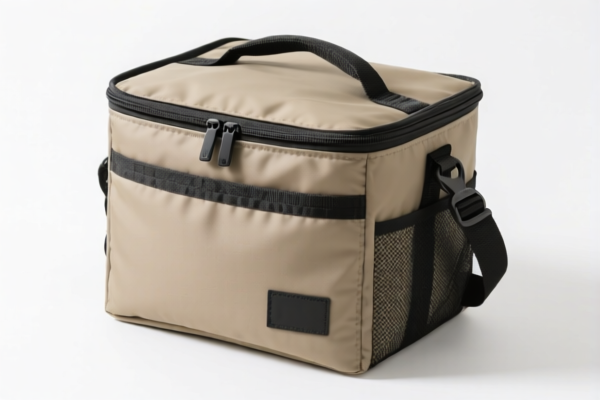
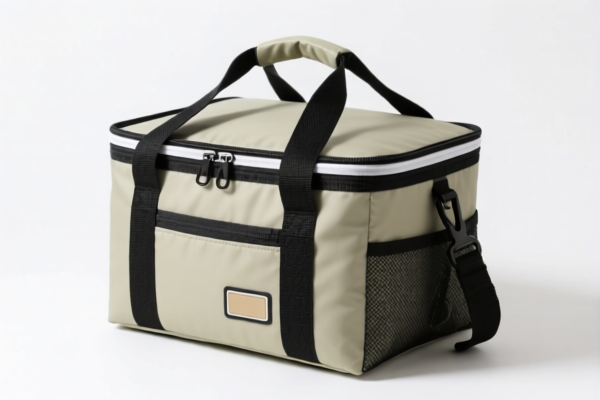
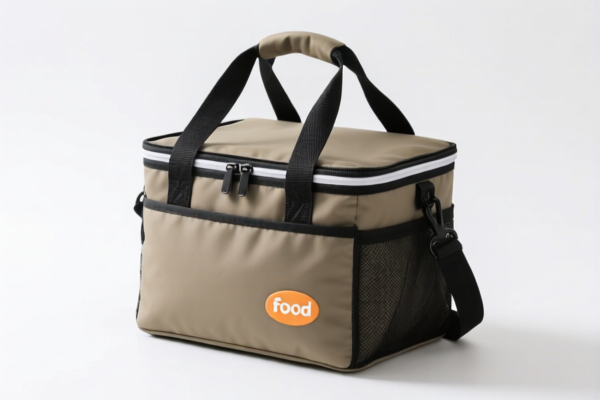
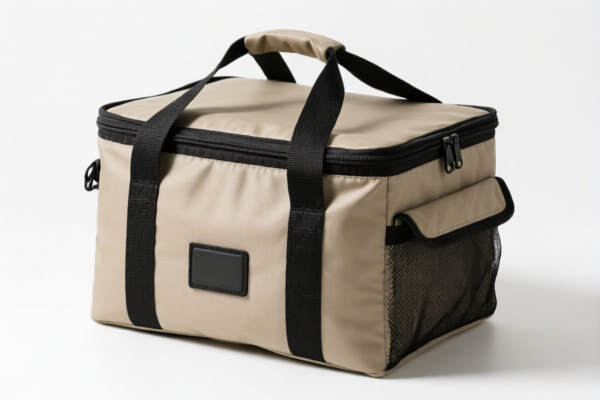
AI分析
🎒 Travel Insulated Lunch Bag (Insulated Food Containers for Carrying Meals)
🌐 HS Code Reference & Customs Clearance Guide | 2026 Latest Tariff Analysis | Professional Level Clearance Strategy
📌 I. Product Definition and Classification: Do You Really Understand “Insulated Lunch Bags”?
An insulated lunch bag is a portable container designed to maintain the temperature of food and beverages, typically used for travel, office, school, or outdoor activities. In international trade, its classification depends heavily on material, function, and construction.
Generally, these bags fall into two main categories: 1. Textile-Based Bags: Made primarily of fabric, nylon, polyester, or canvas with an inner lining of foam, aluminum foil, or PEVA for insulation. → Typically classified under Chapter 42 (Articles of leather; saddlery and harness). 2. Plastic/Vinyl-Based Bags: Made primarily of PVC, TPU, or other plastics with insulated layers. → May be classified under Chapter 39 (Plastics and articles thereof) or Chapter 42 if considered similar to bags of leather.
⚠️ Key Distinction Point:
- If the bag is made primarily of textile materials (e.g., nylon, polyester) with insulated lining → HS Code 4202.92 / 4202.93 (depending on outer material).
- If it is a hard-sided cooler bag made of plastic or insulated foam with fabric exterior → Still often 4202 if it retains the “bag” character.
- If it is a thermos flask or vacuum bottle (rigid, single-container) → HS Code 7323.93 or 7615.19 (depending on material), NOT a bag.
📦 II. HS Code Classification Details (2026 Latest Tariff Authority Comparison)
| HS Code | Product Description | Applicable Scenario | Primary Material | Insulation Type |
|---|---|---|---|---|
4202.92.00.00 |
Articles of apparel and clothing accessories, of leather or of composition leather | Rare for lunch bags; only if made entirely of leather | Leather/PU Leather | Minimal or none |
4202.93.00.00 |
Articles of apparel and clothing accessories, of textile materials | Most common insulated lunch bags (nylon, polyester, canvas) | Fabric/Nylon/Polyester | Foam, PEVA, Aluminum Foil |
4202.32.00.00 |
Articles of leather or composition leather (e.g., wallets, keyholders) | Not applicable unless it’s a tiny accessory | Leather | N/A |
4202.39.00.00 |
Other articles of apparel and clothing accessories (e.g., small pouches) | Small insulated pouches without handles | Fabric/Plastic | Foam/PEVA |
7323.93.00.00 |
Table, kitchen or other household articles and parts thereof, of stainless steel | Rigid stainless steel thermos/flask | Stainless Steel | Vacuum Insulation |
3926.90.97.00 |
Other articles of plastics (e.g., plastic cooler boxes without fabric exterior) | Rigid plastic coolers | Plastic | Foam/PE |
🔍 Key Reminder:
- Most soft-sided insulated lunch bags (with handles, zippers, and fabric exterior) are classified under 4202.93.00.00 (if textile exterior) or 4202.92.00.00 (if leather-like).
- Rigid plastic coolers without fabric may fall under 3926.90.97.00, but if they have handles and are used as “bags,” customs may still classify them as 4202.
- Thermos flasks are NOT lunch bags; they are under 7323.93 or 7615.19.
💰 III. 2026 Latest Tariff Rate Details (Including Supplementary Taxes, Policy Add-ons)
✅ Applicable Country: United States (US)
✅ Country of Origin: China (CN)
✅ Effective Date: From November 10, 2025 (including subsequent imports)
🎯 1. 4202.93.00.00 —— Insulated Lunch Bag, Textile Exterior (Most Common)
| Item | Content |
|---|---|
| Base Tariff Rate | 12% (ad valorem) |
| USITC Supplementary Tariff | +25% (from USITC Footnote 9903.88.01) |
| IEEPA Supplementary Tariff | +10% (for China/HK products, from November 10, 2025) |
| Total Tariff Rate | 47% |
| Tax Calculation | CIF Value × 47% |
| Eligible for De Minimis Exemption | ❌ No (deny_de_minimis) |
| Legal Basis Path | IEEPA:9903.01.25 → IEEPA:9903.01.24 → USITC:4202.93.00.00 → FOOTNOTE:9903.88.01 |
📌 Explanation:
- The 25% USITC tariff is from the Section 301 trade law supplementary tariffs.
- The 10% IEEPA tariff is the additional tariff on Chinese products under the International Emergency Economic Powers Act.
- Total 47% is a very high tariff, requiring advance planning!
🎯 2. 4202.92.00.00 —— Insulated Lunch Bag, Leather/Composition Leather Exterior
| Item | Content |
|---|---|
| Base Tariff Rate | 12% |
| USITC Supplementary Tariff | +25% |
| IEEPA Supplementary Tariff | +10% |
| Total Tariff Rate | 47% |
| Tax Calculation | CIF × 47% |
| Eligible for De Minimis Exemption | ❌ No |
| Legal Basis Path | IEEPA:9901.25 → IEEPA:9903.01.24 → USITC:4202.92.00.00 → FOOTNOTE:9903.88.01 |
📌 Note:
- Same rate as textile bags; leather-like or PU leather bags are treated similarly.
🎯 3. 3926.90.97.00 —— Plastic Cooler Bag (If Classified as Plastic Article)
| Item | Content |
|---|---|
| Base Tariff Rate | 5.3% |
| USITC Supplementary Tariff | +25% |
| IEEPA Supplementary Tariff | +10% |
| Total Tariff Rate | 40.3% |
| Tax Calculation | CIF × 40.3% |
| Eligible for De Minimis Exemption | ❌ No |
| Legal Basis Path | IEEPA:9903.01.25 → IEEPA:9903.01.24 → USITC:3926.90.97.00 → FOOTNOTE:9903.88.01 |
📌 Note:
- If customs classifies a rigid plastic cooler as a “plastic article” rather than a “bag,” the base rate is lower (5.3%), but the total tariff is still high (40.3%).
🛠️ IV. Customs Clearance Practical Advice (Real-World Pitfall Avoidance Guide)
✅ 1. Required Documentation Checklist (No Omissions Allowed)
| Document | Must Provide | Description |
|---|---|---|
| ✅ Product Specification Sheet | ✔️ | Includes dimensions, capacity, material composition, zipper type, handle type |
| ✅ Material Breakdown | ✔️ | % of fabric, foam, PEVA, aluminum foil, etc. |
| ✅ Product Photos (Including Label) | ✔️ | Clear image of model number, brand, input/output (if any), care label |
| ✅ Third-Party Test Reports | ✔️ | FDA (for food contact), CPSIA (if for children), REACH, Prop 65 |
| ✅ Commercial Invoice | ✔️ | Clearly state “Insulated Lunch Bag” or “Insulated Food Carrier” |
| ✅ Certificate of Origin (CO) | ✔️ | If not China-origin, apply for preferential rates |
| ✅ Packing List | ✔️ | Show relationship between bags, accessories, and packaging |
✅ 2. Declaration Tips (Key Mantras)
🔥 “Soft Bag = 4202, Hard Plastic = 3926, Thermos = 7323, Don’t Mix Up!”
| Scenario | Correct Declaration | Wrong Practice |
|---|---|---|
| Soft-sided insulated lunch bag (fabric exterior) | 4202.93.00.00 |
Misdeclare as “plastic bag” → 40.3% or audit risk |
| Rigid plastic cooler with fabric trim | 4202.93.00.00 or 3926.90.97.00 |
Misdeclare as “thermos” → 7323 (different tariff) |
| Stainless steel vacuum flask | 7323.93.00.00 |
Misdeclare as “lunch bag” → 47% instead of ~42% |
| Small insulated pouch (no handles) | 4202.39.00.00 |
Misdeclare as large bag → higher duty |
✅ 3. Special Circumstances Handling
| Scenario | Handling Advice |
|---|---|
| OEM Custom Lunch Bags | Provide customer order + design drawings to avoid “non-standard” classification |
| Children’s Insulated Lunch Bags | Must comply with CPSIA; provide third-party test reports |
| Food-Contact Materials | Must have FDA or EU 1935/2004 compliance for inner lining |
| Bags with Heated Elements | If electrically heated, may fall under Chapter 85 (e.g., 8516.60) → Different Tariff! |
🌍 V. Global Main Market Customs Clearance Comparison (2026 Latest)
| Country/Region | Recommended HS Code | Tariff | Certification Requirements | Remarks |
|---|---|---|---|---|
| 🇺🇸 United States | 4202.93.00.00 |
47% (China-origin) | FDA + CPSIA (if for kids) | High tariff due to 301/IEEPA |
| 🇨🇳 China | 4202.93.00.00 |
12% | CCC (if applicable) | No additional tariffs |
| 🇪🇺 European Union | 4202.93.00.00 |
4% (if GSP eligible) | REACH + Prop 65 (if US-bound) | No additional tariffs |
| 🇦🇺 Australia | 4202.93.00.00 |
5% | RCM + Food Contact Standards | No additional tariffs |
| 🇯🇵 Japan | 4202.93.00.00 |
10.3% | PSE (if electrical) | No additional tariffs |
📌 Conclusion:
- The US is the only major market with high additional tariffs on Chinese-made insulated lunch bags;
- Chinese-origin insulated lunch bags face a 47% tariff in the US, making cost calculation critical. Consider sourcing from Vietnam, Malaysia, or Mexico for IEEPA exemptions.
📌 VI. Common Errors & Pitfall Avoidance (Blood and Tears Lessons)
❌ Error 1: Declaring a “soft-sided lunch bag” as a “plastic bag” (3926.90.97.00)
👉 Consequence: Customs may reclassify as 4202.93.00.00 → Penalty + Back Tariff!
❌ Error 2: Declaring a “stainless steel thermos” as a “lunch bag”
👉 Consequence: Wrong HS code → Audit, Delay, or Seizure!
❌ Error 3: Not providing FDA compliance for inner lining materials
👉 Consequence: Rejected at US port → Return or Destruction!
❌ Error 4: Using “Food Container” as generic term without specifying material
👉 Consequence: Customs cannot classify → Delays + Extra Fees
✅ Correct Practice:
“Insulated Lunch Bag, 5L Capacity, Polyester Exterior, PEVA/Aluminum Foil Lining, Zipper Closure, Handles, Model XYZ, FDA Compliant for Food Contact”
🎯 VII. Conclusion: Professional Declaration Saves Time, Money, and Stress!
🎯 Remember the Mantra:
🔹 “Soft Bag = 4202, Hard Plastic = 3926, Thermos = 7323, Don’t Mix Up!”
🔹 “HS Code Determines Fate, Tariff Differs by 25%, One Mistake Costs Thousands!”
📌 Pro Tip:
If your insulated lunch bags are originating from Vietnam, Mexico, Thailand, or Malaysia, you may qualify for IEEPA Exemption, reducing tariffs to 0%~5%.
Consider applying for an Advance Ruling from US Customs to avoid clearance risks.
📣 Take Action Now:
📞 Contact a professional customs broker + Provide Product Photos + Apply for HS Code Advance Ruling
🚀 Let your lunch bags clear customs smoothly, export efficiently, and maximize profits!
✨ Professional Clearance Starts with Accurate Classification!
💼 Every Cent of Your Cost Deserves Precise Calculation!
用户评价
关于 HS 编码归类
协调制度(HS)是由世界海关组织(WCO)制定的国际贸易商品分类标准。全球 200 多个国家采用 HS 系统作为海关关税、贸易统计和进出口监管的基础。
每个 HS 编码遵循以下层级结构:
- 章(2 位)——商品大类(例如:第 84 章:机器和机械设备)
- 品目(4 位)——章内的更具体分类
- 子目(6 位)——国际通用细分,所有 WCO 成员国统一使用
- 本国细分(8-10 位)——各国自行扩展的细分编码,如美国 HTSUS 10 位编码
正确的 HS 编码归类对于顺利通关、准确缴纳关税和遵守贸易法规至关重要。错误归类可能导致海关延误、多缴关税或罚款。
从CN进口到US时,适用的关税税率可能包括:
- 最惠国(MFN)税率——适用于 WTO 成员国的标准关税税率
- 普通税率——适用于无贸易协定国家
- 贸易救济关税——附加关税,如 301 条款(反倾销)、232 条款(国家安全)或反补贴税
本页内容仅供参考。如需正式归类,请咨询当地海关或持牌报关代理。