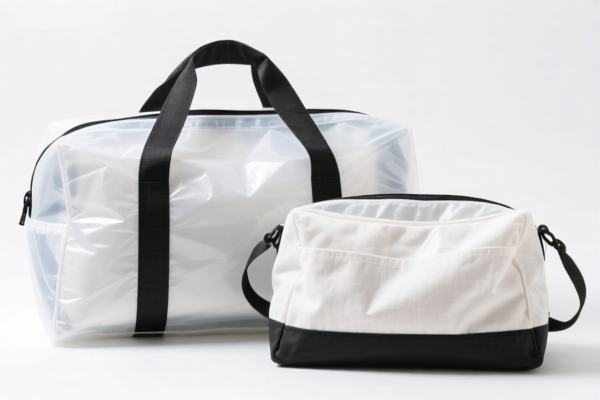
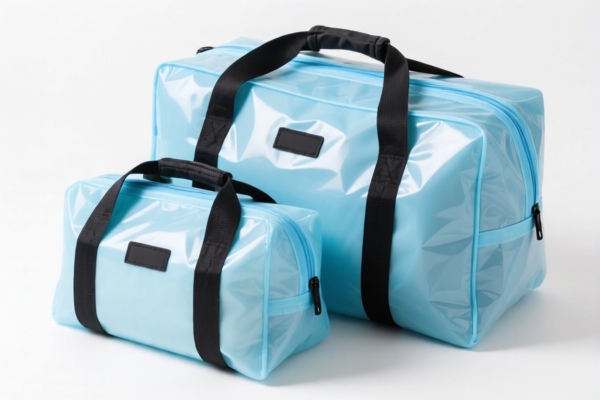
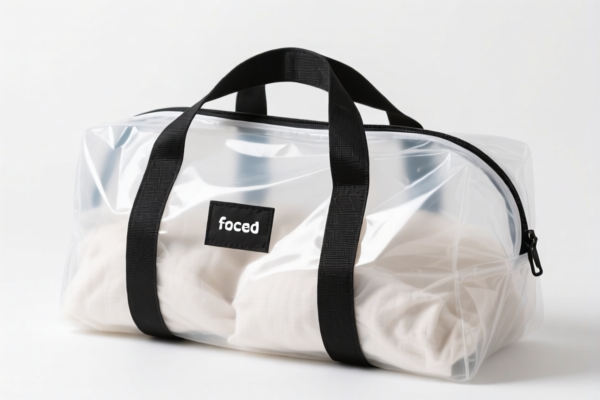
Travel bag with cotton surface and plastic or textile outer surface
CN → US| HS编码 | 关税税率 | 原产国 | 目的国 | 文档 |
|---|---|---|---|---|
| 6305330080 | 25.9% | CN | US | 官方文档 |
| 6305390000 | 25.9% | CN | US | 官方文档 |
| 4202923120 | 52.6% | CN | US | 官方文档 |
| 4202921500 | 41.3% | CN | US | 官方文档 |
商品图片

AI分析
🎒 Travel Bags & Backpacks: Cotton, Plastic & Textile Outer Surfaces
🌐 HS Code Reference & Customs Clearance Guide | 2026 Latest Tariff Analysis | Professional Entry Strategies
📌 I. Product Definition and Classification: Do You Really Understand "Bags" vs. "Backpacks"?
In international trade, the classification of bags depends strictly on material composition, specific shape/utility, and primary fabric. The product described—"Travel bag with cotton surface and plastic or textile outer surface"—is ambiguous and can fall into drastically different tariff brackets depending on how it is constructed and declared.
The key distinction lies in whether the item is classified as a "Backpack" (specifically designed to be worn on the back) or a generic "Travel Bag/Suitcase" (hand-held or wheeled). Furthermore, the "Cotton Surface" must be clearly defined as the primary material versus a mere trim.
⚠️ Critical Distinction:
- If the bag is exclusively for backpack use and has a plastic/textile outer surface (even if it contains cotton components in lining or inner layers), it may be classified under Chapter 63 (Textile Articles) or Chapter 42 (Leather Goods) depending on the outer surface material.
- If the bag is a Travel Bag (suitcase, holdall, duffel) and the outer surface is Cotton mixed with plastic/textile, it falls under Chapter 42 if it meets the "leather-like" or specific textile bag criteria for travel goods.
- Misclassification Risk: Declaring a travel bag as a "backpack" to avoid higher Chapter 42 duties, or vice versa, leads to severe penalties.
📦 II. HS Code Classification Details (2026 Latest Tariff Authority对照)
Based on the provided , here are the specific HS Codes relevant to bags made of plastic, textile, or cotton surfaces. Note that Chapter 42 generally attracts higher duties than Chapter 63 for similar shapes due to perceived "luxury" or "durable goods" status.
| HS Code | Product Description | Applicable Scenario | Material Key Point | Total Tax Rate |
|---|---|---|---|---|
6305.33.00.80 |
Bags of a kind used for packing goods, of a kind used for packing goods, plastic or textile material | Generic packing sacks, bulk bags, or bags primarily used for packing rather than personal carrying | Outer surface: Plastic/Textile (Synthetic) | 25.9% |
6305.39.00.00 |
Other bags of a kind used for packing goods, of a kind used for packing goods, plastic or textile material | Generic textile sacks, bulk bags, or bags primarily used for packing rather than personal carrying | Outer surface: Textile (Non-synthetic or Mixed) | 25.9% |
4202.92.31.20 |
Articles of luggage, whether or not including wheels, handled by hand or slung over the shoulder, not containing electrical appliances: Backpacks | Backpacks specifically designed for back-carriage | Outer surface: Plastic or Textile (General) | 52.6% |
4202.92.15.00 |
Articles of luggage...: Backpacks, of a surface of cotton or textile material | Backpacks with a Cotton or specific textile outer surface | Surface is Cotton/Textile | 41.3% |
4202.92.31.20 |
Articles of luggage, whether or not including wheels...: Travel bags (Suitcases, Holdalls, Duffels) | Travel Bags (Non-backpack format) | Outer surface: Plastic or Textile | 52.6% |
🔍 Key Insight:
- Chapter 63 (6305.xx) is for packing bags (e.g., industrial sacks, large plastic liners). If your "travel bag" is structurally a large sack for goods, it goes here (25.9%).
- Chapter 42 (4202.92) is for personal luggage (backpacks, suitcases). This is where most consumer goods land.
- The "Cotton" Factor: If the outer surface is explicitly Cotton, it may qualify for4202.92.15.00(41.3%), which is 11.3% lower than the generic plastic/textile backpack rate of 52.6%.
- Shape Matters: A "Travel Bag" (handheld) and a "Backpack" (back-worn) often share the same HS code prefix but may be distinguished in detailed sub-headings or by declaration descriptions. In the provided data,4202.92.31.20is used for both generic backpacks and travel bags, suggesting the rate is high regardless of shape if not made of specific cotton textiles.
💰 III. 2026 Latest Tariff Rate Breakdown (Including Surcharges & Policy Add-ons)
✅ Applicable Country: United States (US)
✅ Origin: China (CN)
✅ Effective Date: Post-November 2025 (Current IEEPA/301 Tariffs Apply)
🎯 1. 6305.33.00.80 & 6305.39.00.00 —— Packing Bags (Plastic/Textile)
| Item | Content |
|---|---|
| Base Tariff | 8.4% |
| Section 301 Surcharge | +7.5% |
| Section 122 Tariff | +10% |
| Total Rate | 25.9% |
| De Minimis Exemption | ❌ Not Eligible (Deny de minimis for Chinese textile/packing goods in many cases, or value limit issues) |
| Legal Basis | USITC:6305.33.00.80 → 301:7.5% + 122:10% |
📌 Explanation:
- These codes are for packing purposes. If you import small personal backpacks under these codes, customs may reclassify them as Luggage (Ch. 42), increasing your tax burden.
- 25.9% is moderate but still significant. Ensure the product is genuinely for packing (e.g., large sacks) and not personal use.
🎯 2. 4202.92.15.00 —— Cotton-Surface Backpacks (The "Sweet Spot"?)
| Item | Content |
|---|---|
| Base Tariff | 6.3% |
| Section 301 Surcharge | +25.0% |
| Section 122 Tariff | +10% |
| Total Rate | 41.3% |
| De Minimis Exemption | ❌ Not Eligible |
| Legal Basis | USITC:4202.92.15.00 → 301:25% + 122:10% |
📌 Explanation:
- This is the lowest duty rate for personal luggage (backpacks) in the provided data.
- Condition: The outer surface must be demonstrably Cotton. If it is "Cotton-faced plastic" or "Textile," it might be forced into the higher category.
- Strategy: If your bag is cotton-rich, ensure the bill of materials and technical description emphasize "100% Cotton Outer Fabric" or "Cotton Blend >50%".
🎯 3. 4202.92.31.20 —— Generic Backpacks & Travel Bags (Plastic/Textile)
| Item | Content |
|---|---|
| Base Tariff | 17.6% |
| Section 301 Surcharge | +25.0% |
| Section 122 Tariff | +10% |
| Total Rate | 52.6% |
| De Minimis Exemption | ❌ Not Eligible |
| Legal Basis | USITC:4202.92.31.20 → 301:25% + 122:10% |
📌 Explanation:
- This is the Highest Tariff in the list.
- Applies to:
1. Backpacks made of generic plastic or synthetic textiles.
2. Travel Bags (suitcases, duffels) of any plastic/textile composition.
- Risk: If you import a "Travel Bag" and declare it as a "Backpack" to avoid the 52.6% rate, customs may reject it if the shape doesn't match standard backpack ergonomics. Conversely, declaring a backpack as a "Travel Bag" doesn't help—it's still 52.6%.
🛠️ IV. Customs Clearance Practical Advice (Battle-Tested Pitfall Guide)
✅ 1. Documentation Checklist (Non-Negotiable)
| Document | Mandatory? | Purpose |
|---|---|---|
| ✅ Detailed Product Specification | ✔️ | Must state: "Outer Surface Material: [Cotton/Plastic/Textile]", "Lining Material", "Intended Use: Backpack vs. Travel Bag". |
| ✅ Material Composition Breakdown | ✔️ | Crucial for 4202.92.15.00. Must prove % of Cotton vs. Synthetic. |
| ✅ Product Photos (Front/Back/Inside) | ✔️ | Visual proof of shape. Does it have shoulder straps? (Backpack) vs. Handle/Wheels? (Travel Bag). |
| ✅ Commercial Invoice | ✔️ | Must match the declared HS Code exactly. Use precise terminology. |
| ✅ Packing List | ✔️ | Ensure no missing items that could trigger additional duty calculations. |
✅ 2. Declaration Tips (The Golden Rules)
🔥 "Material Dictates Duty, Shape Dictates Chapter, Cotton Saves Money!"
| Scenario | Correct Declaration | Common Mistake |
|---|---|---|
| Bag is mostly Cotton outer | 4202.92.15.00 (41.3%) |
Declaring as generic textile → 52.6% |
| Bag is Plastic/Neoprene outer | 4202.92.31.20 (52.6%) |
Trying to claim "Textile" → Audit risk |
| Bag is a Large Sack for goods | 6305.33.00.80 (25.9%) |
Declaring as "Luggage" → Unnecessary high duty |
| Bag is a Travel Bag (Duffel) | 4202.92.31.20 (52.6%) |
Declaring as "Backpack" → Rejection if shape differs |
✅ 3. Special Case Handling
| Situation | Advice |
|---|---|
| "Cotton Surface" is actually a Coating | If the outer layer is plastic with a cotton print or lining, it may NOT qualify for 4202.92.15.00. It will be classified as plastic/textile (52.6%). Test the fabric! |
| Mixed Materials | If the outer surface is 50% Cotton, 50% Plastic, customs usually classifies based on the ** predominant material**. If not predominant, they may apply the higher rate. |
| OEM Custom Bags | Provide the buyer's design sheet. If the design specifies "Cotton Canvas," use that in the description. |
| Wheeled Travel Bags | Always classify under 4202.92.31.20. Do not try to misclassify as backpacks. |
🌍 V. Global Market Comparison (2026 Update)
| Market | Recommended HS Code (Example) | Estimated Duty (China Origin) | Key Requirement |
|---|---|---|---|
| 🇺🇸 USA | 4202.92.15.00 (Cotton Backpack) |
41.3% (Lowest) | Proven Cotton Content |
| 🇺🇸 USA | 4202.92.31.20 (Generic) |
52.6% (Highest) | Accurate Shape Description |
| 🇺🇸 USA | 6305.39.00.00 (Packing) |
25.9% | Must be for Packing, Not Personal Use |
| 🇨🇳 China | 4202.92.15.00 |
~6-10% | Standard Import |
| 🇪🇺 EU | 4202.92.31 |
0-4.5% | CE Marking (if applicable) |
| 🇬🇧 UK | 4202.92.31 |
4.5% | Post-Brexit Rules of Origin |
📌 Conclusion:
- The US market is the most complex for these goods due to the layered tariffs (301 + 122).
- Optimization Opportunity: If your bag can be legitimately classified as having a Cotton Outer Surface, you save 11.3% in duty compared to generic plastic/textile bags.
- Avoid Chapter 63 unless you are shipping industrial packing sacks. Personal travel bags are strictly Chapter 42.
📌 VI. Common Errors & Pitfall Guide (Lessons Learned)
❌ Error 1: Calling a plastic-wrapped cotton bag a "Cotton Backpack" to get 41.3%.
👉 Consequence: Customs inspects, finds plastic layer is the "outer surface," reclassifies to 52.6%. You pay the difference + penalties.
❌ Error 2: Declaring a Duffel Bag as a "Backpack" to avoid shape-based scrutiny.
👉 Consequence: If the bag has no shoulder straps or is too large for back-carry, it is rejected as a backpack. Must be declared as Travel Bag (52.6%).
❌ Error 3: Using 6305 for small personal backpacks.
👉 Consequence: Customs deems it "Luggage," reclassifies to 4202. You face a 26.7% duty hike (from 25.9% to 52.6%).
❌ Error 4: Ignoring Section 122 Tariff.
👉 Consequence: The 10% Surtax is applied automatically to most Chinese goods. Failing to account for it leads to underpayment.
✅ Correct Practice:
"Backpack, Travel Series, Outer Shell: 100% Cotton Canvas, Lining: Polyester, Shoulder Straps: Adjustable, Intended for Daily Commute/Travel, Model XYZ"
🎯 VII. Conclusion: Professional Declaration, Cost Savings!
🎯 Remember the Motto:
🔹 "Cotton Surface = 41.3%, Plastic/Textile = 52.6%, Packing Sacks = 25.9%. Shape is King, Material is Queen!"
🔹 "If it's for packing, use 6305. If it's for personal use, it's 4202. Don't mix them up!"
📌 Pro Tip:
If your cotton content is borderline (e.g., 40% cotton), consider reinforcing the cotton claim with third-party lab tests to justify the lower 41.3% rate.
For Section 122 and 301 tariffs, ensure your supplier provides accurate Country of Origin certificates.
📣 Immediate Action:
📞 Audit your current HS Codes. If you are paying 52.6% on a cotton-rich bag, you are overpaying by 11.3%.
🚀 Declare accurately, save thousands per container!
✨ Precision in Classification, Profit in Your Pocket!
💼 Every percentage point counts in cross-border trade!
用户评价
关于 HS 编码归类
协调制度(HS)是由世界海关组织(WCO)制定的国际贸易商品分类标准。全球 200 多个国家采用 HS 系统作为海关关税、贸易统计和进出口监管的基础。
每个 HS 编码遵循以下层级结构:
- 章(2 位)——商品大类(例如:第 84 章:机器和机械设备)
- 品目(4 位)——章内的更具体分类
- 子目(6 位)——国际通用细分,所有 WCO 成员国统一使用
- 本国细分(8-10 位)——各国自行扩展的细分编码,如美国 HTSUS 10 位编码
正确的 HS 编码归类对于顺利通关、准确缴纳关税和遵守贸易法规至关重要。错误归类可能导致海关延误、多缴关税或罚款。
从CN进口到US时,适用的关税税率可能包括:
- 最惠国(MFN)税率——适用于 WTO 成员国的标准关税税率
- 普通税率——适用于无贸易协定国家
- 贸易救济关税——附加关税,如 301 条款(反倾销)、232 条款(国家安全)或反补贴税
本页内容仅供参考。如需正式归类,请咨询当地海关或持牌报关代理。