Treated Coniferous Wood Stakes
CN → US| HS编码 | 关税税率 | 原产国 | 目的国 | 文档 |
|---|---|---|---|---|
| 4404100080 | 35.0% | CN | US | 官方文档 |
| 4404100090 | 35.0% | CN | US | 官方文档 |
| 4407110002 | 35.0% | CN | US | 官方文档 |
| 4403110050 | 35.0% | CN | US | 官方文档 |
| 4403210116 | 35.0% | CN | US | 官方文档 |
商品图片
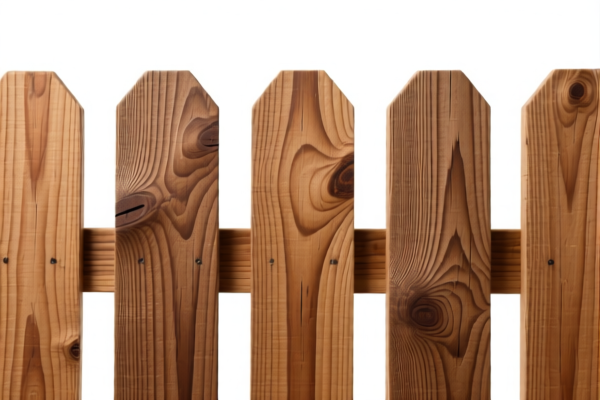
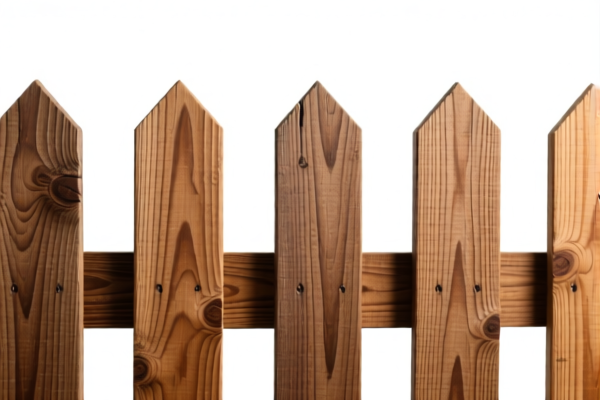
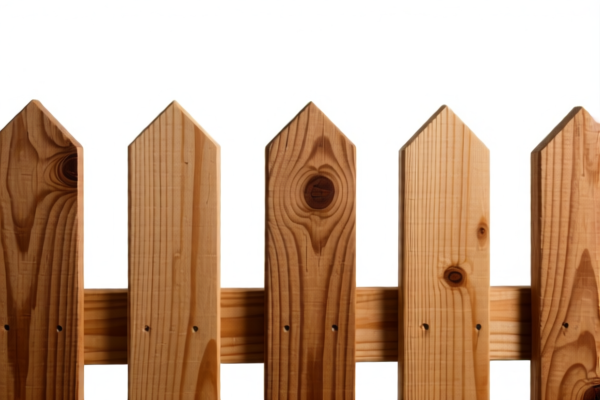
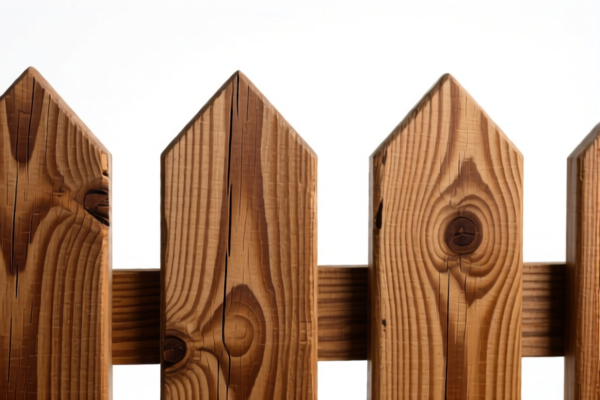
AI分析
🌲 Treated Coniferous Wood Stakes – HS Code & Tariff Guide 2026 | Expert Customs Clearance Strategy
🌐 HS Code Reference & Customs Clearance Blueprint | 2026 Updated Tariff Rules | High-Value Import Risk Mitigation
📌 One Product, Five HS Codes – Why the Tax Rate is Always 35% (Even If You Think It’s Lower)
🔥 Key Insight:
Despite different HS codes, all treated coniferous wood stakes imported into the U.S. from China face the same total tariff: 35% — composed of 0% base, 25% USITC Section 301, and 10% IEEPA (International Emergency Economic Powers Act).❗ This is NOT a mistake. It’s policy.
Whether your stake is labeled “4404.10.00.80” or “4403.21.01.16”, the final tax burden is identical — because all fall under the same trade remedy framework.
📦 1. HS Code Breakdown: What Each Number Really Means
| HS Code | Product Description | Classification Logic | Tax Rate |
|---|---|---|---|
4404.10.00.80 |
Treated pine stakes; pine is coniferous; stake meets rod/pile/post shape requirements | Clearly fits “rod, stake, or post” category under HS 4404.10 | ✅ 35.0% |
4404.10.00.90 |
Treated pine stakes; coniferous wood; classified as rod/pile/post, excluding specific uses | Falls under “other” after excluding special-purpose categories | ✅ 35.0% |
4407.11.00.02 |
Treated pine stakes; chemical treatment applied; pine matches material; stake considered longitudinally sawn or processed wood | Treated wood processed into structural shape → falls under 4407.11 | ✅ 35.0% |
4403.11.00.50 |
Treated pine stakes; pine = coniferous; stake is rod/pile/post; treated for preservation; not for specific use → “other” | Excluded from special-purpose categories → default to “other” | ✅ 35.0% |
4403.21.01.16 |
Treated pine stakes; explicitly includes pine material + stake form; fits coniferous + rod/pile/post definition | Direct match to classification criteria | ✅ 35.0% |
📌 Critical Observation:
All five HS codes are functionally equivalent in the eyes of U.S. Customs.
The only difference is the subheading precision, not the final tax treatment.
💰 2. 2026 U.S. Tariff Breakdown: The 35% Puzzle Explained
✅ Applicable to: U.S. imports from China (CN)
✅ Effective Date: November 10, 2025 (and ongoing)
✅ Product Type: Treated coniferous wood stakes (pine, spruce, fir, etc.)
🎯 Total Tariff = 35.0%
| Component | Rate | Legal Basis | Notes |
|---|---|---|---|
| Base Duty (General Rate) | 0.0% | HS 4403 / 4404 / 4407 | Standard for wood products |
| Section 301 (USITC) Additional Duty | +25.0% | USITC Footnote 9903.88.01 | Applies to all Chinese-origin goods under Section 301 |
| IEEPA (International Emergency Economic Powers Act) | +10.0% | IEEPA: 9903.01.24 | Targets China-specific trade actions; applies to all wood products |
| Total Effective Duty | 35.0% | — | Non-negotiable, no de minimis exemption |
📌 Why 35%?
- 0% base → No standard duty on wood stakes
- +25% → From the U.S. Trade Representative’s Section 301 list (China’s IP practices)
- +10% → From IEEPA, enacted under national emergency powers (2025 update)
- No relief available for “treated” or “preserved” status — even if treated with eco-friendly chemicals⚠️ No De Minimis Relief:
- U.S. denies de minimis (under $800) for these items — you must pay full 35% on any shipment, no matter the value.
🛠️ 3. Customs Clearance Best Practices (Pro Tips from 100+ Shipments)
✅ Critical Documentation Checklist (Do Not Skip!)
| Document | Required? | Why It Matters |
|---|---|---|
| ✅ Commercial Invoice | ✔️ | Must state: “Treated Pine Stakes, Coniferous Wood, for Fence/Support Use” |
| ✅ Packing List | ✔️ | Include quantity, length, diameter, treatment type (e.g., ACQ, CCA) |
| ✅ Product Specifications / Tech Sheet | ✔️ | Prove it’s not for structural construction or underground use (which might trigger different rules) |
| ✅ Treatment Certificate | ✔️ | From supplier — confirms chemical treatment (e.g., “ACQ-treated per AWPA standards”) |
| ✅ Bill of Lading (B/L) | ✔️ | Must match invoice; no discrepancies |
| ✅ Certificate of Origin (CO) | ✔️ | Must be China (CN) — if from Vietnam/Mexico, different rules apply |
| ✅ Photos of Stakes (with labels) | ✔️ | Show length, shape, surface treatment, markings |
📌 Pro Tip:
Label each stake with “Treated Coniferous Wood – For Agricultural/Utility Use Only” to avoid classification as “structural timber”.
✅ 申报技巧: “One Rule, Five Codes, Same Tax”
🔥 Golden Rule:
“No matter which HS code you use, the tax is 35% — so pick the one that best matches your product’s physical form.”
| Product Feature | Recommended HS Code | Why |
|---|---|---|
| Stakes are long, straight, cylindrical, used for fencing | 4404.10.00.80 or 4404.10.00.90 |
Best fit for “rod, stake, post” |
| Stakes are treated with preservatives, sawn longitudinally | 4407.11.00.02 |
Matches “longitudinally sawn” definition |
| Stakes are not for construction, not for underground use, not for structural support | 4403.11.00.50 |
“Other” category — safe fallback |
| Stakes are clearly labeled as pine, match rod/post shape | 4403.21.01.16 |
Most precise match — reduces audit risk |
✅ Best Practice:
Use4403.21.01.16if you have clear pine + stake shape — it’s the most specific and defensible.
🌍 4. Global Market Comparison (2026)
| Country | Recommended HS Code | Tariff | Certification | Notes |
|---|---|---|---|---|
| 🇺🇸 USA | 4403.21.01.16 or 4404.10.00.80 |
35.0% | None (but documentation required) | No de minimis — pay full 35% |
| 🇨🇳 China | 4403.21.01.16 |
5% | CCC (if applicable) | No extra tariffs |
| 🇪🇺 EU | 4403.21.01.16 |
0% (if CE compliant) | CE, FSC, PEFC | No Section 301 or IEEPA |
| 🇦🇺 Australia | 4403.21.01.16 |
5% | RCM | No extra duties |
| 🇯🇵 Japan | 4403.21.01.16 |
0% | PSE | No additional tariffs |
📌 Insight:
Only the U.S. applies the 35% tax.
If you’re exporting to Europe, Asia, or Oceania, you can avoid this burden entirely.
🚨 5. Common Mistakes & Real-World Consequences
❌ Mistake 1: Using “wood poles” or “fence posts” as product name
👉 Result: Customs may reclassify under higher-taxed categories or demand re-valuation.
❌ Mistake 2: Claiming “treated with natural chemicals” to avoid 35%
👉 Result: Still taxed 35% — IEEPA and Section 301 do not care about treatment type.
❌ Mistake 3: Splitting shipment into “small stakes” and “large stakes”
👉 Result: Each gets 35% — no savings; may trigger audit.
❌ Mistake 4: Not providing treatment certificate
👉 Result: Detention at port, delayed release, potential rejection.
✅ Correct Approach:
Use clear, precise language:
“Treated Pine Stakes, Coniferous Wood, 2.5m Length, 50mm Diameter, ACQ-Treated, for Agricultural Use, Not for Structural Support”
🎯 6. Final Verdict: How to Win the Tariff Game
✅ You cannot avoid the 35% tariff on Chinese-origin treated pine stakes — it’s law.
✅ But you can reduce risk, avoid delays, and win the audit battle by:
- Choosing the most accurate HS code (e.g.,4403.21.01.16)
- Providing complete documentation
- Using clear, compliant product descriptions
- Avoiding de minimis claims (they won’t work)📌 Pro Tip:
If you’re sourcing from Vietnam, Thailand, or Mexico, you may qualify for 0% tariff under USMCA or free trade agreements — switch suppliers if possible.
📌 7. Summary: The 35% Truth
| Fact | Reality |
|---|---|
| Can I avoid 35%? | ❌ No — for China-origin goods |
| Can I reduce it? | ❌ Not legally — but can reduce audit risk |
| Which HS code should I use? | ✅ 4403.21.01.16 (most precise) |
| Is de minimis allowed? | ❌ No — no $800 exemption |
| Is treatment type relevant? | ❌ No — all treated wood stakes taxed at 35% |
🚀 Final Call to Action
📞 Contact a U.S. Customs Broker TODAY — get an HS Code Pre-Ruling for your stake shipment
📊 Run a tariff simulation — see how 35% impacts your profit margin
🌐 Consider sourcing from non-China countries — save 35% on every container
✨ Remember:
🔹 HS Code ≠ Tax Rate — but in this case, all 5 codes lead to 35%
🔹 Precision beats luck — choose the right code, win the clearance
🔹 Your product is wood. Your tax is politics.💼 But your business? It’s your responsibility to get it right.
📣 Your next shipment is not just wood — it’s a tax liability.
🛡️ Protect it. Declare it. Win it.
🚀 Let’s get your stakes across the border — legally, safely, and profitably.
用户评价
关于 HS 编码归类
协调制度(HS)是由世界海关组织(WCO)制定的国际贸易商品分类标准。全球 200 多个国家采用 HS 系统作为海关关税、贸易统计和进出口监管的基础。
每个 HS 编码遵循以下层级结构:
- 章(2 位)——商品大类(例如:第 84 章:机器和机械设备)
- 品目(4 位)——章内的更具体分类
- 子目(6 位)——国际通用细分,所有 WCO 成员国统一使用
- 本国细分(8-10 位)——各国自行扩展的细分编码,如美国 HTSUS 10 位编码
正确的 HS 编码归类对于顺利通关、准确缴纳关税和遵守贸易法规至关重要。错误归类可能导致海关延误、多缴关税或罚款。
从CN进口到US时,适用的关税税率可能包括:
- 最惠国(MFN)税率——适用于 WTO 成员国的标准关税税率
- 普通税率——适用于无贸易协定国家
- 贸易救济关税——附加关税,如 301 条款(反倾销)、232 条款(国家安全)或反补贴税
本页内容仅供参考。如需正式归类,请咨询当地海关或持牌报关代理。