Turpentine Solvent Mixture
CN → US| HS编码 | 关税税率 | 原产国 | 目的国 | 文档 |
|---|---|---|---|---|
| 3814005090 | 41.0% | CN | US | 官方文档 |
| 3301905000 | 17.5% | CN | US | 官方文档 |
| 3805100000 | 40.0% | CN | US | 官方文档 |
| 3805905000 | 38.7% | CN | US | 官方文档 |
| 3301295150 | 17.5% | CN | US | 官方文档 |
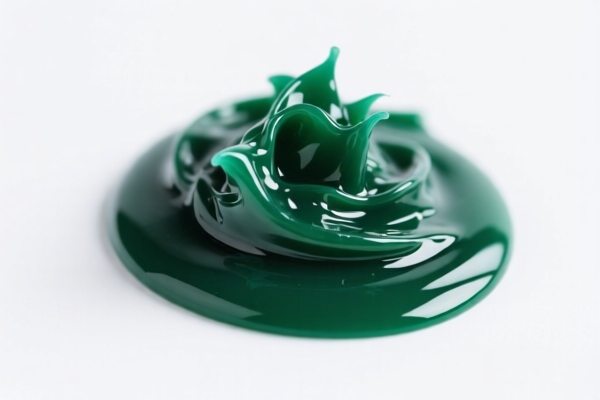
商品图片



AI分析
🧪 Turpentine Solvent Mixture (松节油溶剂混合物)
🌐 HS Code Reference & Customs Clearance Guide | 2026 Latest Tariff Analysis | Professional Entry Strategy
📌 I. Product Definition & Classification: Do You Truly Understand "Turpentine"?
Turpentine solvent mixtures are volatile organic compounds derived primarily from the distillation of resin or pine trees. In international trade, the classification hinges on its chemical nature and end-use. It is generally categorized into two main streams:
1. Terpene-based Chemicals (Essential Oils & Distillates):
If the product is a natural or chemically identical derivative of essential oils, characterized by high terpene content (α-pinene, β-pinene) and used as a fragrance ingredient, flavoring agent base, or natural solvent.
→ Classification Pathway: Chapter 33 (Essential Oils) or Chapter 38 (Miscellaneous Chemical Products).
2. Organic Solvents & Diluents:
If the product is primarily used as an industrial cleaning agent, paint thinner, or carrier for resins, where the terpene content is secondary to its solvent properties.
→ Classification Pathway: Chapter 38 (Organic Solvents).
⚠️ Critical Distinction Point:
- If labeled as "Essential Oil" or "Fragrance Ingredient" with low impurities → Likely 3301 or 3305.
- If labeled as "Solvent," "Thinner," or "Industrial Cleaner" → Likely 3814 or 3805.
- Warning: Misclassifying a pure solvent as an "Essential Oil" can trigger severe penalties for tax evasion, as the tariff rates differ drastically.
📦 II. HS Code Classification Details (Based on Provided Data 2026)
| HS Code | Product Description | Key Characteristics | Total Tax Rate |
|---|---|---|---|
3814.00.50.90 |
Organic Composite Solvents & Diluents | Classified as an organic solvent material; fits the category of mixed solvents for industrial dilution. | 41.0% |
3301.90.50.00 |
Essential Oil Derivatives/Extracts | Classified as a terpene distillate; fits the profile of "other essential oils and resinoids" used in fragrances/flavors. | 17.5% |
3805.10.00.00 |
Terpene Oils (Pinene-based) | Highly consistent with wood turpentine and terpene oils; produced via distillation; standard chemical form. | 40.0% |
3805.90.50.00 |
Other Chemical Solvents | Consistent with pine oil/special solvents; fits under "other chemical products" for specific solvent characteristics. | 38.7% |
3301.29.51.50 |
Non-Citrus Essential Oils | Classified as a volatile oil/essential oil; fits the material attribute of non-citrus essential oils. | 17.5% |
🔍 Key Takeaway:
- The lowest tax burden (17.5%) falls under Chapter 33 (Essential Oils).
- The highest tax burden (41.0%) falls under Chapter 38 (Solvents/Diluents).
- Strategy: If your product is pure turpentine/distillate suitable for fragrance or pharmaceutical use, aiming for 3301 codes is financially superior. If it is a dirty, mixed industrial thinner, 3814 is likely the only compliant option.
💰 III. Detailed Tariff Rate Breakdown (Including Surcharges)
✅ Applicable Country: United States (US)
✅ Origin: China (CN)
✅ Effective Date: Current Trade Policy (Section 301 & IEEPA)
🎯 1. 3814.00.50.90 — Organic Solvents & Diluents (Highest Tax)
| Item | Detail |
|---|---|
| Basic Tariff | 6.0% (Ad Valorem) |
| Section 301 Surcharge | +25.0% (Added by USITC) |
| Section 122 / IEEPA Surcharge | +10.0% (Specific provision cited in data) |
| Total Tax Rate | 41.0% |
| Tax Calculation | CIF Value × 41.0% |
| De Minimis Eligibility | ❌ Not Eligible (High risk for small shipments) |
| Legal Basis | HTSUS 3814 + Trade Act 301 + IEEPA Proclamations |
📌 Explanation:
- This code treats Turpentine as a general organic solvent.
- The 25% Section 301 tariff applies to most Chinese chemicals.
- The additional 10% reflects specific trade restrictions on chemical intermediates.
- Result: Extremely high cost; avoid if product allows alternative classification.
🎯 2. 3301.90.50.00 & 3301.29.51.50 — Essential Oils Derivatives (Lowest Tax)
| Item | Detail |
|---|---|
| Basic Tariff | 0.0% (Ad Valorem) |
| Section 301 Surcharge | +7.5% (Reduced rate for specific chemical categories) |
| Section 122 / IEEPA Surcharge | +10.0% |
| Total Tax Rate | 17.5% |
| Tax Calculation | CIF Value × 17.5% |
| De Minimis Eligibility | ❌ Not Eligible (Still subject to high duties) |
| Legal Basis | HTSUS 3301 + Trade Act 301 (Partial Exclusion) |
📌 Explanation:
- These codes treat Turpentine as an Essential Oil (Terpene Distillate).
- The Basic Tariff is 0%, significantly lowering the base.
- The Section 301 surcharge is lower (7.5%) compared to general chemicals (25%).
- Result: 50% lower total tax than3814. Preferred classification if chemically justified.
🎯 3. 3805.10.00.00 — Terpene Oils (Wood Turpentine)
| Item | Detail |
|---|---|
| Basic Tariff | 5.0% |
| Section 301 Surcharge | +25.0% |
| Section 122 / IEEPA Surcharge | +10.0% |
| Total Tax Rate | 40.0% |
| Tax Calculation | CIF Value × 40.0% |
| De Minimis Eligibility | ❌ Not Eligible |
| Legal Basis | HTSUS 3805 + Trade Act 301 |
📌 Explanation:
- Specific for Wood Turpentine and Terpene Oils.
- While the basic tariff is lower than3814, the 25% Section 301 surcharge makes it nearly as expensive.
- Use this only if the product is strictly defined as "Wood Turpentine" and not a mixed solvent.
🎯 4. 3805.90.50.00 — Other Chemical Products
| Item | Detail |
|---|---|
| Basic Tariff | 3.7% |
| Section 301 Surcharge | +25.0% |
| Section 122 / IEEPA Surcharge | +10.0% |
| Total Tax Rate | 38.7% |
| Tax Calculation | CIF Value × 38.7% |
| De Minimis Eligibility | ❌ Not Eligible |
| Legal Basis | HTSUS 3805 + Trade Act 301 |
📌 Explanation:
- A "catch-all" for pine oil/special solvents.
- Similar high burden to other 38xx codes due to Section 301.
🛠️ IV. Customs Clearance Practical Advice (Real-World Pitfall Guide)
✅ 1. Documentation Checklist (Mandatory)
| Document | Required? | Purpose |
|---|---|---|
| ✅ Product Specification Sheet | ✔️ | Must clearly state Chemical Composition (e.g., % α-pinene, % β-pinene). |
| ✅ MSDS/SDS (Safety Data Sheet) | ✔️ | Essential for hazardous material classification. Must match the HS Code description. |
| ✅ Certificate of Origin | ✔️ | To determine applicability of Section 301/122 tariffs. |
| ✅ Commercial Invoice | ✔️ | Must use precise description: "Turpentine Solvent, Derived from Pinus Species, for Industrial Use" OR "Essential Oil, Turpentine, Natural Distillate". |
| ✅ Lab Test Report | ✔️ | If claiming HS 3301 (17.5%), provide proof that it meets essential oil standards (purity, distillation method). |
✅ 2. Declaration Tips (Key Formulas)
🔥 "Purity Dictates Code, Code Dictates Cost!"
| Scenario | Correct HS Code | Tax Rate | Why? |
|---|---|---|---|
| High-Purity Turpentine (Used in perfumes, food flavors, pharmaceuticals) | 3301.90.50.00 or 3301.29.51.50 |
17.5% | Classified as "Essential Oil." Low basic tax. |
| Industrial Turpentine (Paint thinner, degreaser, mixed with other solvents) | 3814.00.50.90 |
41.0% | Classified as "Organic Solvent." High basic tax + 301. |
| Pure Wood Turpentine (Distilled from pine wood resin) | 3805.10.00.00 |
40.0% | Specific chemical entry, but still hit by 301 tariff. |
| Mixed Pine Oil Solvent (Specialty chemical, not general solvent) | 3805.90.50.00 |
38.7% | Niche chemical category. |
📌 Warning:
- Do NOT declare "Industrial Solvent" if you want the 17.5% rate.
- Do NOT declare "Essential Oil" if the product is contaminated with industrial diluents. Customs will test and reclassify, leading to back taxes + fines.
✅ 3. Special Circumstances
| Situation | Handling Advice |
|---|---|
| OEM/Private Label | Ensure the supplier provides the SDS under the brand name. Mismatched documents cause delays. |
| Blend with Xylene/Toluene | If mixed with other solvents, it must go to 3814. Pure turpentine cannot be mislabeled. |
| Small Sample Shipments | Even small shipments are subject to 17.5%-41% duty. De Minimis ($800) exemption often does NOT apply to chemical surcharges. Check current CBP rulings. |
🌍 V. Global Market Comparison (2026 Latest)
| Country/Region | Recommended HS Code | Estimated Tax (China Origin) | Certification/Notes |
|---|---|---|---|
| 🇺🇸 USA | 3301.90.50.00 (If eligible) |
17.5% | High scrutiny on "Essential Oil" claims. |
| 🇺🇸 USA | 3814.00.50.90 (If solvent) |
41.0% | Standard industrial solvent rate. |
| 🇪🇺 EU | 3805.10.00 |
5% + VAT | Lower tariffs, but strict REACH compliance needed. |
| 🇨🇳 China | 3814.00.50 |
6% | Import into China is cheaper, but export from China is the focus here. |
| 🇯🇵 Japan | 3301.90 |
6% | Requires Japanese standards for essential oils. |
📌 Conclusion:
- USA is the most expensive market due to Section 301 and IEEPA surcharges.
- Classification Strategy is Critical: Saving 23.5% (41.0% - 17.5%) by correctly classifying as an Essential Oil can be the difference between profit and loss.
📌 VI. Common Mistakes & Pitfall Guide (Blood-Lesson Insights)
❌ Mistake 1: Using "Turpentine" as the sole description on the Invoice.
👉 Consequence: Customs has to guess. They often default to the highest tax (3814 → 41.0%).
👉 Fix: Use specific terms: "Natural Turpentine Oil, Distilled, for Fragrance Industry."
❌ Mistake 2: Claiming HS 3301 for Industrial-Grade Turpentine.
👉 Consequence: Customs lab test reveals impurities or low purity. Result: Reclassification to 3814 + Back Taxes + Penalty.
👉 Fix: Only claim 3301 if the product meets ISO standards for Essential Oils.
❌ Mistake 3: Ignoring the "122 Clause" or IEEPA Surcharge.
👉 Consequence: Underestimating costs. The 10% surcharge is separate from the 301 tariff.
👉 Fix: Always calculate Basic + 301 + IEEPA.
❌ Mistake 4: Assuming De Minimis (Section 321) applies to all small shipments.
👉 Consequence: CBP has restricted Section 321 for certain chemicals and countries.
👉 Fix: Verify if your specific HS Code is excluded from De Minimis. Many chemical HS codes are NOT eligible.
✅ Correct Practice:
"Turpentine Solvent, Natural Distillate, Pinus Spp., 98% Purity, MSDS Attached, For Use in Fragrance Base."
(Only if it truly fits Essential Oil criteria)
🎯 VII. Conclusion: Precision in Classification Saves Thousands!
🎯 Remember the Golden Rule:
🔹 "Essential Oil = 17.5%, Solvent = 41%. Purity is King!"
🔹 "Don't guess the HS Code. Let the Chemistry determine the Tax."
📌 Pro Tip:
If your turpentine is 100% natural and suitable for cosmetics/pharmaceuticals, invest in lab certification to support HS 3301.
If it is industrial-grade, accept the 41% cost and focus on supply chain optimization.
📣 Immediate Action:
📞 Request SDS from Supplier
🧪 Verify Purity/Composition
📝 Draft Accurate Commercial Invoice Description
🚀 File Entry with Correct HS Code to Avoid Seizure
✨ Professional Clearance Starts with Precise Classification!
💼 Every Percent of Tax Saved is Pure Profit!
用户评价
关于 HS 编码归类
协调制度(HS)是由世界海关组织(WCO)制定的国际贸易商品分类标准。全球 200 多个国家采用 HS 系统作为海关关税、贸易统计和进出口监管的基础。
每个 HS 编码遵循以下层级结构:
- 章(2 位)——商品大类(例如:第 84 章:机器和机械设备)
- 品目(4 位)——章内的更具体分类
- 子目(6 位)——国际通用细分,所有 WCO 成员国统一使用
- 本国细分(8-10 位)——各国自行扩展的细分编码,如美国 HTSUS 10 位编码
正确的 HS 编码归类对于顺利通关、准确缴纳关税和遵守贸易法规至关重要。错误归类可能导致海关延误、多缴关税或罚款。
从CN进口到US时,适用的关税税率可能包括:
- 最惠国(MFN)税率——适用于 WTO 成员国的标准关税税率
- 普通税率——适用于无贸易协定国家
- 贸易救济关税——附加关税,如 301 条款(反倾销)、232 条款(国家安全)或反补贴税
本页内容仅供参考。如需正式归类,请咨询当地海关或持牌报关代理。