USgine Oil Colorant
CN → US| HS编码 | 关税税率 | 原产国 | 目的国 | 文档 |
|---|---|---|---|---|
| 3204192040 | 41.5% | CN | US | 官方文档 |
| 3204192090 | 41.5% | CN | US | 官方文档 |
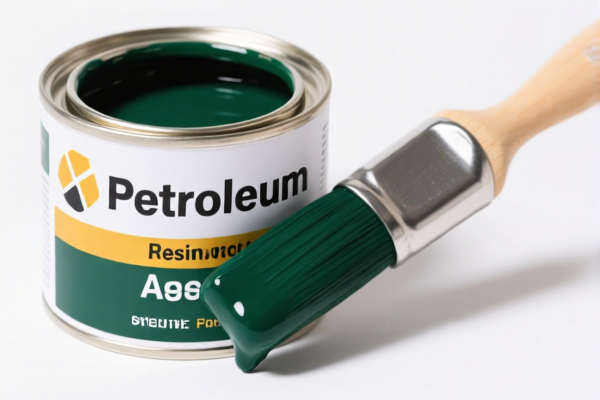
商品图片

AI分析
🎨 US Engine Oil Colorant (Synthetic Organic Dyes)
🌐 HS Code Reference & Customs Clearance Guide | 2026 Latest Tariff Analysis | Professional Compliance Strategy
📌 1. Product Definition and Classification: What Exactly Are "Engine Oil Colorants"?
Engine oil colorants, specifically those described as Synthetic Organic Coloring Matter, are chemical additives used to impart specific colors (often blue, red, or green) to lubricating oils, greases, and industrial fluids. In international trade, these are classified under Chapter 32 (Tanning or Dyeing Extracts; Dyes, Pigments and Other Coloring Matter).
The data provided highlights two specific sub-categories based on U.S. Additional Note 3 to Section VI:
- Solvent Yellow 163 (
3204.19.20.40): A specific solvent dye widely used for coloring petroleum products, including engine oils, due to its compatibility with hydrocarbon bases. - Other Solvent Dyes (
3204.19.20.90): A catch-all category for other synthetic organic coloring matters used as solvent dyes not specifically listed as Solvent Yellow 163.
⚠️ Key Distinction:
- If the product is a pre-mixed liquid blend containing other additives (like detergents or anti-wear agents) where the dye is not the principal character, it might be classified differently.
- However, for pure coloring matter or preparations based on synthetic organic coloring matter, it falls strictly under HS 3204.
- Do not classify this as a "mixed lubricant" (Chapter 34) unless the dye is incidental to a larger base oil formulation. Pure colorants are chemicals (Chapter 32).
📦 2. HS Code Classification Details (2026 Latest Tariff Authority)
| HS Code | Product Description | Specific Application | Key Identifier |
|---|---|---|---|
3204.19.20.40 |
Solvent Yellow 163 & preparations based thereon | Specific solvent dye for petroleum products, engine oils, and greases. | Explicitly named in Additional U.S. Note 3, Section VI. |
3204.19.20.90 |
Other Solvent Dyes & preparations based thereon | Any other synthetic organic coloring matter used as a solvent dye not covered by 3204.19.20.40. | General category for other industrial solvent dyes. |
🔍 Critical Note:
- Both codes fall under 3204.19: "Other, including mixtures... Solvent dyes and preparations based thereon: Other".
- The distinction relies entirely on whether the specific dye is Solvent Yellow 163 (commonly used in oil industry) or another variant.
- Documentation Requirement: You must provide the Chemical Abstracts Service (CAS) Number and International Coloring Index (CI) Name on the commercial invoice to justify the specific sub-heading.
💰 3. 2026 Latest Tariff Rate Breakdown (Including Additional Duties & Policy Surcharges)
✅ Applicable Country: United States (US)
✅ Origin: China (CN) (Assumed based on typical high-tariff scenarios for these goods; if origin is different, check local FTAs)
✅ Effective Time: Current regime (Post-2018 Trade War Rates Active)
🎯 1. 3204.19.20.40 —— Solvent Yellow 163
| Item | Content |
|---|---|
| Base Tariff Rate | 6.5% (Ad Valorem) |
| Section 301 Additional Tariff | +25.0% (List 4A / 301 Action) |
| Total Tariff Rate | 31.5% |
| Tax Calculation | CIF Value × 31.5% |
| De Minimis Exemption | ❌ Not Eligible (Value typically exceeds $800, and chemical imports are often scrutinized) |
| Legal Basis Path | HTSUS: 3204.19.20.40 → USITC Footnote 3 → Section 301: 19 CFR 123.13 |
📌 Explanation:
- The 6.5% is the standard Most Favored Nation (MFN) rate for solvent dyes.
- The 25% is the punitive tariff under Section 301 of the Trade Act of 1974, applied to Chinese-origin chemical products (Chapter 32).
- Total Cost Impact: You pay nearly one-third of the product value in duties alone.
🎯 2. 3204.19.20.90 —— Other Solvent Dyes
| Item | Content |
|---|---|
| Base Tariff Rate | 6.5% (Ad Valorem) |
| Section 301 Additional Tariff | +25.0% (List 4A / 301 Action) |
| Total Tariff Rate | 31.5% |
| Tax Calculation | CIF Value × 31.5% |
| De Minimis Exemption | ❌ Not Eligible |
| Legal Basis Path | HTSUS: 3204.19.20.90 → USITC Footnote 3 → Section 301: 19 CFR 123.13 |
📌 Note:
- The tax rate is identical to Solvent Yellow 163.
- The difference lies in customs scrutiny: "Other" dyes may face stricter chemical safety reviews (EPA/TSCA) than well-known dyes like SY163.
🛠️ 4. Customs Clearance Operational Advice (Practical Pitfall Guide)
✅ 1. Required Documentation List (Non-Negotiable)
| Document | Must Provide? | Explanation |
|---|---|---|
| ✅ Commercial Invoice | ✔️ | Must explicitly state "Solvent Dye" or "Synthetic Organic Coloring Matter", NOT just "Colorant" or "Additive". |
| ✅ HS Code Declaration | ✔️ | Specify 3204.19.20.40 or 3204.19.20.90. Do not generalize to 3204.19.90. |
| ✅ SDS (Safety Data Sheet) | ✔️ | Required for all chemical imports. Must show GHS classification. |
| ✅ TSCA Certification | ✔️ | Critical: EPA requires a certification under the Toxic Substances Control Act (TSCA). Importers must certify compliance (e.g., "All TSCA inventory"). |
| ✅ Product Specifications | ✔️ | Include CAS Number and CI Name to prove it is a "Solvent Dye" and not a "Mixture" (which might have different duties). |
| ✅ Certificate of Origin | ✔️ | If claiming any exemptions or verifying Section 301 applicability. |
✅ 2. Declaration Tips (Key Mnemonic)
🔥 "Be Precise, Be Chemical, Be TSCA Compliant!"
| Situation | Correct Declaration | Wrong Practice |
|---|---|---|
| Pure Dye Powder/Liquid | 3204.19.20.40/90 |
Declaring as "Engine Oil Additive" (Chapter 38) → Risk of penalty for misclassification. |
| Pre-mixed Colored Oil | 3403.99.00 (Lubricating preparations) |
Declaring as pure dye → Major Risk: If it's a mix, it's a lubricant, not a dye. But if it's pure dye for you to mix later, it's Chapter 32. |
| TSCA Status | Explicitly state: "TSCA Compliant" or "All substances on TSCA Inventory" | Leaving blank → Customs Hold: EPA may seize goods if certification is missing. |
| Origin | China | Not stating origin → Cannot assess 301 duties correctly. |
✅ 3. Special Handling Cases
| Situation | Handling Advice |
|---|---|
| Mixture with Solvent | If the dye is dissolved in a solvent (e.g., xylene) for easier application, it is still 3204 if the dye is the essential character. Ensure the invoice lists the dye content percentage. |
| Small Sample Shipments | Even if < $800, TSCA rules still apply. Do not rely on de minimis for chemical safety compliance. |
| OEM/Private Label | Provide the supplier's technical data sheet showing the chemical composition. Customs may reject vague descriptions like "Red Liquid for Oil". |
| Re-importation | If these are returned goods, they may still be subject to the same duties unless you prove they were previously exported (Section 321 re-import relief). |
🌍 5. Global Market Comparison (2026 Latest)
| Country/Region | Recommended HS Code | Tariff Rate | Certification | Notes |
|---|---|---|---|---|
| 🇺🇸 USA | 3204.19.20.40/90 |
31.5% | EPA TSCA + OSHA | High duty, strict chemical compliance. |
| 🇨🇳 China | 3204.19.90 |
6.5% | CCC (if applicable) | Export duty may apply. |
| 🇪🇺 EU | 3204.19 |
6.5% | REACH Registration | REACH registration is mandatory before import. |
| 🇮🇳 India | 3204.19 |
Varies | BIS Standard | Check specific duty notifications. |
| 🇬🇧 UK | 3204.19 |
6.5% | UK REACH | Post-Brexit UK REACH applies. |
📌 Conclusion:
- The USA imposes the highest effective duty (31.5%) due to Section 301.
- TSCA Compliance is the biggest non-tariff barrier in the US. Failure to provide TSCA certification results in automatic rejection by CBP.
📌 6. Common Errors & Pitfall Guide (Blood Lessons)
❌ Error 1: Declaring as "Engine Oil Additive" (HS 3824 or 3403)
👉 Consequence: If classified as a lubricant preparation, the duty might be different (often 0-5%), BUT customs may audit and classify it as a dye (3204) with 31.5% duty + penalties for misdeclaration.
✅ Fix: Classify as Chapter 32 if the primary function is coloring.
❌ Error 2: Ignoring TSCA Certification
👉 Consequence: Goods held at port indefinitely. EPA fines can reach thousands of dollars per day.
✅ Fix: Always include the TSCA certification statement on the invoice.
❌ Error 3: Vague Description "Colorant for Oil"
👉 Consequence: Customs cannot determine if it is Solvent Yellow 163 (40) or Other (90). May assign highest default duty or request extensive info.
✅ Fix: Use CAS Number and CI Name (e.g., "Solvent Yellow 163, CI 26100").
❌ Error 4: Assuming De Minimis Applies
👉 Consequence: Packages < $800 are still subject to chemical safety regulations (TSCA/EPA).
✅ Fix: Treat all chemical imports with full compliance checks, regardless of value.
🎯 7. Conclusion: Precision in Chemical Imports Saves Money!
🎯 Remember the Mnemonic:
🔹 "3204 is the Key, TSCA is the Lock, 31.5% is the Cost!"
🔹 "Don't call it 'Additive', call it 'Dye' or get fined!"
🔹 "Solvent Yellow 163? Check Note 3. Other? Check 'Other' Code."
📌 Pro Tip:
If you are importing large volumes, consider applying for an Exclusion from Section 301 duties if your specific product was eligible for exclusion in previous cycles (check the USTR exclusion lists). However, for standard Solvent Yellow 163, exclusions are rare.
📣 Immediate Action:
📞 Contact a licensed customs broker.
📄 Prepare SDS and TSCA Certification.
📝 Ensure your Commercial Invoice reads: "Synthetic Organic Coloring Matter, Solvent Yellow 163, CAS [Number], HTS 3204.19.20.40".
✨ Professional Clearance Starts with Accurate Classification!
💼 Every dollar saved on compliance is profit earned!
用户评价
关于 HS 编码归类
协调制度(HS)是由世界海关组织(WCO)制定的国际贸易商品分类标准。全球 200 多个国家采用 HS 系统作为海关关税、贸易统计和进出口监管的基础。
每个 HS 编码遵循以下层级结构:
- 章(2 位)——商品大类(例如:第 84 章:机器和机械设备)
- 品目(4 位)——章内的更具体分类
- 子目(6 位)——国际通用细分,所有 WCO 成员国统一使用
- 本国细分(8-10 位)——各国自行扩展的细分编码,如美国 HTSUS 10 位编码
正确的 HS 编码归类对于顺利通关、准确缴纳关税和遵守贸易法规至关重要。错误归类可能导致海关延误、多缴关税或罚款。
从CN进口到US时,适用的关税税率可能包括:
- 最惠国(MFN)税率——适用于 WTO 成员国的标准关税税率
- 普通税率——适用于无贸易协定国家
- 贸易救济关税——附加关税,如 301 条款(反倾销)、232 条款(国家安全)或反补贴税
本页内容仅供参考。如需正式归类,请咨询当地海关或持牌报关代理。