Un dyed Reptile Leather
CN → US| HS编码 | 关税税率 | 原产国 | 目的国 | 文档 |
|---|---|---|---|---|
| 4103201000 | 17.5% | CN | US | 官方文档 |
| 4103202000 | 22.5% | CN | US | 官方文档 |
商品图片
AI分析
🦎 Un-dyed Reptile Leather (Raw Hides & Skins)
🌐 HS Code Reference & Customs Clearance Guide | 2026 Latest Tariff Analysis | Premium Compliance Strategy
📌 One, Product Definition & Classification: What Exactly is "Un-dyed Reptile Leather"?
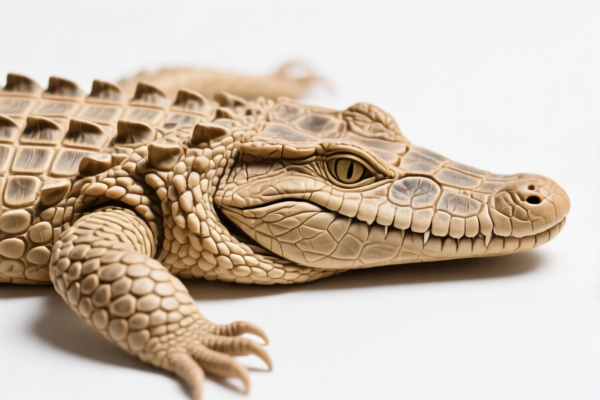
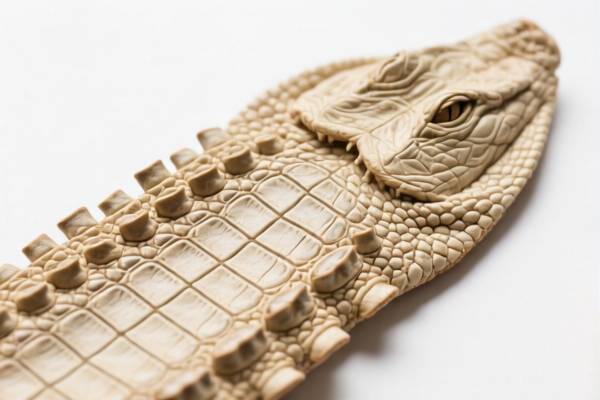
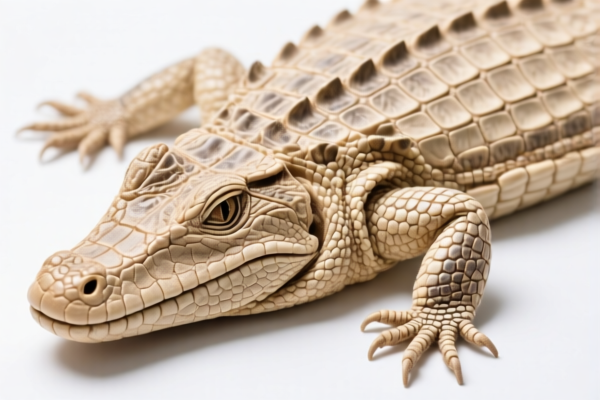
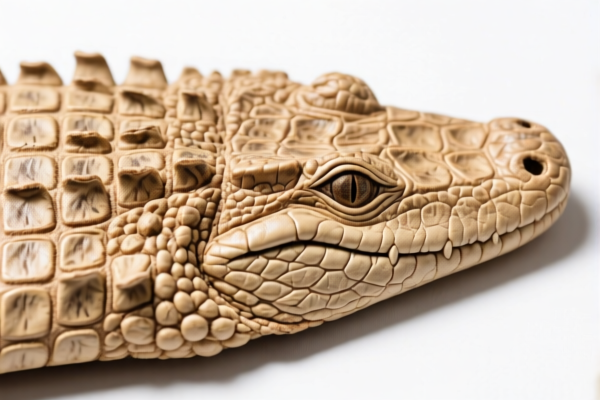
"Un-dyed Reptile Leather" in international trade refers to raw hides and skins of reptiles (such as crocodile, alligator, caiman, snake, and lizard) that have undergone preservation (salting, freezing, or drying) but NOT tanning, dyeing, or finishng.
Crucially, customs authorities distinguish strictly between: * Raw Hides/Skins (Chapter 41): Untanned, undyed, preserved animal skins. * Leather (Chapter 41/42): Tanned, dressed, or dyed hides.
⚠️ Critical Distinction:
- If the material is salted, dried, or frozen but NOT tanned → Classified under Chapter 41 (Raw Hides & Skins).
- If the material is tanned (even without dye) → Classified under Chapter 41/42 (Tanned Leather).
- "Un-dyed" does NOT mean "Untanned." Many exporters mistakenly classify tanned leather as raw hides to avoid higher tariffs, which leads to severe penalties.
📦 Two, HS Code Classification Details (2026 Official Tariff Alignment)
| HS Code | Product Description | Applicable Scenario | Tanned? | Dyed? |
|---|---|---|---|---|
4102.21.00.00 |
Crocodile, Alligator, Caiman Skins (Raw, Preserved) | Raw, salted/dried croc/alligator skins for jewelry/accessories | ❌ No | ❌ No |
4102.29.00.00 |
Other Reptile Skins (Raw, Preserved) | Raw snake, lizard, iguana skins | ❌ No | ❌ No |
4104.41.00.00 |
Tanned Crocodile/Alligator/Caiman Leather (Dyed or Not) | Tanned (vegetable or chrome) but NOT dyed | ✅ Yes | ❌ No |
4104.49.00.00 |
Other Tanned Reptile Leather (Dyed or Not) | Tanned snake/lizard leather, undyed | ✅ Yes | ❌ No |
4106.31.00.00 |
Crust Leather of Crocodile/Alligator/Caiman (Shaved/Unfinished) | Semi-processed, shaved, ready for dyeing | ✅ Yes | ❌ No |
4106.92.00.00 |
Other Crust Leather of Reptiles | Snake/lizard crust leather | ✅ Yes | ❌ No |
🔍 Key Reminder:
- "Un-dyed" is NOT a classification criterion for Chapter 41. Chapter 41 is for RAW skins.
- If the skin has been tanned (even if undyed), it must go to 4104/4106.
- If you declare "Un-dyed Reptile Leather" as4102but it is actually tanned, you face reclassification, back-taxes, and fines.
💰 Three, 2026 Latest Tariff Rate Details (Including Surtaxes & Policy Add-ons)
✅ Applicable Country: United States (US)
✅ Origin: China (CN)
✅ Effective Time: November 10, 2025 onwards (including subsequent imports)
🎯 1. 4102.21.00.00 / 4102.29.00.00 — Raw Reptile Skins (Un-dyed, Untanned)
| Item | Content |
|---|---|
| Base Tariff Rate | 6.5% (ad valorem) |
| USITC Surtax (Section 301) | +7.5% (Footnote 9903.88.01 for certain animal products) |
| IEEPA Surtax | +10% (China-specific, effective Nov 2025) |
| Total Tariff Rate | 24.0% |
| De Minimis Eligibility | ❌ Not Eligible (denied_de_minimis) |
| Legal Path | IEEPA:9903.01.25 → USITC:4102.21.00.00 → FOOTNOTE:9903.88.01 |
📌 Explanation:
- Raw reptile skins are subject to moderate base tariffs.
- The 301 surtax applies to certain animal hides.
- The IEEPA 10% applies to all Chinese-origin goods unless exempt.
- Total 24% is significant for high-value luxury inputs.
🎯 2. 4104.41.00.00 / 4104.49.00.00 — Tanned Reptile Leather (Un-dyed)
| Item | Content |
|---|---|
| Base Tariff Rate | 4.5% - 6.5% (depending on specific subheading) |
| USITC Surtax (Section 301) | +7.5% |
| IEEPA Surtax | +10% |
| Total Tariff Rate | 22.0% - 24.0% |
| De Minimis Eligibility | ❌ Not Eligible |
| Legal Path | IEEPA:9903.01.25 → USITC:4104.41.00.00 → FOOTNOTE:9903.88.01 |
📌 Note:
- Tanned leather (even undyed) is treated similarly to raw skins for surtax purposes.
- Luxury goods surcharge? If imported as part of a finished good (e.g., bag), the tariff structure may change (see Section Four).
🛠️ Four, Customs Clearance Practical Advice (Pitfall Avoidance Guide)
✅ 1. Documentation Checklist (Mandatory)
| Document | Required | Notes |
|---|---|---|
| ✅ Preservation Certificate | ✔️ | Proof of salting/drying/frozen storage (for Chapter 41) |
| ✅ Tanning Certificate | ✔️ | If tanned, proof of tanning method (vegetable/chrome) |
| ✅ Species Identification | ✔️ | CITES permits are mandatory for reptile skins (see below) |
| ✅ Commercial Invoice | ✔️ | Clearly state: "Raw Crocodile Skins, Salted, Undyed" or "Tanned Leather, Chrome-Tanned, Undyed" |
| ✅ CITES Permit | ✔️ | Critical for all reptile products |
| ✅ Packing List | ✔️ | Weight, quantity, dimensions |
✅ 2. Declaration Tips (Key Mantra)
🔥 "Check Tanning Status, Verify CITES, Declare Precisely!"
| Scenario | Correct Declaration | Wrong Practice |
|---|---|---|
| Raw, Salted, Undyed | 4102.21.00.00 |
Misdeclaring as "Leather" → Risk of penalty |
| Tanned, Undyed | 4104.41.00.00 |
Misdeclaring as "Raw Skin" → Smuggling of regulated goods |
| CITES Listed Species | Include CITES Permit # | Failure to attach CITES → Confiscation & Criminal Charges |
✅ 3. Special Circumstances
| Case | Handling Advice |
|---|---|
| CITES Compliance | Reptile skins (Crocodile, Alligator, Snake, Lizard) are strictly regulated under CITES Appendix I or II. You MUST have valid CITES export/import permits. No CITES permit = Seizure. |
| Hybrid Products | If the "leather" is attached to a bag/jacket, classify the entire good under Chapter 42, not Chapter 41. |
| Origin Marking | Ensure the country of origin is clearly marked on the packaging. |
🌍 Five, Global Market Comparison (2026 Latest)
| Country/Region | Recommended HS Code | Tariff (China Origin) | Certification | Notes |
|---|---|---|---|---|
| 🇺🇸 USA | 4102.21.00.00 (Raw) |
~24% | CITES + USDA | Strict CITES enforcement |
| 🇪🇺 EU | 4102.21 (Raw) |
6.5% | CITES + EU Wildlife Regulations | CITES permit required |
| 🇨🇳 China | 4102.21 (Raw) |
0% - 5% | CITES | Low import duty, high regulatory scrutiny |
| 🇬🇧 UK | 4102.21 (Raw) |
6.5% | CITES Post-Brexit Rules | Separate CITES licensing |
📌 Conclusion:
- CITES compliance is the #1 priority for reptile leather.
- Tariffs are moderate (24%) but the regulatory burden is high.
- Misclassification is dangerous due to wildlife trafficking laws.
📌 Six, Common Mistakes & Pitfall Guide (Blood & Tears Lessons)
❌ Mistake 1: Declaring "Tanned Leather" as "Raw Hides" to avoid higher tariffs
👉 Consequence: Customs audit, reclassification, heavy fines, and potential criminal investigation for wildlife trade fraud.
❌ Mistake 2: Ignoring CITES Permit requirements
👉 Consequence: Seizure of goods, destruction, and blacklisting of importer. Reptile skins are high-risk items.
❌ Mistake 3: Using vague descriptions like "Animal Skin"
👉 Consequence: Customs rejection. Must specify species (e.g., "Nile Crocodile Skins") and condition (Raw/Tanned).
❌ Mistake 4: Assuming "Un-dyed" means "Raw"
👉 Consequence: Wrong HS Code. "Un-dyed Tanned Leather" is still tanned leather.
✅ Correct Approach:
"Raw Salted Crocodile Skins, CITES Permit #XYZ, Undyed, Untanned"
OR
"Chrome-Tanned Crocodile Leather, Undyed, CITES Permit #ABC"
🎯 Seven, Conclusion: Precise Classification, Safe Clearance!
🎯 Remember the Mantra:
🔹 "Raw vs. Tanned: Check the Process, Not the Color!"
🔹 "Reptile = CITES Check!"
🔹 "Undyed ≠ Untanned!"
📌 Pro Tip:
If your reptile leather is part of a finished luxury good (e.g., a handbag), the tariff may be calculated on the final product (Chapter 42), not the raw material. Ensure your supply chain documentation aligns with the final product declaration.
📣 Immediate Action:
📞 Contact a wildlife trade compliance expert + Verify CITES permits + Apply for Advance Ruling if unsure.
🚀 Protect your brand, avoid seizures, and trade legally!
✨ Professional Customs Compliance Starts with Precision!
💼 Your Reptile Leather is High-Value, High-Risk. Treat It Accordingly!
用户评价
关于 HS 编码归类
协调制度(HS)是由世界海关组织(WCO)制定的国际贸易商品分类标准。全球 200 多个国家采用 HS 系统作为海关关税、贸易统计和进出口监管的基础。
每个 HS 编码遵循以下层级结构:
- 章(2 位)——商品大类(例如:第 84 章:机器和机械设备)
- 品目(4 位)——章内的更具体分类
- 子目(6 位)——国际通用细分,所有 WCO 成员国统一使用
- 本国细分(8-10 位)——各国自行扩展的细分编码,如美国 HTSUS 10 位编码
正确的 HS 编码归类对于顺利通关、准确缴纳关税和遵守贸易法规至关重要。错误归类可能导致海关延误、多缴关税或罚款。
从CN进口到US时,适用的关税税率可能包括:
- 最惠国(MFN)税率——适用于 WTO 成员国的标准关税税率
- 普通税率——适用于无贸易协定国家
- 贸易救济关税——附加关税,如 301 条款(反倾销)、232 条款(国家安全)或反补贴税
本页内容仅供参考。如需正式归类,请咨询当地海关或持牌报关代理。