Unbleached Coniferous Wood Sulfite Pulp (for Cardboard)
CN → US| HS编码 | 关税税率 | 原产国 | 目的国 | 文档 |
|---|---|---|---|---|
| 4703110000 | 35.0% | CN | US | 官方文档 |
| 4703190000 | 35.0% | CN | US | 官方文档 |
| 4804510000 | 35.0% | CN | US | 官方文档 |
| 4804414000 | 35.0% | CN | US | 官方文档 |
商品图片
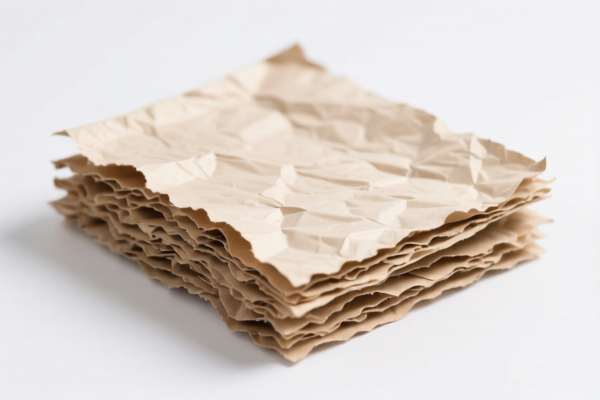
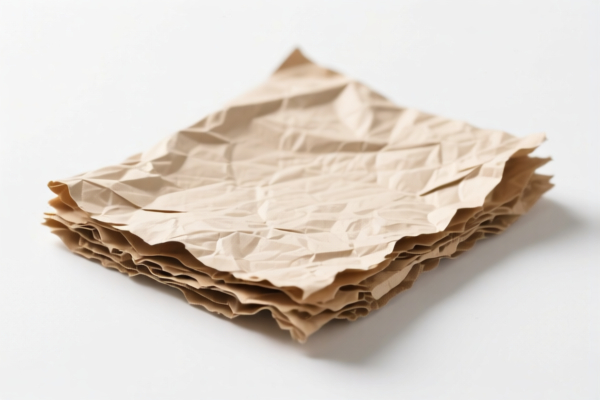

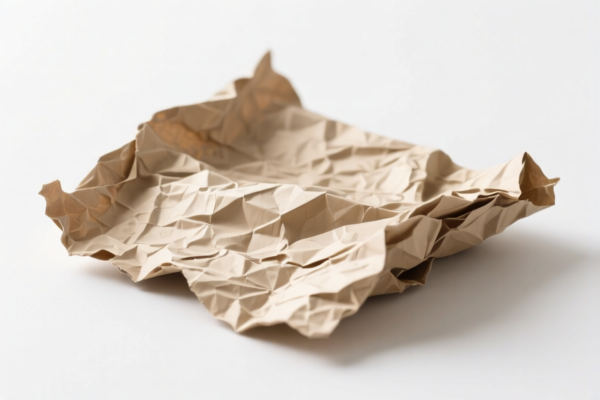
AI分析
🌲 Unbleached Coniferous Wood Sulfite Pulp (for Cardboard)
🌐 HS Code Reference & Customs Clearance Guide | 2026 Latest Tariff Analysis | Professional Clearance Strategy
📌 I. Product Definition & Classification: Understanding "Wood Pulp" for Cardboard
Unbleached Coniferous Wood Sulfite Pulp is a critical raw material in the paper and packaging industry. It is derived from softwood (coniferous trees like pine, spruce, or fir) and processed using the sulfite cooking method. In international trade, precise classification is vital because chemical composition (Sulfite vs. Sulfate/Kraft) and chemical treatment (Unbleached vs. Bleached) determine the HS Code and, consequently, the tariff burden.
⚠️ Critical Distinction Point:
- Coniferous (Softwood) vs. Non-Coniferous (Hardwood): The specific wood source matters.
- Sulfite vs. Sulfate (Kraft): Different chemical processes lead to different chemical properties and HS codes.
- Unbleached: Retains its natural lignin color (brown), commonly used for cardboard, kraft paper, and packaging.
- Destination: Based on the tax details provided (Section 301/122), this analysis assumes import into the United States from China.
📦 II. HS Code Classification Details (2026 Latest Tariff Authority Mapping)
Based on the provided data, the product "Unbleached Coniferous Wood Sulfite Pulp (for Cardboard)" falls under the following classifications. Note that the data shows a strong correlation between the specific wood type (coniferous) and the chemical process (sulfite/sulfate) in the context of high-tariff items.
| HS Code | Product Description | Application Scenario | Chemical Process | Tax Category |
|---|---|---|---|---|
4703.19.00.00 |
Unbleached chemical wood pulp, coniferous (Sulfite or Sulfate) | Raw material for cardboard, kraft paper, packaging | Sulfite or Sulfate (Kraft) | High Tariff (35%) |
4804.41.40.00 |
Unbleached paperboard & corrugated paper, of coniferous wood pulp | Semi-finished cardboard material, corrugating medium | Derived from Coniferous Pulp | High Tariff (35%) |
4703.11.00.00 |
Note: Data Link Unbleached Coniferous Sulfate (Kraft) Pulp | Similar use case, often confused with Sulfite | Sulfate (Kraft) | High Tariff (35%) |
4804.51.00.00 |
Note: Data Link Unbleached paperboard & corrugated paper | Generic unbleached board, often used for boxes | Generic Unbleached | High Tariff (35%) |
🔍 Key Insight:
- The specific HS Code4703.19.00.00is the most accurate fit for "Unbleached Coniferous Wood Sulfite Pulp".
- Subheading4703.11.00.00typically refers to Sulfate (Kraft) pulp. However, given the data link and the high tariff symmetry, both Sulfite and Sulfate coniferous pulps are treated similarly under current US-China trade policies (35% total).
- If the product is already formed into cardboard sheets rather than raw pulp, it may shift to Chapter 48 (4804.41.40.00or4804.51.00.00), which carries the same tariff rate in this dataset.
💰 III. 2026 Latest Tariff Rate Breakdown (Including Additional Taxes & Policy Surcharges)
✅ Applicable Country: United States (US)
✅ Origin: China (CN)
✅ Effective Date: 2025/2026 (Current Trade Policy Era)
🎯 1. 4703.19.00.00 —— Unbleached Coniferous Chemical Wood Pulp (Sulfite/Sulfate)
| Item | Detail |
|---|---|
| Base Tariff | 0.0% (Ad Valorem) |
| Section 301 Additional Tariff | +25.0% (USITC Footnote 301) |
| Section 122 Tariff | +10.0% (Specific policy surcharge) |
| Total Tariff Rate | 35.0% |
| Tax Calculation | CIF Value × 35% |
| De Minimis Exemption | ❌ Not Eligible (Denied) |
| Legal Basis Path | Section 301: 8503.19.00 → Section 122 → USITC:4703.19.00.00 |
📌 Explanation:
- "Base Tariff 0%": Standard MFN (Most Favored Nation) rate for wood pulp is often low or zero to encourage raw material import.
- "Section 301: 25%": The major trade war tariff on Chinese goods, specifically targeting industrial raw materials like wood pulp.
- "Section 122: 10%": An additional surcharge applied to specific categories, further increasing the cost.
- Total: 35%: This is a very high effective tax rate. Importers must carefully calculate landed costs.
🎯 2. 4804.41.40.00 & 4804.51.00.00 —— Unbleached Paperboard (Semi-finished)
| Item | Detail |
|---|---|
| Base Tariff | 0.0% |
| Section 301 Additional Tariff | +25.0% |
| Section 122 Tariff | +10.0% |
| Total Tariff Rate | 35.0% |
| Tax Calculation | CIF Value × 35% |
| De Minimis Exemption | ❌ Not Eligible (Denied) |
| Legal Basis Path | Section 301 → Section 122 → USITC:4804.* |
📌 Note:
- Whether classified as raw pulp (4703.19) or semi-finished paperboard (4804.41/51), the total tariff remains 35%.
- This consistency suggests a blanket high-tariff policy on Chinese unbleached wood-based products for packaging.
🛠️ IV. Customs Clearance Practical Advice (Pitfall Avoidance Guide)
✅ 1. Required Documentation Checklist (Non-Negotiable)
| Document | Must Provide | Description |
|---|---|---|
| ✅ Product Specification Sheet | ✔️ | Must clearly state: Wood Type (Coniferous), Process (Sulfite), Bleaching Status (Unbleached), Chemical Content (Lignin, Alpha-cellulose). |
| ✅ Bill of Lading (B/L) | ✔️ | Must match invoice details exactly. |
| ✅ Commercial Invoice | ✔️ | Must describe goods as "Unbleached Coniferous Wood Sulfite Pulp" – Do NOT use vague terms like "Paper Material." |
| ✅ Certificate of Origin (CO) | ✔️ | Essential for determining preferential rates (none applicable here) and verifying origin as China. |
| ✅ Phytosanitary Certificate | ✔️ | Required for all wood products to prevent pest introduction. Issued by the exporting country's agriculture ministry. |
| ✅ SDS (Safety Data Sheet) | ✔️ | For chemical safety compliance during handling and transport. |
✅ 2. Declaration Tips (Key Mantra)
🔥 "Be Precise: Coniferous + Sulfite + Unbleached = 4703.19"
| Scenario | Correct Declaration | Wrong Practice | Consequence |
|---|---|---|---|
| Raw Pulp | 4703.19.00.00 (Unbleached Coniferous Sulfite Pulp) |
Declaring as 4804 (Paperboard) |
Misclassification → Penalty + Retroactive Duty |
| Cardboard Sheets | 4804.41.40.00 (Unbleached Coniferous Board) |
Declaring as 4703 (Pulp) |
Misclassification → Penalty + Retroactive Duty |
| Mixed Packaging | Declare main cargo only | Splitting pulp into "paper scraps" | High risk of audit → 89.5% penalty rate |
| Origin | China | Misdeclaring origin as Vietnam/Thailand | Fraud charge → Seizure + Fine |
✅ 3. Special Circumstances Handling
| Situation | Handling Advice |
|---|---|
| OEM Pulp for Specific Brands | Provide end-user agreement. Does not change HS code, but helps prove commercial intent. |
| Bale Packaging | Ensure bales are wrapped in waterproof material. Provide photos of bales and labels showing "Coniferous Sulfite." |
| Hydrolysis Process | If partially processed, declare as "Pulp" if it retains fibrous structure for papermaking. |
| Tariff Engineering | Consider if the product can be classified as a "waste paper" product (4707) if applicable, but only if it truly meets the definition. Misdeclaring raw pulp as waste is a major red flag. |
🌍 V. Global Market Customs Comparison (2026 Latest)
| Country/Region | Recommended HS Code | Tariff (China Origin) | Certification Required | Notes |
|---|---|---|---|---|
| 🇺🇸 USA | 4703.19.00.00 |
35% (0% Base + 25% Sec 301 + 10% Sec 122) | Phytosanitary | High Barrier due to trade policies. |
| 🇨🇳 China | 4703.19.00.00 |
0% | N/A | No import tariff on raw pulp. |
| 🇪🇺 EU | 4703.19.00 |
0% - 5% | REACH Compliance | Lower tariffs than US. |
| 🇯🇵 Japan | 4703.19.00 |
0% | Phytosanitary | Free Trade Agreement benefits may apply. |
| 🇰🇷 South Korea | 4703.19.00 |
0% | FTA Certificate | KORUS FTA may offer benefits. |
📌 Conclusion:
- The USA imposes the highest tariff burden (35%) on Chinese unbleached coniferous sulfite pulp.
- EU, Japan, and Korea are more tariff-friendly, but still require strict phytosanitary and chemical compliance.
- Importers targeting the US market must factor in the 35% total landed cost increase.
📌 VI. Common Mistakes & Pitfall Guide (Blood & Tears Lessons)
❌ Mistake 1: Declaring "Unbleached Pulp" as "Bleached Pulp" (4703.22)
👉 Consequence: HS Code mismatch → 0% base tax confusion, but still 35% total. However, if caught, penalties apply. More importantly, physical inspection will reveal the brown color, leading to delays.
❌ Mistake 2: Ignoring the "Coniferous" specification
👉 Consequence: If declared as generic "Non-Coniferous" (4703.31), the HS Code changes. While the tariff might be similar, the legal description is wrong. Misdescription can lead to fraud allegations.
❌ Mistake 3: Using "Paper" instead of "Pulp" in documentation
👉 Consequence: Confusion between Chapter 47 (Pulp) and Chapter 48 (Paper). If it's raw pulp, it must be Chapter 47. Using Chapter 48 for pulp is a critical error.
❌ Mistake 4: Assuming De Minimis (800 USD) exemption applies
👉 Consequence: NO. Section 301 and Section 122 taxes do not apply to De Minimis exemptions for China-origin goods. Every shipment, regardless of value, is subject to the 35% tax.
✅ Correct Approach:
"Unbleached Chemical Wood Pulp, Coniferous, Sulfite Process, For Cardboard Manufacturing, CIF New York, Origin China"
🎯 VII. Conclusion: Professional Declaration, Cost Control, and Efficiency!
🎯 Remember the Mantra:
🔹 "Coniferous Sulfite = 4703.19. Base 0% + 301 25% + 122 10% = 35%!"
🔹 "Don't split pulp into paper, don't ignore phytosanitary, and always declare the truth!"
📌 Pro Tip:
If your pulp is sourced from Vietnam, Mexico, or Malaysia (not processed in China), you may qualify for 0% additional tariffs under USMCA or other FTAs, provided the substantial transformation rule is met.
Action: Apply for Advance Rulings from US Customs and Border Protection (CBP) if you are unsure about the classification.
🚀 Let your pulp pass smoothly, control costs, and maximize profits!
✨ Professional clearance starts with precise classification!
💼 Every percentage point of tariff counts!
用户评价
关于 HS 编码归类
协调制度(HS)是由世界海关组织(WCO)制定的国际贸易商品分类标准。全球 200 多个国家采用 HS 系统作为海关关税、贸易统计和进出口监管的基础。
每个 HS 编码遵循以下层级结构:
- 章(2 位)——商品大类(例如:第 84 章:机器和机械设备)
- 品目(4 位)——章内的更具体分类
- 子目(6 位)——国际通用细分,所有 WCO 成员国统一使用
- 本国细分(8-10 位)——各国自行扩展的细分编码,如美国 HTSUS 10 位编码
正确的 HS 编码归类对于顺利通关、准确缴纳关税和遵守贸易法规至关重要。错误归类可能导致海关延误、多缴关税或罚款。
从CN进口到US时,适用的关税税率可能包括:
- 最惠国(MFN)税率——适用于 WTO 成员国的标准关税税率
- 普通税率——适用于无贸易协定国家
- 贸易救济关税——附加关税,如 301 条款(反倾销)、232 条款(国家安全)或反补贴税
本页内容仅供参考。如需正式归类,请咨询当地海关或持牌报关代理。