Unbleached Handmade Packaging Paper
CN → US| HS编码 | 关税税率 | 原产国 | 目的国 | 文档 |
|---|---|---|---|---|
| 4802693000 | 35.0% | CN | US | 官方文档 |
| 4804314040 | 35.0% | CN | US | 官方文档 |
| 4804412000 | 35.0% | CN | US | 官方文档 |
| 4819504060 | 35.0% | CN | US | 官方文档 |
| 4819400040 | 35.0% | CN | US | 官方文档 |
商品图片
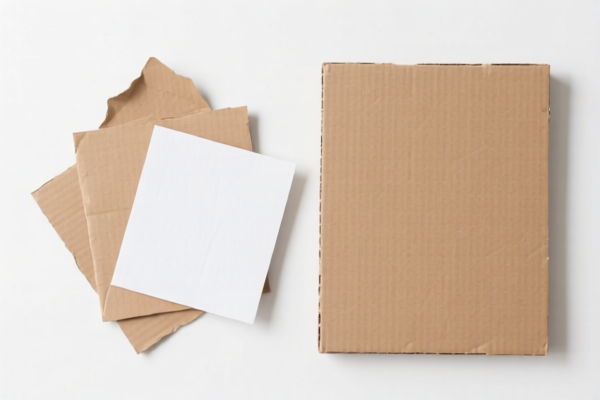
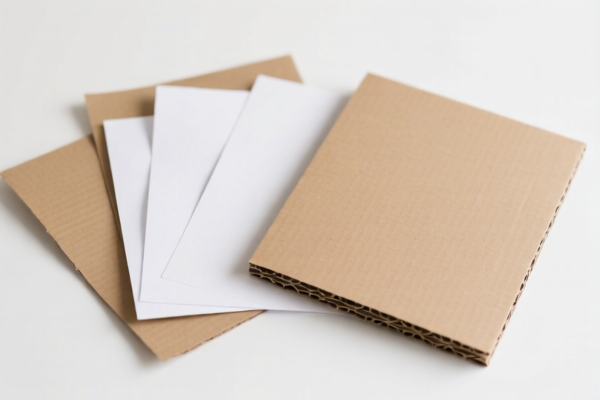
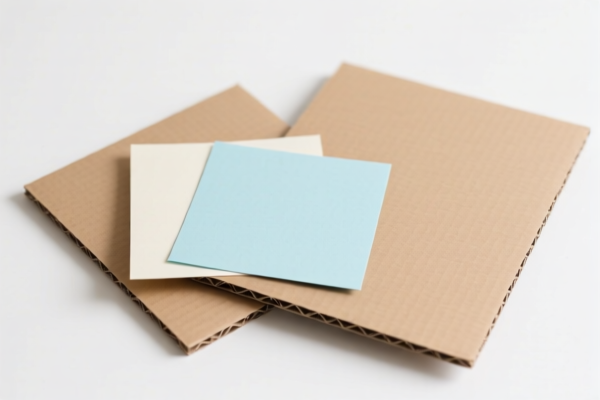
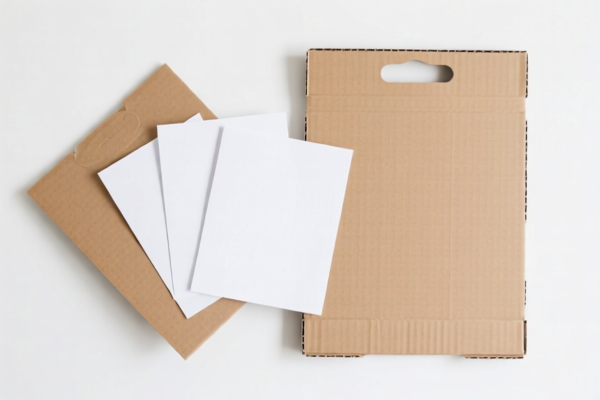
AI分析
📦 Unbleached Handmade Packaging Paper
🌐 HS Code Reference & Customs Clearance Guide | 2026 Latest Tariff Analysis | Professional Clearance Strategy 📌 I. Product Definition & Classification: Do You Really Understand "Unbleached Handmade Packaging Paper"?
"Unbleached Handmade Packaging Paper" is a specialty paper product characterized by its natural, earthy tone (due to being unbleached) and artisanal texture (due to the handmade process). In international trade, it is primarily classified under Chapter 48 (Paper and Paperboard). The key to accurate classification lies in determining whether it is viewed as a raw paper sheet (for further manufacturing) or a finished packaging container/wrapper.
Key Classification Logic: 1. Material: "Paper" implies wood pulp or other fibrous material. 2. Process: "Unbleached" means it retains its natural color, typically brown or kraft-like. 3. Form: "Handmade" refers to the production method, but customs classification often prioritizes physical properties (coating, weight, strength) and usage over the manufacturing method unless specified otherwise in specific subheadings. 4. Usage: "Packaging" suggests it is used for wrapping, bundling, or creating containers.
⚠️ Critical Distinction: * If it is a plain, uncoated sheet used as a base material for bags or boxes → Likely 4804 (Kraft paper/board). * If it is a specific type of kraft paper for sacks/bags → Likely 4804.31. * If it is a general uncoated paper not specified elsewhere → Likely 4802.69. * If it is folded into a specific container (like a bag or box) → Likely 4819.
📦 II. HS Code Classification Details (2026 Latest Tariff Authority Comparison)
Based on the provided data, here are the five most relevant HS Codes, explained with their specific matching logic.
| HS Code | Product Description | Matching Logic & Summary | Total Tax Rate |
|---|---|---|---|
| 4802.69.30.00 | Other paper, uncoated, weighing ≤ 40g/m², other | Material Match: Infers paper composition from "Packaging Paper". Form Match: Fits uncoated paper attributes. Usage Match: Fits the broad category of paper uses. |
35.0% |
| 4804.31.40.40 | Kraft liner paper, unbleached, in rolls, other than corrugated, weighing > 150g/m² | Usage Match: "Packaging Paper" matches the usage. Material Inference: "Unbleached" reasonably infers primary, unbleached kraft paper. Description Fit: Matches the description of unbleached packaging paper. |
35.0% |
| 4804.41.20.00 | Kraft paper and kraftliner, unbleached, other than corrugated, other, weighing ≤ 150g/m² | 'Unbleached' ↔ 'Unbleached': Material feature match. 'Packaging' ↔ 'For Packaging': Usage feature match. Logic: No material conflict; deemed possible fit based on 'other' category logic. |
35.0% |
| 4819.50.40.60 | Other folding cartons, boxes, and cases, of paper or paperboard | Material: Fits "Paper/Board" attribute (inferred from "Packaging Paper"). Form: Fits the scope of "Packaging Containers" (Packaging paper is often used to make containers). Conflict: No material or usage conflict found. |
35.0% |
| 4819.40.00.40 | Other folded paper or paperboard packaging, other than folding cartons and boxes, of paper or paperboard | Material: Inferred as "Paper" (matches ref's paper/board requirement). Form: Packaging paper (fits ref's packaging container/bag logic). Conflict: No material conflict. |
35.0% |
🔍 Key Reminder: * 4804 Codes generally apply to sheets/rolls of kraft paper intended for further processing (e.g., making sacks or boxes). * 4819 Codes generally apply to finished packaging items (e.g., pre-folded cartons, bags, or wrappers). * "Handmade" does not automatically change the HS code if the physical characteristics (weight, coating, fiber type) align with standard industrial categories. Customs often classifies handmade paper by its technical properties first.
💰 III. 2026 Latest Tariff Rate Details (Including Additional Taxes, Policy Surcharges)
✅ Applicable Country: United States (US) ✅ Origin: China (CN) ✅ Effective Date: From November 10, 2025 (including subsequent imports)
All the HS codes listed in the data share the same total tax rate structure due to US trade policies on Chinese paper products.
🎯 1. General Tariff Structure for All Listed HS Codes
| Item | Content |
|---|---|
| Base Tariff Rate | 0.0% (Ad valorem) (Most paper products have low or zero base MFN tariffs) |
| Section 301 Tariff (USITC) | +25.0% (Additional duty imposed under Section 301 of the Trade Act of 1974) |
| Section 122 Tariff (IEEPA) | +10.0% (Additional duty under the International Emergency Economic Powers Act, specifically targeting certain Chinese imports) |
| Total Effective Tax Rate | 35.0% |
| Tax Calculation | CIF Value × 35% |
| De Minimis Exemption | ❌ Not Eligible (Section 301 and 122 tariffs generally cannot be bypassed via Section 321 de minimis entry for China-origin goods in this category) |
| Legal Basis Path | USITC: Section 301 Footnote → IEEPA: Section 122 Authority → Specific HS Code Subheadings |
📌 Explanation: * "USITC Additional Duty 25%": Derived from the Trump-era Section 301 tariffs, which remain in effect under Biden’s administration for most Chinese industrial goods, including paper products. * "Section 122 Tariff 10%": Reflects additional national security or emergency economic powers applied to specific categories of Chinese imports. * Total 35%: This is a high tariff burden. Importers must factor this into their landed cost calculations. There is no significant tax advantage between the different HS codes (4802, 4804, 4819) for China-origin goods in this dataset; all are taxed at 35%.
🛠️ IV. Customs Clearance Practical Advice (Pitfall Avoidance Guide)
✅ 1. Documentation Checklist (Missing Items Cause Delays)
| Document | Required | Notes |
|---|---|---|
| ✅ Product Specification Sheet | ✔️ | Must include: Weight (g/m²), Dimensions, Material (e.g., Kraft, Recycled), Bleach Status. |
| ✅ Physical Sample / Photos | ✔️ | Clear images showing the "Handmade" texture and "Unbleached" color. |
| ✅ Commercial Invoice | ✔️ | Clearly state: "Unbleached Handmade Packaging Paper", HS Code, Country of Origin (China). |
| ✅ Packing List | ✔️ | Detail net/gross weight. Distinguish between rolls and cut sheets. |
| ✅ Certificate of Origin (CO) | ✔️ | Essential for proving China origin to assess correct Section 301/122 duties. |
| ✅ Manufacturing Process Description | ✔️ | Briefly explain "Handmade" process if questioned (e.g., "wet laid, no mechanical bleaching"). |
✅ 2. Declaration Strategy (Key Mantras)
🔥 "Be Specific on 'Packaging' vs. 'Raw Paper'!"
| Scenario | Correct Declaration | Incorrect Practice | Consequence |
|---|---|---|---|
| Rolls of Paper | 4804.31.40.40 or 4804.41.20.00 (Specify: "Unbleached Kraft Paper for Packaging") |
Misdeclaring as 4819 (Finished Containers) |
Potential misclassification penalty; customs may reclassify. |
| Cut Sheets for Wrapping | 4802.69.30.00 or 4804 (Specify: "Uncoated Paper Sheets") |
Calling it "Packaging Box" | If it’s not a box, this is false declaration. |
| Pre-folded Bags/Boxes | 4819.40.00.40 or 4819.50.40.60 (Specify: "Folded Paper Packaging") |
Declaring as "Raw Paper" | If it’s already a container, 4804 is wrong. |
| "Handmade" Labeling | Mention in "Description" field | Ignoring "Handmade" | May trigger questions about value or classification; better to disclose. |
✅ 3. Special Considerations
| Situation | Handling Advice |
|---|---|
| Weight Matters | If g/m² is not provided, customs may assign a default or request clarification. Always declare weight. |
| Coating Status | Ensure it is truly "Uncoated." If any coating is present, it may move to 4810 or 4805, which could have different tax treatments (though still likely 35% in this dataset). |
| Origin Declaration | Be honest about "China Origin." Trying to mask origin leads to severe penalties, fraud charges, and seizure. |
| Handmade Premium | The "Handmade" aspect may justify a higher value but does not change the HS code unless it creates a distinct product class (rare in paper). Focus on technical specs. |
🌍 V. Global Market Clearance Comparison (2026 Latest)
| Country/Region | Recommended HS Code | Tariff (China Origin) | Certification Requirements | Notes |
|---|---|---|---|---|
| 🇺🇸 USA | 4804.31.40.40 / 4819.50.40.60 |
35.0% (Total) | None specific for paper, but must meet EPA/FSMA if food contact | High tariffs due to Section 301 + 122. |
| 🇨🇳 China | 4804 / 4819 |
5% - 10% (Import) | CCC (if applicable) | No additional punitive tariffs. |
| 🇪🇺 EU | 4804 / 4819 |
0% - 6.5% | REACH (Chemical compliance) | No Section 301 equivalent. Lower duty burden. |
| 🇬🇧 UK | 4804 / 4819 |
0% - 6.5% | UKCA (if relevant) | Post-Brexit rules; generally low duties for paper. |
| 🇯🇵 Japan | 4804 / 4819 |
0% - 3.0% | FSC (Forest certification recommended) | Free Trade Agreement (JPEPA) may apply for qualifying goods. |
📌 Conclusion: * USA is the most expensive market for this product due to the 35% combined tariff. * EU, UK, Japan, and China offer significantly lower duty rates (0-10%). * For US market entry, cost absorption or supply chain adjustment (e.g., third-country transshipment where legally permissible) must be carefully evaluated.
📌 VI. Common Mistakes & Pitfall Guide (Lessons Learned)
❌ Mistake 1: Declaring "Handmade Paper" as a luxury item with no HS code reference. 👉 Consequence: Customs will reject the entry or assign a generic code with higher scrutiny.
❌ Mistake 2: Confusing "Packaging Paper" (raw material) with "Packaging Boxes" (finished good). 👉 Consequence: Wrong HS Code (4804 vs 4819) → Potential audit flag, even if tax rate is similar in this dataset.
❌ Mistake 3: Omitting "Unbleached" in the description.
👉 Consequence: May be classified as "Bleached Paper" (e.g., 4802.55), which could have different technical standards or even higher scrutiny.
❌ Mistake 4: Assuming "Handmade" qualifies for a lower tariff. 👉 Consequence: No such tariff exists in US HTS for handmade paper vs. machine-made paper. Both are taxed at 35%.
✅ Correct Practice:
"Unbleached, Uncoated Kraft Paper, Handmade, for Packaging Purposes, Roll/Sheet, [Weight] g/m², Origin: China"
🎯 VII. Conclusion: Precise Classification, Cost Control, Compliance!
🎯 Remember the Mantra:
🔹 "Unbleached & Uncoated is Key" 🔹 "Packaging Paper vs. Box: Form Dictates Code" 🔹 "35% Tariff for China: Plan Ahead!" 🔹 "Handmade Adds Value, Not Tax Breaks!"
📌 Pro Tip: If your packaging paper is intended for food contact, ensure you have FDA compliance documentation ready. While this doesn't change the HS code, it prevents detention due to safety concerns. For the US market, consider if value-added transformation in a third country (under strict rules of origin) is viable to reduce tariff exposure, but consult a legal expert to avoid circumvention penalties.
📣 Immediate Action:
📞 Contact a Licensed Customs Broker + Provide Product Specs (Weight/Weight) + Verify Country of Origin. 🚀 Ensure Smooth Clearance, Efficient Export, and Maximized Profit!
✨ Professional Clearance Starts with Accurate Classification! 💼 Every cent of your cost deserves precise calculation!
用户评价
关于 HS 编码归类
协调制度(HS)是由世界海关组织(WCO)制定的国际贸易商品分类标准。全球 200 多个国家采用 HS 系统作为海关关税、贸易统计和进出口监管的基础。
每个 HS 编码遵循以下层级结构:
- 章(2 位)——商品大类(例如:第 84 章:机器和机械设备)
- 品目(4 位)——章内的更具体分类
- 子目(6 位)——国际通用细分,所有 WCO 成员国统一使用
- 本国细分(8-10 位)——各国自行扩展的细分编码,如美国 HTSUS 10 位编码
正确的 HS 编码归类对于顺利通关、准确缴纳关税和遵守贸易法规至关重要。错误归类可能导致海关延误、多缴关税或罚款。
从CN进口到US时,适用的关税税率可能包括:
- 最惠国(MFN)税率——适用于 WTO 成员国的标准关税税率
- 普通税率——适用于无贸易协定国家
- 贸易救济关税——附加关税,如 301 条款(反倾销)、232 条款(国家安全)或反补贴税
本页内容仅供参考。如需正式归类,请咨询当地海关或持牌报关代理。