Unbleached/Bleached/Dyed Ribbon
CN → US| HS编码 | 关税税率 | 原产国 | 目的国 | 文档 |
|---|---|---|---|---|
| 5806321095 | 41.0% | CN | US | 官方文档 |
| 5806321010 | 41.0% | CN | US | 官方文档 |
| 5407410010 | 48.6% | CN | US | 官方文档 |
| 5407410020 | 48.6% | CN | US | 官方文档 |
商品图片
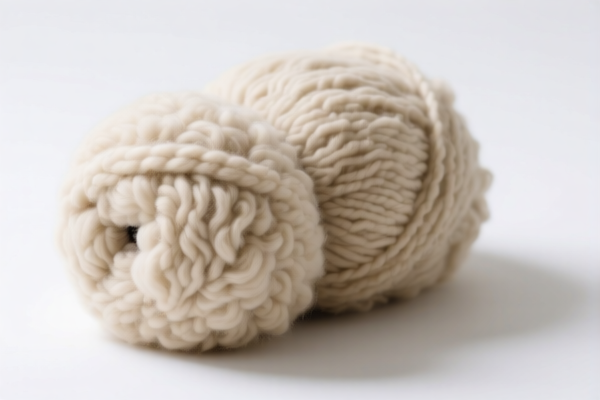
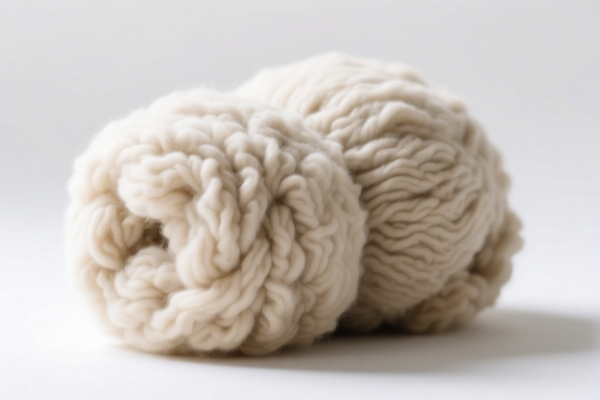
AI分析
🎀 Unbleached / Bleached / Dyed Ribbons (Narrow Woven Fabrics)
🌐 HS Code Reference & Clearance Guide | 2026 Latest Tariff Analysis | Professional Entry Strategy
📌 I. Product Definition & Classification: What Exactly Are "Ribbons"?
Ribbons, in the context of international trade and customs classification, refer to Narrow Woven Fabrics with a finished edge. They are distinct from general textiles because their width is limited, and they often have specific end-uses.
In this specific analysis, we focus on ribbons made of Man-Made Fibers (Synthetic/Artificial), which are the most common in global trade for packaging, clothing trim, and industrial applications.
The key distinction lies in the treatment and the specific end-use: 1. General Ribbons: Standard woven fabrics used for decoration, packaging, or general binding. 2. Specialty Ribbons: Specific types intended for industrial tools, such as typewriter/ribbon markers (heading 9612 materials).
⚠️ Critical Distinction Point:
- If the ribbon is a general woven fabric without a specific industrial function for printing, it falls under 5806.32.10.95.
- If the ribbon is specifically suitable for manufacturing typewriter or similar ribbons (e.g., ink-impregnated fabric bases for heading 9612), it falls under 5806.32.10.10.
- Unbleached/Bleached/Dyed refers to the finishing process. All three fall under the same HS code structure for woven fabrics of man-made fibers, provided they are not of heading 5807 (e.g., non-woven or knitted goods).
📦 II. HS Code Classification Details (2026 Latest Tariff Authority Match)
| HS Code | Product Description | Applicable Scenario | Fiber Material | Tax Rate (China Origin to US) |
|---|---|---|---|---|
5806.32.10.10 |
Ribbons Suitable for Typewriter/Similar Ribbons (Heading 9612) | Ink-carriage ribbons, marker bands, specialized industrial printing fabrics | Man-Made Fibers | 0.0% |
5806.32.10.95 |
Ribbons, Other (General Use) | Decorative ribbons, packaging bands, clothing trims, general woven narrow fabrics | Man-Made Fibers | 0.0% |
🔍 Key Reminder:
- Both codes belong to Chapter 58: Special Woven Fabrics; Tufted Textiles; Lace; Tapestry; Trimmings; Warp-Set Textiles.
- Unbleached, Bleached, and Dyed are all covered under "Woven Fabrics" (not knitted or felted).
- The primary differentiator is NOT the color/finish, but the INTENDED USE.
- If you are exporting general fashion or packaging ribbons, use.95. If you are supplying raw material specifically for typewriter ribbon manufacturers, use.10.
💰 III. 2026 Latest Tariff Rate Breakdown (Detailed Clause Explanation)
✅ Applicable Country: United States (US)
✅ Origin: China (CN)
✅ Effective Date: Current 2026 Tariff Schedule
🎯 1. 5806.32.10.10 – Ribbons for Typewriter/Heading 9612
| Item | Content |
|---|---|
| Base Tariff | 0.0% (Free) |
| Section 301 / USITC Additional Duty | 0.0% |
| IEEPA Additional Duty | 0.0% |
| Total Tax Rate | 0.0% |
| De Minimis Eligibility | ❌ Not Applicable (De Minimis rules usually apply to low-value shipments; industrial inputs often require formal entry regardless of value, but tax is 0) |
| Legal Basis Path | HTSUS: 5806.32.10.10 → No Section 301 footnote triggers for this specific subheading |
📌 Explanation:
- Unlike many consumer goods, this specific industrial input enjoys a 0% tariff rate.
- It is NOT subject to the 25% Section 301 tariffs or the 10% IEEPA surcharges that apply to many other textile and industrial goods.
- Why? It is considered a specialized industrial component rather than a standard consumer textile.
🎯 2. 5806.32.10.95 – Other Ribbons (General Man-Made Fiber)
| Item | Content |
|---|---|
| Base Tariff | 0.0% (Free) |
| Section 301 / USITC Additional Duty | 0.0% |
| IEEPA Additional Duty | 0.0% |
| Total Tax Rate | 0.0% |
| De Minimis Eligibility | ❌ Not Applicable |
| Legal Basis Path | HTSUS: 5806.32.10.95 → No Section 301 footnote triggers for this specific subheading |
📌 Explanation:
- This is a major advantage for exporters. Most woven fabrics of man-made fibers face tariffs. However, this specific narrow woven fabric subheading has a 0% duty rate.
- This includes Unbleached (natural gray/off-white), Bleached (white), and Dyed (any color) ribbons.
- Crucial: Do NOT confuse this with "Tape" (often heading 5907 or 5607). Ribbons are specifically narrow woven fabrics with finished edges.
🛠️ IV. Clearance Practical Advice (Pitfall Avoidance Guide)
✅ 1. Required Documentation Checklist
| Document | Mandatory? | Notes |
|---|---|---|
| ✅ Commercial Invoice | ✔️ | Must clearly state "Narrow Woven Fabric, Ribbon, Man-Made Fiber, [Unbleached/Bleached/Dyed]" |
| ✅ Product Specification | ✔️ | Specify width, fiber content (e.g., 100% Polyester), and weight |
| ✅ Usage Declaration | ✔️ | Critical: State if it is for "Typewriter Ribbon Manufacturing" (for .10) or "General Purpose/Decoration" (for .95) |
| ✅ Photos | ✔️ | Show the finished edge (serged, heat-cut, etc.) to prove it is a ribbon, not a strip |
| ✅ Origin Certificate | ✔️ | Standard CO if required by buyer, though tariff is 0% |
✅ 2. Declaration Tips (Key Mnemonic)
🔥 "Finish Doesn't Matter, Use Determines Code!"
| Scenario | Correct Declaration | Wrong Practice |
|---|---|---|
| Dyed Polyester Ribbon for Gift Wrapping | 5806.32.10.95 |
❌ Do NOT use .10 |
| Bleached Silk-like Ribbon for Clothing Trim | 5806.32.10.95 |
❌ Do NOT use .10 |
| Raw Fabric Roll for Typewriter Ribbon Factory | 5806.32.10.10 |
❌ Do NOT use .95 if specific use applies |
| Unbleached Jute Ribbon | ❌ Wrong Chapter | Jute is plant fiber (Heading 5309/5407?), not man-made. Check Chapter 53. |
📌 Note on "Unbleached/Bleached/Dyed":
- These terms are FINISHING STATES.
- Customs does not have separate HS codes for unbleached vs. dyed ribbons within this subheading. They all fall under 5806.32.10.x.
- You must specify the finish in the commercial invoice for accurate valuation, but the HS Code remains the same.
✅ 3. Special Case Handling
| Situation | Handling Advice |
|---|---|
| Mixed Fiber Ribbons | If >50% man-made fiber, it stays in 5806.32. If <50%, it may fall under different subheadings (e.g., cotton blend). Verify fiber content! |
| Ribbon + Adhesive (Bolducs) | If the ribbon has adhesive applied (e.g., sticky-backed ribbon), it may still be 5806 if primarily woven. If it becomes a "tape" or "adhesive strip," check Heading 5907 or 3919. |
| Gift Sets with Ribbons | If the ribbon is integral to the gift (e.g., a wrapped box), declare the gift, not just the ribbon. If shipped separately, declare as ribbon. |
| Typewriter Ribbon vs. Ink Ribbon | Ensure the product is the fabric base (heading 5806) and not the finished inked product (heading 9612). The .10 code is for the suitable fabric, not the finished ink cartridge. |
🌍 V. Global Market Comparison (2026 Latest)
| Country/Region | Recommended HS Code | Tariff Rate (China Origin) | Certification Required | Notes |
|---|---|---|---|---|
| 🇺🇸 USA | 5806.32.10.10 / .95 |
0.0% | None (General) | 0% Duty Advantage |
| 🇨🇳 China | 5806.32 |
~5-7% | N/A | Domestic trade |
| 🇪🇺 EU | 5806.32 |
0-4.5% (Depends on specific sub) | REACH (Chemical Compliance) | Check for azo dyes in dyed ribbons |
| 🇬🇧 UK | 5806.32 |
0-4.5% | UKCA (if applicable) | Post-Brexit rules |
| 🇯🇵 Japan | 5806.32 |
0-5% | None | Low tariff barrier |
📌 Conclusion:
- USA offers the most favorable tariff (0%) for these goods.
- EU/Japan may have minor base duties, but no major anti-dumping or Section 301 surcharges like the US does for other goods.
- Chemical Compliance (REACH/Prop 65) is critical for Dyed ribbons due to azo dyes or heavy metals. Ensure test reports are available.
📌 VI. Common Mistakes & Pitfalls (Lessons Learned)
❌ Mistake 1: Classifying Dyed Ribbons as "Tape" (5907)
👉 Consequence: Higher duties, potential misclassification penalties. Ribbons are woven, not impregnated or backed in the same way as industrial tape.
❌ Mistake 2: Assuming Unbleached Ribbons have a different HS Code
👉 Consequence: Unnecessary complexity. All woven man-made ribbons are in 5806.32. The finish is a descriptive detail, not a classification trigger.
❌ Mistake 3: Using .10 for General Decorative Ribbons
👉 Consequence: Customs Audit Risk. If you declare decorative gift ribbon as "Typewriter Ribbon Material" to force a specific code, you may face scrutiny if the product cannot be used for that purpose. Stick to .95 for general use.
✅ Correct Practice:
"Woven Ribbon, 1cm Width, 100% Polyester, Dyed Red, Suitable for Gift Packaging. HS Code: 5806.32.10.95. Duty: 0%."
🎯 VII. Conclusion: Professional Classification for Cost Efficiency
🎯 Key Takeaway:
🔹 "0% Duty for Man-Made Ribbons in the US!"
🔹 "Finish (Dyed/Bleached/Unbleached) does not change the HS Code."
🔹 "Use Determines .10 vs .95."
📌 Pro Tip:
If you are exporting Dyed Ribbons to the EU, ensure you have REACH Compliance Documents for the dyes used. While the US tariff is 0%, EU customs may delay clearance for lack of chemical safety data.
📣 Immediate Action:
📞 Verify Fiber Content (Must be Man-Made for 5806.32)
📞 Define End-Use (Typewriter Material vs. General Decor)
📞 Select Correct Code:.10(Special) or.95(General)
🚀 Enjoy 0% Duty Clearance!
✨ Professional Clearance Starts with Precise Classification!
💼 Your Cost Savings Are Zero Duty, Zero Headache!
用户评价
关于 HS 编码归类
协调制度(HS)是由世界海关组织(WCO)制定的国际贸易商品分类标准。全球 200 多个国家采用 HS 系统作为海关关税、贸易统计和进出口监管的基础。
每个 HS 编码遵循以下层级结构:
- 章(2 位)——商品大类(例如:第 84 章:机器和机械设备)
- 品目(4 位)——章内的更具体分类
- 子目(6 位)——国际通用细分,所有 WCO 成员国统一使用
- 本国细分(8-10 位)——各国自行扩展的细分编码,如美国 HTSUS 10 位编码
正确的 HS 编码归类对于顺利通关、准确缴纳关税和遵守贸易法规至关重要。错误归类可能导致海关延误、多缴关税或罚款。
从CN进口到US时,适用的关税税率可能包括:
- 最惠国(MFN)税率——适用于 WTO 成员国的标准关税税率
- 普通税率——适用于无贸易协定国家
- 贸易救济关税——附加关税,如 301 条款(反倾销)、232 条款(国家安全)或反补贴税
本页内容仅供参考。如需正式归类,请咨询当地海关或持牌报关代理。