Undyed Cowhide Belt
CN → US| HS编码 | 关税税率 | 原产国 | 目的国 | 文档 |
|---|---|---|---|---|
| 4205000500 | 37.9% | CN | US | 官方文档 |
| 4205004000 | 36.8% | CN | US | 官方文档 |
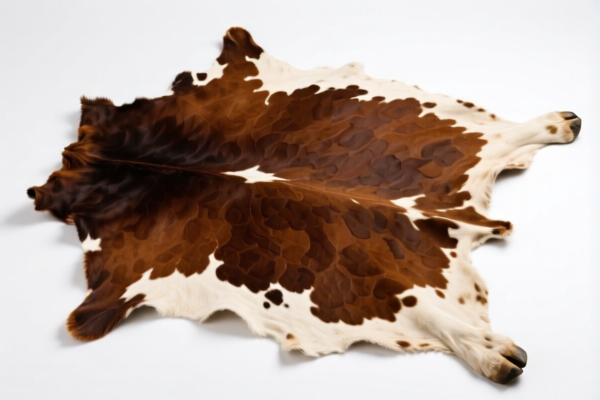
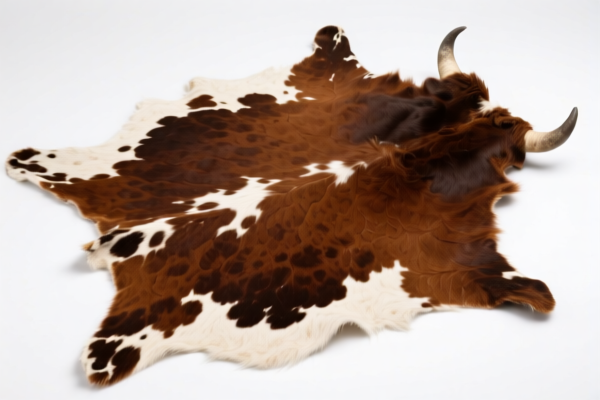
商品图片


AI分析
🐄 Undyed Cowhide Belt (Leather Belting for Industrial Use)
🌐 HS Code Reference & Clearance Guide | 2026 Latest Tariff Analysis | Professional Clearance Strategy
📌 1. Product Definition: What is an "Undyed Cowhide Belt"?
In international trade, "Cowhide Belt" is a broad term that can refer to fashion accessories or industrial components. However, the specific description provided in the data ("Belting leather cut or wholly or partly manufactured into forms or shapes suitable for conversion into belting") points strictly to industrial/mechanical use, not fashion.
Key Distinction: * Fashion Belt: A strap worn around the waist, usually with a buckle. (Not covered in this specific data snippet). * Industrial Belting Leather: Raw or partially processed leather specifically cut or shaped to be manufactured into drive belts, conveyor belts, or transmission belts for machinery and mechanical appliances.
⚠️ Critical Clarification:
If the item is a finished fashion accessory, it belongs elsewhere. The HS codes provided below apply only to leather intended for technical/industrial applications (e.g., factory machinery, automotive engines, conveyor systems).
📦 2. HS Code Classification Details (Based on Provided Data)
The provided data identifies two specific sub-categories under "Other articles of leather or of composition leather". Both fall under Chapter 42.
| HS Code | Product Description | Technical Application | Tax Rate |
|---|---|---|---|
| 4205.00.05.00 | Belting leather: Cut or wholly/partially manufactured into forms suitable for conversion into belting. | Used in machinery or mechanical appliances or other technical uses. This includes leather blanks cut into specific shapes (strips, rounds) to be turned into drive belts. | 27.9% |
| 4205.00.40.00 | Other: Straps and strops. | General-purpose leather straps/strops. While "Belting Leather" (above) is for conversion into belts, this code covers finished straps used for tying, securing, or minor mechanical support, but not necessarily for power transmission. | 26.8% |
🔍 Key Interpretation for "Undyed Cowhide Belt": * If the cowhide is cut into long strips, rounds, or specific profiles specifically for making industrial drive belts, it most likely falls under 4205.00.05.00. * If it is a simple strap for tying or general mechanical securing (not power transmission), it may fall under 4205.00.40.00. * "Undyed" status does not change the HS code but confirms it is a raw material component, not a finished consumer good.
💰 3. 2026 Tariff Rate Breakdown
✅ Applicable Country: United States (US)
✅ Origin: China (CN) (Note: Rates provided in data include surcharges applicable to Chinese origin)
✅ Effective Time: 2025/2026 Tariff Schedule
🎯 1. 4205.00.05.00 – Belting Leather (Industrial Use)
| Item | Content |
|---|---|
| Basic Tariff | 2.9% |
| Section 301 / Additional Tariff | +25.0% |
| Total Tax Rate | 27.9% |
| Calculation Basis | CIF Value × 27.9% |
| De Minimis Exemption | ❌ Not Applicable (Goods of Chinese origin generally do not qualify for de minimis exemptions under current enforcement for tariffable goods). |
| Legal Basis | HTSUS 4205.00.05.00 + Section 301 Enlistment |
📌 Explanation:
The 2.9% is the standard Most Favored Nation (MFN) duty for leather articles. * The 25.0% is the punitive tariff imposed under Section 301 of the Trade Act of 1974 on Chinese goods. * Total: 27.9%*. This is a significant cost factor for industrial leather components.
🎯 2. 4205.00.40.00 – Other Leather Articles (Straps and Strops)
| Item | Content |
|---|---|
| Basic Tariff | 1.8% |
| Section 301 / Additional Tariff | +25.0% |
| Total Tax Rate | 26.8% |
| Calculation Basis | CIF Value × 26.8% |
| De Minimis Exemption | ❌ Not Applicable |
| Legal Basis | HTSUS 4205.00.40.00 + Section 301 Enlistment |
📌 Explanation:
Slightly lower basic duty (1.8%) compared to belting leather. * Still subject to the 25.0% additional duty. * Total: 26.8%*.
🛠️ 4. Clearance Practical Advice (Avoiding Pitfalls)
✅ 1. Preparation Checklist (Mandatory)
| Document | Required? | Purpose |
|---|---|---|
| ✅ Product Specification Sheet | ✔️ | Must explicitly state: "Intended for industrial machinery," "Cut for belting conversion," "Undyed cowhide." |
| ✅ Photos of Product | ✔️ | Show the shape (strip, round, etc.) and lack of dye/finish. |
| ✅ Commercial Invoice | ✔️ | Clear description: "Undyed Cowhide Belting Leather for Machinery, HS 4205.00.05.00." Do not use vague terms like "Fashion Belt." |
| ✅ Packing List | ✔️ | Detail weight and dimensions. |
| ✅ Certificate of Origin | ✔️ | Confirm origin. If non-Chinese (e.g., Vietnam, Italy), the 25% surcharge may not apply! |
✅ 2. Declaration Strategy
🔥 "Define the Use, Define the Code, Avoid the Penalty!"
| Scenario | Correct Declaration | Wrong Declaration | Consequence |
|---|---|---|---|
| Industrial Belting Leather | "Undyed Cowhide Leather, cut into strips for industrial drive belts, HS 4205.00.05.00" | "Leather Belt" or "Fashion Accessory" | Risk of misclassification audit, potential re-classification to higher duty or fine. |
| General Strap | "Leather Straps for mechanical securing, HS 4205.00.40.00" | "Belting" | May be accepted, but 4205.00.05.00 is more precise for "belting" purposes. |
| Fashion Belt | N/A (Not in Data) | "Leather Belt for Waist" | 100% Wrong HS Code. Would fall under 4203.21 or similar, with different duties. |
✅ 3. Critical Warnings
| Risk | Advice |
|---|---|
| Misclassification | Do NOT declare as "Fashion Belt" if it is industrial. If declared as fashion but found to be industrial, penalties apply. If declared as industrial but is fashion, you may pay higher duties unnecessarily. |
| "Undyed" Status | Ensure the product is truly undyed. If it has any coating, dye, or treatment that makes it a finished article, the description must reflect that. |
| Origin Control | The 25% tariff is specific to Chinese origin. If the cowhide is sourced from Brazil, Italy, or Vietnam, you MUST declare the correct country of origin to potentially avoid the 25% surcharge. |
| Component vs. Product | If the "belt" is part of a larger machine, consider if it should be declared as a "part of the machine" (often lower duty) rather than a standalone leather article. Provide assembly diagrams if applicable. |
🌍 5. Global Market Comparison (2026)
| Country/Region | Recommended HS Code | Estimated Duty (China Origin) | Key Requirement | Note |
|---|---|---|---|---|
| 🇺🇸 USA | 4205.00.05.00 |
27.9% (2.9% + 25%) | Precise industrial description | High tariff due to Section 301. |
| 🇨🇳 China | 4205.00.05.00 |
~5-7% (General Trade) | CIQ Inspection | Lower duty than US. |
| 🇪🇺 EU | 4205.00.00 |
4.7% (Standard) | REACH Compliance | No Section 301 equivalent. |
| 🇬🇧 UK | 4205.00.00 |
4.7% | CE/UKCA (if applicable) | Post-Brexit rules apply. |
📌 Conclusion:
The US market is significantly more expensive for this product due to the 25% additional tariff.
Strategy: If possible, source undyed cowhide from non-China origins (e.g., South America, Europe) to bypass the 25% surcharge, reducing total duty to ~2.9% (US) or lower.
📌 6. Common Mistakes & Pitfalls
❌ Mistake 1: Declaring "Undyed Cowhide Belt" as "Fashion Accessory" (HS 4203.21)
👉 Result: If the item is clearly for industrial use (shape/size), customs may reclassify it, leading to penalties and delays.
❌ Mistake 2: Ignoring the "Cut/Manufactured into Forms" Detail
👉 Result: If the leather is raw hides vs. cut strips, the description must be exact. 4205.00.05.00 requires the leather to be "cut or wholly or partly manufactured into forms." Raw hides may fall under 4117 (Raw Hides).
❌ Mistake 3: Assuming "Undyed" Means Duty-Free
👉 Result: No. The tax rate is still 27.9%. Coloration does not affect the 25% tariff.
✅ Correct Practice:
"Undyed Cowhide Leather, cut into 2-inch strips for conversion into industrial transmission belts, HS 4205.00.05.00"
🎯 7. Final Recommendation for Clearing
- Confirm End-Use: Obtain a letter from the end-user stating the leather is for industrial machinery belting, not fashion.
- Check Origin: If the cowhide is not from China, update the Country of Origin on the invoice to avoid the 25% surcharge.
- Apply for Advance Ruling: For large volumes, apply for a US Customs Advance Ruling to lock in the HS Code
4205.00.05.00and ensure compliance. - Cost Calculation: Budget for 27.9% of the CIF value in duties if sourcing from China.
📣 Action Item:
📞 Contact your freight forwarder with the Product Specification and Country of Origin documentation immediately.
🚀 Accurate classification saves money and prevents customs holds!
✨ Professional Clearance, Start with Precise HS Codes!
💼 Every percent of duty counts—optimize your supply chain today!
用户评价
关于 HS 编码归类
协调制度(HS)是由世界海关组织(WCO)制定的国际贸易商品分类标准。全球 200 多个国家采用 HS 系统作为海关关税、贸易统计和进出口监管的基础。
每个 HS 编码遵循以下层级结构:
- 章(2 位)——商品大类(例如:第 84 章:机器和机械设备)
- 品目(4 位)——章内的更具体分类
- 子目(6 位)——国际通用细分,所有 WCO 成员国统一使用
- 本国细分(8-10 位)——各国自行扩展的细分编码,如美国 HTSUS 10 位编码
正确的 HS 编码归类对于顺利通关、准确缴纳关税和遵守贸易法规至关重要。错误归类可能导致海关延误、多缴关税或罚款。
从CN进口到US时,适用的关税税率可能包括:
- 最惠国(MFN)税率——适用于 WTO 成员国的标准关税税率
- 普通税率——适用于无贸易协定国家
- 贸易救济关税——附加关税,如 301 条款(反倾销)、232 条款(国家安全)或反补贴税
本页内容仅供参考。如需正式归类,请咨询当地海关或持牌报关代理。