Undyed Fox Skins for Gloves
CN → US商品图片
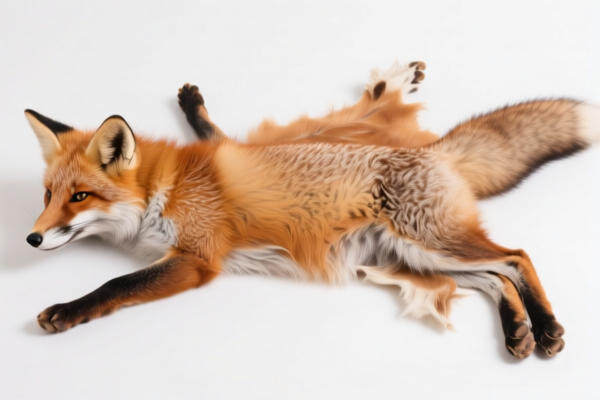
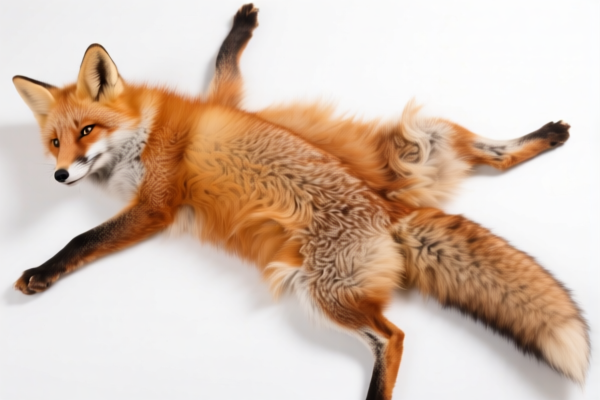
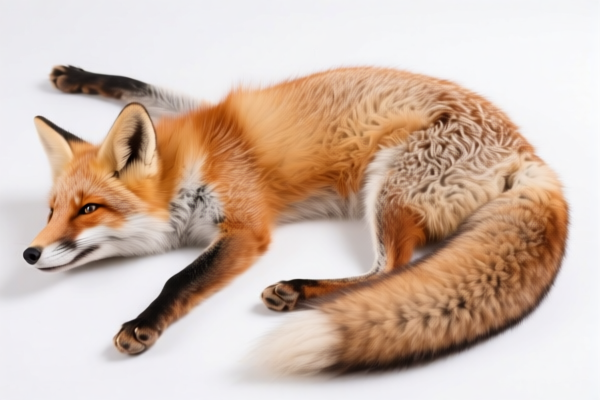
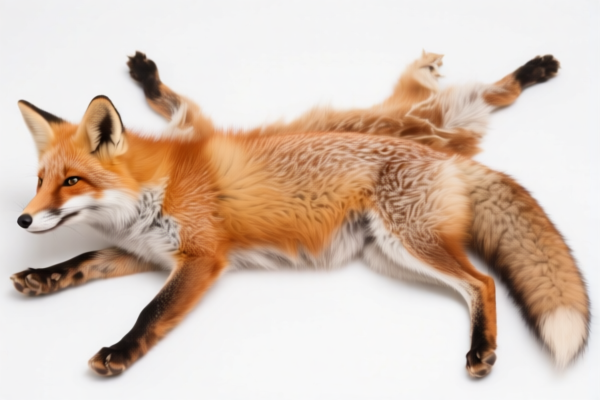
AI分析
🦊 Undyed Fox Skins for Gloves
🌐 HS Code Reference & Customs Clearance Guide | 2026 Latest Tariff Analysis | Professional Tier Clearance Strategy
📌 I. Product Definition & Classification: Do You Really Understand "Undyed Fox Skins"?
Undyed Fox Skins, primarily sourced from the red fox (Vulpes vulpes) and arctic fox, are raw hides or pelts used exclusively as raw materials for the production of luxury gloves, coats, and fashion accessories. In international trade, they are distinct from "fur制品" (finished fur garments) or "dyed/tanned leathers." The key regulatory distinction lies in their preparation state:
- Fresh/Preserved Skins (Raw/Hairy): Skins that are salted, frozen, or air-dried but not tanned, dyed, or dyed-and-tanned. They retain the natural hair/wool.
- Tanned/Preserved Skins: Skins that have undergone chemical tanning processes to preserve them but remain undyed (natural color or whitened via mechanical/chemical bleaching not classified as dyeing).
⚠️ Critical Distinction:
- If the skins are not tanned (just salted/fresh) → They are raw animal products.
- If the skins are tanned but undyed → They are classified as prepared furskins.
- Gloves are the end use, but the imported item is the skin. Do not classify as "Gloves" (HS 6116) unless they are already sewn into gloves.
📦 II. HS Code Classification Details (2026 Latest Tariff Authority Comparison)
| HS Code | Product Description | Application Scenario | State of Preparation |
|---|---|---|---|
4302.10.00.00 |
Whole skins and pieces thereof, undressed (raw, salted, fresh) | Raw fox pelts, salted fox skins, fresh pelts | ❌ Not Tanned |
4302.20.00.00 |
Whole skins and pieces thereof, tanned or crusted (undyed) | Tanned fox pelts, natural color, whitened fox skins | ✅ Tanned, ❌ Undyed |
4302.30.00.00 |
Whole skins and pieces thereof, dressed (dyed) | Dyed fox skins, colored fur | ✅ Dyed |
4302.40.00.00 |
Garments and clothing accessories, of whole skins | Fox fur coats, vests, hats | ✅ Finished Goods |
6116.93.00.00 |
Gloves, mittens, and mitts, fitted, of leather or composition leather | Gloves made from fox skin | ✅ Finished Gloves |
9803.00.00.00 |
Other articles of non-textile materials (rare, specific cases) | Scrap fur, waste | ❌ Waste |
🔍 Key Reminder:
- Undyed Fox Skins for Gloves are NOT gloves. They are raw materials.
- If the skins are tanned (preserved but natural color), use 4302.20.00.00.
- If the skins are raw/salted (not tanned), use 4302.10.00.00.
- Do NOT classify as6116(Gloves) unless the product is already sewn. Misclassification leads to severe penalties.
💰 III. 2026 Latest Tariff Rate Breakdown (Including Surtaxes & Policy Add-ons)
✅ Applicable Country: United States (US)
✅ Origin: China (CN)
✅ Effective Date: November 10, 2025 (including subsequent imports)
🎯 1. 4302.20.00.00 —— Tanned or Crusted Undyed Fox Skins
| Item | Content |
|---|---|
| Base Rate | 0% (ad valorem) |
| USITC Surtax | +25% (from USITC Footnote 9903.88.01 for Section 301 items) |
| IEEPA Surtax | +10% (Targeting China/HK products, effective from Nov 10, 2025) |
| Total Rate | 35% |
| Tax Calculation | CIF Value × 35% |
| De Minimis Eligibility | ❌ Not Eligible (deny_de_minimis) |
| Legal Basis Path | IEEPA:9903.01.25 → IEEPA:9903.01.24 → USITC:4302.20.00.00 → FOOTNOTE:9903.88.01 |
📌 Explanation:
- "USITC Surtax 25%" is part of the Section 301 tariffs on Chinese goods.
- "IEEPA 10%" is the new emergency surcharge under the International Emergency Economic Powers Act.
- Total 35% is a high cost for raw materials. Pre-calculation is essential.
🎯 2. 4302.10.00.00 —— Undressed (Raw) Fox Skins
| Item | Content |
|---|---|
| Base Rate | 0% |
| USITC Surtax | +25% |
| IEEPA Surtax | +10% |
| Total Rate | 35% |
| Tax Calculation | CIF Value × 35% |
| De Minimis Eligibility | ❌ Not Eligible |
| Legal Basis Path | IEEPA:9901.25 → IEEPA:9903.01.24 → USITC:4302.10.00.00 → FOOTNOTE:9903.88.01 |
📌 Note:
- Raw skins and tanned undyed skins share the same surtax structure in this context.
- Even if the skins are "whitened" (mechanically or mildly chemically) but not dyed, they fall under 4302.20.00.00.
🛠️ IV. Customs Clearance Practical Advice (Combat Pitfall Guide)
✅ 1. Documentation Checklist (None Can Be Missing)
| Document | Required | Explanation |
|---|---|---|
| ✅ Species Identification | ✔️ | Must specify Vulpes vulpes (Red Fox) or Vulpes lagopus (Arctic Fox). Varies by CITES status. |
| ✅ CITES Permit | ✔️ | Crucial! Foxes are CITES Appendix II. Import requires valid CITES Export/Import permits. |
| ✅ Preparation Certificate | ✔️ | State clearly: "Tanned but Undyed" or "Raw/Salted." Provide chemical processing details. |
| ✅ Commercial Invoice | ✔️ | Must describe: "Fox Skins, Undyed, Tanned, for Glove Manufacturing." Do NOT write "Gloves." |
| ✅ Packing List | ✔️ | Detail number of skins, average weight, dimensions. |
| ✅ Biosecurity Declaration | ✔️ | Confirm no pests, diseases, or animal waste. |
| ✅ CITES Appendix II List | ✔️ | Provide the CITES list for the specific fox species. |
✅ 2. Declaration Tips (Key Mantra)
🔥 "Raw vs. Tanned, CITES First, Name Precise, Taxes Avoided!"
| Scenario | Correct Declaration | Incorrect Practice |
|---|---|---|
| Tanned, undyed fox skins | 4302.20.00.00 + CITES Permit |
Declare as "Leather" → 0% but CITES violation! |
| Raw, salted fox skins | 4302.10.00.00 + CITES Permit |
Declare as "Finished Fur" → 0% but CITES violation! |
| Fox skin gloves | 6116.93.00.00 + CITES Permit |
Declare as "Raw Skins" → Wrong HS Code |
| Dyed fox skins | 4302.30.00.00 + CITES Permit |
Declare as "Undyed" → Penalty for misdescription |
✅ 3. Special Cases Handling
| Scenario | Handling Advice |
|---|---|
| OEM Custom Skins | Provide customer design specs. Ensure CITES matches the source country. |
| Mixed Species Shipments | Clearly list each species and its corresponding CITES code. Do not bundle. |
| Whitened Skins | If whitened via bleaching, declare as "Tanned and Dyed/Whitened" if chemical dyes are used. If only mechanical, "Tanned Undyed." |
| Scrap/Off-cuts | If small pieces <10 sq. dm, still subject to CITES but may have simplified declaration. |
🌍 V. Global Major Markets Customs Comparison (2026 Latest)
| Country/Region | Recommended HS Code | Tariff | Certification Requirement | Notes |
|---|---|---|---|---|
| 🇺🇸 USA | 4302.20.00.00 |
35% (CN Origin) | CITES + USFWS | High surtax. CITES is mandatory. |
| 🇨🇳 China | 4302.20.00.00 |
5% | CITES | No surtax. CITES mandatory. |
| 🇪🇺 EU | 4302.20.00.00 |
5% | CITES + EU Wildlife Trade Regulations | Strict CITES enforcement. |
| 🇬🇧 UK | 4302.20.00.00 |
5% | CITES + UK Wildlife Trade | Post-Brexit CITES rules apply. |
| 🇯🇵 Japan | 4302.20.00.00 |
8% | CITES | No surtax. |
📌 Conclusion:
- CITES Compliance is the #1 Hurdle for fox skins globally.
- USA has the highest tariff burden (35%) due to Section 301 and IEEPA.
- EU/China/Japan have lower tariffs but strict CITES documentation.
- Always declare the species accurately. Generic "Fox Skin" declarations are rejected.
📌 VI. Common Errors & Pitfall Guide (Blood Lessons)
❌ Error 1: Declaring "Undyed Fox Skins" as "Leather" or "Fur Garments"
👉 Consequence: CITES Violation → Seizure, Fine, Criminal Charges.
👉 Tariff Error: Wrong HS Code → Penalty + Back Taxes.
❌ Error 2: Omitting CITES Permits
👉 Consequence: Shipment Rejected/Returned at US Port. Delays up to 6 months.
❌ Error 3: Mixing Raw and Tanned Skins in One Shipment Without Distinction
👉 Consequence: Customs inspection required → High Demurrage Costs.
❌ Error 4: Using "Fox Skins for Gloves" as the Product Name Without HS Code Detail
👉 Consequence: Customs may classify as "Finished Gloves" (if ambiguous) or reject for lack of detail.
✅ Correct Practice:
"Fox Skins, Tanned, Undyed, Species: Vulpes vulpes, CITES Appendix II, for Glove Manufacturing, Model: RAW-FX-001"
🎯 VII. Conclusion: Professional Declaration, Save Time, Reduce Costs!
🎯 Remember the Mantra:
🔹 "CITES First, Species Precise, Tanned vs. Raw Clear, Tariffs Accurate!"
🔹 "Fox Skins are Not Gloves, Raw Skins Need CITES, Tariffs are 35%, Don't Risk It!"
📌 Pro Tip:
- If your fox skins are originating from countries with preferential trade agreements (e.g., Canada, Russia for China), check if CITES permits are still required (Yes, always).
- For USA imports, consider Advance Rulings from CBP to confirm HS Code if you are unsure about the "Tanned vs. Dyed" status.
- Work with a licensed CITES broker to ensure permit validity.
📣 Immediate Action:
📞 Contact CITES Licensed Broker + Provide Species Details + Apply for CITES Permits
🚀 Ensure your Fox Skins pass customs smoothly, legally, and efficiently.
✨ Professional Clearance, Starting with Accurate Classification!
💼 Your Cost Savings Depend on Precision!
用户评价
关于 HS 编码归类
协调制度(HS)是由世界海关组织(WCO)制定的国际贸易商品分类标准。全球 200 多个国家采用 HS 系统作为海关关税、贸易统计和进出口监管的基础。
每个 HS 编码遵循以下层级结构:
- 章(2 位)——商品大类(例如:第 84 章:机器和机械设备)
- 品目(4 位)——章内的更具体分类
- 子目(6 位)——国际通用细分,所有 WCO 成员国统一使用
- 本国细分(8-10 位)——各国自行扩展的细分编码,如美国 HTSUS 10 位编码
正确的 HS 编码归类对于顺利通关、准确缴纳关税和遵守贸易法规至关重要。错误归类可能导致海关延误、多缴关税或罚款。
从CN进口到US时,适用的关税税率可能包括:
- 最惠国(MFN)税率——适用于 WTO 成员国的标准关税税率
- 普通税率——适用于无贸易协定国家
- 贸易救济关税——附加关税,如 301 条款(反倾销)、232 条款(国家安全)或反补贴税
本页内容仅供参考。如需正式归类,请咨询当地海关或持牌报关代理。