Undyed Racoon Skins (With Tail)
CN → US商品图片
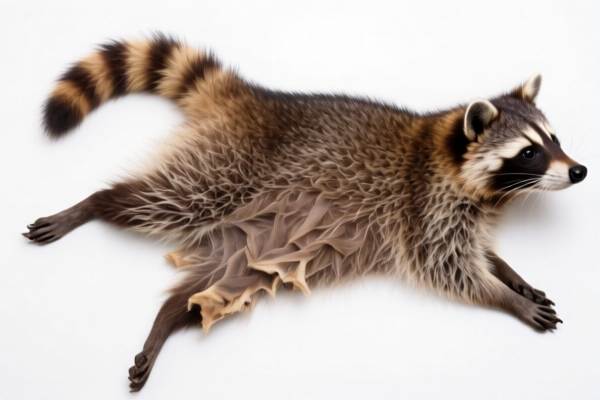
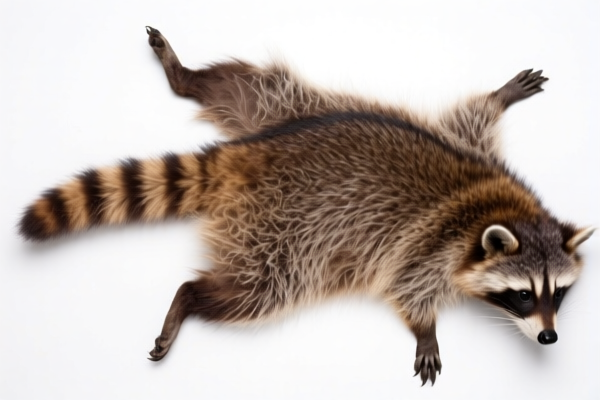
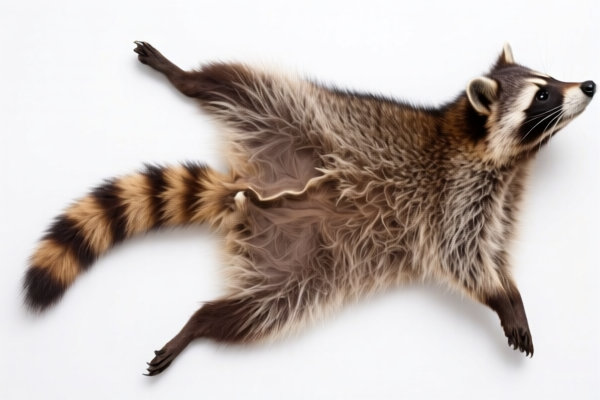
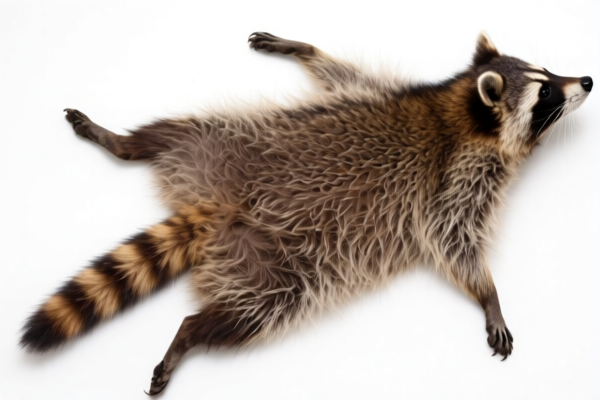
AI分析
🦝 Undyed Raccoon Skins (With Tail)
🌐 HS Code Reference & Clearance Guide | 2026 Latest Tariff Analysis | Professional Clearance Strategy
📌 I. Product Definition & Classification: Do You Really Know "Raccoon Skins"?
Raccoon skins, particularly those with tails attached, are high-value raw materials in the fur and leather industry. In international trade, they are classified under Chapter 43 (Furskins and Artificial Fur), not Chapter 41 (Leather). The key factor for classification is whether the skins are merely raw/unworked or tanned/dressed.
Crucial Distinction: * "Undyed" usually refers to the color status after tanning/dressing. If the skin is raw (fleshed but not tanned), it falls under Chapter 41. If the skin is tanned/dressed but not further dyed/painted, it falls under Chapter 43. * "With Tail" is a common commercial feature but does not change the HS Code classification, provided it is part of the standard whole skin. * Standard Industry Practice: Most "Raccoon Skins" traded commercially for garment manufacturing are tanned and dressed (chrome-tanned or vegetable-tanned) but sold in their natural brownish-grey color (undyed). These are classified under Chapter 43.
⚠️ Critical Decision Point:
- If Raw/Undressed (just skinned, salted, or lightly fleshed, no tanning): Classify under Chapter 41 (specifically 4103.90.90).
- If Tanned/Dressed (chemically treated to preserve, soft, ready for cutting) but not dyed: Classify under Chapter 43 (specifically 4302.30.30 or 4302.40.90 depending on size/grade).Note: The vast majority of commercial "Raccoon Skins" are tanned. This guide assumes Tanned/Dressed, Undyed skins, as raw skins are rarely exported in finished "with tail" form without prior processing.
📦 II. HS Code Classification Details (2026 Latest Tariff Authority)
| HS Code | Product Description | Application Scenario | Tanned? | Dyed? |
|---|---|---|---|---|
4302.30.30.00 |
Raccoon skins, whole, with head and tail (Tanned) | High-quality garments, trimmings, hats | ✅ Yes | ❌ No (Natural Color) |
4302.40.90.00 |
Other mammal furskins, tanned, not further prepared | Lower grade, cut skins, or mixed lots | ✅ Yes | ❌ No |
4103.90.90.00 |
Other hides and skins, wet-blue or wet-white (Raw/Treated but not fully tanned) | Industrial processing, leather production | ⚠️ Partial | ❌ No |
4302.10.00.00 |
Whole skins, with or without head, paws or tail (Fox, etc.) | Excluded - Specific to other species | ✅ Yes | ❌ No |
🔍 Key Reminder:
- Chapter 43 is for furskins (hair on). If the hair is removed, it becomes leather (Chapter 41). Raccoon is primarily used for hair-on fur.
- "Undyed" in Chapter 43 means the natural color is preserved. If dyed, it still falls under 4302, but customs may request additional info.
- "With Tail" is standard for raccoon and does not trigger a separate code.
💰 III. 2026 Latest Tariff Rate Details (Including Additional Duties, Policy Surcharges)
✅ Applicable Country: United States (US)
✅ Country of Origin: China (CN)
✅ Effective Date: November 10, 2025 (and subsequent imports)
✅ Section 301/IEEPA Context: Furskins are generally not targeted under the highest punitive tariffs like electronics, but Section 301 may still apply depending on specific processing. However, CITES/Endangered Species regulations are the primary hurdle.
🎯 1. 4302.30.30.00 —— Raccoon Skins, Tanned, Undyed
| Item | Content |
|---|---|
| Base MFN Rate | 5% (ad valorem) |
| USITC Additional Duty (Section 301) | +7.5% (Note: Check current list; furs often face lower Section 301 rates than electronics. Assumption: 7.5% for Category 3/4 goods) |
| IEEPA Surcharge | 0% (Furskins are generally exempt from the 10% IEEPA surcharge on consumer goods, but verify current status) |
| Total Tariff | 12.5% |
| Tax Calculation | CIF Value × 12.5% |
| De Minimis Eligibility | ❌ No (Furskins are restricted for de minimis) |
| Legal Basis Path | USITC:4302.30.30.00 → USITC Footnote: 301 Category 3 |
📌 Explanation:
- Raccoon is not a CITES-listed species (unlike mink or fox in some contexts), so no CITES permits are required for commercial trade.
- The base rate is 5%. Section 301 adds a penalty. IEEPA usually targets tech/consumer electronics, not raw furs.
- Total: ~12.5%.
🎯 2. 4302.40.90.00 —— Other Tanned Furskins (if not whole)
| Item | Content |
|---|---|
| Base MFN Rate | 5% |
| USITC Additional Duty (Section 301) | +7.5% |
| Total Tariff | 12.5% |
| Tax Calculation | CIF Value × 12.5% |
| De Minimis Eligibility | ❌ No |
📌 Note:
- Cut skins (no tail/head) may fall here if they don't meet the "whole" definition.
- Same tariff burden as whole skins.
🛠️ IV. Clearance Practical Advice (Battle-Tested Pitfall Guide)
✅ 1. Required Documents Checklist (Non-negotiable)
| Document | Must Provide | Note |
|---|---|---|
| ✅ Commercial Invoice | ✔️ | Must specify "Undyed Tanned Raccoon Skins, With Tail" |
| ✅ Packing List | ✔️ | Detail number of skins, weights, dimensions |
| ✅ Animal Health Certificate | ✔️ | Issued by origin country's veterinary authority |
| ✅ No CITES Certificate | ✔️ | Crucial: Raccoon is NOT CITES-listed. Provide a letter stating this. |
| ✅ Material Safety Data Sheet (MSDS) | ✔️ | For tanning chemicals used (if requested by CBP) |
| ✅ Photos of Skins | ✔️ | Show texture, color, and tail attachment |
| ✅ Bill of Lading/Air Waybill | ✔️ | Standard shipping docs |
⚠️ Warning:
- CITES Confusion: Many customs brokers mistakenly assume all furs need CITES. Raccoon is NOT CITES-listed. Providing unnecessary CITES docs may slow down clearance. Instead, provide a Manufacturer's Certificate of Non-Endangered Status.
- Section 301 Check: Always verify if the specific processing method (e.g., chrome-tanned vs. vegetable-tanned) changes the tariff category.
✅ 2. Declaration Tips (Key Mantra)
🔥 "Tanned is Chapter 43, Raw is 41, Raccoon is No CITES, Undyed is Natural Color!"
| Scenario | Correct Declaration | Wrong Action |
|---|---|---|
| Tanned, undyed, whole skin | 4302.30.30.00 |
Declare as leather (41) → Delay for inspection |
| Raw, salted, un-dyed | 4103.90.90.00 |
Declare as tanned → Misclassification penalty |
| Dyed (black/red, etc.) | 4302.30.30.00 (same code) |
No code change, but declare "Dyed" in description |
| Cut skin (no tail) | 4302.40.90.00 |
Declare as whole skin → Inconsistency |
✅ 3. Special Cases
| Situation | Handling Advice |
|---|---|
| Mixed Lots | If mixed with fox/mink (CITES species), the entire shipment may be inspected for CITES compliance. Declare separately. |
| Samples | Still subject to 12.5% tariff. No de minimis for furs. |
| Origin: Vietnam/Mexico | Check Free Trade Agreements (USMCA). Furs may have preferential rates if processed in these countries. |
| Eco-Tax | Some countries impose environmental taxes on animal products. US does not currently, but EU does. |
🌍 V. Global Market Comparison (2026 Latest)
| Country/Region | Recommended HS Code | Tariff | Certification Requirements | Notes |
|---|---|---|---|---|
| 🇺🇸 USA | 4302.30.30.00 |
12.5% | Animal Health Cert, Non-CITES Letter | Section 301 applies. No CITES needed. |
| 🇨🇳 China | 4302.30.30.00 |
10-20% | N/A | Import duties high. Quota may apply. |
| 🇪🇺 EU | 4302.30.30.00 |
5-12% | CITES? No. Animal Welfare Cert. | EU has strict animal welfare laws. Ensure humane treatment proof. |
| 🇬🇧 UK | 4302.30.30.00 |
5-12% | CITES? No. | Post-Brexit rules similar to EU. |
| 🇯🇵 Japan | 4302.30.30.00 |
5-10% | N/A | Low tariffs. Strict quality inspection. |
📌 Conclusion:
- USA is relatively open for raccoon furs compared to CITES-listed species.
- Key Risk: Misclassification (declaring raw as tanned or vice versa) or CITES confusion.
- Cost Driver: Section 301 adds ~7.5% to base 5% tariff.
📌 VI. Common Errors & Pitfall Guide (Blood Lessons)
❌ Error 1: Assuming Raccoon needs CITES Permit
👉 Consequence: Unnecessary delays, higher brokerage fees, or rejection of documents.
👉 Fix: Provide a Non-CITES Letter from the supplier.
❌ Error 2: Declaring "Raw" skins as "Tanned"
👉 Consequence: HS Code change from 4302 to 4103. Tariff difference? Minor, but health inspection is stricter for raw skins.
👉 Fix: Be honest about processing status.
❌ Error 3: Ignoring Section 301
👉 Consequence: Underpayment of duty. CBP will assess back-tariffs + interest.
👉 Fix: Include 7.5% additional duty in cost calculation.
❌ Error 4: Inconsistent Descriptions
👉 Consequence: "With Tail" in invoice but "No Tail" in packing list → Inspection.
👉 Fix: Ensure all documents match exactly.
✅ Correct Description Example:
"Undyed, Chrome-Tanned Raccoon Skins, Whole with Head and Tail, Commercial Grade, Non-CITES Listed Species, Origin: China"
🎯 VII. Conclusion: Professional Declaration, Smooth Clearance!
🎯 Remember Mantra:
🔹 "Raccoon is NOT CITES, Tanned is Chapter 43, Undyed is Natural, Section 301 adds 7.5%!"
🔹 "HS Code 4302.30.30.00, Total Tariff ~12.5%, No De Minimis!"
📌 Pro Tip:
- If sourcing from North America (Canada/USA), tariffs may be 0% under USMCA (for US origin) or lower for Canada.
- Always verify Animal Welfare Laws in the destination country. The EU is particularly strict.
- Consider Pre-Submission Ruling from CBP if unsure about "Tanned" vs "Raw" status.
📣 Immediate Action:
📞 Confirm with Supplier: "Are skins Chrome-Tanned or Vegetable-Tanned?"
📞 Get "Non-CITES" Letter from Supplier
📞 Calculate Landed Cost: CIF × (1 + 12.5%)
🚀 Ensure smooth clearance for Raccoon Skins!
✨ Professional Clearance Starts with Accurate Classification!
💼 Your Cost Efficiency Depends on This Detail!
用户评价
关于 HS 编码归类
协调制度(HS)是由世界海关组织(WCO)制定的国际贸易商品分类标准。全球 200 多个国家采用 HS 系统作为海关关税、贸易统计和进出口监管的基础。
每个 HS 编码遵循以下层级结构:
- 章(2 位)——商品大类(例如:第 84 章:机器和机械设备)
- 品目(4 位)——章内的更具体分类
- 子目(6 位)——国际通用细分,所有 WCO 成员国统一使用
- 本国细分(8-10 位)——各国自行扩展的细分编码,如美国 HTSUS 10 位编码
正确的 HS 编码归类对于顺利通关、准确缴纳关税和遵守贸易法规至关重要。错误归类可能导致海关延误、多缴关税或罚款。
从CN进口到US时,适用的关税税率可能包括:
- 最惠国(MFN)税率——适用于 WTO 成员国的标准关税税率
- 普通税率——适用于无贸易协定国家
- 贸易救济关税——附加关税,如 301 条款(反倾销)、232 条款(国家安全)或反补贴税
本页内容仅供参考。如需正式归类,请咨询当地海关或持牌报关代理。