Unfaced Wood
CN → US| HS编码 | 关税税率 | 原产国 | 目的国 | 文档 |
|---|---|---|---|---|
| 4410190010 | 35.0% | CN | US | 官方文档 |
| 4410120010 | 35.0% | CN | US | 官方文档 |
商品图片
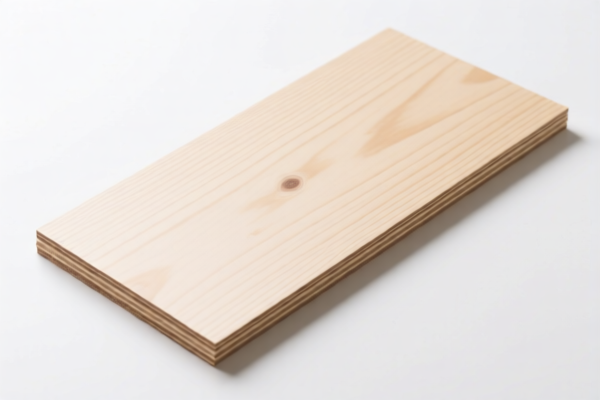
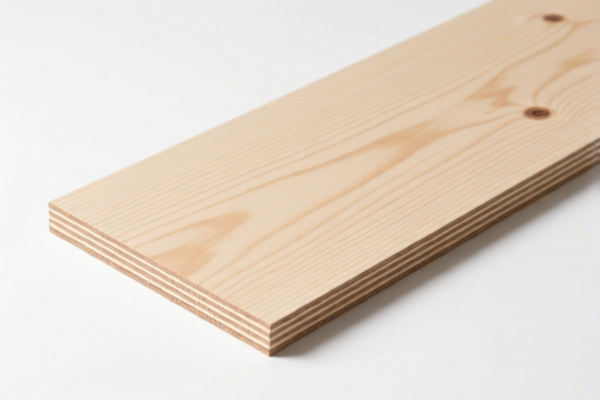
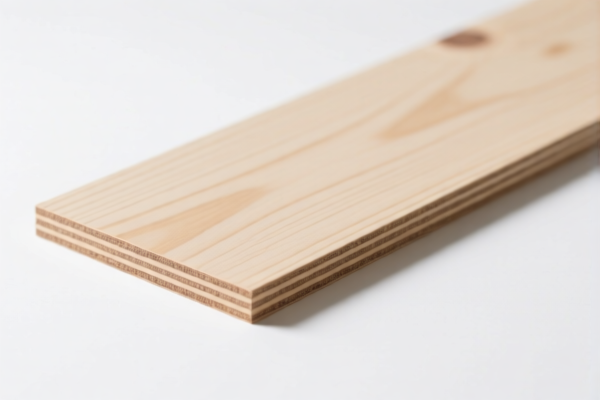
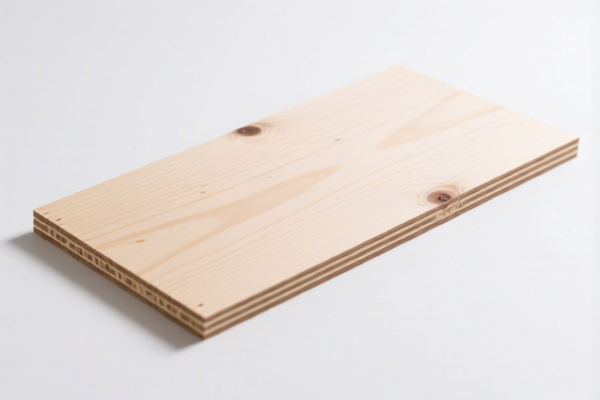
AI分析
🪵 Unfaced Wood Boards (Particle Board & OSB)
🌐 HS Code Reference & Customs Clearance Guide | 2026 Latest Tariff Analysis | Professional Clearance Strategy
📌 I. Product Definition & Classification: Do You Truly Understand "Unfaced Wood Boards"?
"Unfaced Wood Boards" in international trade primarily refer to Particle Board (PB) and Oriented Strand Board (OSB), along with similar agglomerated wood materials (like waferboard). These are engineered wood products made from wood chips, strands, or particles bonded with resins or other organic binding substances.
The critical distinction in classification lies in the form and processing state: 1. Oriented Strand Board (OSB): Distinct layered structure, high strength, typically used for structural applications. 2. Particle Board (Other): Made of fine wood particles, often used for furniture or interior fitments.
⚠️ Key Classification Point:
- "Unfaced" or "Unworked/Sanded": The boards have not been covered with veneer, plastic, metal, or other facing materials. They may have been sanded but are not further worked (e.g., not edge-banded, not laminated).
- Material Basis: Must be of wood or other ligneous materials.
📦 II. HS Code Classification Details (2026 Latest Tariff Authority Comparison)
Based on the provided DATA, the classification is strictly divided into two main categories depending on the specific type of board.
| HS Code | Product Description | Application Scenario | Surface Treatment |
|---|---|---|---|
4410.12.00.10 |
Oriented Strand Board (OSB) Unworked or not further worked than sanded |
Structural sheathing, roofing, flooring substrates | ❌ No facing (Only sanded) |
4410.19.00.10 |
Other Particle Board / Similar Boards (e.g., Waferboard) of wood Unworked or not further worked than sanded |
Furniture cores, cabinet bodies, interior partitions | ❌ No facing (Only sanded) |
🔍 Important Reminder:
- If the board has a veneer, melamine face, or laminate, it would fall under different subheadings (e.g., 4410.11 or 4410.19 with further indication).
- The term "Unfaced" in the user input aligns with "Unworked or not further worked than sanded".
- Do not confuse OSB (4410.12) with generic Particle Board (4410.19). The structure determines the code.
💰 III. 2026 Latest Tariff Rate Details (Including Surcharges & Policy Add-ons)
✅ Applicable Country: United States (US)
✅ Origin: China (CN) (Note: Based on the provided tax detail "Additional Tariff: 25.0%", implying US-China trade context)
✅ Effective Time: Current trade policies (Subject to change)
🎯 1. 4410.12.00.10 —— Oriented Strand Board (OSB)
| Item | Content |
|---|---|
| Base Tariff Rate | 0.0% (ad valorem) |
| Section 301 Additional Tariff | +25.0% |
| Total Tax Rate | 25.0% |
| Tax Calculation | CIF Value × 25.0% |
| De Minimis Eligibility | ❌ No (Usually subject to higher scrutiny) |
| Legal Basis | HTSUS 4410.12.00.10 + USITC Footnote for Section 301 |
📌 Explanation:
- OSB is heavily used in US construction. The 25% additional tariff is part of the Section 301 trade remedies against China.
- Even though the base duty is 0%, the effective entry rate is 25%.
🎯 2. 4410.19.00.10 —— Other Particle Board / Similar Boards
| Item | Content |
|---|---|
| Base Tariff Rate | 0.0% (ad valorem) |
| Section 301 Additional Tariff | +25.0% |
| Total Tax Rate | 25.0% |
| Tax Calculation | CIF Value × 25.0% |
| De Minimis Eligibility | ❌ No |
| Legal Basis | HTSUS 4410.19.00.10 + USITC Footnote for Section 301 |
📌 Note:
- Generic particle boards and waferboards are treated similarly to OSB in terms of tariffs.
- The 25% surcharge applies to all wood-based panels of Chinese origin in this category.
🛠️ IV. Customs Clearance Practical Advice (Battle-Tested Pitfall Avoidance)
✅ 1. Required Documentation Checklist (Non-negotiable)
| Document | Must Provide | Explanation |
|---|---|---|
| ✅ Commercial Invoice | ✔️ | Must clearly state "Particle Board" or "OSB", not just "Wood". |
| ✅ Packing List | ✔️ | Detailed breakdown of quantities per carton/bundle. |
| ✅ Product Specification Sheet | ✔️ | Crucial: Must specify density, formaldehyde emission class (E0/E1), and dimensions. |
| ✅ Material Composition Proof | ✔️ | Confirm no hazardous adhesives if required by specific states; confirm wood origin. |
| ✅ Bill of Lading (B/L) | ✔️ | Clean B/L. |
| ✅ ISF Filing (10+2) | ✔️ | Must file 10 days before loading. Incorrect HS leads to penalties. |
✅ 2. Declaration Tips (Key Mantra)
🔥 “Specify Material, State Form, Avoid Generic Terms!”
| Scenario | Correct Declaration | Incorrect Practice |
|---|---|---|
| OSB Panels | Oriented Strand Board (OSB), Unfaced, Sanded |
"Wood Panels" or "Construction Materials" |
| Particle Board | Particle Board of Wood, Unfaced, Sanded |
"Furniture Parts" or "Chipboard" (Ambiguous) |
| Faced Boards | Must declare facing material | Declaring as "Unfaced" when laminated |
| Mixed Containers | Separate HS Codes for PB and OSB | Mixing under one generic code to simplify |
✅ 3. Special Case Handling
| Situation | Handling Advice |
|---|---|
| Formaldehyde Emissions | US Customs may request CARB Phase 2 or TSCA Title VI compliance proof. Ensure your supplier provides certificates. |
| Wood Pest Control | Ensure ISPM 15 compliance for pallets. Wood itself may require fumigation or heat treatment certificates. |
| Value Verification | US Customs closely audits wood panel values. Keep purchase contracts and payment records ready for audit. |
| Re-export/Transshipment | If goods pass through a third country, ensure the Certificate of Origin proves Chinese origin to trigger the 25% tariff correctly. |
🌍 V. Global Market Customs Comparison (2026 Latest)
| Country/Region | Recommended HS Code | Tariff (China Origin) | Certification Requirements | Notes |
|---|---|---|---|---|
| 🇺🇸 USA | 4410.12.00.10 / 4410.19.00.10 |
25.0% | TSCA Title VI / CARB Phase 2 | High scrutiny on value and origin. |
| 🇨🇳 China | 4410.12.00.10 / 4410.19.00.10 |
~5-10% (Import) | CCC (if applicable) | Main export market for these products. |
| 🇪🇺 EU | 4410.12 / 4410.19 |
0% (General) | CE Marking (Formaldehyde) | Strict E1/E0 emission standards. |
| 🇨🇦 Canada | 4410.12 / 4410.19 |
0% (With CUSMA) | SPS (Biosecurity) | Verify preferential tariff eligibility. |
📌 Conclusion:
- USA is the key market where the 25% additional tariff significantly impacts cost.
- EU and other markets focus more on environmental standards (Formaldehyde) than high tariffs.
📌 VI. Common Errors & Pitfall Guide (Blood & Tears Lessons)
❌ Error 1: Declaring OSB as "Other Wood Boards" under a generic code
👉 Consequence: Classification error → Potential duty underpayment → Penalties + Back Taxes.
❌ Error 2: Missing the "Unfaced/Sanded" distinction
👉 Consequence: If the board is actually laminated, it may fall under a different HS with different duty rates (often higher or lower, but requires correct declaration). Misdeclaration leads to ** seizures**.
❌ Error 3: Ignoring Formaldehyde Certification (TSCA/CARB)
👉 Consequence: US CBP may reject entry or refer to EPA for non-compliance → Deportation or Destruction.
❌ Error 4: Incorrect Origin Declaration
👉 Consequence: If origin is not China, the 25% tariff shouldn't apply. But if it is China and you declare otherwise → Fraud Charges.
✅ Correct Practice:
"OSB Panels, 3/4 inch, Unfaced, Sanded, CARB Phase 2 Compliant, Model XYZ, Made in China"
🎯 VII. Conclusion: Precise Classification, Cost Efficiency!
🎯 Remember the Mantra:
🔹 "OSB is 4410.12, PB is 4410.19."
🔹 "Unfaced means Sanded Only. Facing changes everything."
🔹 "25% Tax for China Origin in the USA. Don't ignore it!"
📌 Pro Tip:
If your wood panels are re-manufactured in Vietnam or Mexico, check if they qualify for USMCA (Canada/Mexico) or Generalized System of Preferences (GSP) benefits to mitigate tariffs. However, for Chinese-origin wood panels, the 25% tariff is currently unavoidable.
📣 Immediate Action:
📞 Verify CARB/TSCA Compliance with Supplier
📄 Prepare Detailed Spec Sheets for CBP Audit
🚀 Clear Customs Smoothly, Avoid Delays, Protect Margins!
✨ Professional Customs Clearance Starts with Accurate Classification!
💼 Your Cost, Precisely Calculated!
用户评价
关于 HS 编码归类
协调制度(HS)是由世界海关组织(WCO)制定的国际贸易商品分类标准。全球 200 多个国家采用 HS 系统作为海关关税、贸易统计和进出口监管的基础。
每个 HS 编码遵循以下层级结构:
- 章(2 位)——商品大类(例如:第 84 章:机器和机械设备)
- 品目(4 位)——章内的更具体分类
- 子目(6 位)——国际通用细分,所有 WCO 成员国统一使用
- 本国细分(8-10 位)——各国自行扩展的细分编码,如美国 HTSUS 10 位编码
正确的 HS 编码归类对于顺利通关、准确缴纳关税和遵守贸易法规至关重要。错误归类可能导致海关延误、多缴关税或罚款。
从CN进口到US时,适用的关税税率可能包括:
- 最惠国(MFN)税率——适用于 WTO 成员国的标准关税税率
- 普通税率——适用于无贸易协定国家
- 贸易救济关税——附加关税,如 301 条款(反倾销)、232 条款(国家安全)或反补贴税
本页内容仅供参考。如需正式归类,请咨询当地海关或持牌报关代理。