Unlocking Plate Tool
CN → US| HS编码 | 关税税率 | 原产国 | 目的国 | 文档 |
|---|---|---|---|---|
| 8205593080 | 35.0% | CN | US | 官方文档 |
| 8205595510 | 40.3% | CN | US | 官方文档 |
| 8205593080 | 35.0% | CN | US | 官方文档 |
| 8205595510 | 40.3% | CN | US | 官方文档 |
商品图片
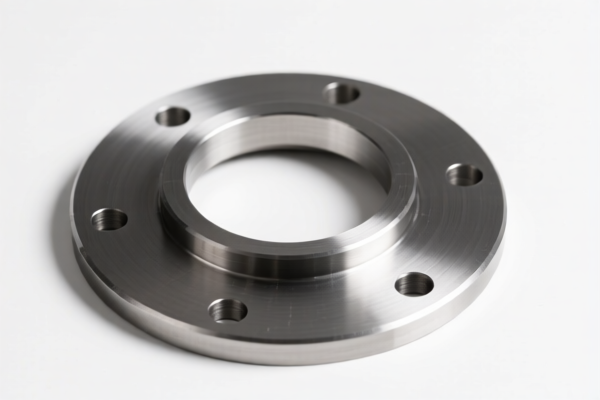
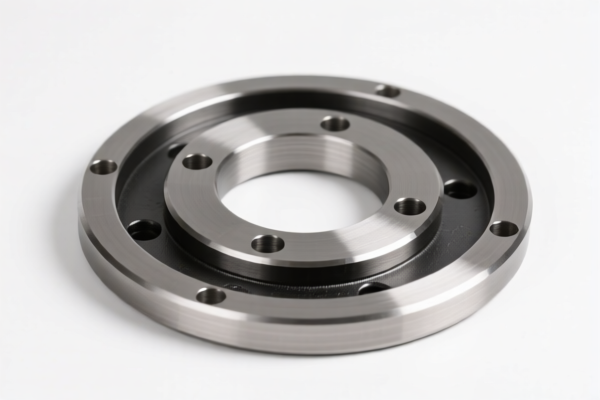
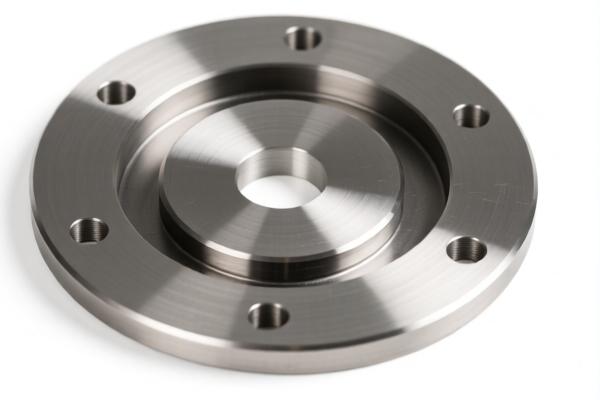
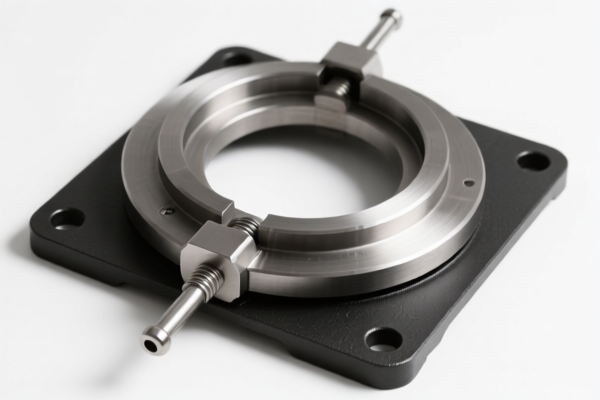
AI分析
🔓 Unlocking Plate Tool (Manual Hardware Tool)
🌐 HS Code Reference & Customs Clearance Guide | 2026 Latest Tariff Analysis | Professional Clearance Strategy
📌 I. Product Definition & Classification: What is an "Unlocking Plate Tool"?
The "Unlocking Plate Tool" (often referred to as a Plate Unlocker, Locking Plate Tool, or Wedge/Pry Tool) is a specialized manual instrument used in industrial, construction, or automotive maintenance to remove, adjust, or secure locking plates, wedges, or track components.
In international trade, its classification depends on its material and mechanical nature:
Metal Manual Tools (Steel/Iron): Tools made of ferrous metals (iron/steel) used for prying, wedging, or mechanical manipulation. These are classified under Chapter 82 (Tools, Implements, Cutlery...). Other Material/Non-Specific: If the material is unknown or non-metallic, it may fall into broader "hand tools" categories.
⚠️ Key Classification Logic:
- If the tool is metallic (steel/iron) and designed for mechanical leverage or wedging → It is often viewed as a "Hand Tool with Edge/Function" or "Other Hand Tools".
- If the specific function is defined as a wedge,撬棍 (pry bar), or rail tool, it aligns with 8205.59.
- Crucial Distinction: The tax rate varies significantly based on whether customs classifies it as a generic "hand tool" (lower base duty) or a "metal tool with specific mechanical properties" (higher base duty).
📦 II. HS Code Classification Details (2026 Latest Tariff Authority Comparison)
Based on the provided data, two primary HS Codes are identified for this product, reflecting different material/function interpretations.
| HS Code | Product Description | Applicability Scenario | Key Classification Logic |
|---|---|---|---|
| 8205.59.30.80 | Other Hand Tools (General Category) | Generic unlocking tool, pry bar, or wedge; no specific "edged" function defined; material conflict absent. | Classified as a general "Other Hand Tool" under Chapter 82. Assumes no specific metallic edge requirement. |
| 8205.59.55.10 | Other Hand Tools: With Edge/Mechanical Function (Metal) | Metal (steel/iron) tool used for prying, unlocking, or mechanical leverage; inferred as "edged" or mechanically functional. | Classified as a metal hand tool with specific mechanical/edge properties. Higher base duty due to material/function specificity. |
🔍 Important Note:
- The difference between 30.80 and 55.10 lies in the inferred material and mechanical nature.
- 8205.59.30.80 is the "Fallback" for General Hand Tools (Lower Base Duty: 0%).
- 8205.59.55.10 is for "Metal/Edged Tools" (Higher Base Duty: 5.3%).
- Both fall under 8205.59 (Other hand tools; hand or pedal operated power tools...).
💰 III. 2026 Latest Tariff Rate Breakdown (Including Add-ons)
✅ Applicable Country: United States (US)
✅ Origin: China (CN)
✅ Effective Date: 2025-11-10 onwards (including subsequent imports)
🎯 1. 8205.59.30.80 —— Other Hand Tools (General Category)
| Item | Content |
|---|---|
| Base Duty Rate | 0.0% (Ad Valorem) |
| USITC Additional Duty | +25% (Section 301 / USITC Footnote) |
| IEEPA Additional Duty | +10% (China/HK products, effective 2025-11-10) |
| Total Duty Rate | 35.0% |
| Tax Calculation | CIF Value × 35% |
| De Minimis Exemption | ❌ Not Eligible (Deny De Minimis) |
| Legal Basis Path | Base: 0.0% → USITC: +25.0% → IEEPA: +10.0% |
📌 Explanation:
- This classification assumes the tool is a general "hand tool" without specific "edged" mechanical characteristics that trigger higher base duties.
- Total 35% is still high due to trade war tariffs, but 10% lower than the metal-specific classification.
- Why 0% Base? It is categorized under a broader "Other Hand Tools" subheading where the base duty is zero, but subject to all add-ons.
🎯 2. 8205.59.55.10 —— Other Hand Tools: With Edge/Mechanical Function (Metal)
| Item | Content |
|---|---|
| Base Duty Rate | 5.3% (Ad Valorem) |
| USITC Additional Duty | +25% (Section 301 / USITC Footnote) |
| IEEPA Additional Duty | +10% (China/HK products, effective 2025-11-10) |
| Total Duty Rate | 40.3% |
| Tax Calculation | CIF Value × 40.3% |
| De Minimis Exemption | ❌ Not Eligible (Deny De Minimis) |
| Legal Basis Path | Base: 5.3% → USITC: +25.0% → IEEPA: +10.0% |
📌 Explanation:
- This classification assumes the tool is made of iron/steel and has a mechanical or edged function (e.g., prying edge, locking mechanism).
- Total 40.3% is 5.3% higher than the general category due to the 5.3% base duty.
- Why 5.3% Base? Customs often applies higher base rates to specific metal tools to distinguish them from generic hand tools.
🛠️ IV. Customs Clearance Practical Advice (Field Avoidance Guide)
✅ 1. Documentation Checklist (Missing Items Cause Delays)
| Document | Required? | Explanation |
|---|---|---|
| ✅ Product Specification Sheet | ✔️ | Must detail: Material (Steel/Iron/Aluminum), Dimensions, Weight, Function (Prying/Unlocking). |
| ✅ Material Declaration | ✔️ | Crucial for distinguishing between 30.80 (General) and 55.10 (Metal/Edged). Explicitly state "Steel" or "Iron" if applicable. |
| ✅ Product Photos (Clear) | ✔️ | Show the tool’s shape, handle, and any "edges" or mechanical parts. Helps customs officer visualize the function. |
| ✅ Commercial Invoice | ✔️ | Must describe item as "Manual Unlocking Tool" or "Plate Pry Tool". Avoid vague terms like "Hardware". |
| ✅ Packing List | ✔️ | Detail quantity and net/gross weight. |
✅ 2. Declaration Tips (Key Phrases for Success)
🔥 "Declare Function, Specify Material, Avoid Ambiguity!"
| Scenario | Recommended Description | Risk of Vague Description |
|---|---|---|
| General Pry Bar/Wedge | "Manual Steel Pry Bar for Plate Unlocking, No Blade" | May be misclassified as "Edged Tool" → 40.3% |
| Metal Tool with Specific Locking Mechanism | "Steel Mechanical Unlocking Tool for Industrial Plates" | May be misclassified as "General Hand Tool" → Risk of audit if structure is complex |
| Non-Metal Handle + Metal Head | "Composite Handle Steel Unlocking Tool" | Clarify material split; customs may focus on the working part (Steel) |
⚠️ Critical:
- If the tool is purely steel/metal and has a pointed or wedging end, customs is likely to assign 8205.59.55.10 (40.3%).
- If the tool is generic (e.g., a simple wedge with no sharp edge), you may argue for 8205.59.30.80 (35.0%).
- Strategy: Provide clear photos showing no sharp edges to support the 35.0% classification if possible.
✅ 3. Special Cases
| Case | Handling Advice |
|---|---|
| Customs Requests Material Proof | Provide mill certificates or material test reports confirming "Steel" or "Iron". |
| Tool Used for Electrical Panels | Clarify it is a manual mechanical tool, not an electrical device. |
| Set of Tools | If sold in a kit, ensure the invoice lists the "Unlocking Tool" separately or as a single unit with clear components. |
🌍 V. Global Market Comparison (2026 Latest)
| Country/Region | Recommended HS Code | Duty Rate (China Origin) | Key Certification | Notes |
|---|---|---|---|---|
| 🇺🇸 USA | 8205.59.30.80 |
35.0% | N/A | High trade war impact. |
| 🇺🇸 USA | 8205.59.55.10 |
40.3% | N/A | Higher base due to metal/edged classification. |
| 🇨🇳 China | 8205.59.30.80 |
~5-10% (Import) | CCC (if applicable) | Lower base duty, no US add-ons. |
| 🇪🇺 EU | 8205.59.30.80 |
0-6% (Varies) | CE | No Section 301 or IEEPA tariffs. |
| 🇬🇧 UK | 8205.59.30.80 |
0-4% | UKCA | Post-Brexit rules apply. |
📌 Conclusion:
- USA is the most challenging market due to 35-40% total duties.
- EU/UK offer significantly lower duties, making them more attractive for price-sensitive markets.
- Cost Saving Strategy: If exporting to the US, optimize packaging to avoid "kit" classification traps and ensure accurate material declaration to potentially qualify for the lower 35% tier if the tool is not "edged".
📌 VI. Common Errors & Pitfalls (Lessons Learned)
❌ Error 1: Describing the item only as "Hardware" or "Tool"
👉 Consequence: Customs may default to the higher "Metal/Edged" classification (40.3%) or demand additional info, causing delays.
❌ Error 2: Claiming "Plastic" material when the working part is Steel
👉 Consequence: Misdeclaration of material → Fines, Seizure, or Forced Re-classification.
❌ Error 3: Ignoring Section 301 and IEEPA tariffs
👉 Consequence: Underpaying taxes → Back Taxes + Interest + Penalties.
❌ Error 4: Using "Electrical Tool" in description for a manual tool
👉 Consequence: Misclassification into Chapter 85 (Electrical) → Wrong Duty, Potential Fraud Investigation.
✅ Correct Approach:
"Manual Steel Plate Unlocking Tool (Pry Bar), Non-Electric, For Industrial Use, Model XYZ"
🎯 VII. Conclusion: Precision Classification Saves Money!
🎯 Remember the Rules:
🔹 "Steel + Edge = 40.3% (8205.59.55.10)"
🔹 "General/Wedge + No Edge = 35.0% (8205.59.30.80)"
🔹 "Both pay 25% USITC + 10% IEEPA"
📌 Pro Tip:
If your tool is not a sharp blade but a pry/wedge, emphasize "Non-Edged" in your documentation to support the 35.0% rate. Always consult with a licensed customs broker for pre-classification rulings if the tool's design is ambiguous.
✨ Professional Clearance Starts with Accurate Classification!
💼 Every 1% of Duty Saved is Pure Profit!
用户评价
关于 HS 编码归类
协调制度(HS)是由世界海关组织(WCO)制定的国际贸易商品分类标准。全球 200 多个国家采用 HS 系统作为海关关税、贸易统计和进出口监管的基础。
每个 HS 编码遵循以下层级结构:
- 章(2 位)——商品大类(例如:第 84 章:机器和机械设备)
- 品目(4 位)——章内的更具体分类
- 子目(6 位)——国际通用细分,所有 WCO 成员国统一使用
- 本国细分(8-10 位)——各国自行扩展的细分编码,如美国 HTSUS 10 位编码
正确的 HS 编码归类对于顺利通关、准确缴纳关税和遵守贸易法规至关重要。错误归类可能导致海关延误、多缴关税或罚款。
从CN进口到US时,适用的关税税率可能包括:
- 最惠国(MFN)税率——适用于 WTO 成员国的标准关税税率
- 普通税率——适用于无贸易协定国家
- 贸易救济关税——附加关税,如 301 条款(反倾销)、232 条款(国家安全)或反补贴税
本页内容仅供参考。如需正式归类,请咨询当地海关或持牌报关代理。