Unprocessed Coniferous Boards
CN → US| HS编码 | 关税税率 | 原产国 | 目的国 | 文档 |
|---|---|---|---|---|
| 4405000000 | 38.2% | CN | US | 官方文档 |
| 4410110010 | 35.0% | CN | US | 官方文档 |
| 4411931000 | 35.0% | CN | US | 官方文档 |
| 4411921000 | 35.0% | CN | US | 官方文档 |
| 4410190010 | 35.0% | CN | US | 官方文档 |
商品图片
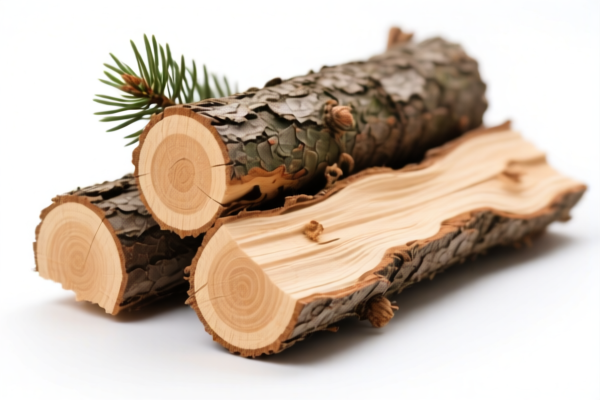
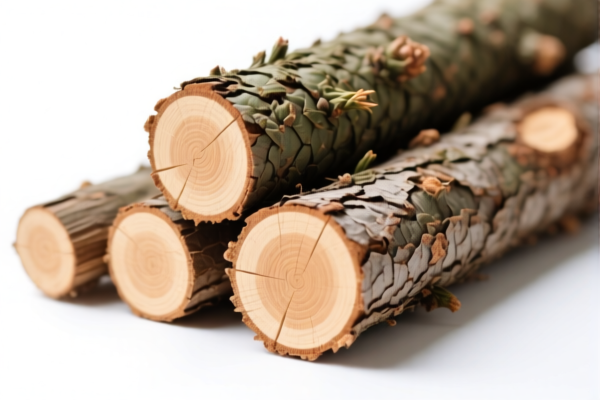
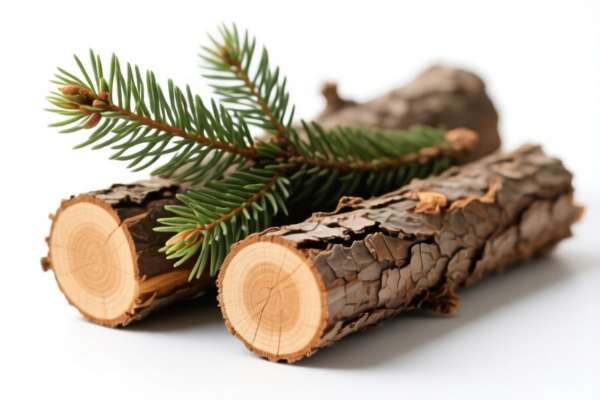
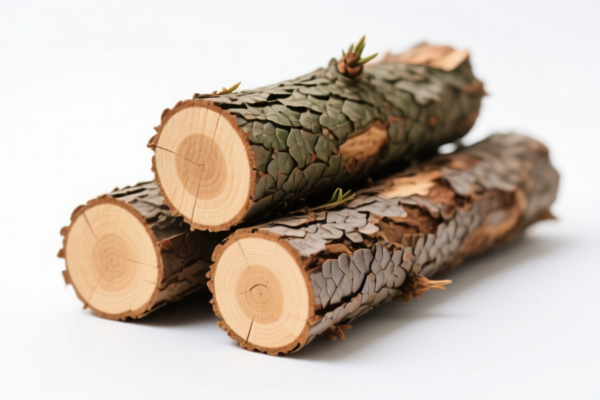
AI分析
🌲 Unprocessed Coniferous Boards (Wood Fiber Boards)
🌐 HS Code Reference & Customs Clearance Guide | 2024/2025 Latest Tariff Analysis | Professional Clearance Strategy for Wood Products
📌 I. Product Definition & Classification: What are "Unprocessed Coniferous Boards"?
"Unprocessed Coniferous Boards" typically refer to wood fiber boards made from coniferous wood (such as pine, spruce, or fir) that have not undergone significant mechanical processing beyond initial fiber preparation. In international trade, these products fall under Chapter 44 (Wood and Articles of Wood), specifically in the subheadings for particle boards, fiberboards, and other wood-based panels.
Key Distinction:
- Unprocessed/Primary State: Refers to boards that are essentially raw or semi-finished, lacking the finishing, machining, or detailed structural integration of ready-to-use furniture parts.
- Material: Must be primarily wood/coniferous fiber.
- Form: Boards, sheets, or slabs.
⚠️ Critical Classification Point:
- If the product is pure wood dust/shavings with no binding or specific board structure → May fall under 4405.00.00.00 (Wood wool, wood flour).
- If the product is compressed wood fiber/boards without further machining → Falls under 4410 or 4411 series, depending on density and composition.
📦 II. HS Code Classification Details (Based on Provided Data)
| HS Code | Product Description | Applicability Scenario | Processing Level |
|---|---|---|---|
4405.00.00.00 |
Unprocessed wood fiber board; material is wood; form is primary/semi-finished; matches wood wool/wood flour attributes. | Raw wood wool, fine wood flour, or very loose fiber mats not yet compressed into dense boards. | ✅ Primary/Semi-finished |
4410.11.00.10 |
Unprocessed wood fiber board; material is wood fiber; form is board; in unprocessed state. | Standard particle board or chipboard made from coniferous wood, compressed but not machined/finished. | ✅ Unprocessed/Compressed |
4411.93.10.00 |
Unprocessed wood fiber board; not mechanically machined; meets requirements for wood fiberboard material. | Medium Density Fiberboard (MDF) or High Density Fiberboard (HDF) that is raw/unmachined. | ✅ Unprocessed/Fiberboard |
4411.92.10.00 |
Unprocessed wood fiber board; not mechanically machined; fully meets material and form requirements. | Similar to 4411.93, specific sub-category for fiberboards under certain density/composition criteria. | ✅ Unprocessed/Fiberboard |
4410.19.00.10 |
Unprocessed wood fiber board; material is wood fiber; form is board; not further processed. | Other types of wood-based panels (particle/chipboard) not specifically listed under 4410.11. | ✅ Unprocessed/Panel |
🔍 Key Reminder:
- All these HS codes are classified under Chapter 44 (Wood), not Chapter 85 or 94 (furniture/electronics).
- The term "Unprocessed" here means no final machining, edging, laminating, or joining into furniture components.
- If the boards are cut to size, drilled, or laminated, they may fall under different subheadings (e.g., 4412 or 9403).
💰 III. 2024/2025 Latest Tariff Rate Details (Including Surtaxes & Policy Surcharges)
✅ Applicable Country: United States (US)
✅ Origin: China (CN)
✅ Effective Time: Ongoing (including subsequent imports under current trade policies)
🎯 1. 4405.00.00.00 —— Wood Wool & Wood Flour
| Item | Content |
|---|---|
| Base Tariff | 3.2% (ad valorem) |
| Section 301 Surtax | +25.0% |
| Section 122 Tariff (122 Clause) | +10.0% |
| Total Tariff Rate | 38.2% |
| Tax Calculation | CIF Value × 38.2% |
| De Minimis Exemption | ❌ Not Eligible (deny_de_minimis) |
| Legal Basis Path | USITC:4405.00.00.00 → FOOTNOTE:301 → IEEPA:122 |
📌 Explanation:
- The 3.2% base rate applies to general imports.
- The 25% surcharge is under Section 301 of the Trade Act (targeting Chinese goods).
- The 10% surcharge is under Section 122 (national security/emergency powers).
- Total 38.2% is a significant cost driver. De minimis (de minimis) exemption does NOT apply for these HS codes under current enforcement.
🎯 2. 4410.11.00.10 —— Wood Fiber Boards (Particle Board)
| Item | Content |
|---|---|
| Base Tariff | 0.0% |
| Section 301 Surtax | +25.0% |
| Section 122 Tariff (122 Clause) | +10.0% |
| Total Tariff Rate | 35.0% |
| Tax Calculation | CIF Value × 35.0% |
| De Minimis Exemption | ❌ Not Eligible |
| Legal Basis Path | USITC:4410.11.00.10 → FOOTNOTE:301 → IEEPA:122 |
📌 Note:
- Although the base rate is 0%, the 35% total effective rate is still high.
- Applies to particle boards, chipboards, and OSB (Oriented Strand Board) if they meet the "unprocessed" definition.
- De minimis exemption is denied for these HS codes under current US enforcement policies.
🎯 3. 4411.93.10.00 & 4411.92.10.00 —— Wood Fiberboards (MDF/HDF)
| Item | Content |
|---|---|
| Base Tariff | 0.0% |
| Section 301 Surtax | +25.0% |
| Section 122 Tariff (122 Clause) | +10.0% |
| Total Tariff Rate | 35.0% |
| Tax Calculation | CIF Value × 35.0% |
| De Minimis Exemption | ❌ Not Eligible |
| Legal Basis Path | USITC:4411.93/92 → FOOTNOTE:301 → IEEPA:122 |
📌 Important:
- MDF (Medium Density Fiberboard) and HDF (High Density Fiberboard) are classified here.
- Base rate 0%, but 35% total due to surcharges.
- These are common materials for furniture, cabinets, and flooring substrates.
- De minimis exemption is NOT available for imports from China under current rules.
🎯 4. 4410.19.00.10 —— Other Wood Fiber Boards
| Item | Content |
|---|---|
| Base Tariff | 0.0% |
| Section 301 Surtax | +25.0% |
| Section 122 Tariff (122 Clause) | +10.0% |
| Total Tariff Rate | 35.0% |
| Tax Calculation | CIF Value × 35.0% |
| De Minimis Exemption | ❌ Not Eligible |
| Legal Basis Path | USITC:4410.19.00.10 → FOOTNOTE:301 → IEEPA:122 |
📌 Note:
- Covers other types of wood-based panels not specifically listed under 4410.11 or 4411.92/93.
- Same 35% total rate applies.
- Consistency in tariff treatment across unprocessed wood fiber boards is key for cost planning.
🛠️ IV. Customs Clearance Practical Advice (Avoid Pitfalls)
✅ 1. Required Documentation Checklist (Mandatory)
| Document | Must Provide | Notes |
|---|---|---|
| ✅ Product Specification Sheet | ✔️ | Include material type (coniferous), density, dimensions, thickness, binding agent (if any). |
| ✅ Product Photos (Including Label) | ✔️ | Clear images of boards, packaging, and any markings. |
| ✅ Commercial Invoice | ✔️ | Clearly state "Unprocessed Coniferous Wood Fiber Board" or similar accurate description. |
| ✅ Packing List | ✔️ | Detail weight, volume, and number of packages. |
| ✅ Certificate of Origin (CO) | ✔️ | If applicable for preferential rates (though unlikely for China origin due to surcharges). |
| ✅ Phytosanitary Certificate | ✔️ | Crucial for wood products to prove no pests/diseases. Required by USDA/APHIS. |
| ✅ ISPM 15 Compliance Proof | ✔️ | If pallets/crates are used, they must be heat-treated/fumigated and marked. |
📌 Critical Reminder:
- Phytosanitary Certificate is mandatory for wood products entering the US.
- Lack of this certificate can lead to rejection, re-export, or destruction at the port.
✅ 2. Declaration Tips (Key Mantra)
🔥 “Be Specific: Material, Form, Processing Level. Vague Terms = Delays!”
| Scenario | Correct Declaration | Wrong Practice |
|---|---|---|
| Raw wood wool/flour | 4405.00.00.00 |
Misdeclare as "furniture part" → 20%+ duties + penalties |
| Particle board (unprocessed) | 4410.11.00.10 |
Misdeclare as "finished panel" → Higher duties + inspection |
| MDF/HDF (unprocessed) | 4411.93.10.00 / 4411.92.10.00 |
Misdeclare as "wood planks" → Incorrect duty rate |
| Mixed wood products | Itemize each type separately | Bundle under one HS code → Audit risk |
✅ 3. Special Cases & Handling
| Scenario | Handling Advice |
|---|---|
| OEM Custom Boards | Provide client order + design specs. Avoid generic descriptions. |
| Boards with Lamination | If laminated, may fall under different HS codes. Declare accurately. |
| Boards for Furniture | If sold as "furniture components," still declare as wood boards if unprocessed. |
| Wood Pallets Included | Must comply with ISPM 15. Separate declaration may be needed. |
🌍 V. Global Main Market Clearance Comparison (2024/2025)
| Country/Region | Recommended HS Code | Tariff (China Origin) | Certification Requirements | Notes |
|---|---|---|---|---|
| 🇺🇸 USA | 4410.11.00.10 / 4411.93.10.00 |
35% - 38.2% | Phytosanitary Certificate + ISPM 15 | High surcharges apply. De minimis denied. |
| 🇨🇳 China | 4410.11.00.10 / 4411.93.10.00 |
0% - 5% | N/A | No surcharges for domestic trade. |
| 🇪🇺 EU | 4411.93.10.00 |
0% - 6.5% | FSC/PEFC Certification (optional but recommended) | No Section 301/122 surcharges. |
| 🇦🇺 Australia | 4411.93.10.00 |
5% | Biosecurity Approval Required | Stricter phytosanitary rules. |
| 🇯🇵 Japan | 4411.93.10.00 |
0% - 3.2% | Phytosanitary Certificate | Moderate inspection. |
📌 Conclusion:
- USA has the highest tariffs due to Section 301 and Section 122 surcharges (35-38.2%).
- EU, Australia, Japan have significantly lower or no surcharges, making them more cost-effective for exports.
- Phytosanitary compliance is critical for all markets due to wood product nature.
📌 VI. Common Mistakes & Pitfall Guide (Blood Lessons)
❌ Mistake 1: Declaring "Unprocessed Boards" as "Furniture Parts"
👉 Consequence: Incorrect HS code → Underpayment of duties + penalties.
❌ Mistake 2: Omitting Phytosanitary Certificate
👉 Consequence: Goods rejected, re-exported, or destroyed at US port.
❌ Mistake 3: Using "Wood Boards" as a generic description
👉 Consequence: Customs audit delay → Storage fees + demurrage charges.
❌ Mistake 4: Assuming De Minimis Exemption Applies
👉 Consequence: Seizure of goods for violating de minimis rules (denied for these HS codes).
✅ Correct Practice:
"Unprocessed Coniferous Wood Fiber Board, MDF, 18mm thickness, 4x8 feet, raw, no lamination, ISPM 15 compliant pallets, Phytosanitary Certificate attached."
🎯 VII. Conclusion: Professional Declaration, Save Time & Cost!
🎯 Remember the Mantra:
🔹 "Material + Form + Processing = Correct HS Code"
🔹 "Phytosanitary + ISPM 15 = Non-Negotiable for Wood"
🔹 "35-38% Tariff in USA = Plan Cost Accordingly"
🔹 "De Minimis Denied = Full Duty Applies"
📌 Pro Tip:
- If your wood boards are sourced from Vietnam, Malaysia, or Thailand, you may qualify for lower or zero Section 301 surcharges.
- Consider supply chain diversification to reduce tariff burden.
- Apply for Advance Ruling from US Customs if unsure about classification.
📣 Immediate Action:
📞 Contact a licensed customs broker + Provide Product Specs + Obtain Phytosanitary Certificate
🚀 Ensure smooth clearance, avoid delays, and protect your margins!
✨ Professional Customs Clearance Starts with Accurate Classification!
💼 Your Every Dollar of Cost Deserves Precise Calculation!
用户评价
关于 HS 编码归类
协调制度(HS)是由世界海关组织(WCO)制定的国际贸易商品分类标准。全球 200 多个国家采用 HS 系统作为海关关税、贸易统计和进出口监管的基础。
每个 HS 编码遵循以下层级结构:
- 章(2 位)——商品大类(例如:第 84 章:机器和机械设备)
- 品目(4 位)——章内的更具体分类
- 子目(6 位)——国际通用细分,所有 WCO 成员国统一使用
- 本国细分(8-10 位)——各国自行扩展的细分编码,如美国 HTSUS 10 位编码
正确的 HS 编码归类对于顺利通关、准确缴纳关税和遵守贸易法规至关重要。错误归类可能导致海关延误、多缴关税或罚款。
从CN进口到US时,适用的关税税率可能包括:
- 最惠国(MFN)税率——适用于 WTO 成员国的标准关税税率
- 普通税率——适用于无贸易协定国家
- 贸易救济关税——附加关税,如 301 条款(反倾销)、232 条款(国家安全)或反补贴税
本页内容仅供参考。如需正式归类,请咨询当地海关或持牌报关代理。