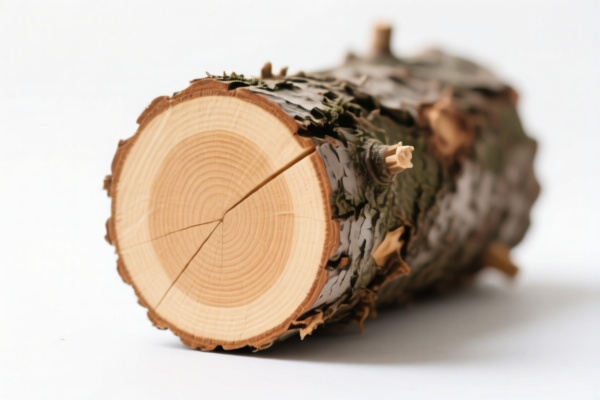
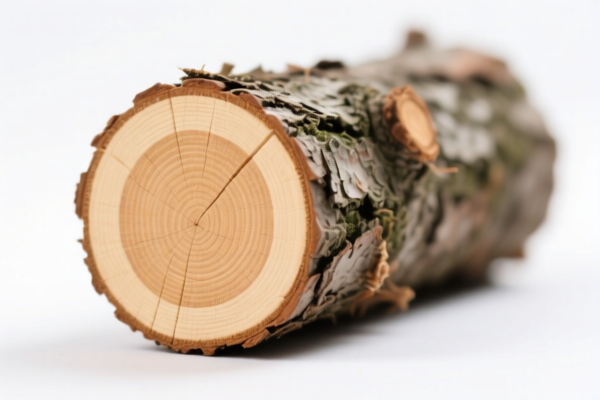
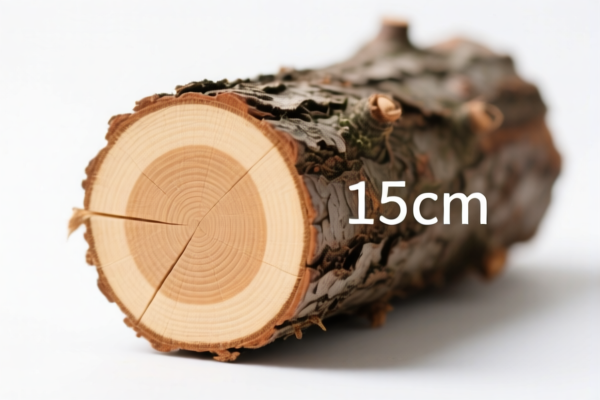
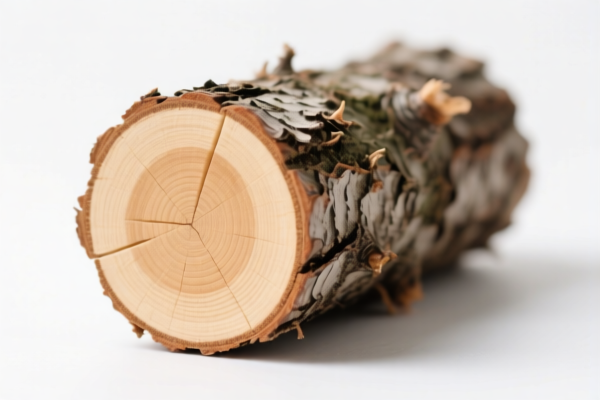
Unprocessed Fir Logs, Rough, Minimum Cross Section 15cm+
CN → US| HS编码 | 关税税率 | 原产国 | 目的国 | 文档 |
|---|---|---|---|---|
| 4403210125 | 35.0% | CN | US | 官方文档 |
| 4403210130 | 35.0% | CN | US | 官方文档 |
| 4401110000 | 35.0% | CN | US | 官方文档 |
| 4407120059 | 35.0% | CN | US | 官方文档 |
| 4409109040 | 35.0% | CN | US | 官方文档 |
商品图片
AI分析
🌲 Unprocessed Fir Logs, Rough (Minimum Cross Section 15cm+)
🌐 HS Code Reference & Clearance Guide | 2026 Updated Tariff Analysis | Professional Wood Product Strategy
📌 I. Product Definition & Classification: What Are You Actually Shipping?
Unprocessed Fir Logs (Rough) are raw timber commodities in their natural state. In international trade, they are strictly defined as: 1. Raw Material: Wood that has not been processed into planks, beams, or furniture. 2. Dimensional Requirement: The product explicitly states a "Minimum Cross Section of 15cm or more." This is the critical threshold that separates "firewood/peeling logs" from "structural/construction timber" or "fuel wood." 3. Species: Specifically Fir (Pinus species), which falls under Coniferous Wood.
⚠️ Key Distinction Point:
- If the cross-section is < 15cm, it might be classified as "Fuel Wood" or "Peeling Logs" (different HS codes, potentially lower base rates but same surcharges).
- If the cross-section is ≥ 15cm, it is classified under Chapter 44 Heading 4403 (Wood Prepared for Use as Piles, Poles, etc.) or 4401 (Fuel Wood) depending on specific intent, but due to trade restrictions, the risk profile is high.
📦 II. HS Code Classification Details (2026 Tariff Authority Mapping)
Based on the provided data, here are the 5 applicable HS Codes for Unprocessed Fir Logs (Rough, ≥15cm) and the rationale for each:
| HS Code | Product Description | Rationale for Classification |
|---|---|---|
4403.21.01.25 |
Fir Logs, Rough, Min Cross Section ≥15cm | Matches the exact physical description: Fir (Pinus), Rough, large cross-section. Primary code for structural raw timber. |
4403.21.01.30 |
Fir Logs, Rough, Min Cross Section ≥15cm | Secondary sub-code for the same physical description. Often used for specific logging batches or slight variations in moisture/finish not altering the core classification. |
4401.11.00.00 |
Fir Logs, Classified as Coniferous Fuel Wood | If the logs are intended for burning/energy but meet the size definition, they may fall under "Fuel Wood." Note: Even if intended for construction, customs may scrutinize this if quality is poor. |
4407.12.00.59 |
Other Coniferous Wood, Planed/Tongued, etc. (Fallback) | Fallback Category: If logs are slightly processed (e.g., debarked, slight planing) but still considered "logs," or if 4403 is rejected for some administrative reason, this catch-all for other coniferous wood applies. |
4409.10.90.40 |
Fir Wood, Continuously Shaped (Fallback) | Fallback Category: Another broad category for wood that doesn't fit neatly into 4403. Used if the logs have minor shaping but are not fully milled planks. |
🔍 Critical Insight:
- Codes4403.21.01.25and4403.21.01.30are the most accurate for raw logs ≥15cm.
- Codes4407and4409are riskier fallbacks implying some level of processing. If customs inspects and finds raw logs, they may force reclassification to4403, but the tax rate remains identical in this dataset.
- Code4401.11.00.00is for Fuel Wood. Misdeclaring structural logs as fuel wood to avoid phytosanitary checks is a fraud risk.
💰 III. 2026 Tariff Rate Breakdown (Including Surcharges & Policy Add-ons)
✅ Applicable Country: United States (US)
✅ Origin: China (CN)
✅ Effective Date: Ongoing (Section 301 & IEEPA)
All 5 HS Codes listed above carry the identical tax structure in this dataset. Here is the detailed breakdown:
🎯 Total Effective Tax Rate: 35.0%
| Tax Component | Rate | Legal Basis & Explanation |
|---|---|---|
| 1. Base Tariff | 0.0% | Standard MFN (Most Favored Nation) rate for raw timber/wood products is often 0% or minimal. |
| 2. Section 301 Surcharge | +25.0% | Imposed under US Trade Act Section 301 against Chinese goods. Wood products are frequently on the List 3/4A affected items. |
| 3. IEEPA Tariff (Sec 177) | +10.0% | Imposed under the International Emergency Economic Powers Act (IEEPA), specifically referencing Section 177 (or similar executive orders targeting critical materials). |
| TOTAL | 35.0% | Sum: 0% + 25% + 10% |
📌 Detailed Tax Clause Explanation:
- "122-Clause Tariff 10%": This refers to the IEEPA Section 177 tariff, which targets specific raw materials from China, including timber products. It is separate from the Section 301 tariff.
- "Add-on Tariff 25%": This is the standard Section 301 duty on Chapter 44 products from China.
- Cumulative Effect: These tariffs are cumulative, not mutually exclusive. You pay both.⚠️ De Minimis Exemption Status:
❌ NOT ELIGIBLE (deny_de_minimis).
Unlike small packages (< $800), raw timber shipments are excluded from de minimis exemption. Every container is subject to full duty payment and strict inspection.
🛠️ IV. Customs Clearance Practical Advice (Pitfall Avoidance Guide)
✅ 1. Documentation Checklist (Non-Negotiable)
| Document | Mandatory? | Purpose |
|---|---|---|
| Phytosanitary Certificate | ✔️ Essential | Issued by the exporting country's agricultural authority. Proves wood is free of pests (bark beetles, nematodes, etc.). Without this, goods will be destroyed or returned. |
| Fumigation Certificate | ✔️ Essential | Proof that logs were fumigated (e.g., Methyl Bromide or Heat Treatment per ISPM 15). Must specify the method and date. |
| Commercial Invoice | ✔️ | Must clearly state: "Unprocessed Fir Logs, Rough," HS Code, Origin, and Gross/Net Weight. |
| Bill of Lading | ✔️ | Clean bill of lading, no clauses indicating damage or moisture issues. |
| Packing List | ✔️ | Detail number of logs, average dimensions, and total volume (CBM). |
| Forest Product Certificate | ✔️ | Proof of legal harvesting (e.g., FSC, PEFC, or local legal harvesting permits). |
✅ 2. Declaration Strategy (Key Mantras)
🔥 "Raw Logs ≠ Firewood; Phytosanitary is King; Size Matters!"
| Scenario | Correct Declaration | Risk if Incorrect |
|---|---|---|
| Logs ≥ 15cm Cross-Section | HS 4403.21.01.25 or .30 |
If declared as 4401 (Fuel), customs may suspect evasion of phytosanitary rigor for "structural" wood. |
| Logs < 15cm Cross-Section | HS 4401.11.00.00 (Fuel Wood) |
If declared as 4403 when <15cm, may be rejected for misclassification of dimensions. |
| Bark On/Off | Specify clearly in Invoice | Logs with bark carry higher pest risk. If debarked, state "Debarked." |
| Origin | Must be China (CN) | Mislabeling origin to avoid tariffs is customs fraud (Seizure + 100% penalty risk). |
✅ 3. Special Handling Tips
| Situation | Recommendation |
|---|---|
| Moisture Content | Ensure logs are not wet enough to cause mold during transit. Wet wood can lead to condensation claims and phytosanitary rejection. |
| Bark Presence | If bark is present, ISPM 15 compliance is mandatory. If bark is removed, it must be explicitly stated. |
| Port Selection | Some ports have stricter phytosanitary inspections for wood. Pre-clearing with a licensed customs broker is highly recommended. |
| Tariff Engineering | Can you process the logs into sawn timber (4407) in a third country (e.g., Vietnam) to change the origin? Check Rules of Origin carefully. Simple transshipment does NOT change origin. |
🌍 V. Global Market Comparison (2026 Update)
| Country/Region | Recommended HS Code | Total Tariff (China Origin) | Key Requirement | Note |
|---|---|---|---|---|
| 🇺🇸 USA | 4403.21.01.25 |
35% (25% Sec 301 + 10% IEEPA) | Phytosanitary + Fumigation | Highest Barrier. Strict enforcement. |
| 🇨🇳 China | 4403.21.01.25 |
0-5% (Varies by trade agreement) | Import License (if applicable) | China imports wood for processing. |
| 🇪🇺 EU | 4403.10 / 4403.21 |
0% (General) | EUTR (European Timber Regulation) | Must prove Legal Harvesting (no deforestation). |
| 🇯🇵 Japan | 4403.41 / 4403.91 |
0-5% | Phytosanitary Certificate | Strict inspection for pests. |
📌 Conclusion:
- The USA is the most challenging market due to the 35% combined tariff and strict phytosanitary rules.
- EU requires legal provenance proof, not just taxes.
- Japan and China have lower tariff barriers but strict quality/pest controls.
📌 VI. Common Mistakes & Pitfalls (Lessons Learned)
❌ Mistake 1: Declaring logs as "Firewood" (4401) to avoid higher tariffs.
👉 Consequence: If cross-section is ≥15cm, customs will reject the classification and reassign to 4403. No tax savings, only delay.
❌ Mistake 2: Forgetting the Phytosanitary Certificate.
👉 Consequence: Immediate seizure and incineration of the cargo. Loss of 100% value.
❌ Mistake 3: Ignoring the "10% IEEPA" tariff.
👉 Consequence: Underpaying duties by 10%. Back-tariffs + Interest + Penalties upon audit.
❌ Mistake 4: Mixing "Fir" with "Spruce" or "Pine" without distinction.
👉 Consequence: Misclassification. Fir (Pinus abies) and other pines have different sub-codes. Ensure accurate species identification.
✅ Correct Practice:
"Unprocessed Fir Logs, Rough, Debarked, Heat Treated, Cross-Section ≥15cm, Origin: China, HS: 4403.21.01.25, With Phytosanitary Cert #XXXX"
🎯 VII. Conclusion: Professional Declaration for Cost Control
🎯 Remember This Mantra:
🔹 "Logs ≥15cm = 4403; Tariff 35%; Phytosanitary is Life."
🔹 "No Cert = No Entry; Misclass = Penalty."
📌 Pro Tip:
If you are importing large volumes, consider applying for a Section 301 Exclusion (if applicable for certain wood products) or pre-classification ruling from CBP.
For IEEPA 10%, there are few to no exemptions for raw timber from China. Plan your pricing accordingly.
📣 Immediate Action:
📞 Contact your customs broker to verify the Phytosanitary Certificate format with the exporting country's agency.
📄 Ensure your invoice explicitly states "Fir" and "Cross-Section ≥15cm" to justify HS4403.21.01.25.
🚀 Budget for 35% duty + freight + phytosanitary fees. Do not underestimate the total landed cost.
✨ Accurate Classification Saves Money. Professional Compliance Ensures Speed.
💼 Your timber is as valuable as its certification!
用户评价
关于 HS 编码归类
协调制度(HS)是由世界海关组织(WCO)制定的国际贸易商品分类标准。全球 200 多个国家采用 HS 系统作为海关关税、贸易统计和进出口监管的基础。
每个 HS 编码遵循以下层级结构:
- 章(2 位)——商品大类(例如:第 84 章:机器和机械设备)
- 品目(4 位)——章内的更具体分类
- 子目(6 位)——国际通用细分,所有 WCO 成员国统一使用
- 本国细分(8-10 位)——各国自行扩展的细分编码,如美国 HTSUS 10 位编码
正确的 HS 编码归类对于顺利通关、准确缴纳关税和遵守贸易法规至关重要。错误归类可能导致海关延误、多缴关税或罚款。
从CN进口到US时,适用的关税税率可能包括:
- 最惠国(MFN)税率——适用于 WTO 成员国的标准关税税率
- 普通税率——适用于无贸易协定国家
- 贸易救济关税——附加关税,如 301 条款(反倾销)、232 条款(国家安全)或反补贴税
本页内容仅供参考。如需正式归类,请咨询当地海关或持牌报关代理。