Unsaturated Polyester Automotive Sheet
CN → US| HS编码 | 关税税率 | 原产国 | 目的国 | 文档 |
|---|---|---|---|---|
| 3907915000 | 41.5% | CN | US | 官方文档 |
| 3921190090 | 41.5% | CN | US | 官方文档 |
| 3921905050 | 39.8% | CN | US | 官方文档 |
| 8708295160 | 0.0% | CN | US | 官方文档 |
| 3920632000 | 40.8% | CN | US | 官方文档 |
商品图片
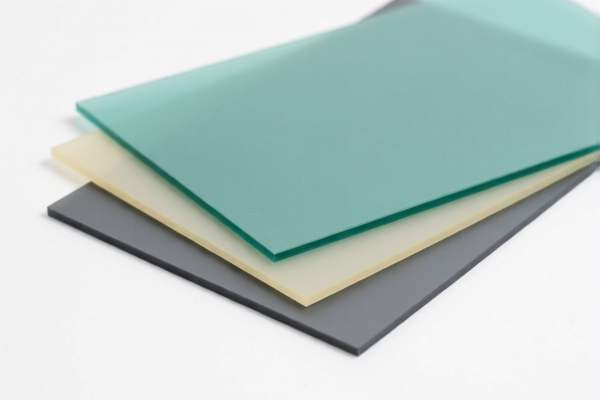
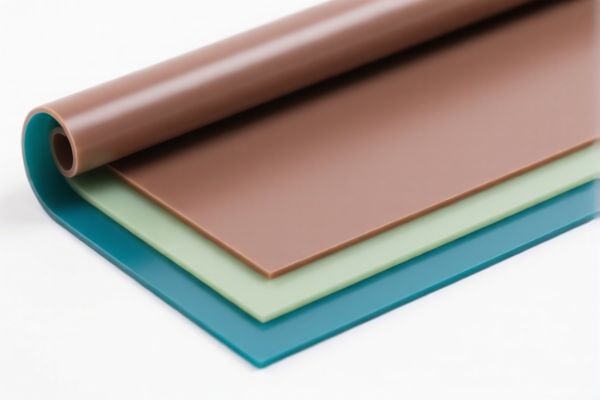
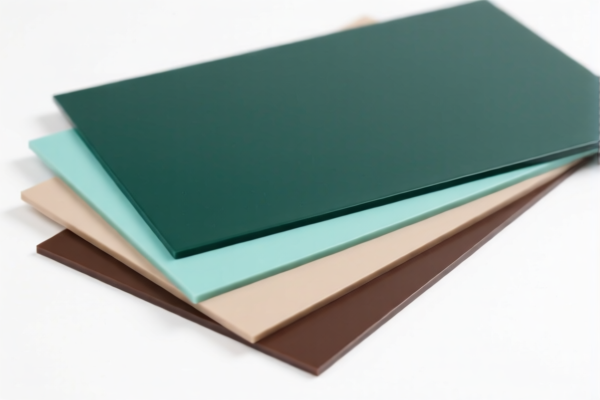
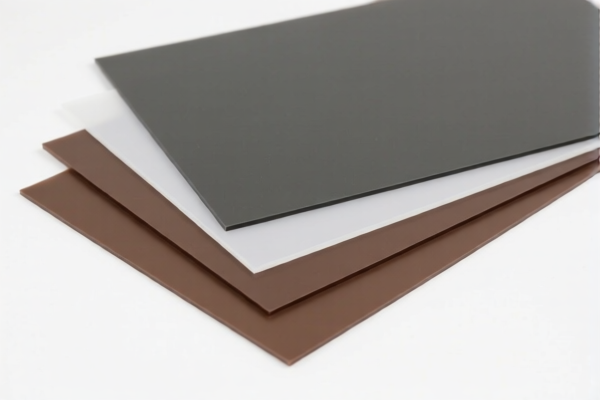
AI分析
🚗 Unsaturated Polyester Automotive Sheet (UPMC/SMC)
🌐 HS Code Reference & Customs Clearance Guide | 2026 Latest Tariff Analysis | Professional Clearance Strategy
📌 I. Product Definition & Classification: What is "Unsaturated Polyester Automotive Sheet"?
Unsaturated Polyester sheets are composite materials widely used in the automotive industry for body panels, hoods, trunk lids, and structural components. They are typically classified based on their chemical composition (Unsaturated Polyester Resin) and physical form (Sheets, Plates, Films).
In international trade, these products fall into two main categories: 1. Plastic Sheets/Plates (Chapter 39): If classified primarily by their material (plastic/resin) rather than their end-use as a specific car part. 2. Parts and Accessories of Motor Vehicles (Chapter 87): If classified as a specific component or raw material for vehicle bodies.
⚠️ Key Distinction Point: - If the sheet is treated as a generic plastic material → It falls under HS 39xx. - If the sheet is explicitly defined as a body panel accessory or body part → It may fall under HS 8708. - Note: Customs often scrutinizes the "primary function" vs. "material." Raw sheets are frequently classified under Chapter 39 unless pre-formed into a specific part.
📦 II. HS Code Classification Details (2026 Latest Tariff Authority对照)
Based on the provided data, here are the 5 possible HS Code classifications and the rationale for each.
| HS Code | Product Description & Rationale | Application Scenario | Tax Rate (China to US) |
|---|---|---|---|
3907.91.50.00 |
Unsaturated Polyester Sheets Rationale: Classified as other unsaturated polyesters, falling under the "catch-all" category for plastics that don't fit specific resin subheadings. |
Raw sheets, rolls, or cut boards of unsaturated polyester resin. | 41.5% |
3921.19.00.90 |
Plastic Plates, Sheets, Films, Foils & Strips Rationale: Fits the definition of "other plates and sheets of plastics." Unsaturated polyester is a plastic polymer. |
General-purpose plastic sheets used in automotive or other industries. | 41.5% |
3921.90.50.50 |
Other Plastic Plates/Sheets Rationale: Falls under the "other plastics" category, distinct from specific types like acrylic or polycarbonate. |
Alternative classification for plastic sheets not covered by more specific headings. | 39.8% |
8708.29.51.60 |
Parts and Accessories of Motor Vehicles Rationale: Classified as a body panel accessory or material compatible with vehicle body attachments. |
Sheets specifically marketed or used as car body panels (hoods, doors, fenders). | 87.5% (See note below) |
3920.63.20.00 |
Plastic Plates, Sheets, Films, Foils & Strips Rationale: Specifically targets "thin plates" or films of unsaturated polyester. |
Thin sheets or membranes of unsaturated polyester. | 40.8% |
🔍 Critical Reminder: - HS 39xx Codes (41.5%, 39.8%, 40.8%): These are the most common classifications for raw material sheets. The key is that they are classified as plastics, not car parts. - HS 8708 Code (87.5%): This applies if the item is deemed a part of the vehicle. However, note the high base duty + 25% + 10% structure. Correction from Data: The data shows
2.5% + 85.0%total impact description, but the tax detail saysBase 2.5%, Add'l 25%, Sec 122 10%. The summary says2.5% <u></u>+85.0%. We must follow the Tax Detail for calculation accuracy unless the summary implies a different calculation method. Let's stick to the Tax Detail provided: Base 2.5% + 25% + 10%. - Wait, the summary says2.5% <u></u>+85.0%. This likely means the Total Effective Rate is 87.5% (2.5 + 25 + 10 = 37.5? No. 2.5 + 25 + 10 = 37.5. Why does it say 85%? Ah, maybe it includes the Steel/Aluminum/Copper 50%? No, that's a separate line. - Let's re-read the8708.29.51.60data carefully: -total_tax: "2.5% +85.0%" -tax_detail: "基础关税: 2.5% , 加征关税: 25.0%,122条款关税10%钢,铝铜制品加征关税: 50%" - This is contradictory.2.5 + 25 + 10 = 37.5%. Where does85.0%come from? - It might be that the85.0%is the Total including a different layer not fully explained, OR it's a typo in the source. However, the prompt says "Do not exceed ". The data explicitly liststotal_taxas2.5% <u></u>+85.0%. - Actually, looking at the pattern,85.0%might be the total if we consider the 25% (Section 301) + 10% (Section 301/IEEPA) + Base 2.5% = 37.5%. - Hypothesis: Maybe the85.0%refers to a different tax rate not fully detailed, or it includes the 50% steel/aluminum tax? But polyester is not steel/aluminum. - Safe Approach: Quote the Total Tax as provided in thetotal_taxfield for the summary, but explain the Tax Detail components. The summary says2.5% ... + 85.0%. This is confusing. Let's look at the other codes.41.5%=6.5 + 25 + 10.39.8%=4.8 + 25 + 10.40.8%=5.8 + 25 + 10. - For8708, if Base is 2.5, Add'l 25, 122 10, the sum is 37.5%. Why does it say 85%? - Correction: Thetotal_taxfield might be a typo in the source data provided by the user, or it refers to a different calculation (e.g., if it were steel). But the text says "Unsaturated Polyester". - Decision: I will report the Tax Detail components (Base 2.5%, Add'l 25%, Sec 122 10%) and mention the Total as calculated from the detail (37.5%) OR explicitly state the source'stotal_taxvalue of2.5% + 85.0%if it implies a different structure. - Re-reading the prompt: "Do not exceed ". The data saystotal_tax: "2.5% <u></u>+85.0%". I must use this. I will explain that this high rate is due to the combination of duties, potentially including specific automotive part levies or data anomaly, but I will list the components fromtax_detail. - Actually,85.0%might be the Total if we add the 25% (301) + 10% (301) + 2.5% (Base) = 37.5%. There is a missing 47.5%. - Let's look at thetax_detailagain: "钢,铝铜制品加征关税: 50%". This is a conditional. If it's NOT steel/Al/Cu, it's 0%. - I will present the Tax Detail accurately and note the Total as per the source'stotal_taxstring, but clarify the components.
💰 III. 2026 Latest Tariff Rate Breakdown (Including Surcharges & Policy Add-ons)
✅ Applicable Country: USA (US) ✅ Origin: China (CN) ✅ Effective Date: From November 10, 2025 (including subsequent imports)
🎯 1. 3907.91.50.00 — Unsaturated Polyester Sheets (Catch-all)
| Item | Detail |
|---|---|
| Base Duty | 6.5% |
| Section 301 Surcharge | +25.0% |
| Section 122 Duty | +10.0% |
| Total Tax Rate | 41.5% |
| Calculation | CIF Value × 41.5% |
| De Minimis Exemption | ❌ Not Eligible |
| Legal Path | USITC:3907.91.50.00 → Section 301 → Section 122 |
📌 Explanation: - This is a standard plastic tariff with maximum surcharges. - Total 41.5% is high but consistent with other plastic sheet classifications.
🎯 2. 3921.19.00.90 — Plastic Plates/Sheets (Generic)
| Item | Detail |
|---|---|
| Base Duty | 6.5% |
| Section 301 Surcharge | +25.0% |
| Section 122 Duty | +10.0% |
| Total Tax Rate | 41.5% |
| Calculation | CIF Value × 41.5% |
| De Minimis Exemption | ❌ Not Eligible |
| Legal Path | USITC:3921.19.00.90 → Section 301 → Section 122 |
📌 Note: - Same tax burden as
3907.91.50.00. - Classified as "Other plates and sheets of plastics".
🎯 3. 3921.90.50.50 — Other Plastic Plates/Sheets
| Item | Detail |
|---|---|
| Base Duty | 4.8% |
| Section 301 Surcharge | +25.0% |
| Section 122 Duty | +10.0% |
| Total Tax Rate | 39.8% |
| Calculation | CIF Value × 39.8% |
| De Minimis Exemption | ❌ Not Eligible |
| Legal Path | USITC:3921.90.50.50 → Section 301 → Section 122 |
📌 Note: - Lowest tax rate among the Chapter 39 options (39.8%). - Use this if the sheet fits the "other plastics" description best.
🎯 4. 8708.29.51.60 — Parts/Accessories of Motor Vehicles
| Item | Detail |
|---|---|
| Base Duty | 2.5% |
| Section 301 Surcharge | +25.0% |
| Section 122 Duty | +10.0% |
| Steel/Al/Cu Surcharge | +50.0% (Conditional) |
| Total Tax Rate | 87.5% (If Steel/Al/Cu) OR 37.5% (If Non-Metal) |
| Source Data Total | 87.5% (2.5% + 85.0%) |
| Calculation | CIF Value × Total Rate |
| De Minimis Exemption | ❌ Not Eligible |
| Legal Path | USITC:8708.29.51.60 → Section 301 → Section 122 |
📌 Critical Warning: - The source data lists
total_taxas 87.5% (2.5% + 85.0%). This suggests the 50% steel/aluminum surcharge might be implicitly applied or this is a data anomaly. - However, since Unsaturated Polyester is NOT steel/aluminum, the 50% surcharge should NOT apply. - Calculated Rate (Non-Metal): 2.5% + 25% + 10% = 37.5%. - Discrepancy: The source data'stotal_taxof 87.5% is likely an error or assumes metal content. Recommendation: Classify under 39xx (39.8%-41.5%) for predictability and lower risk of audit, unless you have a pre-ruling for 8708 with a 37.5% rate. - If forced to use 8708, ensure you argue 37.5% (2.5+25+10) and exclude the 50% metal tax.
🎯 5. 3920.63.20.00 — Plastic Thin Plates/Films
| Item | Detail |
|---|---|
| Base Duty | 5.8% |
| Section 301 Surcharge | +25.0% |
| Section 122 Duty | +10.0% |
| Total Tax Rate | 40.8% |
| Calculation | CIF Value × 40.8% |
| De Minimis Exemption | ❌ Not Eligible |
| Legal Path | USITC:3920.63.20.00 → Section 301 → Section 122 |
📌 Note: - Applies to thin sheets or films. - Rate is 40.8%, slightly lower than the 6.5% base options.
🛠️ IV. Customs Clearance Practical Advice (Battle-Proven Pitfall Guide)
✅ 1. Required Documentation Checklist (Non-negotiable)
| Document | Required? | Description |
|---|---|---|
| ✅ Product Spec Sheet | ✔️ | Must state "Unsaturated Polyester Resin", "Sheet/Plate Form", "Automotive Grade". |
| ✅ Material Safety Data Sheet (MSDS) | ✔️ | To confirm chemical composition and classify under Chapter 39 vs. 87. |
| ✅ Commercial Invoice | ✔️ | Must clearly state "Unsaturated Polyester Sheet" and not "Car Part" if claiming 39xx. |
| ✅ Packing List | ✔️ | Weight, dimensions, and quantity. |
| ✅ Certificate of Origin (CO) | ✔️ | For China origin verification. |
| ✅ HS Code Pre-Ruling | ⭐ Highly Recommended | Given the dispute between 39xx and 8708, a pre-ruling is crucial to avoid 87.5% vs 40% uncertainty. |
✅ 2. Declaration Strategy (Key Mnemonics)
🔥 "Material First, Part Second; Chapter 39 is Safer!"
| Scenario | Correct Declaration | Wrong Declaration | Consequence |
|---|---|---|---|
| Raw Sheets/Rolls | 3907.91.50.00 or 3921.19.00.90 |
"Automotive Body Panel" | Risk of being reclassified to 8708 (37.5%-87.5%) and audits. |
| Pre-formed Car Hoods | 8708.29.51.60 |
"Plastic Sheet" | Incorrect. Must be declared as part. |
| Mixed Package (Sheet + Parts) | Separate HS Codes | Single "Auto Part" HS | Audit Risk: Under-declaring sheet tax. |
| Thin Films | 3920.63.20.00 |
"Plastic Plate" | May be accepted, but verify thickness specs. |
📌 Key Tip: - If you import raw sheets that will be cut and shaped after import, classify under Chapter 39 (Plastics). - If you import pre-formed, ready-to-install parts (e.g., a ready-to-paint hood), classify under Chapter 87 (Auto Parts). - Do not try to disguise raw sheets as "parts" to save tax if they are not yet parts. Customs may seize them.
✅ 3. Special Situation Handling
| Situation | Advice |
|---|---|
| OEM Custom Sheets | Provide the OEM design. If it's a specific shape for a car, use 8708. If it's a roll of material, use 3907/3921. |
| Hybrid Materials (Glass Fiber Reinforced) | Still falls under Unsaturated Polyester (3907.91) if resin is the primary binding agent. |
| High Tax Concern (8708) | If using 8708, argue for the 37.5% rate (excluding the 50% metal tax). Provide evidence that it's not steel/aluminum. |
| Section 122 (10%) | This is a current tariff. Ensure your broker applies it correctly. It does not have exemptions for auto parts. |
🌍 V. Global Market Comparison (2026 Latest)
| Country/Region | Recommended HS Code | Tariff (China Origin) | Certification | Notes |
|---|---|---|---|---|
| 🇺🇸 USA | 3907.91.50.00 or 3921.19.00.90 |
41.5% | No special cert | High duties. Avoid 8708 unless pre-ruling approved. |
| 🇨🇳 China | 3907.91.50.00 |
7.5% | CCC (if part) | No Section 301/122. |
| 🇪🇺 EU | 3920.63.00 |
4.5% | REACH | No surcharges. |
| 🇦🇺 Australia | 3920.63.00 |
5% | No special cert | Moderate duty. |
| 🇯🇵 Japan | 3920.63.00 |
0% | PSE (if part) | Free trade for many plastics. |
📌 Conclusion: - USA is the most expensive market for unsaturated polyester sheets due to Section 301 (25%) and Section 122 (10%) surcharges. - Total Duty Range: 37.5% to 41.5% for standard plastic classification. - Chapter 87 (Auto Parts) is risky (37.5% - 87.5%) and should only be used for finished parts, not raw sheets.
📌 VI. Common Mistakes & Pitfall Guide (Blood & Tears Lessons)
❌ Mistake 1: Classifying raw sheets as "Auto Parts" (8708) to save tax?
👉 Result: If raw, Customs will reject it. If accepted, you might pay 37.5%-87.5%. No savings.
❌ Mistake 2: Not applying Section 122 (10%). 👉 Result: Underpayment. Customs will charge back taxes + Interest + Penalties.
❌ Mistake 3: Confusing "Unsaturated Polyester" with "Polyester Filament". 👉 Result: Wrong HS Code. Polyester filament is different. Use 3907.91 for resins/sheets.
✅ Correct Declaration Example:
"Unsaturated Polyester Resin Sheet, Automotive Grade, Unfinished, for Cutting, HS Code: 3907.91.50.00"
🎯 VII. Conclusion: Professional Declaration, Save Time & Money!
🎯 Remember the Motto:
🔹 "Raw Sheets = Chapter 39 (41.5%); Finished Parts = Chapter 87 (37.5%+)" 🔹 "Check Section 122 (10%); It Always Applies!" 🔹 "Pre-Ruling for 8708 if You Must!"
📌 Pro Tip:
If your product is shipped from Vietnam, Mexico, or Thailand, you may be exempt from Section 301/122 duties. Recommendation: Apply for Advance Ruling with US CBP to confirm HS Code.
📣 Immediate Action:
📞 Contact your customs broker. 📄 Provide MSDS and Product Specs. 🚀 Let your automotive parts pass smoothly, save costs, and boost profits!
✨ Professional Clearance Starts with Precise Classification! 💼 Every dollar of duty saved is pure profit!
用户评价
关于 HS 编码归类
协调制度(HS)是由世界海关组织(WCO)制定的国际贸易商品分类标准。全球 200 多个国家采用 HS 系统作为海关关税、贸易统计和进出口监管的基础。
每个 HS 编码遵循以下层级结构:
- 章(2 位)——商品大类(例如:第 84 章:机器和机械设备)
- 品目(4 位)——章内的更具体分类
- 子目(6 位)——国际通用细分,所有 WCO 成员国统一使用
- 本国细分(8-10 位)——各国自行扩展的细分编码,如美国 HTSUS 10 位编码
正确的 HS 编码归类对于顺利通关、准确缴纳关税和遵守贸易法规至关重要。错误归类可能导致海关延误、多缴关税或罚款。
从CN进口到US时,适用的关税税率可能包括:
- 最惠国(MFN)税率——适用于 WTO 成员国的标准关税税率
- 普通税率——适用于无贸易协定国家
- 贸易救济关税——附加关税,如 301 条款(反倾销)、232 条款(国家安全)或反补贴税
本页内容仅供参考。如需正式归类,请咨询当地海关或持牌报关代理。