Unstripped Hemlock Logs
CN → US| HS编码 | 关税税率 | 原产国 | 目的国 | 文档 |
|---|---|---|---|---|
| 4401110000 | 35.0% | CN | US | 官方文档 |
| 4401210000 | 35.0% | CN | US | 官方文档 |
| 4407120019 | 35.0% | CN | US | 官方文档 |
| 4407120020 | 35.0% | CN | US | 官方文档 |
| 4403230135 | 35.0% | CN | US | 官方文档 |
商品图片
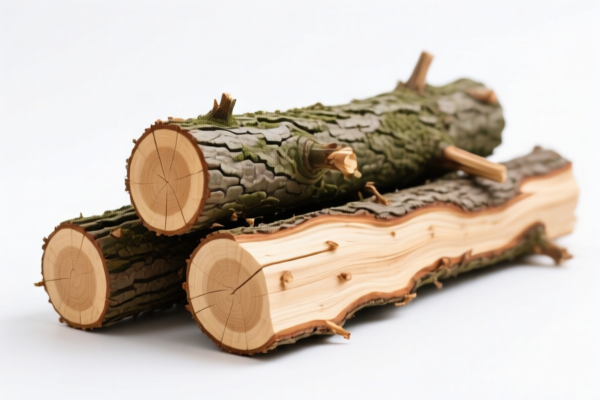
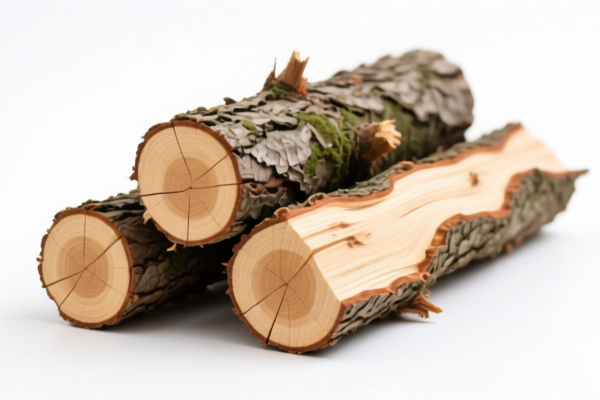
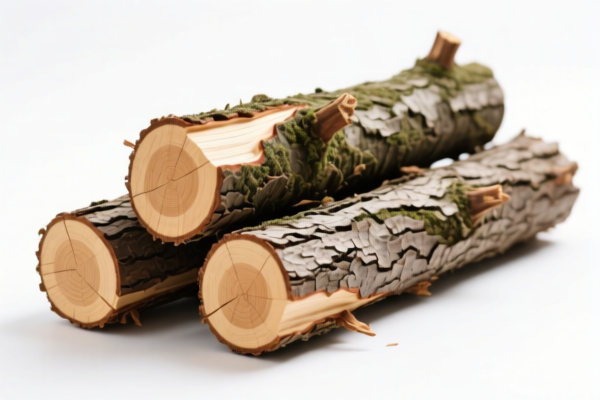
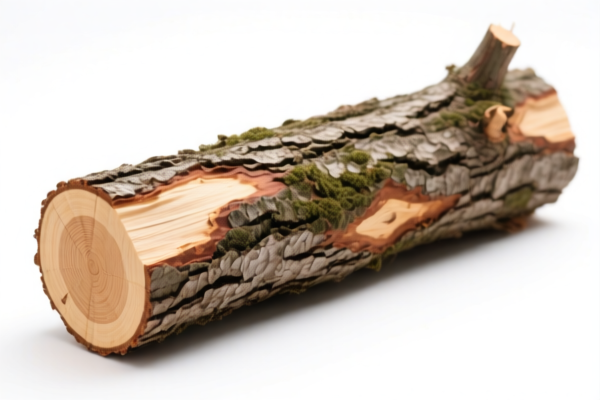
AI分析
🌲 Unstripped Hemlock Logs (Western & Eastern Hemlock)
🌐 HS Code Reference & Customs Clearance Guide | 2026 Latest Tariff Analysis | Professional Wood Logistics Strategy
📌 I. Product Definition & Classification: What Are "Unstripped Hemlock Logs"?
Hemlock (primarily Tsuga species, including Western Hemlock and Eastern Hemlock) is a valuable softwood timber widely used in construction, furniture, and pulp production. In international trade, "Unstripped" refers to timber that has not been stripped of its bark, while "Logs" refers to wood that has been merely delimbed and cut to length, without sawing, planing, or further processing into lumber.
⚠️ Key Distinction:
- Logs (Raw Wood): Merely delimbed and cut. Still round or partially processed. → Typically falls under Chapter 4401 or 4403.
- Sawn Timber (Lumber): Processed into planks, beams, etc. → Falls under Chapter 4407 or 4409.
- Chipped/Pulped: If used for paper, different rules apply.
In the provided dataset, the focus is on unprocessed raw wood (logs/sawlogs) and partially processed but un-planed forms, all matching Hemlock (Coniferous).
📦 II. HS Code Classification Details (Based on Provided Data)
The following HS codes are derived strictly from the <DATA> provided, all pertaining to Hemlock Wood in various raw or minimally processed states. All carry a 35.0% Total Tax Rate.
| HS Code | Product Description (Summary) | Physical State & Material |
|---|---|---|
4401.11.00.00 |
Unprocessed Hemlock Logs Matches coniferous species & log form |
Logs: Raw, delimbed, round/unmilled. |
4401.21.00.00 |
Unprocessed Hemlock Matches coniferous material & raw form |
Raw Chips/Waste or Small Logs: Often used for pulping or small-scale processing. |
4407.12.00.19 |
Unprocessed Hemlock Matches untreated form & Hemlock material |
Sawn Wood (Unplaned): Planed/sawn but not further finished. Specific sub-category for Hemlock. |
4407.12.00.20 |
Unprocessed Hemlock Matches other Hemlock material & untreated form |
Sawn Wood (Unplaned): Another specific sub-category for Hemlock sawn timber. |
4403.23.01.35 |
Unprocessed Hemlock Matches Hemlock material & rough timber form |
Rough Timber: Treated or untreated wood in a rough, un-squared form. |
🔍 Critical Note:
- All listed HS codes belong to Chapter 44 (Wood and articles of wood).
- Hemlock is classified under Coniferous Wood.
- Despite minor differences in processing level (Log vs. Sawn vs. Rough), the tax burden is identical (35%) in this specific dataset.
💰 III. 2026 Latest Tariff Rate Breakdown (Detailed Tax Clauses)
✅ Applicable Country: United States (US)
✅ Origin: China (CN)
✅ Total Tax Rate: 35.0% across all listed HS codes
🎯 Universal Tax Structure for Hemlock Logs (All Codes Above)
| Tax Component | Rate | Legal Basis / Description |
|---|---|---|
| Base Tariff (MFN) | 0.0% | Standard Most Favored Nation rate for wood products. |
| Section 301 Additional Tariff | +25.0% | Imposed under US Trade Law Section 301 (List 3/4A) on Chinese imports. |
| Section 122 Tariff | +10.0% | Specific additional duty for certain Chinese wood products (often related to trade remedy or specific bilateral agreements). |
| TOTAL TAX RATE | 35.0% | Sum of Base + 301 + 122 |
| Calculation Basis | Ad Valorem | Calculated on the CIF Value (Cost, Insurance, and Freight) or Duty-Paid Value depending on customs valuation rules. |
| De Minimis Exemption | ❌ Not Applicable | High-value bulk wood shipments rarely qualify for de minimis (e.g., $800 threshold). |
📌 Explanation of Tax Clauses:
- "Base Tariff: 0.0%": Under normal WTO MFN rates, softwood logs from many origins are duty-free. However, this is negated by additional duties.
- "Section 301: 25%": This is the primary punitive tariff on Chinese goods. Most wood products from China fall under this list.
- "Section 122: 10%": This refers to specific tariffs often associated with Section 232 (national security) or other specific trade actions targeting forestry products from certain countries. In this dataset, it is explicitly listed as an additional 10% on top of the 25%.
- Combined Impact: The 35% total tax significantly increases the landed cost, requiring careful cost calculation and potential price renegotiation with buyers.
🛠️ IV. Customs Clearance Practical Advice (Avoid Pitfalls)
✅ 1. Documentation Checklist (Mandatory)
| Document | Required? | Purpose |
|---|---|---|
| Phytosanitary Certificate | ✅ Critical | Issued by the country of origin to prove the wood is free from pests (e.g., Asian Longhorned Beetle, Emerald Ash Borer). No certificate = Rejection/Quarantine. |
| Commercial Invoice | ✅ Mandatory | Must clearly state: Product: Hemlock Logs, HS Code, CIF Value, Origin: China. |
| Bill of Lading (B/L) | ✅ Mandatory | Proof of shipment. Ensure weight and volume match the invoice. |
| Packing List | ✅ Mandatory | Details of bundles, total cubic meters, and weight. |
| Wood Treatment Certificate | ✅ If Applicable | If the logs are heat-treated (HT) or fumigated, provide proof (ISPM 15 standard if applicable, though logs are often exempt from ISPM 15 if debarked, but phytosanitary is still key). |
| Form A / Certificate of Origin | ❌ Not Needed for Preference | No free trade agreement applies to reduce tariffs for China-origin wood in this context. |
✅ 2. Classification Strategy & Risk Mitigation
🔥 "Logs vs. Sawn: One Mistake, Huge Penalty!"
| Scenario | Correct HS Code Approach | Risk if Misclassified |
|---|---|---|
| Round/Delimbed Logs | Use 4401.11.00.00 or 4403.23.01.35 |
If declared as sawn timber (4407), customs may still assess 35%, but requires different phytosanitary checks. |
| Sawn Timber (Unplaned) | Use 4407.12.00.19 or 4407.12.00.20 |
If declared as logs, customs may inspect for hidden processing. |
| Mixed Shipments (Logs + Sawn) | Declare Separately | Mixing logs and sawn timber in one entry can cause delays. Use separate line items. |
| "Unstripped" Definition | Ensure bark is NOT fully removed | If bark is removed, it might be classified as "processed" or "stripped," potentially affecting phytosanitary requirements. |
📌 Key Tip:
- "Unstripped" means bark is present. If bark is removed, the wood is more susceptible to insect infestation and may require more stringent phytosanitary measures.
- Volume Calculation: Customs often verifies the gross cubic meters vs. net weight. Ensure your packing list is accurate.
✅ 3. Special Considerations for Hemlock
| Issue | Recommendation |
|---|---|
| Pest Inspection | Hemlock is a host for several insects. Ensure the wood is treated or inspected at the port of exit. |
| Moisture Content | High moisture content can lead to mold during transit. Ensure adequate ventilation in containers. |
| Price Fluctuation | Wood prices are volatile. Lock in prices early to mitigate tax impact. |
| Trade Wars | Given the 35% tariff, consider if sourcing from other countries (e.g., Canada, Russia) is more cost-effective, even with transport costs. |
🌍 V. Global Market Comparison (2026 Snapshot)
| Market | HS Code (Hemlock Logs) | Base Tariff | Additional Tariffs | Total Effective Rate |
|---|---|---|---|---|
| 🇺🇸 USA | 4401.11.00.00 |
0% | 301 (25%) + 122 (10%) | 35.0% |
| 🇨🇳 China | 4401.11.00.00 |
0-5% | None (FTAs with NZ, AU, etc.) | ~0-5% |
| 🇪🇺 EU | 4401.10.00 |
0-5% | None | ~0-5% |
| 🇯🇵 Japan | 4401.10.00 |
0-3% | None | ~0-3% |
📌 Conclusion:
- The US market is the most expensive for Chinese-origin Hemlock logs due to the 35% combined tariff.
- For US-bound shipments, cost optimization strategies (e.g., value engineering, alternative sourcing) are critical.
📌 VI. Common Errors & Pitfalls (Lessons Learned)
❌ Error 1: Declaring "Sawn Timber" when it's "Logs"
👉 Consequence: Phytosanitary certificate may not match the product form, leading to quarantine hold.
❌ Error 2: Ignoring "Unstripped" status
👉 Consequence: If bark is present, customs may demand fumigation even if previously exempt, causing delays.
❌ Error 3: Under-declaring Value
👉 Consequence: Heavy fines for tax evasion. The 35% rate is fixed, so any attempt to lower the declared value is risky.
❌ Error 4: Mixing HS Codes in One Entry
👉 Consequence: If logs and sawn timber are mixed, customs may assess the highest duty rate for the entire shipment or delay clearance for separate inspection.
✅ Correct Practice:
"Hemlock Logs, Unstripped, Delimbed, Length: 2-4m, Origin: China, HS: 4401.11.00.00, Phytosanitary Cert: Attached"
🎯 VII. Conclusion: Strategic Recommendations
🎯 Key Takeaways:
🔹 "35% Tax is Fixed": Do not expect tariff reductions under normal circumstances.
🔹 "Phytosanitary is Key": Without it, the cargo will not enter the US.
🔹 "Accurate Description": "Unstripped Hemlock Logs" must be clearly stated.
📌 Pro Tip:
If you are importing large volumes, consider:
1. Pre-Clearance: Submit documents to CBP (Customs and Border Protection) in advance.
2. Value Engineering: Negotiate with suppliers to lower FOB prices to offset the 35% tax.
3. Alternative Origins: Explore sourcing from Canada or Russia if possible, though geopolitical factors may apply.
📣 Immediate Action:
📞 Contact a Customs Broker: Ensure your broker is familiar with Chapter 44 and Section 301/122 tariffs.
📄 Prepare Phytosanitary Cert: Start this process at the point of origin before shipment.
📊 Calculate Landed Cost: Include the 35% tax in your pricing model to maintain margins.
✨ Precision in Classification, Efficiency in Clearance, Profitability in Trade!
💼 Your Wood, Your Rules, Your Bottom Line!
用户评价
关于 HS 编码归类
协调制度(HS)是由世界海关组织(WCO)制定的国际贸易商品分类标准。全球 200 多个国家采用 HS 系统作为海关关税、贸易统计和进出口监管的基础。
每个 HS 编码遵循以下层级结构:
- 章(2 位)——商品大类(例如:第 84 章:机器和机械设备)
- 品目(4 位)——章内的更具体分类
- 子目(6 位)——国际通用细分,所有 WCO 成员国统一使用
- 本国细分(8-10 位)——各国自行扩展的细分编码,如美国 HTSUS 10 位编码
正确的 HS 编码归类对于顺利通关、准确缴纳关税和遵守贸易法规至关重要。错误归类可能导致海关延误、多缴关税或罚款。
从CN进口到US时,适用的关税税率可能包括:
- 最惠国(MFN)税率——适用于 WTO 成员国的标准关税税率
- 普通税率——适用于无贸易协定国家
- 贸易救济关税——附加关税,如 301 条款(反倾销)、232 条款(国家安全)或反补贴税
本页内容仅供参考。如需正式归类,请咨询当地海关或持牌报关代理。