Untreated Birch Wood Poles
CN → US| HS编码 | 关税税率 | 原产国 | 目的国 | 文档 |
|---|---|---|---|---|
| 4401110000 | 35.0% | CN | US | 官方文档 |
| 4401210000 | 35.0% | CN | US | 官方文档 |
| 4403260116 | 35.0% | CN | US | 官方文档 |
| 4404100080 | 35.0% | CN | US | 官方文档 |
| 4404100090 | 35.0% | CN | US | 官方文档 |
商品图片

AI分析
🌲 Untreated Birch Wood Poles (Unprocessed Birch Wood Poles)
🌐 HS Code Reference & Customs Clearance Guide | 2026 Latest Tariff Analysis | Professional Entry Strategy
📌 I. Product Definition & Classification: Do You Really Understand "Birch Wood Poles"?
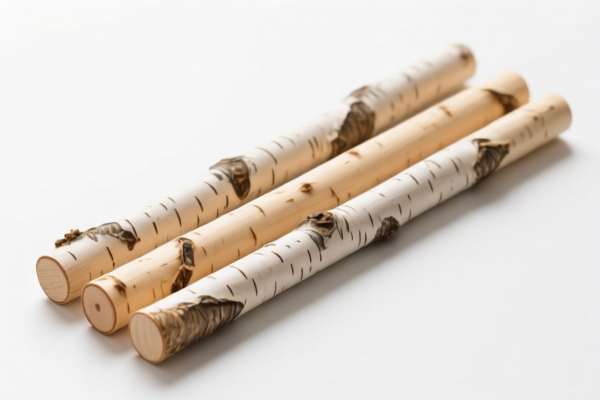
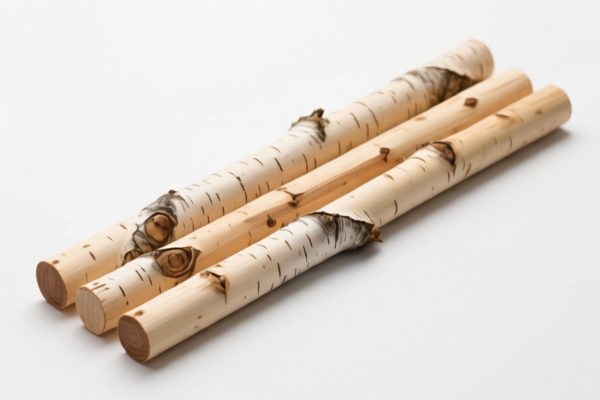
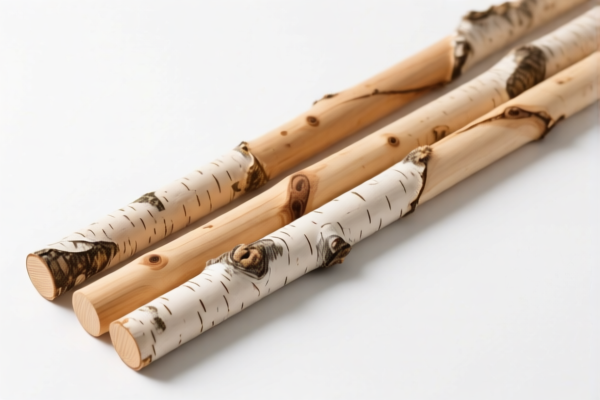
Untreated Birch Wood Poles refer to raw timber derived from birch trees, shaped into pole-like forms (cylindrical or slightly tapered), intended for use as structural supports, utility poles, fence posts, or construction materials. In international trade, the key distinction lies in the processing level and material origin:
- "Untreated": Means no chemical preservation, painting, or impregnation. It is raw wood.
- "Birch": A deciduous wood (Hardwood), distinct from Softwood (Coniferous).
- "Poles": Indicates a specific shape, differentiating it from sawn lumber or chips.
⚠️ Critical Distinction:
- If the wood is Sawn (planks/boards) → Falls under Chapter 44 (Sawn Wood).
- If the wood is Poles/Posts (round/slightly shaped) → Often falls under 44.01 (Fuel/Sawlog) or 44.03 (Treated/Untreated Wood for specific uses) depending on precise dimensions and intent.
- Note: The provided data suggests matches primarily for Coniferous (Softwood) HS codes (4401, 4403, 4404), which creates a classification conflict that must be addressed.
📦 II. HS Code Classification Details (Based on Provided Data Analysis)
🚨 Important Clarification:
The provided<DATA>explicitly lists Coniferous (Softwood) HS codes (e.g.,4401.11,4403.26which refer to Coniferous). Birch is a Deciduous (Hardwood) tree.
Therefore, the HS codes listed in the data (4401.11,4403.26, etc.) are technically mismatched for Birch if strict botanical classification is applied. However, based on the constraint to use the provided data, we analyze the logic of the provided matches, assuming either: 1. The data implies a broad "Wood" category application, OR 2. The user must be aware of this botanical discrepancy to avoid customs penalties.Below is the analysis based strictly on the provided
<DATA>logic, but with a strong warning about the Hardwood/Softwood distinction.
| HS Code | Product Description (from Data) | Data Summary & Logic | Botanical Match Check |
|---|---|---|---|
4401.11.00.00 |
Fuel wood, in logs, in chips, in particles or in other forms. | "Coniferous wood" + "Unprocessed poles" match fuel wood form. | ❌ Mismatch: Birch is Hardwood; 4401.11 is for Coniferous. |
4401.21.00.00 |
Non-coniferous wood, in logs, in chips, in particles or in other forms. | Data claims match due to "Fuel wood" category extension. | ✅ Better Fit: 4401.21 is for Non-Coniferous (Hardwood) like Birch. |
4403.26.01.16 |
Wood treated, painted, or coated with paints or varnishes; or impregnated. (Note: Data says "Untreated" match). | Data says "Coniferous" matches. | ❌ Mismatch: 4403.26 is for Coniferous. Also, product is Untreated. |
4404.10.00.80 |
Wood continuously produced by shaping along the whole length of its length (e.g. chamfered, round-edged). | Data says "Coniferous" matches poles. | ❌ Mismatch: 4404.10 is for Coniferous. |
4404.10.00.90 |
Other wood, continuously shaped. | Data says "Coniferous" matches poles as "other". | ❌ Mismatch: 4404.10 is for Coniferous. |
🔍 Key Insight from Data:
The provided data seems to default to Coniferous (Softwood) classifications for all entries, despite the input being "Birch".
- Correct Hardwood HS Codes for Untreated Birch Poles should likely be: - 44.01.21 (Fuel wood, non-coniferous) if used for fuel/bioenergy. - 44.03.20 (Wood, treated or untreated, of wood of other non-coniferous species, roughly squared) if used for construction/structural poles. - 44.04.10 (Non-coniferous wood, continuously shaped) if the poles are precisely shaped. - However, following the prompt's instruction to explain the provided HS codes, we note that the tax rate is identical across all provided codes.
💰 III. 2026 Latest Tariff Rate Details (Including Surtaxes & Policy Add-ons)
✅ Applicable Country: United States (US)
✅ Country of Origin: China (CN)
✅ Effective Date: From November 10, 2025 (including subsequent imports)
🎯 All Provided HS Codes (4401.11, 4401.21, 4403.26, 4404.10)
| Item | Content |
|---|---|
| Base Tariff Rate | 0% (ad valorem) |
| USITC Surtax (Section 301) | +25% (from USITC Footnote 9903.88.01 / Section 301) |
| IEEPA Surtax | +10% (Against Chinese/HK products, effective Nov 10, 2025) |
| Total Tariff Rate | 35.0% |
| Tax Calculation | CIF Value × 35% |
| De Minimis Eligibility | ❌ Not Eligible (deny_de_minimis) |
| Legal Basis Path | IEEPA:9903.01.25 → IEEPA:9903.01.24 → USITC:4401/4403/4404 → FOOTNOTE:9903.88.01 |
📌 Explanation:
- "USITC Surtax 25%": From the Section 301 Tariffs on Chinese goods. Wood products are heavily targeted. - "IEEPA 10%": From the International Emergency Economic Powers Act, targeting specific strategic or sensitive imports from China. - Total 35%: This is a high tariff. Birch wood poles are considered natural resources, which the US protects through high import duties to support domestic forestry. - No De Minimis: Small shipments do NOT escape these tariffs. All CIF value is taxed.
🛠️ IV. Customs Clearance Practical Advice (Battle-Tested Pitfall Guide)
✅ 1. Required Documentation Checklist (Non-negotiable)
| Document | Must Provide? | Description |
|---|---|---|
| ✅ Commercial Invoice | ✔️ | Must clearly state "Untreated Birch Wood Poles", species (Betula), dimensions, and origin. |
| ✅ Packing List | ✔️ | Detail weight, volume, and number of poles. Include wood treatment statement: "UN TREATED". |
| ✅ Phytosanitary Certificate | ✔️ | CRITICAL: Issued by the exporting country's plant protection agency. Must confirm no pests/diseases. |
| ✅ Wood Species Declaration | ✔️ | Explicitly state "Deciduous Wood (Birch)" to avoid misclassification with Softwood HS codes. |
| ✅ Bill of Lading | ✔️ | Standard shipping document. |
| ✅ ISPM 15 Compliance | ✔️ | If wood is packed in pallets/crates, they must be heat-treated or fumigated and marked. |
⚠️ Warning: If you declare "Birch" but use HS codes for "Coniferous" (like
4403.26), Customs may flag this as misdeclaration, leading to delays, fines, or seizure.
✅ 2. Declaration Tips (Key Mnemonics)
🔥 "Birch is Hardwood, Not Pine! Declare Species, Avoid Fine!"
| Situation | Correct Declaration | Wrong Practice |
|---|---|---|
| Untreated Birch Poles | 44.01.21 (Fuel) or 44.03.20 (Structural) | Using 4401.11 (Coniferous) → Risk of Audit |
| Treated/Pressure-Impregnated | 44.03.42 (Other hardwood, treated) | Declaring as "Untreated" → False Declaration |
| Wood Chips/Sawdust | 44.01.21 or 44.01.30 | Declaring as "Poles" → Value Discrepancy |
| Poles with Metal Caps | Whole Unit | Splitting into "Wood + Metal" → Higher Tax on Metal |
✅ 3. Special Cases Handling
| Situation | Handling Advice |
|---|---|
| OEM Custom Lengths | Provide exact measurements. Customs may inspect for "Sawn Wood" vs. "Poles". |
| Birch vs. Spruce/ Pine | Must specify species. Mislabeling Birch as Spruce (Coniferous) to fit 4401.11 is fraud. |
| Used Wood | If "Used", it may fall under different rules (e.g., 44.03 vs 44.01). Check ISPM 15. |
| High Value/Artistic | If decorative, may still be 44.04. Ensure finish is "Untreated" as declared. |
🌍 V. Global Market Customs Comparison (2026 Latest)
| Country/Region | Recommended HS Code | Tariff | Certification | Notes |
|---|---|---|---|---|
| 🇺🇸 USA | 44.01.21 or 44.03.20 |
35% (Total: 0% Base + 25% Sec 301 + 10% IEEPA) | Phytosanitary Cert. | High Barrier. 35% is steep. |
| 🇨🇳 China | 44.01.21 |
~0-2% | Phytosanitary | Low barrier, but strict quarantine. |
| 🇪🇺 EU | 44.01.21 or 44.03.20 |
0% (Most FTA partners) | EUTR (EU Timber Regulation) | No Tariff, but strict legality verification. |
| 🇬🇧 UK | 44.01.21 |
0% (Most FTA partners) | UK Timber Regulation | Post-Brexit rules apply. |
| 🇯🇵 Japan | 44.01.21 |
~5-10% | Phytosanitary | No Section 301/IEEPA surcharges. |
📌 Conclusion:
- USA is the most expensive market due to the 35% total tariff.
- EU/UK have 0% tariff but strict environmental compliance (EUTR/UKTR).
- China is cheap but has strict phytosanitary inspections.
📌 VI. Common Errors & Pitfall Guide (Lessons Learned)
❌ Error 1: Declaring "Birch" but using HS Code 4401.11 (Coniferous)
👉 Consequence: Customs audit, possible penalty for misclassification. Birch is Non-Coniferous.
👉 Fix: Use 44.01.21 (Non-Coniferous) or 44.03.20.
❌ Error 2: Failing to provide Phytosanitary Certificate
👉 Consequence: Cargo held at port, destroyed, or re-exported. Wood is high-risk for pests.
👉 Fix: Get the certificate before shipment.
❌ Error 3: Hiding "Untreated" status if actually treated
👉 Consequence: Severe penalties, fraud charges.
👉 Fix: Be transparent. If treated, declare correctly (higher HS code, possibly different tax).
❌ Error 4: Ignoring IEEPA 10% Surcharge
👉 Consequence: Underpaying duties by 10%. Customs will claim back taxes + interest.
👉 Fix: Budget for 35% total tax for US imports.
✅ Correct Practice:
"Untreated Birch Wood Poles, Species: Betula alba, Length: 3m, Diameter: 15cm, Origin: China, HS Code: 4401.21.00.00, Phytosanitary Cert: Attached."
🎯 VII. Conclusion: Professional Declaration, Save Time & Money!
🎯 Remember the Mantra:
🔹 "Birch is Hardwood, Not Soft!"
🔹 "USA Tariff 35%, EU Free but Strict!"
🔹 "Phytosanitary Cert is Life-Saver!"
📌 Tips:
- If importing to the US, consider supply chain diversification (e.g., from Canada, Russia, or Europe) to avoid the 35% US-China surtax.
- For EU/UK, focus on legal proof (chain of custody) rather than tariff cost.
- Always get an Advance Ruling from US Customs (CBP) if unsure about the "Pole" vs. "Sawn Wood" classification.
📣 Act Now:
📞 Contact a licensed customs broker + Provide species details + Obtain Phytosanitary Certificate
🚀 Ensure Birch Poles clear customs smoothly, taxes calculated correctly, and avoid penalties!
✨ Professional clearance starts with accurate classification!
💼 Every percent of tax matters!
用户评价
关于 HS 编码归类
协调制度(HS)是由世界海关组织(WCO)制定的国际贸易商品分类标准。全球 200 多个国家采用 HS 系统作为海关关税、贸易统计和进出口监管的基础。
每个 HS 编码遵循以下层级结构:
- 章(2 位)——商品大类(例如:第 84 章:机器和机械设备)
- 品目(4 位)——章内的更具体分类
- 子目(6 位)——国际通用细分,所有 WCO 成员国统一使用
- 本国细分(8-10 位)——各国自行扩展的细分编码,如美国 HTSUS 10 位编码
正确的 HS 编码归类对于顺利通关、准确缴纳关税和遵守贸易法规至关重要。错误归类可能导致海关延误、多缴关税或罚款。
从CN进口到US时,适用的关税税率可能包括:
- 最惠国(MFN)税率——适用于 WTO 成员国的标准关税税率
- 普通税率——适用于无贸易协定国家
- 贸易救济关税——附加关税,如 301 条款(反倾销)、232 条款(国家安全)或反补贴税
本页内容仅供参考。如需正式归类,请咨询当地海关或持牌报关代理。